














Mpu Kuturan, Architect of Bali’s Identity: From Samuan Tiga to the Emergence of Meru and Temple Layout
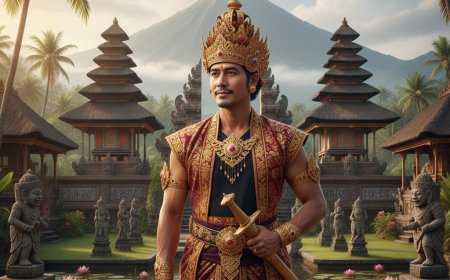
Mpu Kuturan was a key figure in shaping Bali’s social, religious, and architectural systems that continue to endure today. Based on the Lontar Mpu Kuturan, ancient Balinese inscriptions, and academic studies such as those from Udayana University, he played a central role in unifying various religious sects through a grand assembly at Pura Samuan Tiga, leading to the formulation of the Siwa-Buddha synthesis and the Trimurti concept. He also established the **Kahyangan Tiga** system, which became the foundational temple structure in every traditional village. In architecture, Mpu Kuturan is recognized as a pioneer in organizing Balinese temple layouts, including introducing and formalizing the meru shrine as a cosmological symbol of Mount Mahameru. Architectural research indicates that the meru concept and spatial principles such as Tri Mandala reflect an integration of spirituality and spatial organization. Thus, Mpu Kuturan’s legacy is not merely historical, but remains a living foundation of Balinese society today.


The name Mpu Kuturan is almost inseparable from discussions about the foundations of Balinese civilization. He is remembered not merely as a priest, but as the architect of a socio-religious system that continues to shape the life framework of Balinese society today. His legacy is preserved not only in oral traditions, but also in lontar manuscripts, inscriptions, and modern academic studies that attempt to critically reinterpret his role.
According to traditions recorded in the Lontar Mpu Kuturan, this figure emerged around the 11th century during the reign of Udayana Warmadewa, when Bali was experiencing a period of religious instability. Various sects developed in parallel—Siwa, Wisnu, Brahma, as well as Buddhist and Tantric traditions—which in some cases led to tensions within society. In this context, Mpu Kuturan did not appear as a ruler, but as a spiritual mediator who introduced a reconciliatory approach.
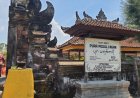
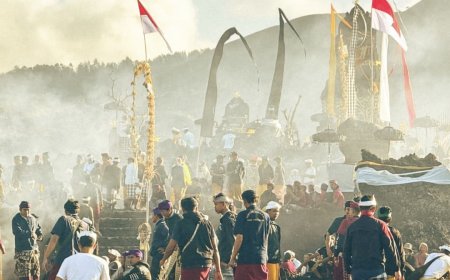
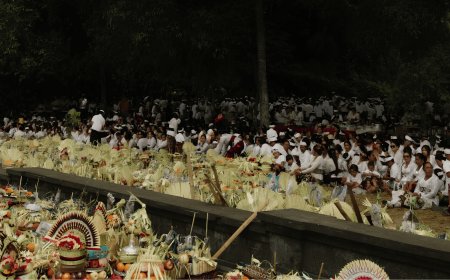
A key event consistently associated with him is the grand assembly at Pura Samuan Tiga. Based on historical studies, popular writings, and academic research from Udayana University, this meeting became a convergence point for previously separate sects. It was here that Mpu Kuturan formulated the unification of teachings within the Siwa-Buddha framework while introducing the concept of Trimurti as a shared foundation. From this process, ideological conflicts gradually subsided, replaced by a more integrated religious system.
The impact of Samuan Tiga extended beyond theology. According to studies published in Udayana University journals on ancient Balinese social structures, Mpu Kuturan also formulated the concept of Kahyangan Tiga, consisting of Pura Desa, Pura Puseh, and Pura Dalem in every village. This system was not merely a division of temple functions, but a way of binding the relationship between humans, nature, and the divine within a unified spatial order. At the same time, it reinforced the traditional village system as an autonomous socio-religious unit, which remains the backbone of Balinese society today.
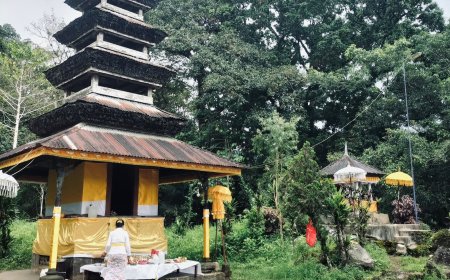
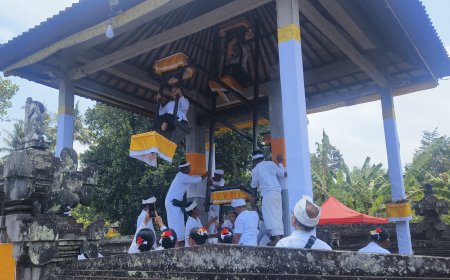
However, one contribution that is often insufficiently highlighted is Mpu Kuturan’s role in shaping temple architecture and introducing the meru structure. In several lontar texts and supported by studies of traditional Balinese architecture, he is described as the figure who formalized the use of pelinggih meru, the multi-tiered shrine with stacked roofs that has become a hallmark of Balinese temples. The meru is not merely an aesthetic element, but a cosmological symbol representing Mount Mahameru as the center of the universe and a marker of spiritual hierarchy.
Architectural research published in academic repositories such as ojs.unud.ac.id shows that the meru system is closely linked to the concept of verticality in Balinese Hindu cosmology, where each tier represents a different layer of existence. In this context, Mpu Kuturan can be seen as a pioneer who integrated cosmological symbolism into tangible spatial practice. This is also evident in the layout of temples such as Pura Besakih, which developed into Bali’s main spiritual center with a complex and highly organized shrine structure.
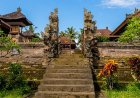
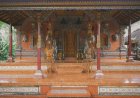
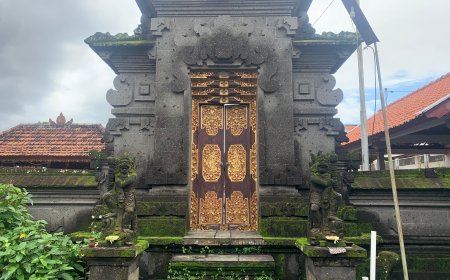
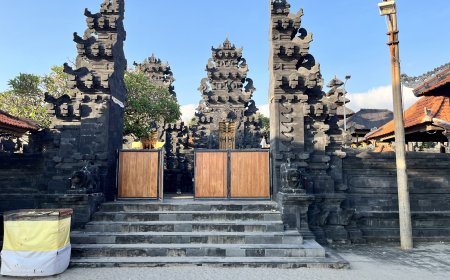
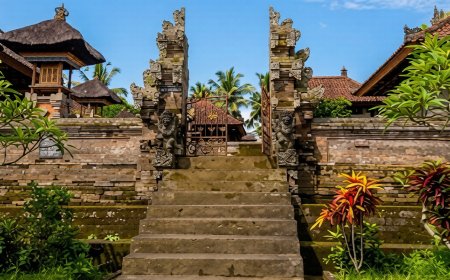
Beyond the meru, he is also believed to have formulated spatial principles of temple layout known as Tri Mandala, dividing space into utama, madya, and nista mandala. This system reflects levels of sacredness while also regulating ritual flow. According to various studies on Balinese culture, this pattern later became the standard for temple construction across Bali, demonstrating the enduring conceptual influence of Mpu Kuturan.
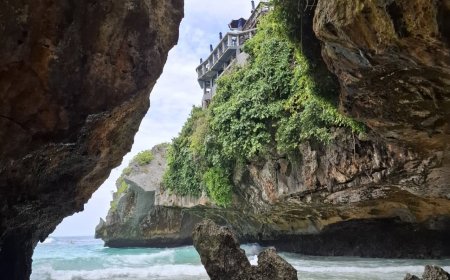
Tradition also states that his spiritual center was located at Pura Luhur Silayukti. From this site, his teachings spread widely and were connected to the broader intellectual networks of Java and Bali. Some sources mention his interaction with prominent figures such as Mpu Bharadah, indicating that Bali at the time was not isolated, but part of a dynamic intellectual landscape of the archipelago.
Nevertheless, modern scholars caution against interpreting Mpu Kuturan as a single, unified historical figure. Several historiographical studies suggest that “Mpu Kuturan” may have been a title or representation of multiple figures across a certain period. Despite this debate, academic consensus acknowledges that the role attributed to this name reflects a major transformative process in the formation of Balinese identity.
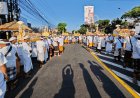
Ultimately, Mpu Kuturan’s legacy lives not only in texts or historical memory, but in the daily practices of Balinese society. Every village with its Kahyangan Tiga, every temple with its meru structures, and the sacred spatial order that continues to be maintained all serve as evidence that ideas formulated nearly a thousand years ago remain active today. In this sense, Mpu Kuturan is not merely a historical figure, but the principal architect of Bali as it is known today.