













Tari Baris Gede: The Tale of Great Warriors' Valor in Defending Dharma
Far from an ordinary dance, this is the manifestation of a celestial army descending to safeguard the sanctity of the ceremony. With piercing gazes and drawn spears, the Baris Gede Dance is enveloped in the mystical aura of Dharma's guardians, stirring the soul of every beholder.

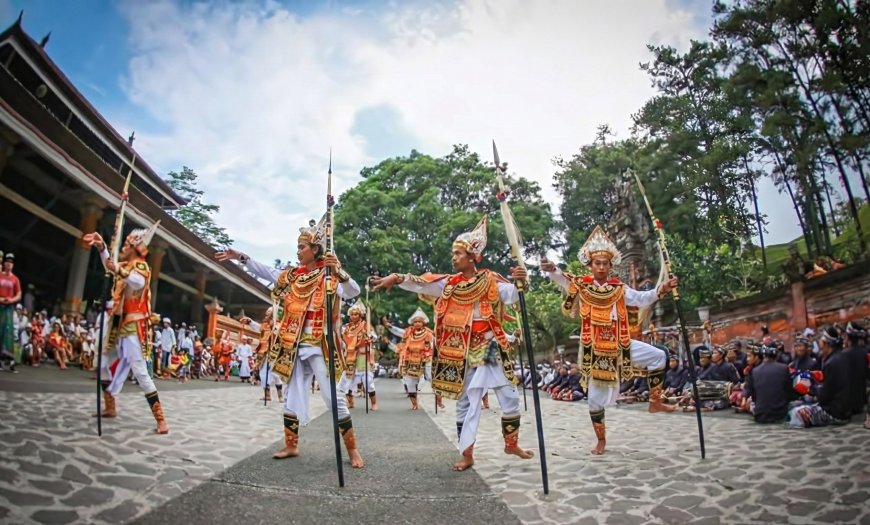
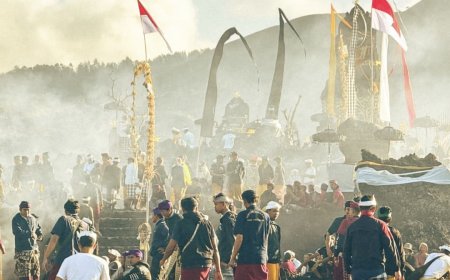
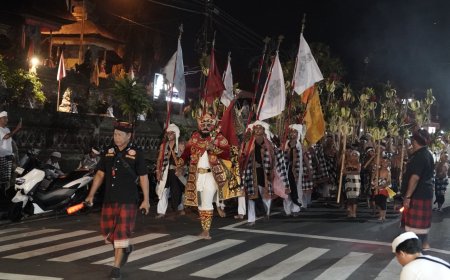
The resounding sound of the Gong Gede gamelan breaks the silence in the Jeroan temple area. Dozens of adult men in magnificent attire suddenly appear, lining up neatly, and stamping their feet gallantly. This is the Baris Gede Dance, a sacred dance that marks that Ida Bhatara or the Deities have arrived amidst Their devotees.
As one of the noble cultural heritages, Baris Gede is not merely an art performance, but a mandatory ritual that accompanies major ceremonies and Karya Agung in Bali.
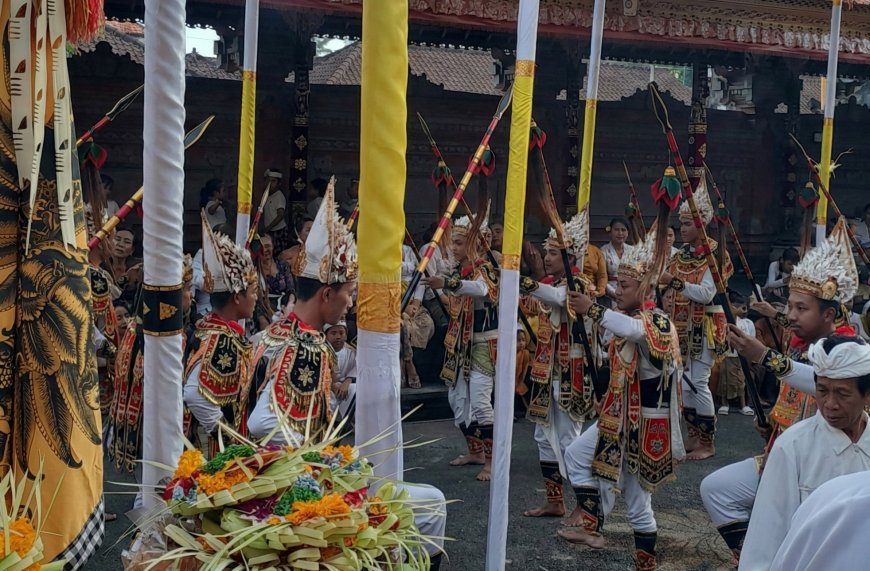
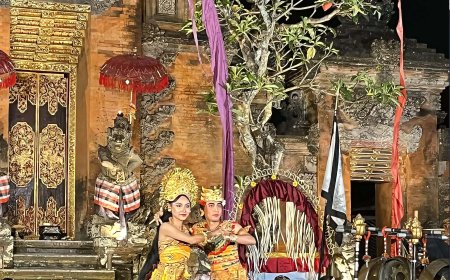
The Gallant Performance of Baris Gede Dance (Photo Source: Personal Collection)
The Baris Gede Dance depicts the might of the celestial army, often referred to as Widyadara. Etymologically, the word "Baris" means a row or formation of soldiers, while "Gede" means great or grand.
The movements of this dance are highly distinctive. There are no graceful, supple body curves. Instead, there are only firm, staccato movements, a wide and sturdy stance, and high-lifted shoulders symbolizing authority.
The dancers' gaze never wavers from focus. The sharp seledet technique symbolizes the vigilance of a soldier on duty guarding the king, in this case, guarding Ida Bhatara. In their hands, they grasp real weapons, such as sharp-pointed spears, ready to ward off any disturbances.
In the Balinese Hindu concept, a major ceremony requires a balance between sekala (the visible world) and niskala (the unseen world). The Baris Gede Dance serves as a niskala "protective cordon".
These dancers are tasked with welcoming the arrival of the Deities during the Nedunang Ida Bhatara procession as they descend to the world. Their presence is believed to neutralize the negative forces of Bhuta Kala that seek to disrupt the ceremony. Therefore, this dance must be performed in the holiest areas of the temple, namely in the Jeroan or Jaba Tengah, and not on an ordinary entertainment stage.
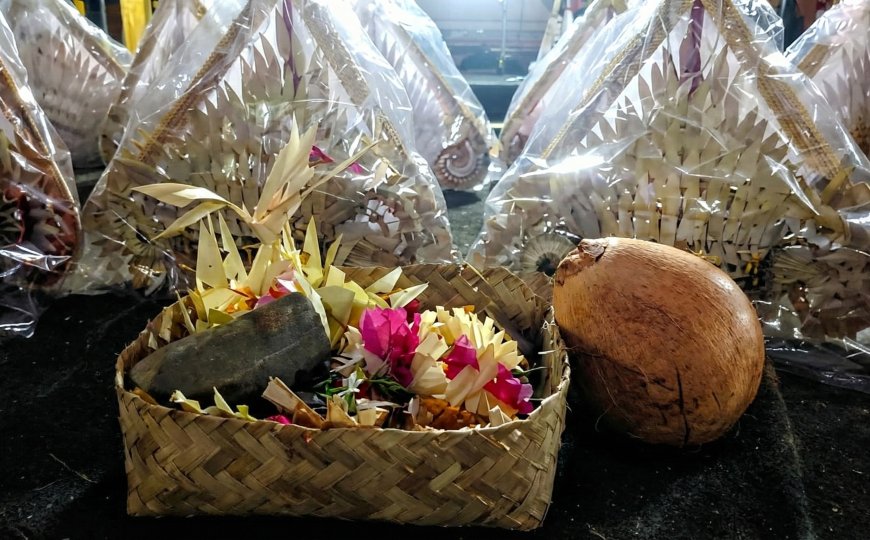
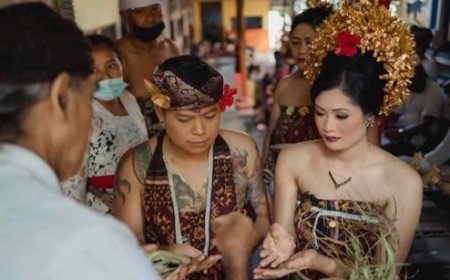
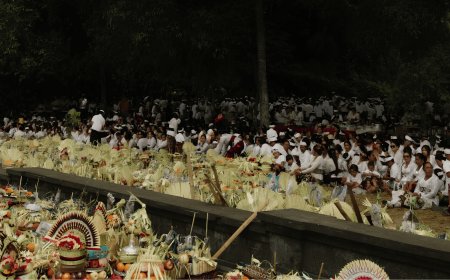
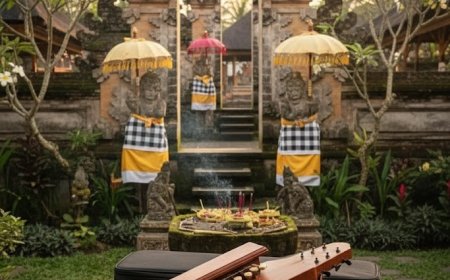
Daksina Prepared for the Dance Costume Purification Procession (Photo Source: Personal Collection)
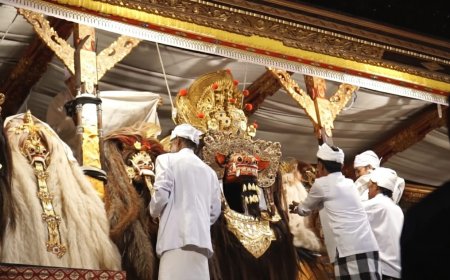
One thing rarely known to the layperson is that the majesty of the Baris Gede Dance is inseparable from the processions behind the scenes. Before the magnificent attire adorns the dancer's body, the set of clothing must undergo a Pasupati or purification procession first.
For the Balinese people, the gelungan (white triangular crown) and awir (back drape) are not mere costumes. After the ritual, these objects are considered 'alive'.
This ritual aims to unite the dancer's soul with his attire. When the costume is worn, the dancer is no longer the 'Wayan' or 'Made' we know in daily life, instead, his body has been borrowed to serve as a vessel for the Widyadara energy. This is what often gives the audience goosebumps when witnessing Baris Gede, due to the presence of strong taksu energy.
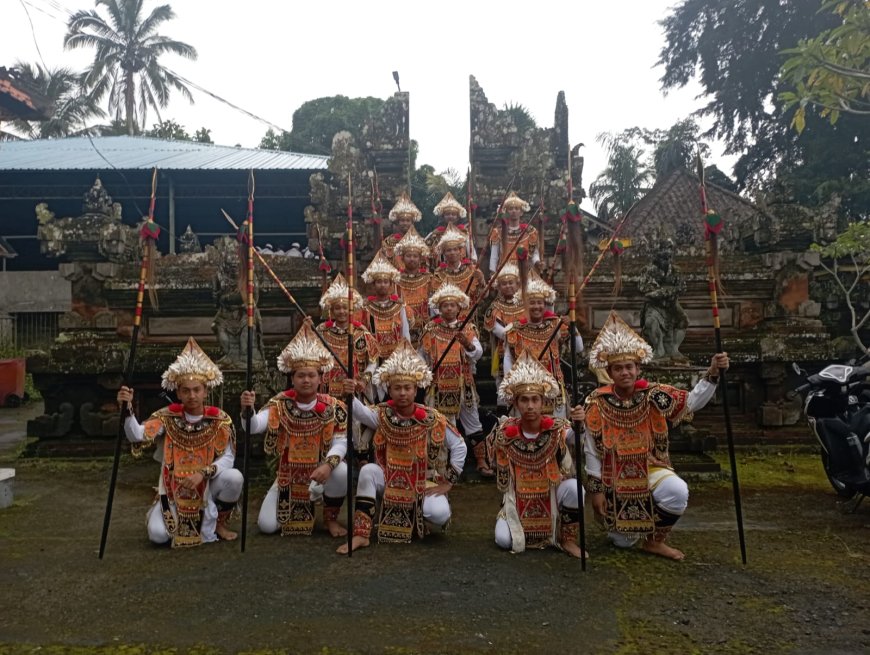
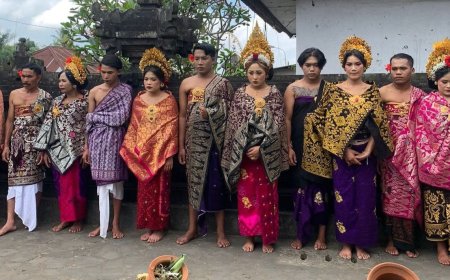
The Cohesion of Baris Gede Dancers, a Symbol of Unity and Regeneration (Photo Source: Personal Collection)
The Baris Gede Dance is usually performed en masse in even numbers (8, 10, 20, or even 40 people). Unlike solo dances that highlight individual skills, Baris Gede prioritizes the cohesion of the formation.
The dancers are men of various ages, especially the youth, who present this dance as a form of ngayah, which is sincere and selfless service to God. In these ranks, individual ego is dissolved into a single harmonious movement, symbolizing the spirit of menyama braya (brotherhood) of the Balinese community in ensuring the ceremony's success.
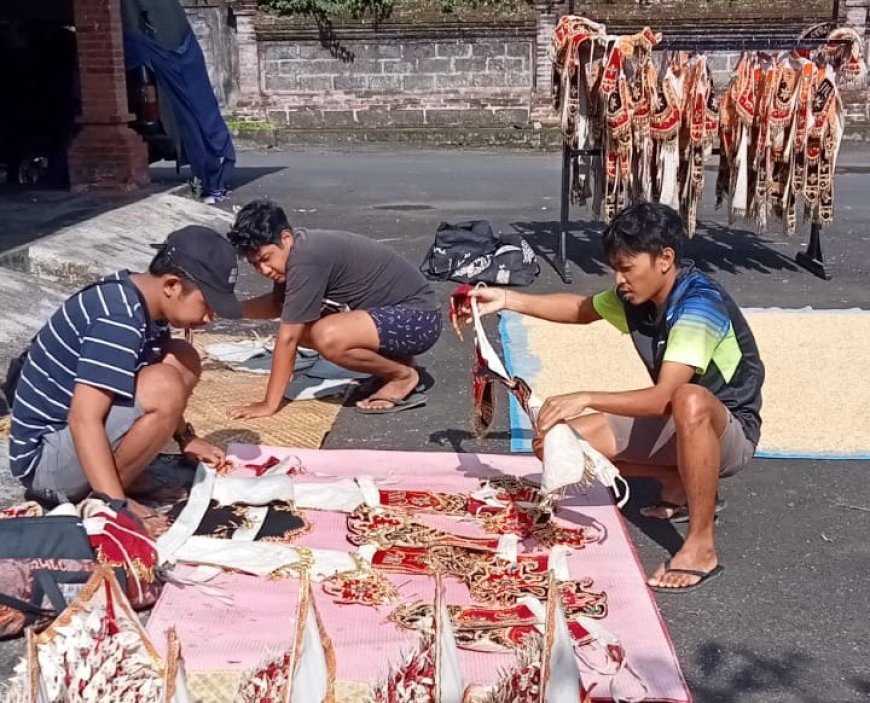
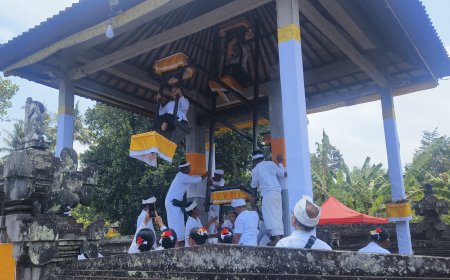
Dancers Drying and Maintaining the Dance Attire (Photo Source: Personal Collection)
The involvement of the younger generation extends beyond dancing within the temple grounds. Behind the splendor of the performance lies hard work and great responsibility in maintaining these 'skins' of the Gods.
The youths work hand in hand to sun-dry and reorganize the attire, including the hair-adorned gelungan, under the sunlight. This physical maintenance is performed to ensure the costumes remain durable and ready for the next ceremony. This process is just as important as the purification ritual, serving as a form of total respect for the ancestral heritage entrusted to them.
With all its philosophical majesty, movements, rituals, and the dedication of its dancers, the Baris Gede Dance stands tall as a cultural fortress. It is tangible proof that art in Bali is not merely a spectacle, but a guidance and a sacred offering for the upholding of Dharma.