








































I Wayan Gobiah Author of Nemoe Karma 1931 Balinese Novel
The novel Nemoe Karma (1931) by I Wayan Gobiah is the first novel written in Balinese. It tells the story of Soedana, who becomes entangled in an arranged marriage, family conflicts, and eventually finds true love. More than 90 years later, this story remains relevant as a portrait of Balinese society and as a reminder of the importance of harmony in life.


Imagine Bali in the early 1930s. Literature there was still centered on oral traditions: geguritan, kidung, and tembang passed down from generation to generation. There had not yet been any long-form prose written in the mother tongue. It was at this moment that a groundbreaking work emerged, Nemoe Karma, the first Balinese novel, published in 1931.

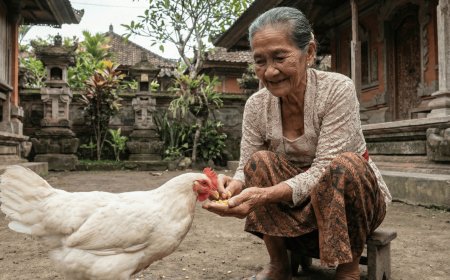
Gobiah, the teacher who gave birth to modern Balinese literature, AI Illustration (Source: Personal Collection)
Its arrival marked a surprise in the history of Balinese literature. For the first time, the Balinese language was used to tell a story in modern form, complete with plot, characters, and social conflict. The figure behind this work was not a famous literary giant, but a humble schoolteacher: I Wayan Gobiah.
Gobiah’s Life Journey
Gobiah was born around 1898 in Panjer, Badung. His childhood coincided with a turbulent era. When the Dutch attacked Denpasar in 1906, Gobiah was assigned to escort Prince Ida Tjokardo Alit Ngurah to Lombok. From this event, Gobiah gained the opportunity to attend school, eventually continuing his education in Singaraja.
In this city, Gobiah met Mas Nitisastro, a teacher and writer who introduced him to the world of literature. His own life was not free from sorrow: he lost his wife and child at a young age. Yet in his grief, Gobiah found solace in Balai Pustaka publications, including popular novels such as Sitti Nurbaya. From these readings, his literary style began to take shape.
His writing career started with the illustrated fable Satua Lutung Mungil (1923), followed by the geguritan Rare Angon (1926). Both works reflected Gobiah’s enthusiasm for renewing storytelling methods. However, the pinnacle of his career came when Balai Pustaka published Nemoe Karma in 1931, marking the birth of modern prose in the Balinese language.
Story and Themes in Nemoe Karma
Nemoe Karma centers on the story of Soedana, the son of a widower named Pan Soedana who became trapped in gambling debts. In his desperation, the father sold his child to repay what he owed. Soedana was then taken in by the family of Men Soekarsi. The daughter of the household fell in love with him, but their relationship was bound by a sense of obligation, rather than pure love.
The storyline then expands, portraying other characters with winding fates: forced marriages, unions filled with conflict, and even divorce. On the other hand, the novel also presents tales of sincere love that end happily. In this way, the work embodies two central themes: the bitterness of arranged marriages and the joy of unions born of genuine love.

Soedana’s love story, AI Illustration (Source: Personal Collection)
This depiction parallels early 20th-century Malay novels such as Sitti Nurbaya (1922) by Marah Rusli and Salah Asuhan (1927) by Abdul Muis. The difference, however, is that Nemoe Karma is not heavy with political messages, but instead focuses more on portraying Balinese society.
According to I Nyoman Darma Putra, a Balinese literature scholar and professor at the Faculty of Cultural Sciences, Udayana University (2010), the novel reflects the lives of Bali’s lower-class communities in the 1920s, many of whom were ensnared by gambling habits. Furthermore, the story implies the importance of faith in Ida Sang Hyang Widhi Wasa, the role of education, and a critical stance toward extravagant traditional ceremonies.
Philosophy and Relevance Today
Although written more than 90 years ago, the values contained in Nemoe Karma still feel fresh. The relationships between the characters can only endure if they are built on respect, responsibility, and sincere love. This message aligns with the teaching of Tri Kaya Parisudha: to think well, speak well, and act well.
In modern society, similar issues continue to arise: marriages formed under social pressure, relationships that falter due to ego, and traditions that demand great sacrifices. The novel reminds us that true happiness comes from harmony, not from coercion or mere obligation.
A Living Legacy
Now, nearly a century after its publication, Nemoe Karma remains worthy of being read, not only as a work of literature, but also as a social and moral mirror. Gobiah demonstrated how literature can document the face of society while also offering guidance in values. Even today, people are still searching for their own “nemu karma”, whether that be a soulmate, peace within the family, or harmony with the environment, so Gobiah’s work continues to live on as a timeless reflection of life.