








































Lontar Geguritan Jayaprana: Social Criticism of Power and Injustice
Behind the beauty of the rhythmic Balinese language and literature lies a story born out of the people's unrest towards their rulers, namely Lontar Geguritan Jayaprana. This classic work not only tells a tragic love story, but also presents a sharp social critique of the arbitrariness of power. Like a sesonggan that holds the wisdom of ancestors, this geguritan teaches that love and loyalty are often powerless in the face of the lust and ambition of those in power.

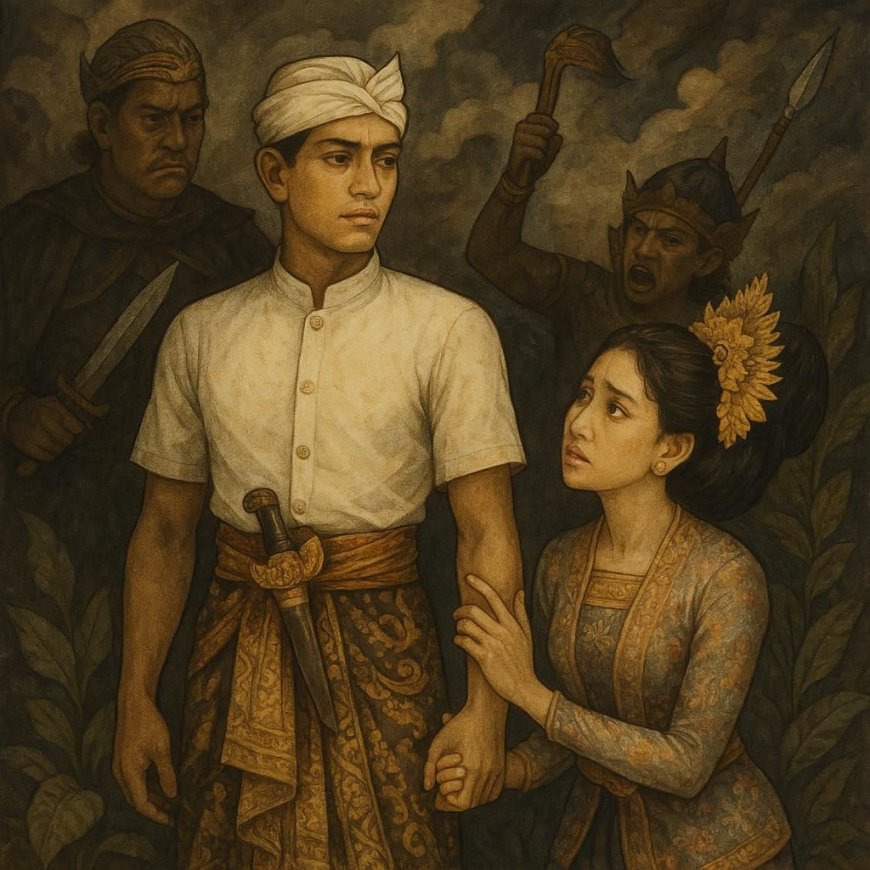
The main character in this story is Jayaprana, a young man who lives a simple life and has a noble heart. Jayaprana is later appointed as a royal servant and married to the girl he adores, Layonsari. However, this happiness turns to sorrow when the king himself becomes infatuated with Layonsari. Unable to control his lust, the ruler uses his position to get rid of Jayaprana. With a letter of command, the king concealed his evil intentions. This is illustrated in stanza 109 of the lontar, which reads:
“Temuli raris kapaca, Salinging surate mangkin, Ya te nani Jayaprana, tuara sedeng bakal pupu, majalan nani pang melah, ne ne jani, Konkon kola ngamatiang.”
The translation into English is:
“Then he quickly read it. The contents of the letter were: ‘Hey, Jayaprana, you are not worthy of being kept alive. Walk away quietly, right now. I command that you be killed.’”

Excerpt from the Lontar Geguritan Jayaprana (Source: Personal Collection)
This verse clearly reveals the injustice of a loyal servant who was sacrificed for the king's personal interests. The criticism is subtle but painful, because the power that should protect the people has instead become a tool of oppression.
The Lontar Geguritan Jayaprana is estimated to have been written during the Balinese kingdom era between the 17th and 19th centuries, when literature served as a means of conveying moral messages and social unrest. Set in a magnificent palace, this geguritan actually reveals the fragility of justice within the power structure. It is not surprising that this story lives on, as its message transcends time: power without morality is a source of suffering.

Lontar Jayaprana manuscript at the Gedong Kirtya Museum (Source: Private Collection)
To this day, the story of Jayaprana and Layonsari has been passed down through Balinese lontar manuscripts and oral traditions that are recited at various traditional events. The preservation of this geguritan proves that its value has never faded with time. Most of the Jayaprana Geguritan palm leaf manuscripts are now stored in palm leaf preservation centers, one of which is the Gedong Kirtya Museum in Singaraja.