








The Kala Tattwa Lontar: The Philosophy of Sang Kala in Cosmic Harmony
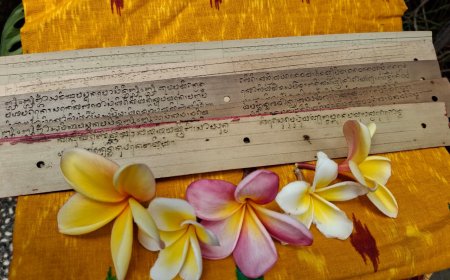
The Kala Tattwa Lontar is a sacred manuscript in the Balinese Hindu tradition that embodies profound Shaivite teachings. This text recounts the birth of Sang Hyang Kala while also elaborating on his essential role in maintaining cosmic order. Within its passages, one finds not only mythological narratives about his origins and journey but also deep philosophical reflections on his significance as a symbol of time, the law of karma, and the guardian of universal balance. By combining narrative elements with moral instruction, Kala Tattwa emphasizes that Sang Hyang Kala is not merely a fearsome figure, but rather a manifestation of cosmic law that reminds humanity to live in accordance with dharma, preserve harmony with nature, and remain aware of the eternal cycles of life.

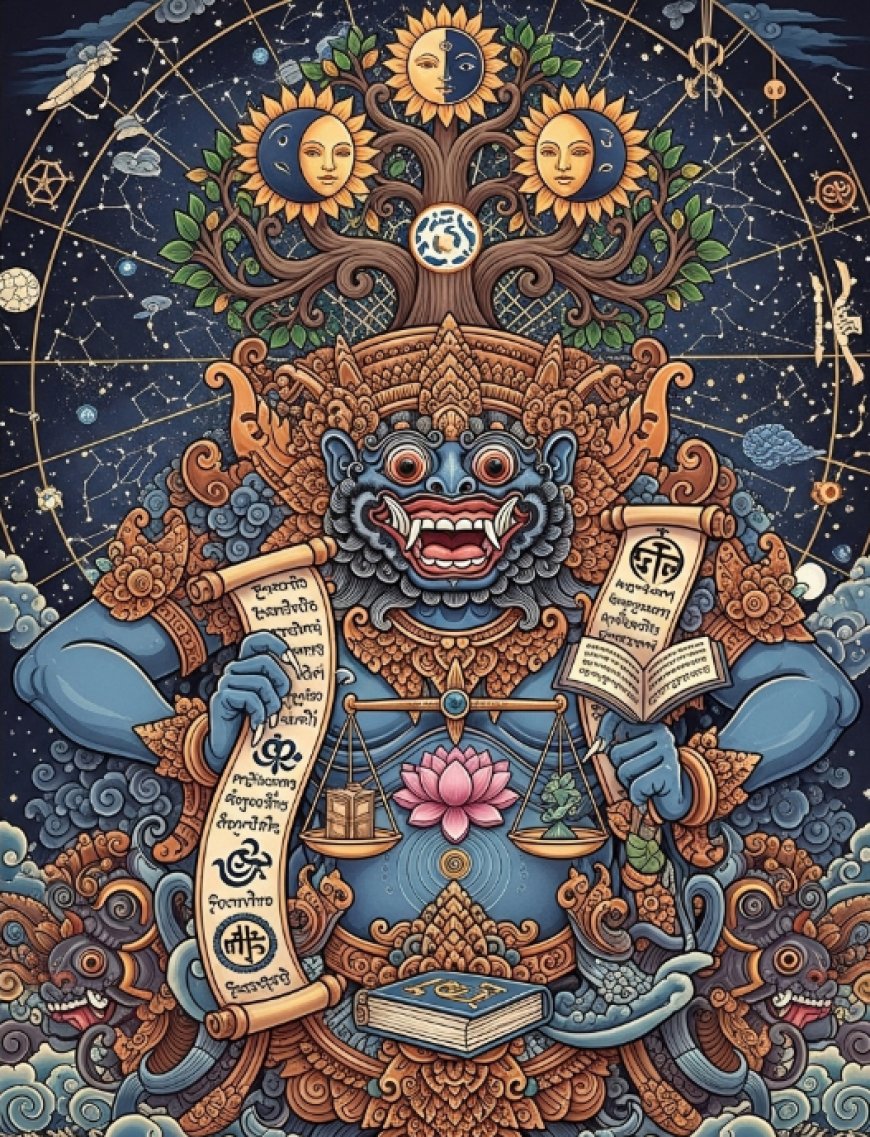
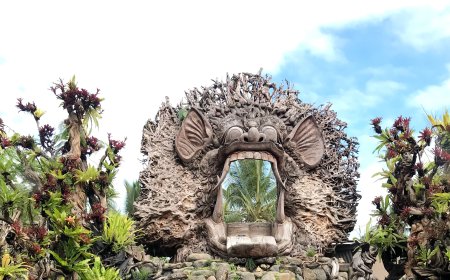
The Kala Tattwa Lontar is not merely a mythological tale, but a Shaivite manuscript rich in philosophical teachings. At its core, this text narrates the origin of Sang Hyang Kala, a fearsome figure who, paradoxically, plays a vital role in maintaining cosmic balance. Rather than being understood solely as a terrifying entity, Sang Hyang Kala symbolizes time, karma, and the inevitability of dharma in human life.
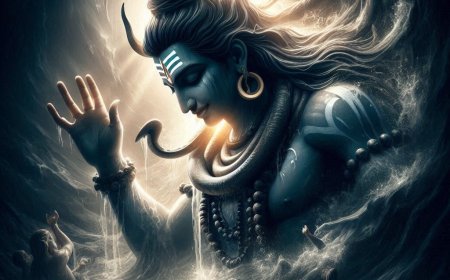
According to the lontar, the emergence of Sang Hyang Kala is closely tied to the divine union of Bhatara Siwa and Dewi Uma. It is described that during a moment by the seashore, the wind uncovered Dewi Uma’s garment, arousing Bhatara Siwa. His semen fell into the ocean and radiated a dazzling light. This energy was witnessed by Bhatara Brahma and Bhatara Wisnu, who, through their yogic power, gathered it and manifested it into a colossal, terrifying giant. This origin highlights the philosophical view that even unexpected events contain divine purpose and energy.
After his birth, Sang Hyang Kala was overwhelmed with confusion about his identity, crying out with a thunderous roar that shook the heavens. The Nawa Sanga deities attempted to confront him but were unable to wound or defeat him. The event reached Bhatara Siwa, who descended and engaged him in battle. Yet even Siwa could not overcome Sang Hyang Kala. When questioned, the giant innocently expressed only a desire to know his parents. This revelation moved Bhatara Siwa, who then acknowledged Sang Hyang Kala as his son, with Dewi Uma as his mother. From that moment, he was named Sang Hyang Kala, representing both time and destiny.
The lontar further records the divine authority granted to Sang Hyang Kala. Bhatara Siwa bestowed upon him the power to uphold karmic law, namely punishing the guilty and protecting the innocent. He was also granted the capacity to sustain all living beings, signifying his role in the cycle of life. Dewi Uma, in her manifestation as Bhatari Durga, instructed him to dwell at Pura Dalem, where he serves as protector of Kala, Durga, Pisaca, Wil, Rakshasa, Kingkara, and other unseen forces. His position is essential in the ritual of Bhuta Yajna, where his presence ensures harmony between the human and spiritual realms.
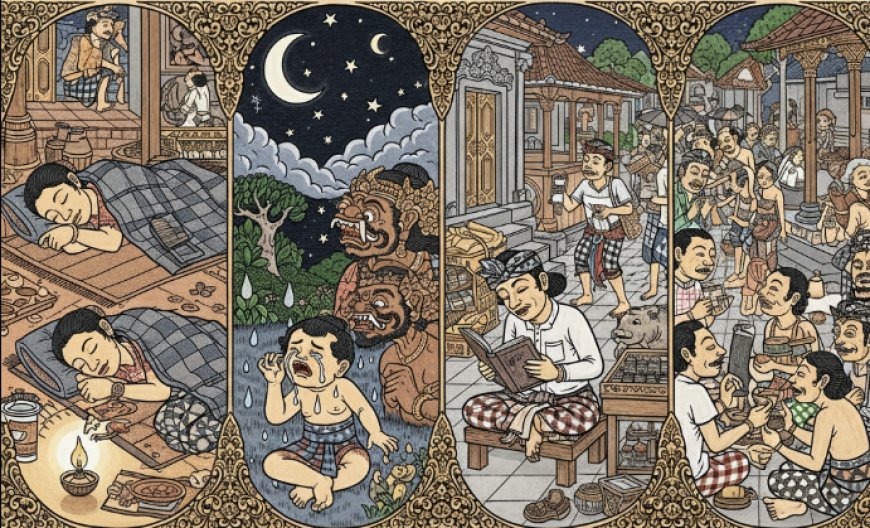
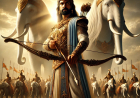
Groups of People Believed to be ‘Food’ for Kala, AI Illustration (Source: Private Collection)
The Kala Tattwa Lontar also contains a symbolic list of humans said to become the "food" of Sang Hyang Kala: those who sleep until late afternoon, children who cry at night, individuals who recite sacred texts in the middle of the road, and groups who gather idly in public spaces. This list is not to be taken literally, but rather as a moral code reminding people that deviant behaviors have consequences. Thus, Sang Hyang Kala functions as a guardian of ethics and morality, guiding human conduct in accordance with dharma.
Another significant teaching states that Sang Hyang Kala is granted the right to seize souls during Sasih Kasanga, particularly those who transgress dharma. Should a village experience impurity or inauspicious signs, he may inflict disease or misfortune as a form of cosmic purification. To restore balance, leaders are obliged to perform various yajna rituals, such as Manusa Yajna, Bhuta Yajna, Rsi Yajna, Pitra Yajna, and Dewa Yajna, conducted under the witness of the Catur Weda. These rituals serve as acts of atonement, ensuring the preservation of harmony between humans, nature, and the divine.
Beyond its cosmogonic narrative, the Kala Tattwa Lontar also conveys practical wisdom. It describes signs of illness, medicinal remedies, and even omens preceding death. The text emphasizes two central teachings: Canting Mas and Siwer Mas. Furthermore, the role of tirta (holy water) is highlighted, where the tirta prepared by Shaiva-Buddhist priests is considered a decisive element in the success of rituals. This illustrates the interconnection between spirituality, health, and social order in Balinese life.
In essence, the Kala Tattwa Lontar is not confined to myth but serves as a comprehensive philosophical manuscript. Sang Hyang Kala emerges as more than a symbol of fear; he represents the cosmic law governing balance, morality, and the cycles of existence. His presence reminds humanity to live in harmony with dharma, to preserve the unity of nature and society, and to cultivate equilibrium within oneself and the universe.