








Belimbing Village: Getting to Know the History of the Formation of Belimbing Village
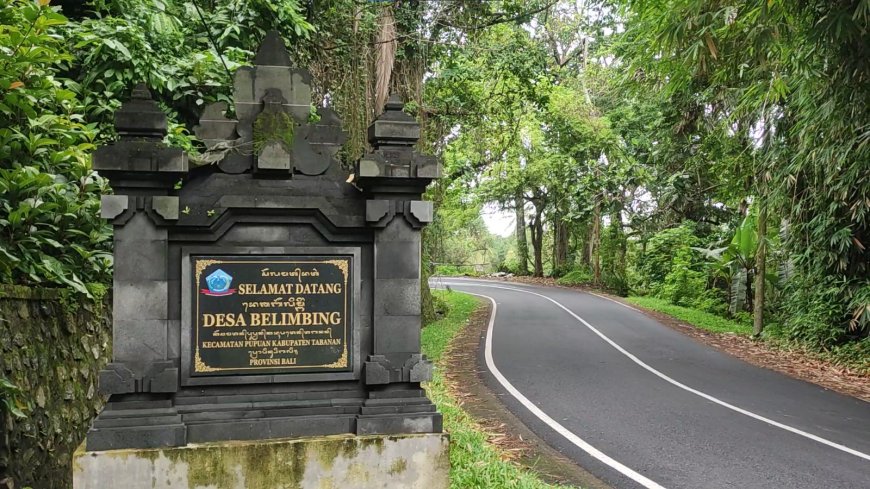
Belimbing Village, drawn by its enchanting natural beauty, is situated in the Pupuan District, Tabanan Regency, Bali. However, its natural charm turns out to be merely surface-level, as behind this beauty lies a fascinating and mysterious origin story.
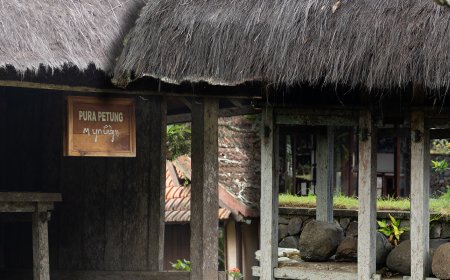
In ancient times, the custodians of Mekori Temple were the residents of Mekori Village, consisting of two groups. The first group comprised ordinary human residents known as Mekori Village residents, who occupied the area around Mekori Temple as their settlement. The second group was the Giant or Cannibalism residents who lived in an area called Sungga, approximately two kilometers to the Northeast of Mekori Village. Both groups collectively maintained Luhur Mekori Temple as their place of worship.
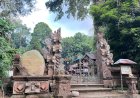
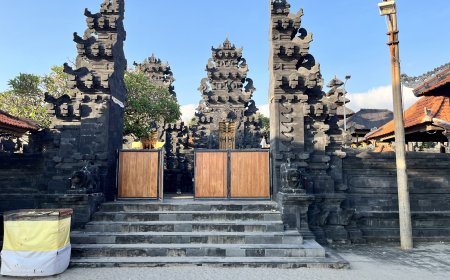
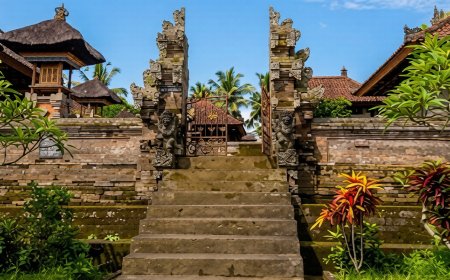
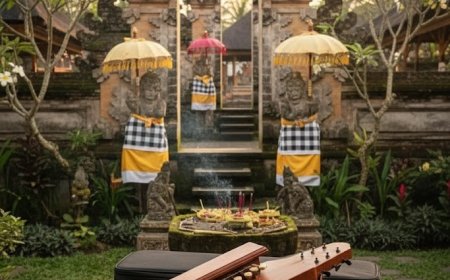
Known since ancient times as Pura Luhur Mekori, it earned its name because from the outside of its entrance, it resembles a temple gate flanked by two large Bunut trees. The term "Mekori," derived from the Balinese language where "Kori" means "Gate" or "Enclosed Temple," later prefixed with "Me" to become "Mekori," signifying "Temple Gate or Enclosed Temple." There is also an opinion suggesting that "Mekori" originates from "Mas Kori," purportedly meaning Pura Luhur Mekori adorned with a golden enclosure, as believed by supernatural entities. Over time, it became well-known as Pura Luhur Mekori.
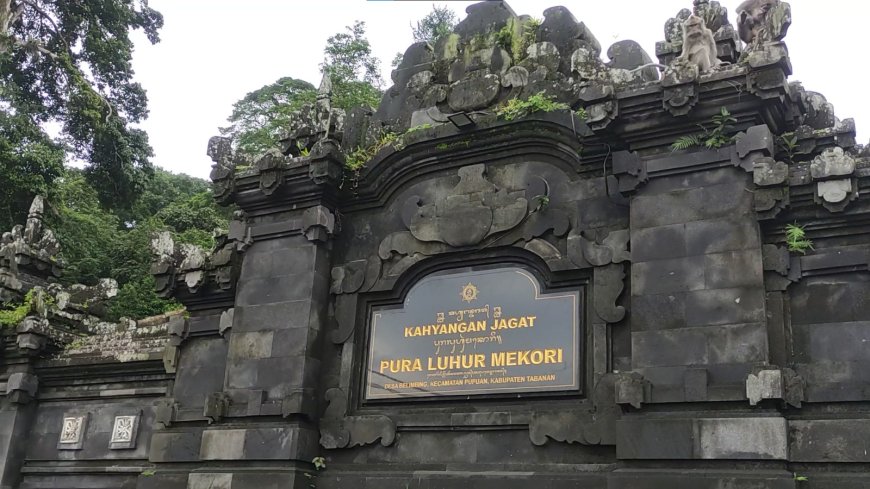
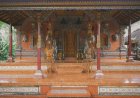
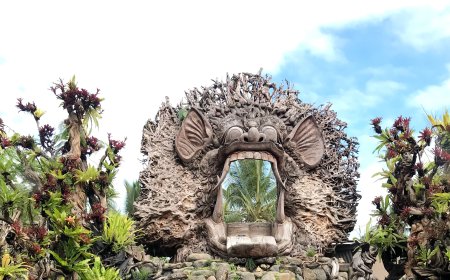
Mekori Temple (Source: Author's Collection)
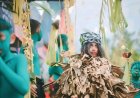
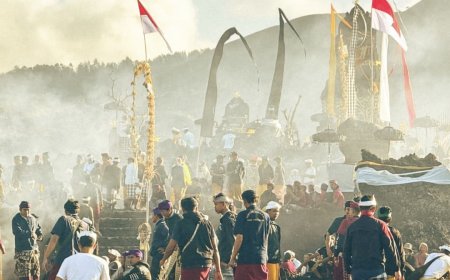
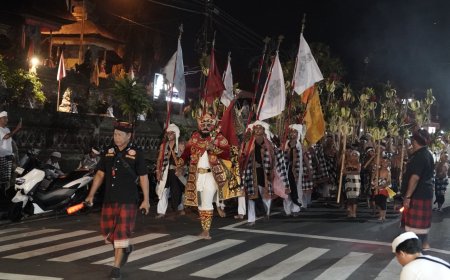
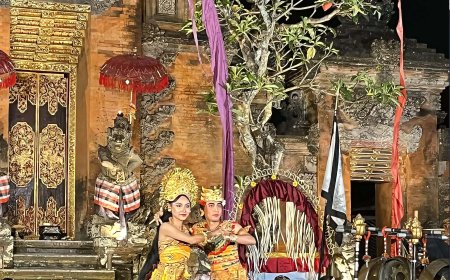
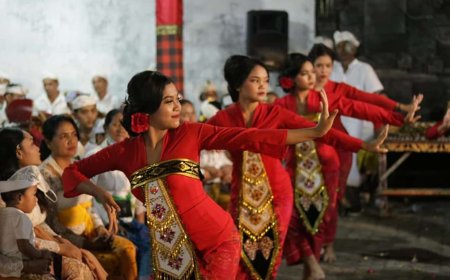
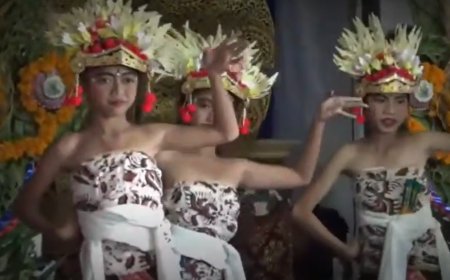
Since ancient times, there has been a noble tradition inherited through generations, namely the staging of the "Tari Rejang Renteng" dance during the celebration of the guardian deity or temple festival at Pura Luhur Mekori. The Rejang dance is performed, encircling the main mandala area of the temple, with male and female dancers, including children and adults, carrying Lelontek, Tombak or Pengawin, and Tedung, accompanied by the Kidung Warga Sari.
It is told that after a performance of the Tari Rejang Renteng, there was a kidnapping of the last dancer in the line. This incident greatly disrupted the celebration of the guardian deity or temple festival and disturbed the peace of the village of Mekori. Due to repeated incidents of the kidnapping of the last dancer, no one wanted to participate in the dance, especially in the position at the back. However, the people of Mekori were concerned about the consequences of not preserving and continuing the tradition of Tari Rejang Renteng during the celebration of the guardian deity or temple festival.
Therefore, a trap was devised to catch the kidnapper. Eventually, it was agreed to tie the hands of the last dancer with a thread, which was marked and prepared with a sufficiently long thread roll. After agreeing on this technique, during the celebration of the guardian deity or temple festival at Pura Luhur Mekori, when the offering or performance of Tari Rejang was about to begin, the village leader tied the thread to the hand of the last dancer. Hoping that this effort would succeed, they did not forget to seek guidance and blessings from Ida Sanghyang Widhi, who resides in Pura Luhur Mekori.
After the performance of the Tari Rejang, which circled the main mandala area of the temple three times, it turned out that the marked thread or roll of thread spun rapidly, and the last dancer had disappeared, kidnapped. The situation stirred up commotion in the festival atmosphere. Subsequently, armed with various weapons, all adult villagers embarked on a pursuit, tracing the end of the thread.
It is told that after carefully tracing the thread, its end led to a cave in the Sungga region inhabited by a married couple who were residents of the Giant or Cannibalism community. This angered the villagers of Mekori, who immediately attacked the Giant residents. Fiercely, the people of Mekori stormed into Sungga, the location of the cave. It is narrated that at that time, a lone male Giant was found, and he refused to be accused of wrongdoing, claiming that it was his wife who had kidnapped the dancer.
The female Giant, supposedly, had escaped but was later captured in the Southern region. The villagers who captured her then beat her collectively until her bones scattered or "Mejerang kahan," hence the area where the female Giant was killed became known as the village of Angkah.
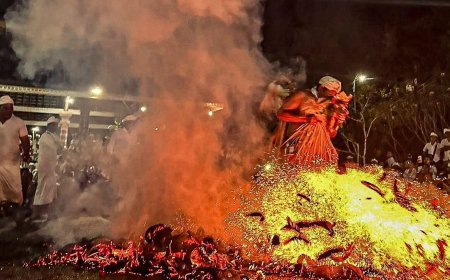
Because the villagers of Mekori were already emotionally charged, they did not accept the explanation from the male Giant. The male Giant was brutally tortured with various sharp weapons until, nearing death, he cursed the villagers of Mekori. He claimed that the villagers had made a mistake by hurting innocent residents. The Giant then cursed Mekori, predicting that the village would suffer from a disaster of rain and fire. Consequently, Mekori was immediately engulfed in a severe fire disaster. This event led to the destruction of Mekori as its inhabitants could not escape the fire.
Allegedly, the only structure that survived the disaster was Mekori Temple. During the fire disaster that struck Mekori, some villagers who were away from the village at the time survived the catastrophe. However, upon learning of the events that had befallen Mekori, they dared not return to their village. From that moment on, they sought refuge in a distant area now known as Banjar Alas.
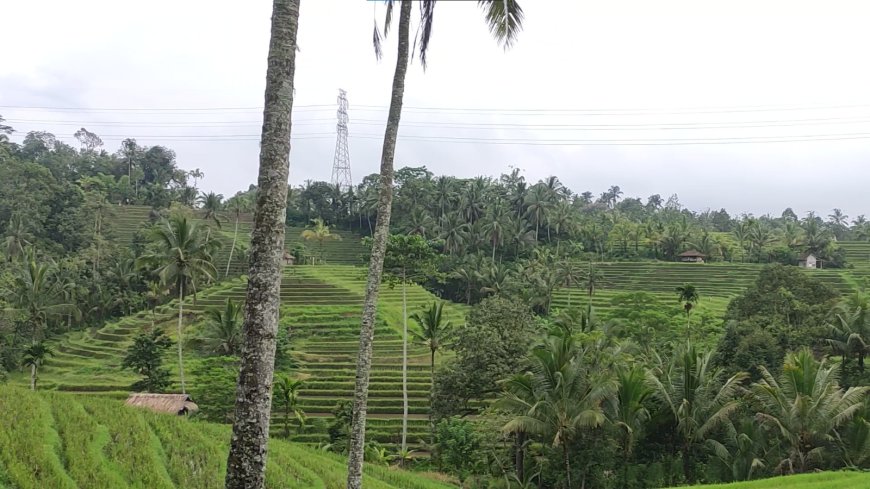
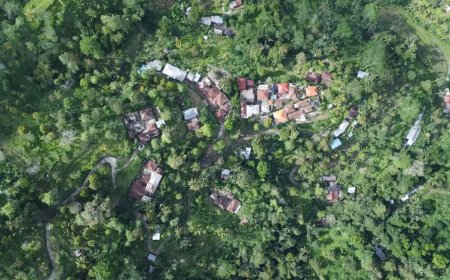
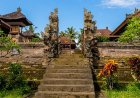
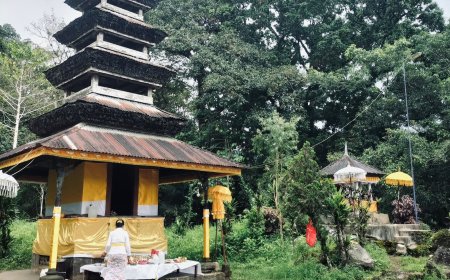
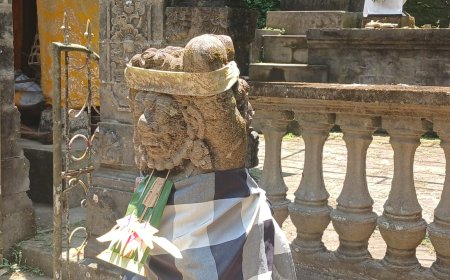
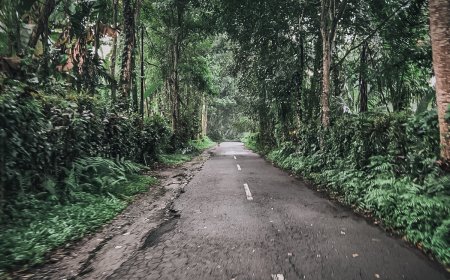
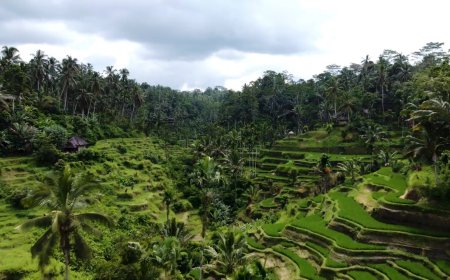
Belimbing Rice Terrace (Source: Author's Collection)
Over a considerable period, the situation and condition of this region became known to one of the residents descended from Pasek Tohjiwa, living in the village of Wanagiri. This individual developed an interest in occupying the former territory of Mekori because the area had fertile land suitable for agriculture and plantations. It is narrated that, with the approval of his older brother, the residents of Pasek Tohjiwa set out for the former territory of Mekori, accompanied by many followers. Among these followers, numbering dozens of households, half were ordinary human residents, and the other half were inhabitants of the virtual world or "Wong Samar".
Upon reaching their destination, they were amazed and awestruck by the existence of the territory. It consisted of high plateaus resembling ocean waves and bordered valleys cut by several rivers, giving the appearance of a starfruit. From that moment on, the newly occupied territory was named Belimbing Village. It is surrounded by two major rivers, namely Yeh Otan and Yeh Balian, and is intersected by several rivers: Yeh Mada, Yeh Nyem, Yeh Sapuan, and Yeh Mejis. It is told that the inhabitants of the virtual world or Wong Samar were initially permitted to settle in the area around Kebeng Desa and Kebeng Luput, west of the settlement of the residents of Pasek Tohjiwa.
Almost simultaneously with the arrival of the residents of Pasek Tohjiwa from the village of Wanagiri in the Selemadeg District, it turned out that several residents of Pasek Marga Telu also arrived, originally residing downstream along the Yeh Sapuan river. Consequently, they jointly occupied the territory of Belimbing Village, cultivating the land for agriculture and plantations in a simple and cooperative manner. As the residents of Pasek Tohjiwa had followers from the virtual world or Wong Samar, it often sparked curiosity among the residents of Pasek Marga Telu. Especially in terms of cultivating their agricultural land, the residents of Pasek Tohjiwa were unexpectedly quick and efficient, causing surprise among the residents of Pasek Marga Telu.
It is narrated that, at one point, when the residents of Pasek Tohjiwa were transporting rice given by the residents of Pasek Marga Telu, only a procession of floating rice was visible heading towards the rice barn of Pasek Tohjiwa, without anyone being seen carrying it. Over time, this peculiarity made the residents of Pasek Marga Telu feel that coexisting with the residents of Pasek Tohjiwa was no longer harmonious.
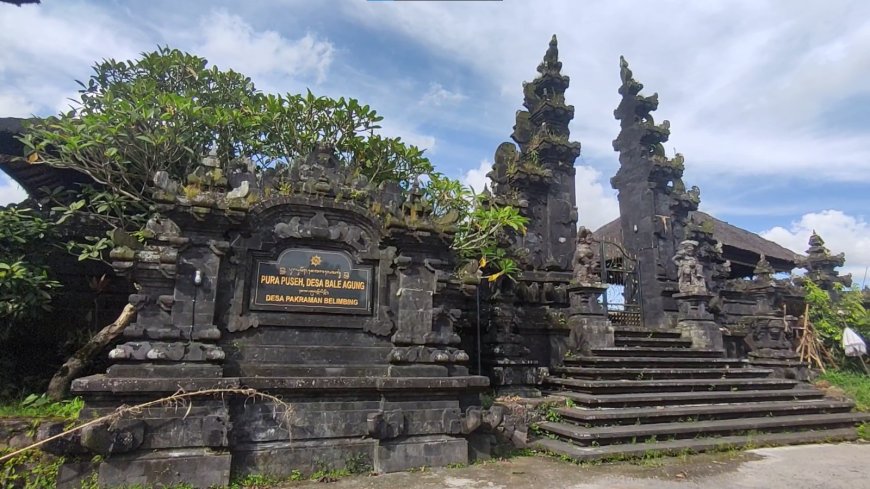
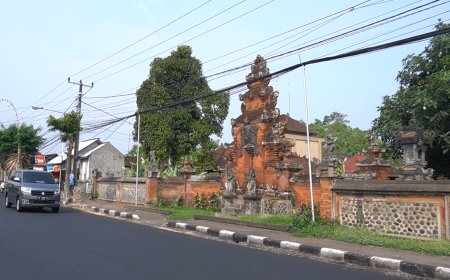
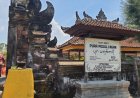
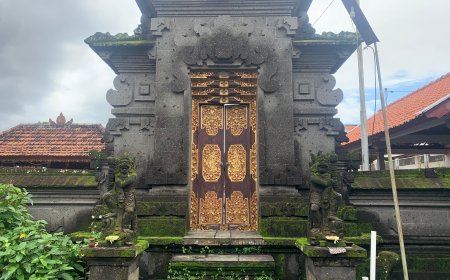
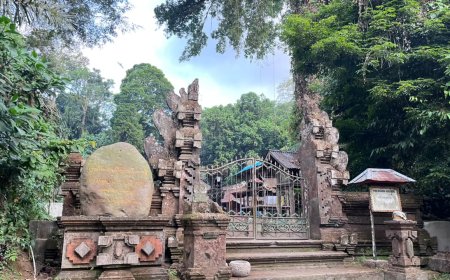
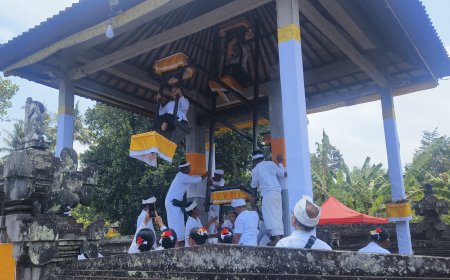
Puseh Temple Bale Agung Village (Source: Editor's Collection)
After some time, several newcomers from various regions arrived in Belimbing Village, joining the community in occupying the territory. Among these newcomers, it is narrated that individuals from the Kebayan community arrived, whose ancestors hailed from Wongaya Gede Village in the Penebel District. When they first arrived in Belimbing Village, the members of the Kebayan community were still bachelors. Later on, one of them married the daughter of a resident of Pasek Tohjiwa. As the population of Belimbing Village was still relatively small, and there was plenty of untouched land suitable for agriculture and plantations, the members of the Kebayan community, now the in-laws, were invited to settle in Belimbing Village.
The settlement area was then organized, with the Puseh Temple and Bale Agung as the main religious centers or "Ulu Desa" in the village's mandala. The residents of Pasek Tohjiwa and their relatives occupied the western and southwest sides of Ulu Desa. Meanwhile, the members of the Kebayan community were allowed to settle on the southern to southeastern sides of Ulu Desa, both as residential and agricultural areas. Similarly, other residents were given places around Ulu Desa. The location of the cemetery, initially around Tibu Kreteg on the banks of the Yeh Otan river, and the Pura Dalem, was relocated to an area called Munjar Munduk to the east of Ulu Desa.
As the leaders of Belimbing Village, the residents of Pasek Tohjiwa permitted the presence of other community members to live together, with the obligation to bear responsibilities as "Kanca" or Coordinators of the Village Community in organizing the guardian deity celebrations or temple festivals at Pura Luhur Mekori and other temples in the Belimbing Village area. The meeting place or gathering area at the residence of Pasek Tohjiwa is now known as Keluhuran, which originally took the form of the Pelinggih Bebaturan.
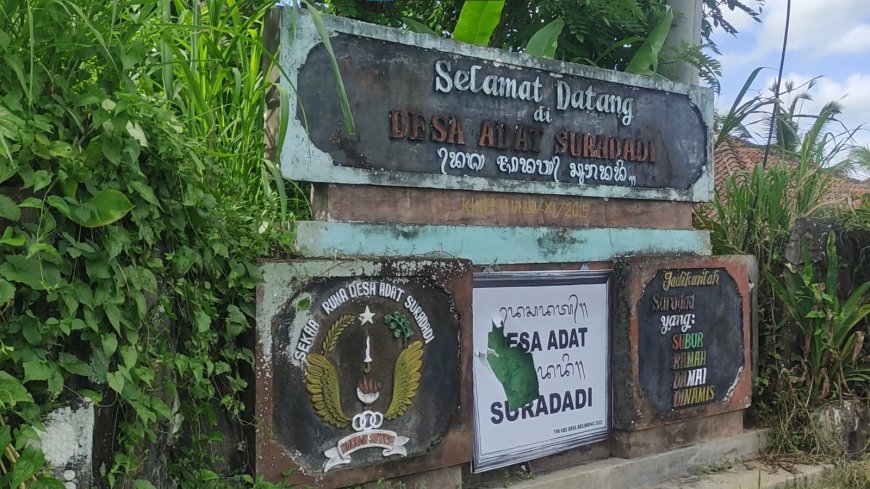
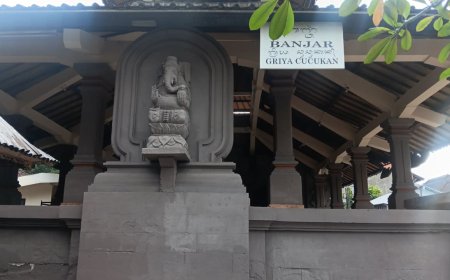
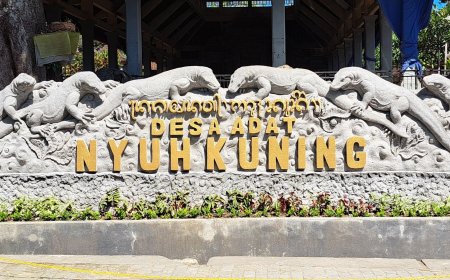
Suradadi Village (Source: Editor's Collection)
It is narrated that because the residents of Pasek Marga Telu felt cheated and dissatisfied with the perceived dishonesty in the previous agreement, from that moment onwards, the residents of Pasek Marga Telu issued a "Bhisama" or statement. This declaration strictly forbade entering into marriage alliances and did not permit their community or descendants to form marital ties with the residents of Pasek Tohjiwa and their future descendants.
Anyone violating this prohibition would face "ruwatan" or atonement by fulfilling certain conditions, lest they incur curses or misfortunes from their ancestors. As a redemption ritual or "ruwatan," if any member of the Pasek Marga Telu community desired to form a marital bond with someone from Pasek Tohjiwa, they had to undergo a ritual. This involved laying out a white cotton cloth as a footpath from the residence of Pasek Marga Telu, which would be drenched with the oil from a hundred bottles of pork fat, leading to the dwelling of the residents of Pasek Tohjiwa, or vice versa.
Any party daring to violate this Bhisama would supposedly face curses from their ancestors. This event is believed to be the reason why, to this day, each lineage adheres to the prohibition on forming marital ties, as they wish to avoid the consequences of their ancestors' curses. From that moment on, the southern border of Belimbing Village, only a few dozen meters away from the northern boundary of Marga Telu Village, was established. This decision was made at the request of the residents of Pasek Marga Telu, who eventually relocated their meeting place a few meters further north, a location now known as "Batu Tangluk." This event marked a historical milestone, as the residents of Pasek Marga Telu no longer participated in occupying the territory of Belimbing Village, which encompassed four Traditional Villages: Belimbing, Karyasari, Durentaluh, and Suradadi.