





Exploring Pinge Traditional Village: A Traditional Village Preserving the Charm of Bali's Past
Traditional villages in Bali are community units that adhere to customary law, with territories, traditions, and positions passed down from generation to generation. Each traditional village in Bali has its own uniqueness, ranging from the environment, traditions, to distinctive sacred places. One example of a traditional village in Bali is Pinge Traditional Village.

Bali, often referred to as the Island of the Gods, can captivate the heart with its natural beauty, including mountains, lakes, waterfalls, and other soothing landscapes. On the other hand, Bali also boasts diverse cultural elements, encompassing various arts, customs, and religious ceremonies. Despite this, there's a cultural diversity aspect that is often overlooked, namely the traditional villages. The traditional villages in Bali are community units that uphold customary law, with inherited territories, traditions, and positions. Each traditional village in Bali has its uniqueness, ranging from the environment, traditions, to distinctive sacred places. One such example is the Pinge Traditional Village.
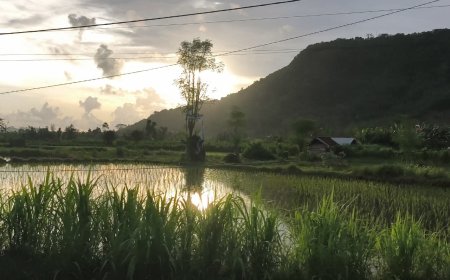
Pinge Traditional Village is located in the Marga District, Tabanan Regency. The village covers an area of approximately 140 hectares and is situated at an altitude of 500 meters above sea level. The population of Pinge Village is around 165 households or approximately 816 people. To reach this village, one needs to travel about 34 km from the center of Denpasar, and if using a motorcycle, the journey takes about 1 hour.
According to the head of the Pinge Traditional Village, I Made Jadrayasa, the history of the name Pinge Traditional Village dates back to the time of the kingdom when the King of Bali, Anak Agung Gede Agung from Puri Marga, daily smelled a very fragrant aroma. His uncle was then sent to find the source of this fragrant aroma. The source turned out to be a large white frangipani tree growing around the Natar Jemeng Temple. The word "pinge" itself, according to the locals, means "white." Since then, the place where the white frangipani tree grew large became known as Banjar Pinge or Pinge Traditional Village, and the name has been used ever since.
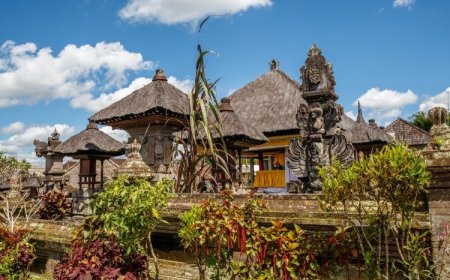
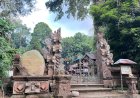
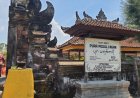
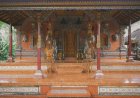
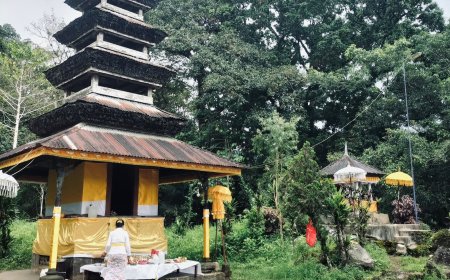
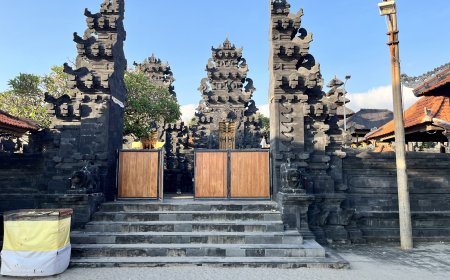
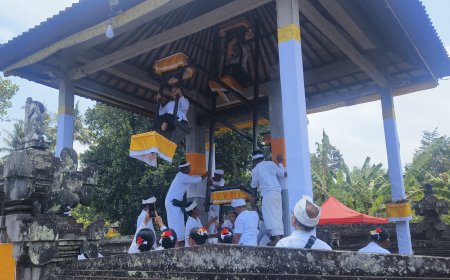
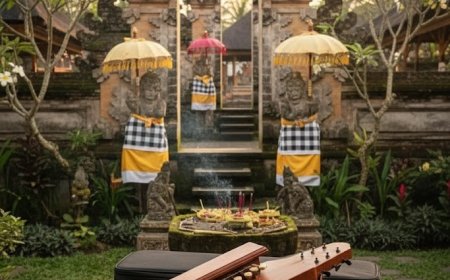
In this traditional village, there is only one community unit, namely Banjar Pinge. To qualify as a traditional village, Pinge Traditional Village has the Three Kahyangan Temples. These temples are the Village Temple, where God Brahma is worshiped and plays a role as the representation of the universe. Additionally, there is the Puseh Temple, where God Vishnu is revered as the preserver, and the Dalem Temple, used to worship Lord Shiva in the form of Goddess Durga and serves as the ruler of the universe. In addition to the Three Kahyangan Temples, there are various other temples in Pinge Traditional Village, such as the Dang Khayangan Temple that is Natar Jemeng Temple, and the Subak Temple.
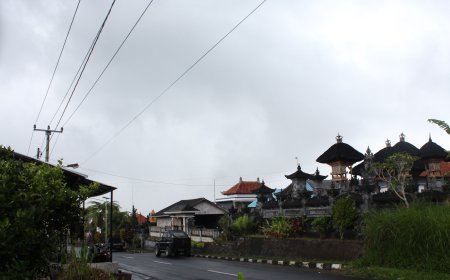
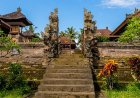
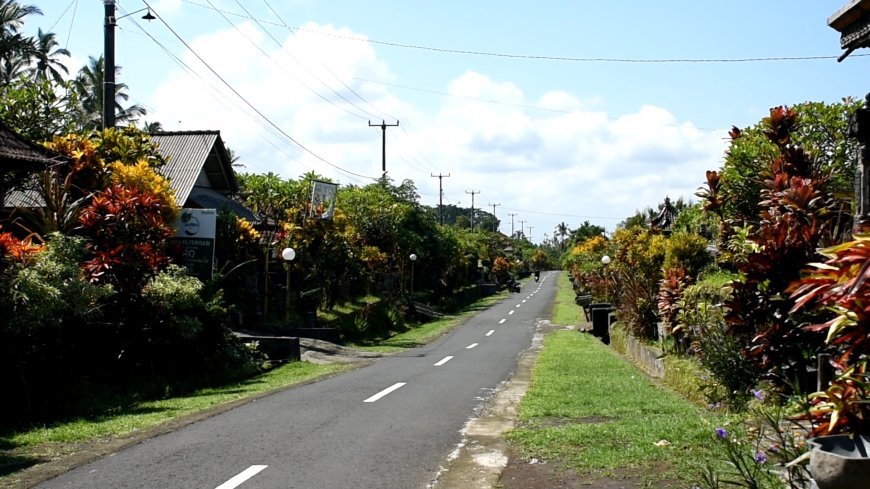
Despite rapid modernization, Pinge Traditional Village maintains the authenticity of its spatial planning by adhering to traditional settlement patterns. The Tri Hita Karana concept with asta kosala kosali is consistently applied, both at the village level and in the residents' homes. Pinge Traditional Village uses one main road as a guide for community settlement planning. This has been established based on existing Pinge Traditional Village regulations (awig-awig), where residents are prohibited from building houses, shops, workshops, and similar structures beyond the boundary walls (penyengker walls). The Tri Hita Karana concept, consisting of parahyangan, pawongan, and palemahan, is clearly reflected at the village level, especially through the presence of the three main temples: the village temple, puseh, and dalem. The structure of the Pinge Tourism Village remains united in one community unit, creating a close-knit unity.
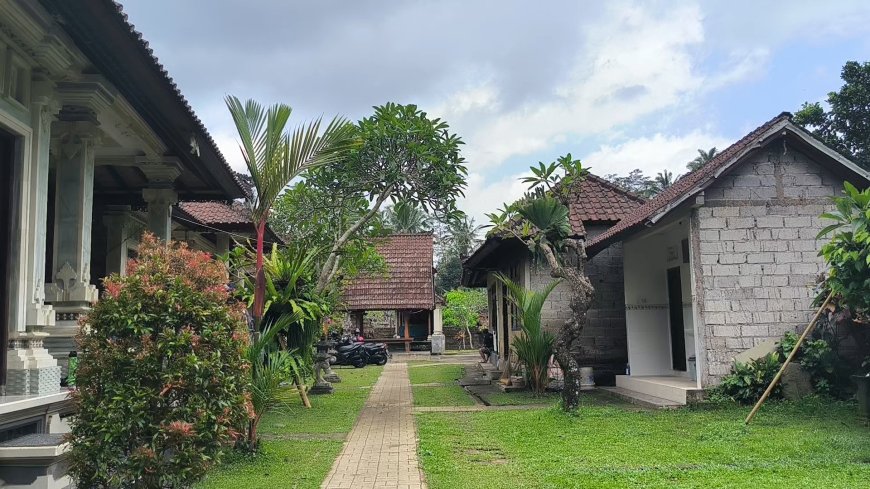
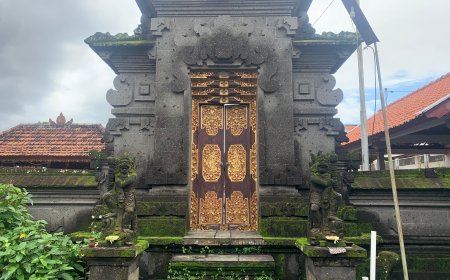
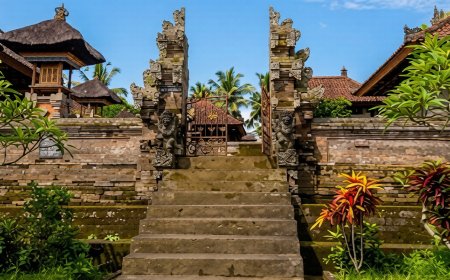
One of the Residents' Houses in the Pinge Traditional Village (Photo Source: Author's Collection)
At the community level, the spatial arrangement still maintains the structure of traditional buildings. For example, there is a sanggah or bale dangin as a living and sleeping place located to the north, a kitchen paon in the southwest for cooking, and a rice barn as a place for storing rice to the east or north of the kitchen, or to the right of the entrance gate of the house. Each house also has a teba, serving as a place for raising livestock or planting something.

Pis Bolong Symbol as Resident's House Number (Photo Source: Author's Collection)
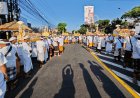
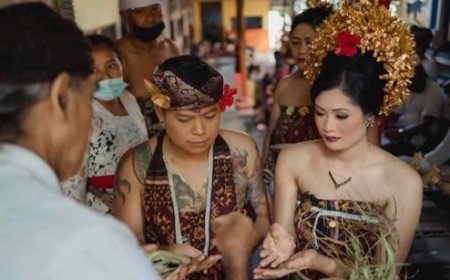
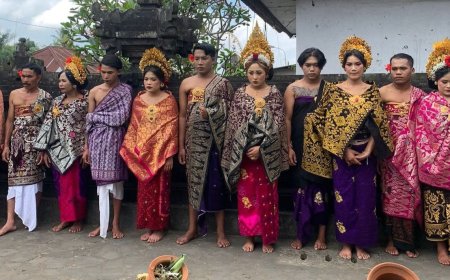
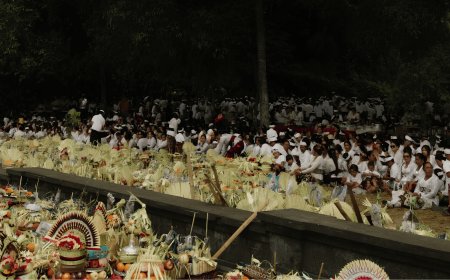
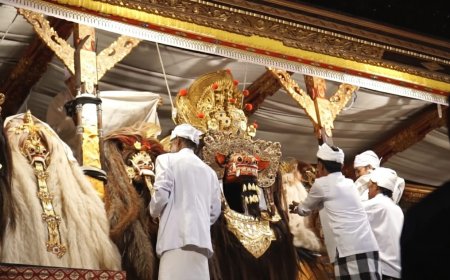
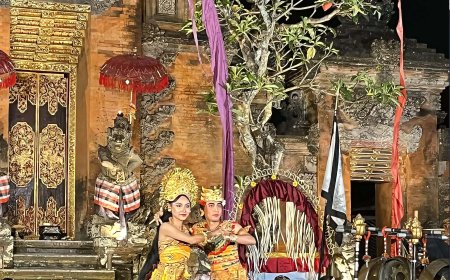
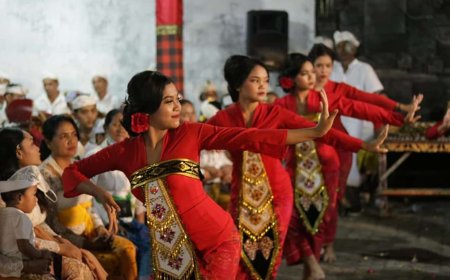
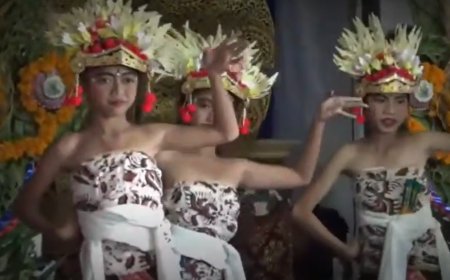
Pinge Traditional Village features several traditional arts such as bumbung gebyog and leko traditional dance performances. Additionally, there is a unique tradition for counting the population called "cacah jiwa." The cacah jiwa process is carried out every six months, in conjunction with the celebration at the Pinge Traditional Village Dalem Temple. In its implementation, each head of the family brings a piece of wood or "pis bolong" according to the number of family members and then submits it to the officials at the Dalem Temple. Once all the pieces are gathered, they are counted, reflecting the total population of Pinge Traditional Village. Subsequently, all the pis bolong, along with offerings, are presented to Ida Sesuhunan at the Dalem Temple.
In conclusion, Pinge Traditional Village sets an excellent example of how the heritage of tradition and culture can be preserved despite the onslaught of modernization. With a rich history and strong cultural values, Pinge Traditional Village can continue to serve as a source of inspiration and learning for future generations.