
















The Legend of Watugunung: The Fall of an Unrivaled Ruler
Once upon a time, there was a child named Watugunung, the son of King Kulagiri and Dewi Sintakasih. His mother, overwhelmed by him, struck Watugunung with a rice spoon, leading him to leave the kingdom. He grew up to be an arrogant and prideful figure, but eventually met his end while trying to fulfill the demands of a woman he wished to marry.

In the Lontar Medang Kemulan, it is told that there once lived a wise and powerful king named King Kulagiri, who ruled justly over a great and prosperous kingdom called Kundadwipa. King Kulagiri was blessed with two beautiful and loving wives, Dewi Sintakasih and Dewi Sanjiwartia.
Life in the kingdom ran peacefully and harmoniously until one day, King Kulagiri decided to go on a meditation retreat to Mount Semeru. He left the kingdom and his two wives, including Dewi Sintakasih, who was pregnant at the time.
As time passed, Dewi Sintakasih felt a deep longing for her husband. As her pregnancy progressed, she decided to follow King Kulagiri to the summit of Mount Semeru. With great courage and determination, Dewi Sintakasih embarked on a journey filled with challenges.
However, during the journey, on a large flat rock, she began to feel the signs of labor. Dewi Sintakasih gave birth on the rock, and the baby fell directly onto the large stone. Surprisingly, the newborn was unharmed, but the stone where he landed split in two. This event was seen as a divine sign. The baby was then named I Watugunung.
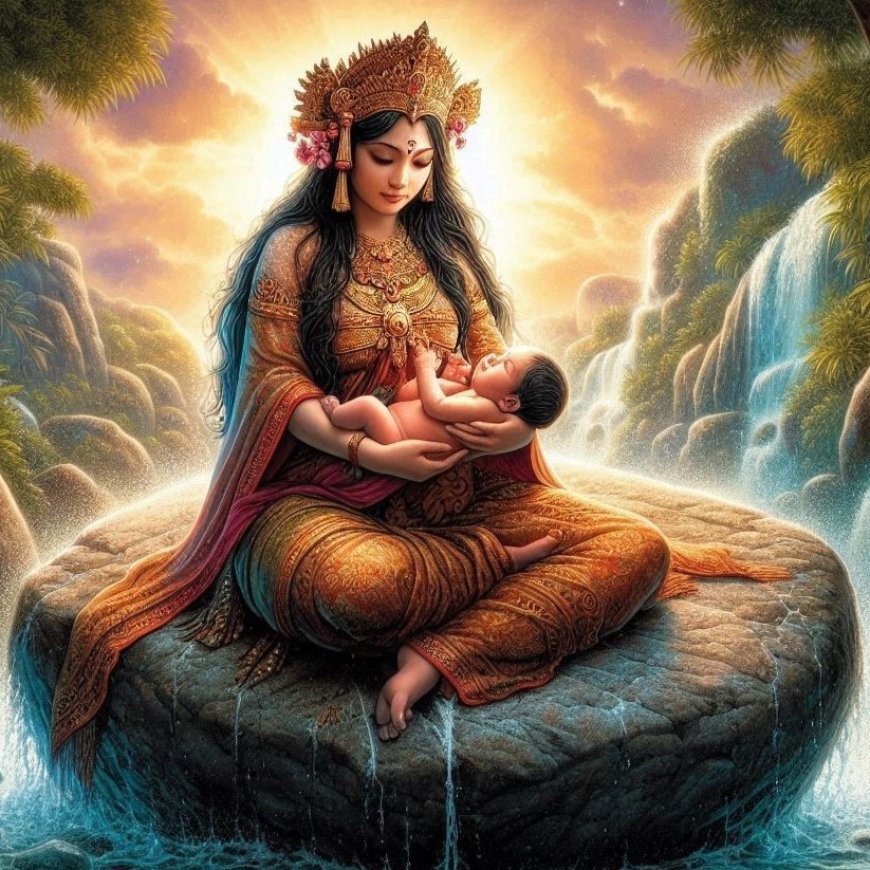 Dewi Sintakasih after giving birth to I Watugunung on a large stone (Source: Personal Collection)
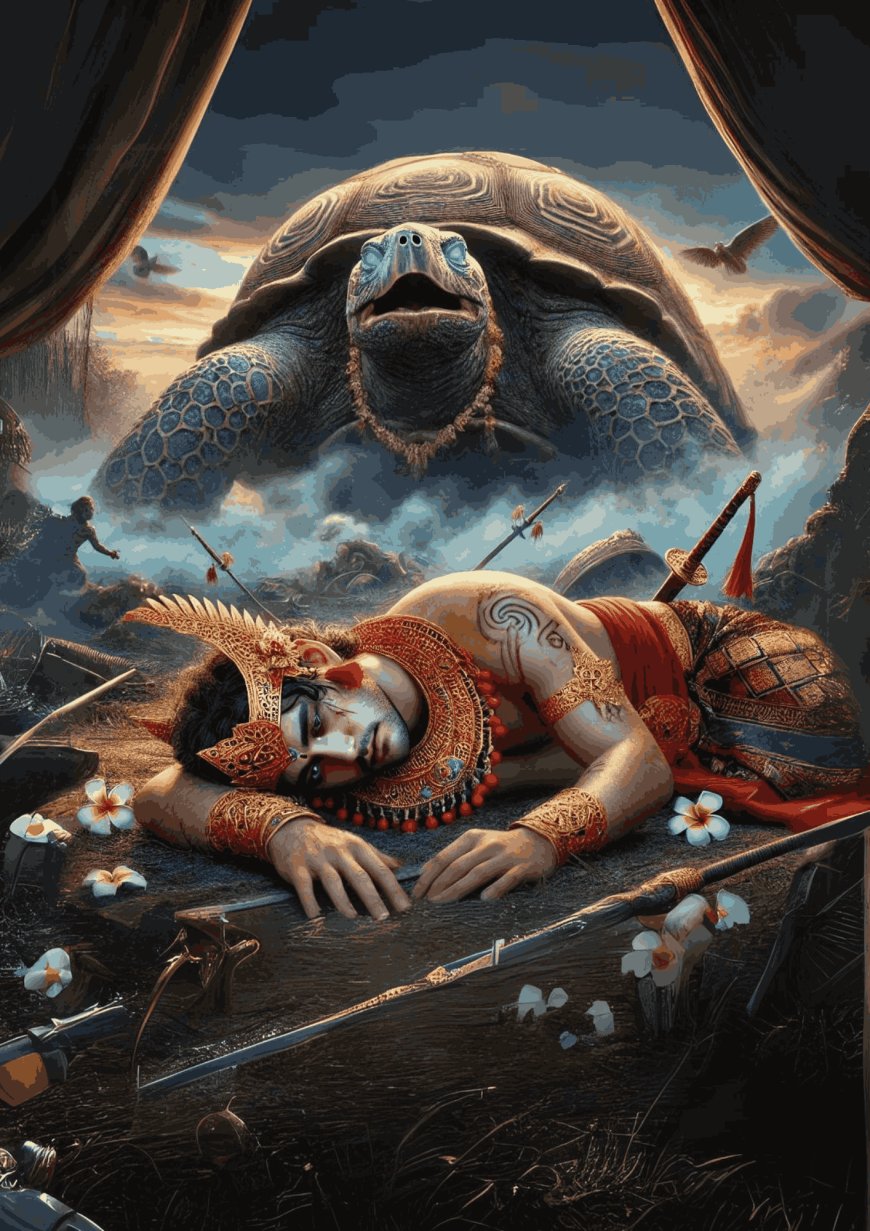
Blessed by Lord Brahma, this child was endowed with extraordinary and unparalleled strength. Brahma also prophesied that Watugunung would become a powerful figure known throughout the world, invincible to gods, demons, giants, or humans. However, Brahma warned that the only one capable of defeating and killing Watugunung would be Lord Vishnu, who would incarnate as a turtle (Kurma).
From a young age, Watugunung exhibited signs of strength and willpower beyond ordinary humans. One notable trait was his insatiable appetite, which often became uncontrollable. His mother, Dewi Sintakasih, frequently struggled to fulfill his constant requests for food.
One day, exhausted and unable to bear it any longer, Dewi Sintakasih struck Watugunung's head with a rice spoon. As a result, Watugunung’s head was injured and bled. The physical and emotional pain led Watugunung to leave the palace.
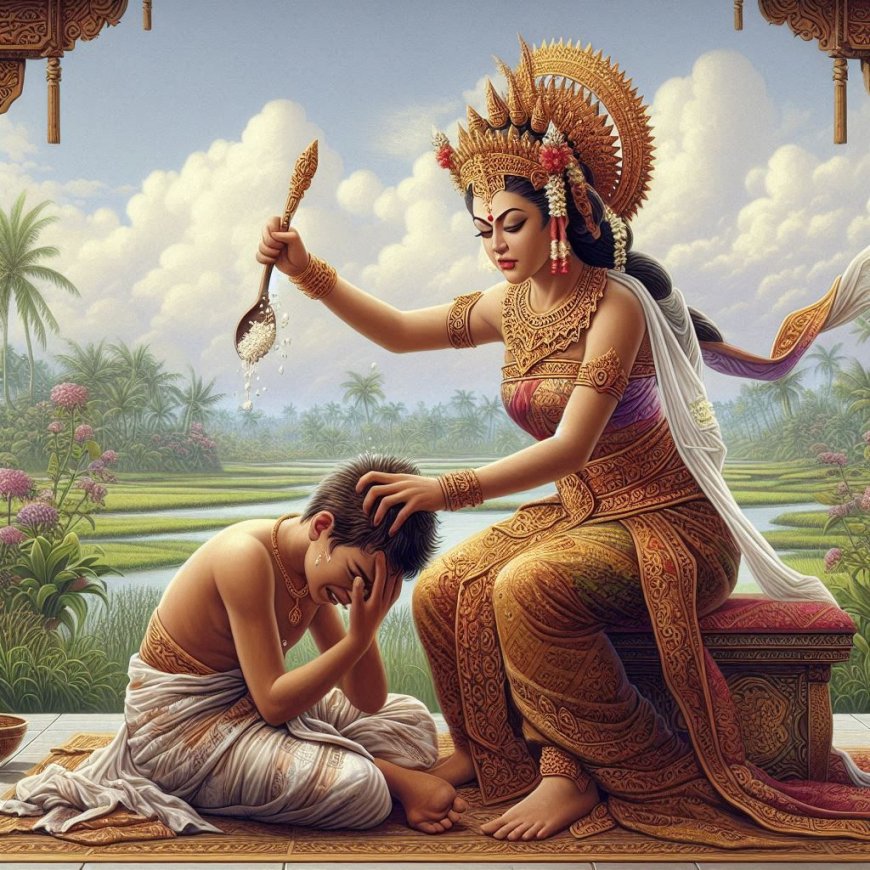 Dewi Sintakasih hitting Watugunung's head with a rice spoon (Source: Personal Collection)
In his wanderings, Watugunung decided to meditate, seeking even greater strength. His prayers were answered, and he gained tremendous power, unmatched by anyone on earth. However, with such immense strength, Watugunung became arrogant and tyrannical.
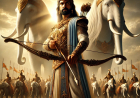
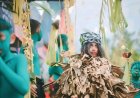
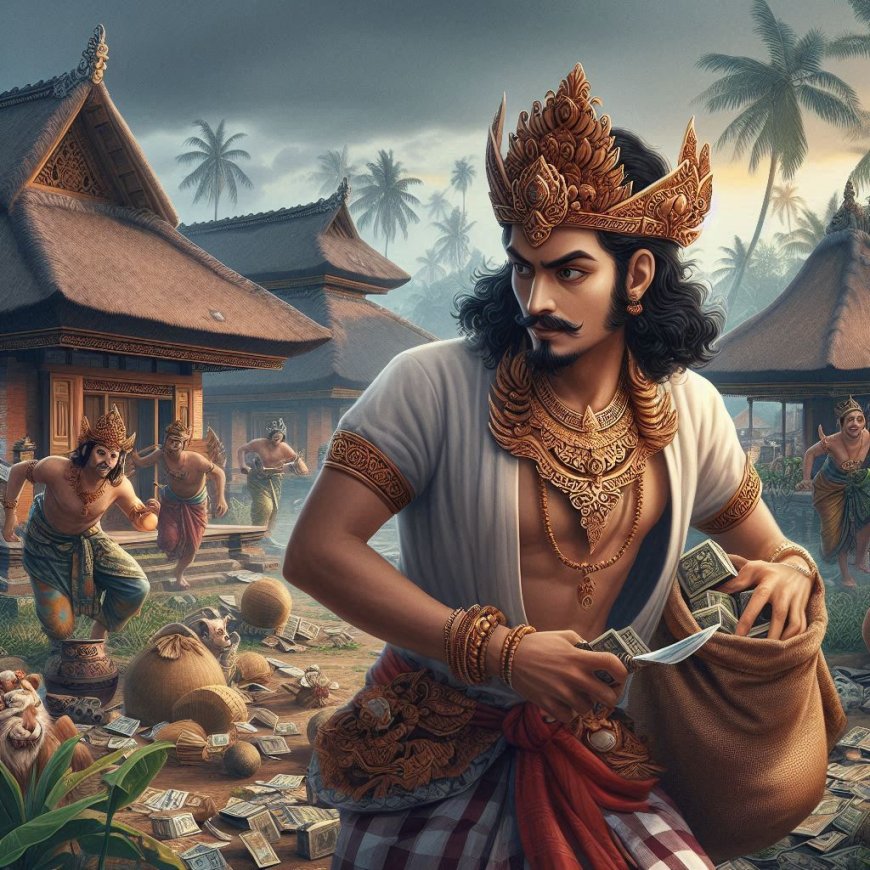 Watugunung became an arrogant figure and took pleasure in raiding (Source: Personal Collection)
After successfully conquering Kundadwipa, his homeland, Watugunung entered the palace of Kundadwipa. He was captivated by the beauty of Dewi Sintakasih, the queen, unaware that she was his biological mother. Since neither mother nor son recognized each other, Watugunung, mesmerized by her extraordinary beauty, deeply desired to make Dewi Sintakasih his wife.
However, one day, while Dewi Sintakasih was grooming Watugunung's head, she noticed the scar from the rice spoon strike on his head. At that moment, Dewi Sintakasih realized that the man who wished to marry her was actually her own son.
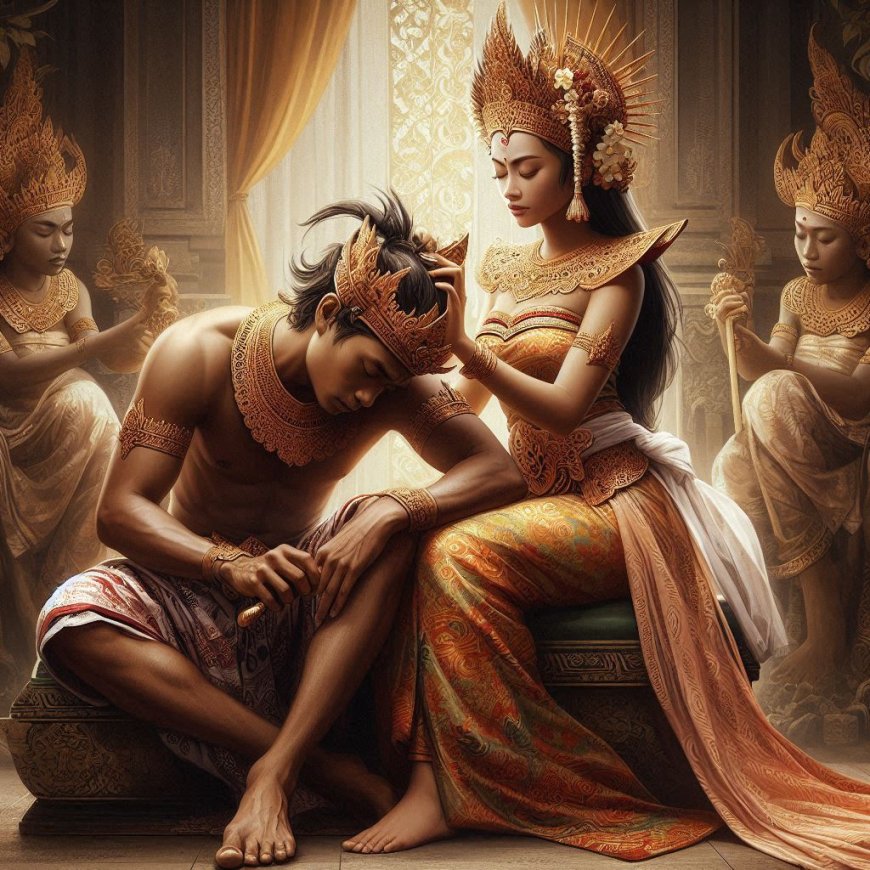 Dewi Sintakasih searching for lice on Watugunung's head (Source: Personal Collection)
Remembering Brahma's prophecy that only Lord Vishnu's incarnation as a turtle could defeat Watugunung, she devised a plan to free herself from him. Dewi Sintakasih asked Watugunung to take Dewi Sri Lakshmi, the wife of Lord Vishnu, as his co-wife.
This request enraged Lord Vishnu. However, Watugunung was not intimidated by Lord Vishnu’s anger; instead, he challenged him to a battle. The battle was inevitable, and Lord Vishnu transformed into a turtle armed with a chakra (a divine discus).