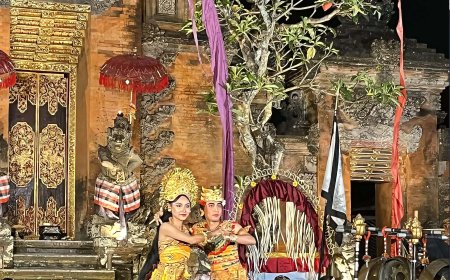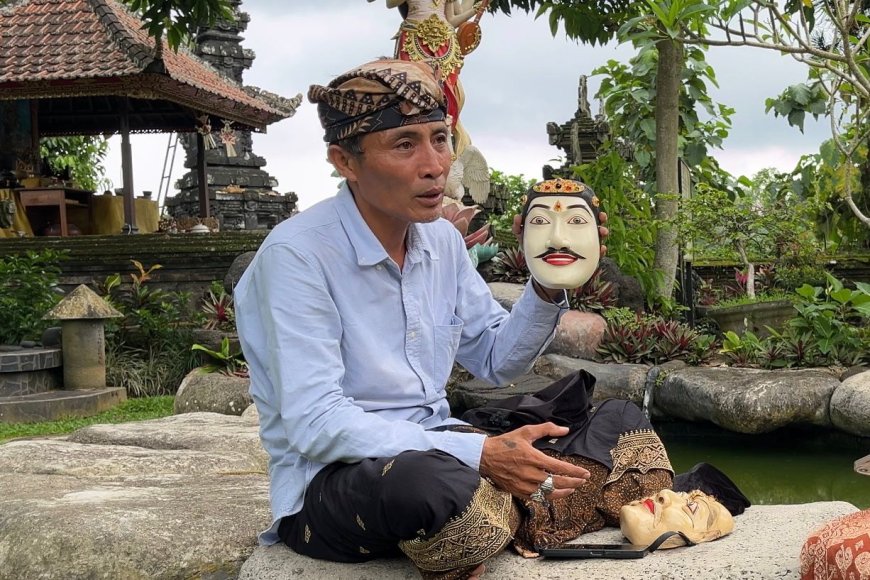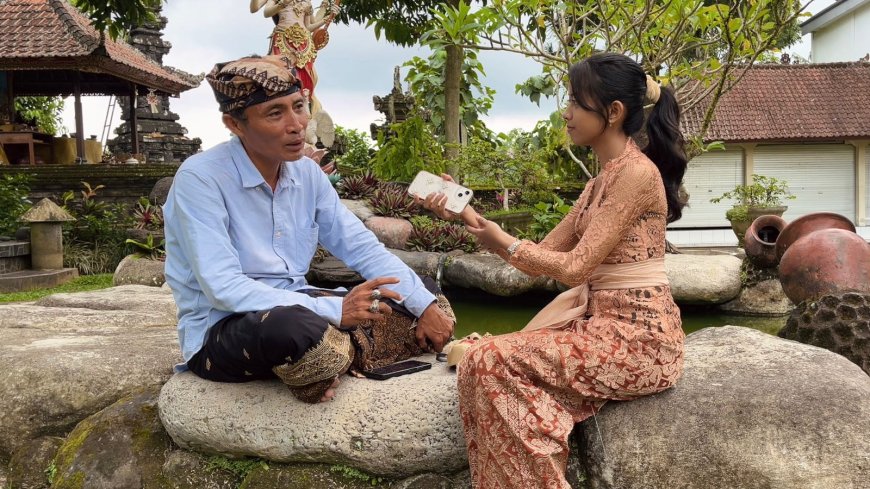
I Dewa Gede Putra in Conversation About His Journey (Source: Personal Collection)
Dewa Putra’s journey began during his elementary school years, when he already expressed a desire to follow in his parents’ footsteps in the world of art. Upon entering high school, he chose to pursue art education at a vocational high school, majoring in the arts at SMK Negeri 3 Sukawati (KOKAR Bali). He later continued his studies in art at IKIP PGRI, taking a formal path as an educator. Through this process, he ultimately became a dance teacher and a cultural arts teacher. Beyond formal education, he has also been actively involved in conducting non-formal training in dance and Balinese mask art (topeng).
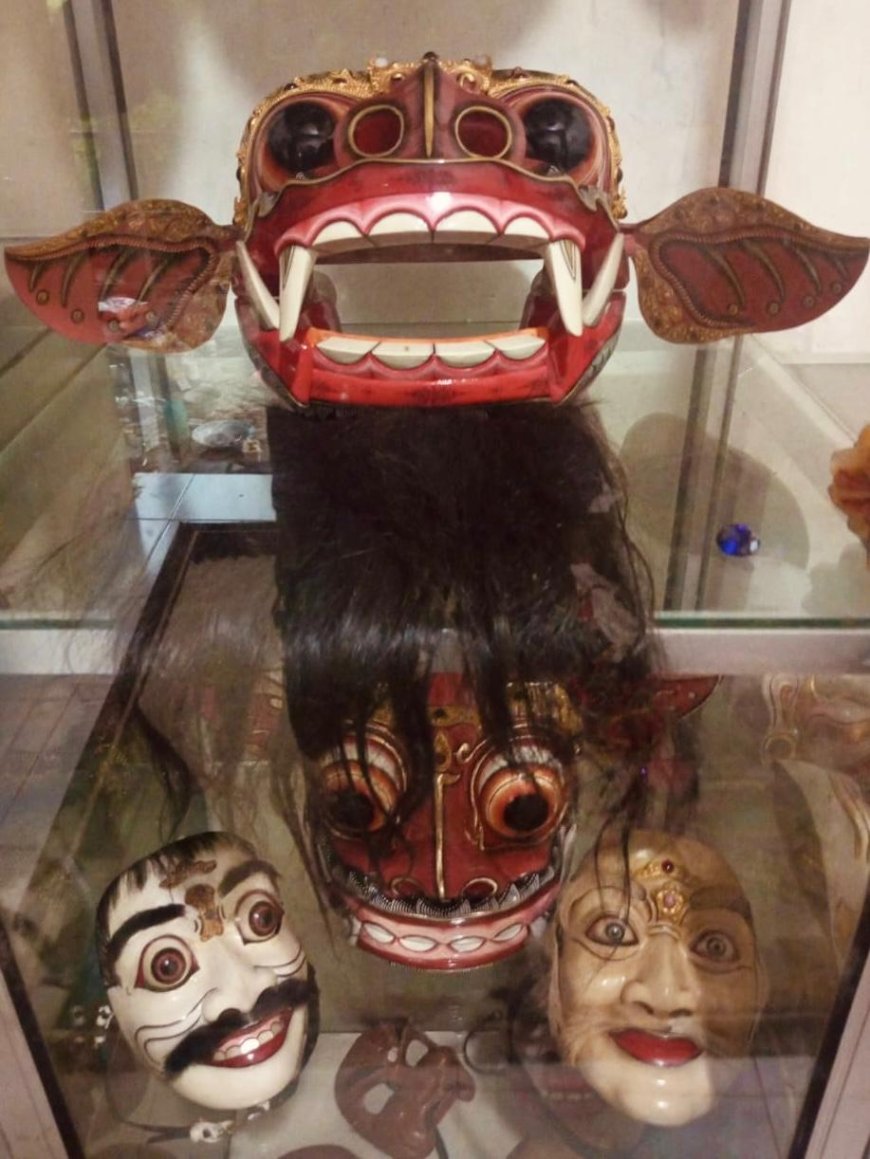
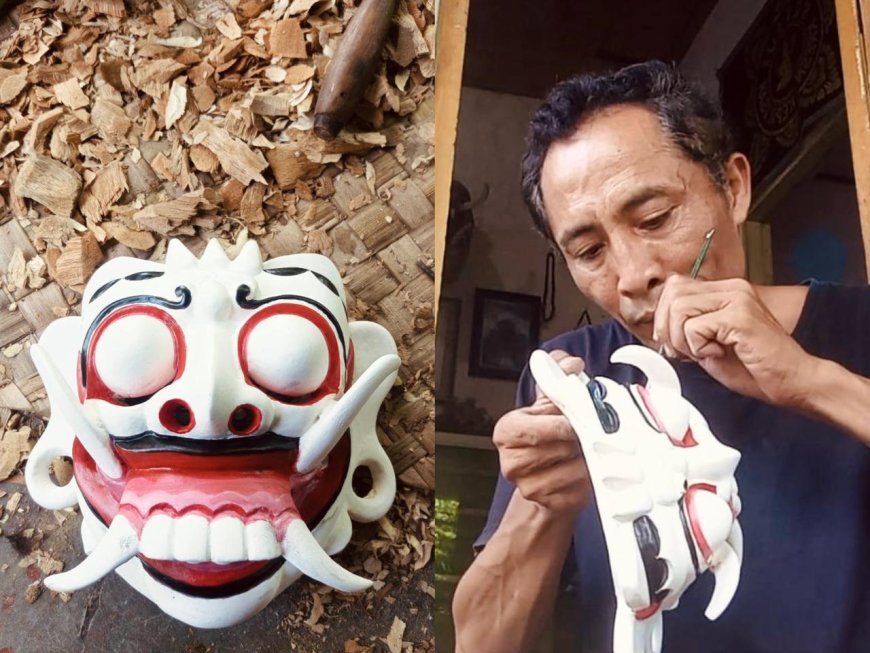
I Dewa Gede Putra’s Balinese Mask Collection (Source: Personal Collection)
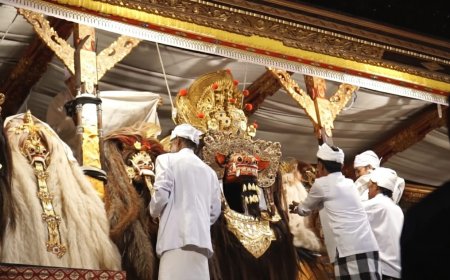
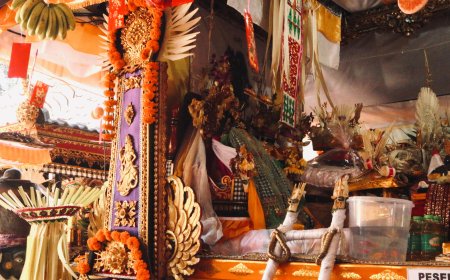
In his collection, Dewa Putra owns various types of masks, including inherited masks as well as masks created by his own hands. Most of them are wali masks, which are used in sacred ritual and performance contexts, such as Topeng Rangda, Topeng Barong, and other types of masks. The types of masks he most frequently creates and performs with are wali masks, including the Topeng Keras, Topeng Tua, Topeng Dalem Arsa Wijaya, Topeng Penasar or Wijil, and Topeng Pajegan.
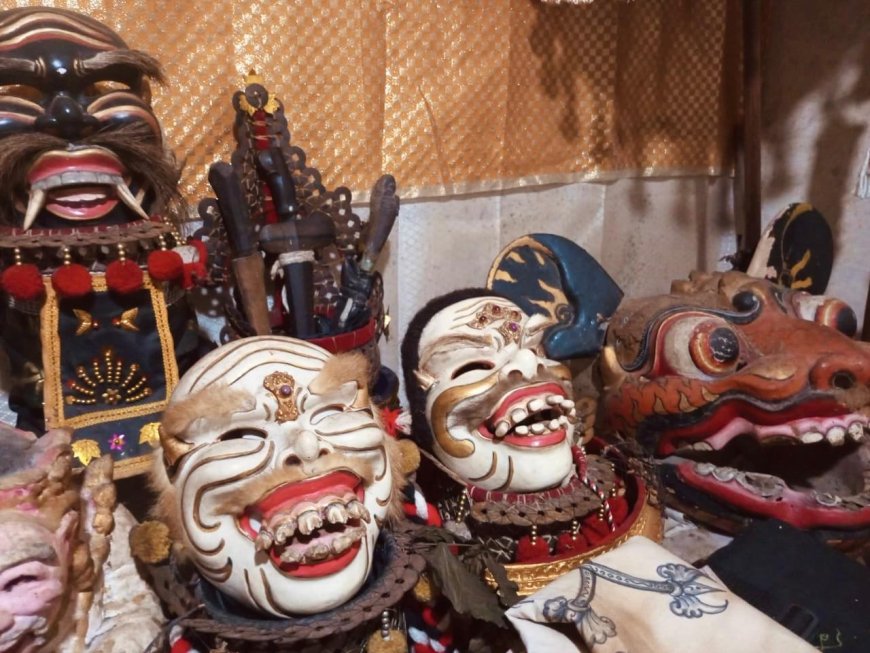
I Dewa Gede Putra’s Balinese Mask Collection (Source: Personal Collection)
According to him, each mask has a distinct function, character, and meaning, and therefore cannot be treated carelessly. Dewa Putra explains that the deepest impression he experiences as an artist arises when he performs using a mask he has created himself. There is a different emotional quality between performing one’s own work and performing someone else’s, even though both must adhere to the same traditional conventions (pakem). However, when an artist creates a mask and then performs with it, a stronger inner connection is formed. It is in this moment that the impression and message of a dance feel more profound, as the creative process and artistic expression merge within a single body.
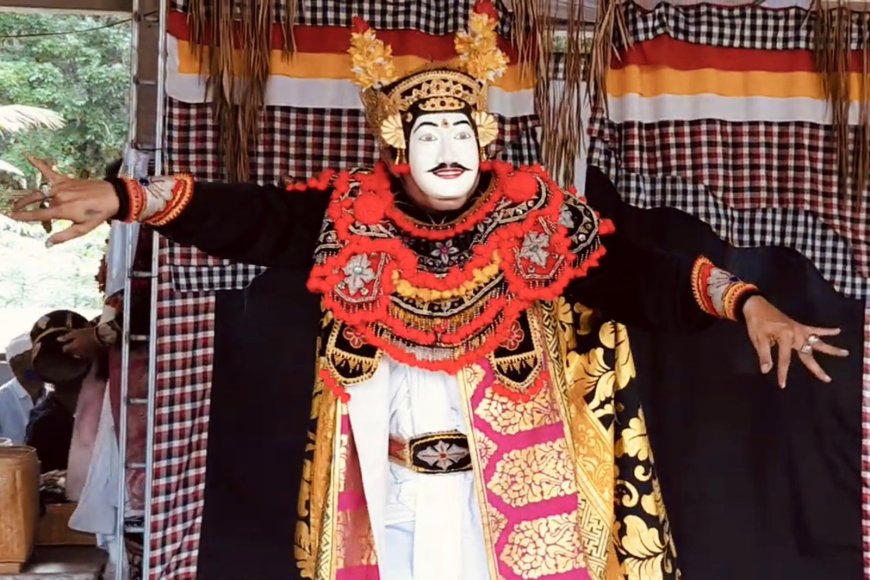
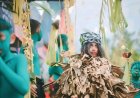
I Dewa Gede Putra Performing the Dalem Arsa Wijaya Mask (Source: Personal Collection)
In the art of mask dance, character immersion is a fundamental key. Each tapel or mask carries a distinct character that must be deeply understood by the dancer. For example, the Topeng Tua symbolizes an elderly figure endowed with wisdom. Its movements must be slow, careful, and reflective of age and life experience. In contrast, the Topeng Keras represents a patih or a brave warrior, requiring firm, strong, and assertive movements.
The Topeng Dalem Arsa Wijaya symbolizes a king, characterized by refined, dignified, and authoritative movements. Meanwhile, the Penasar serves as a parekan, or narrator, who conveys the storyline within the mask performance. Each character has its own established movement conventions (pakem) that must be learned and understood so that the dance feels alive and meaningful.
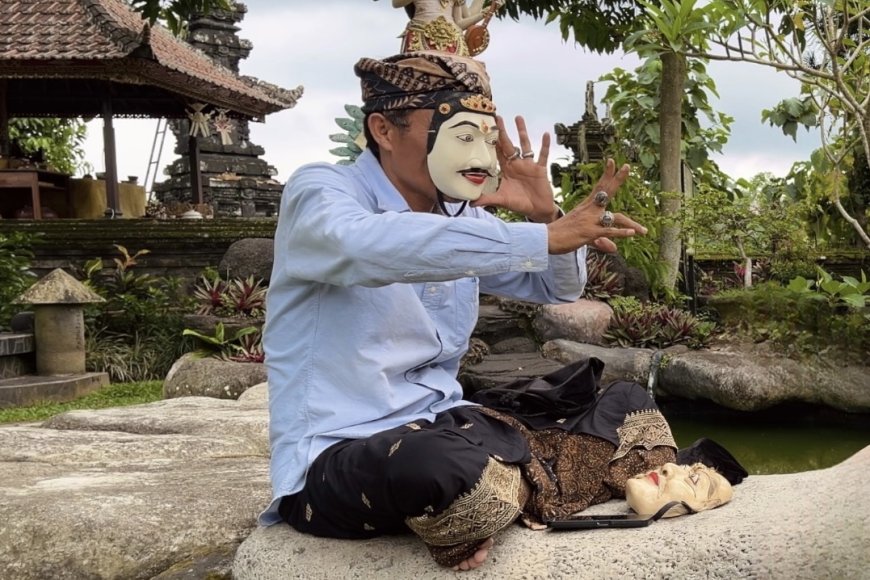
I Dewa Gede Putra Demonstrating the Movements of the Dalem Arsa Wijaya Mask (Source: Personal Collection)
Dewa Putra hopes that the younger generation of Bali, particularly those of the Hindu faith, will continue to preserve and safeguard balinese mask art, as art and religion are deeply interconnected in Balinese life. According to him, if the Balinese people themselves do not protect their cultural heritage, there will be no one left to do so. He encourages the younger generation at the very least to become familiar with and appreciate mask art, even if they do not directly participate as practitioners.