







Echoing from the Hills of Ungasan: The Journey of a Young Artist in Traditional Arts
This article tells the story of a young artist from Ungasan Village who dedicates himself to Balinese karawitan as a form of devotion to cultural tradition. His interest began at an early age and grew through formal education and artistic experiences in various performances and competitions. For him, art is not merely about achievement, but about ngayah (selfless service), togetherness, and the responsibility to preserve ancestral heritage. Amid the challenges of modernization, this story highlights the vital role of young artists in ensuring that Balinese traditional arts remain alive and sustainable.

Amid the rapid growth of tourism and the swift current of modernization, Balinese traditional arts face significant challenges. Gadgets, digital entertainment, and popular culture increasingly dominate the daily lives of younger generations. Yet behind these changes, there are still young people who choose to move slowly preserving, nurturing, and reviving traditions passed down through generations.
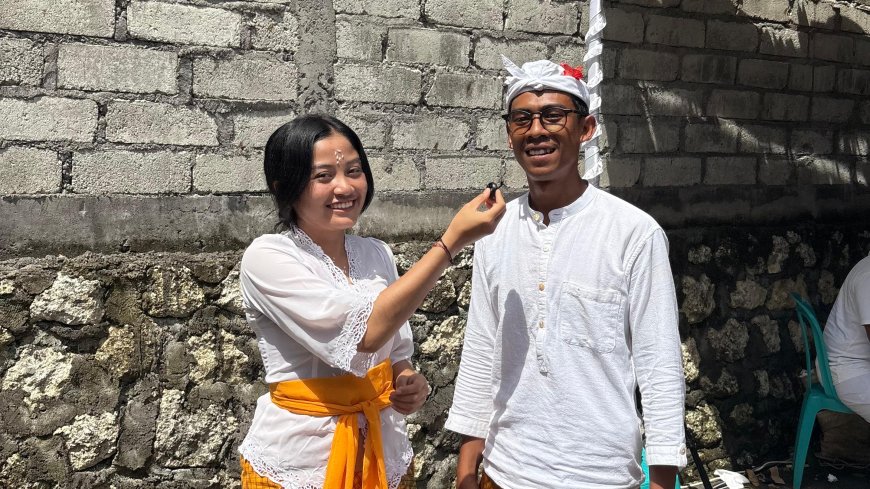
One of them is I Komang Sukajaya Sudarma, S. Sn. , a young artist from Ungasan Village who dedicates himself to Balinese karawitan with a deep awareness of its role in the life of Balinese society.

I Komang Sukajaya Sudarma, S. Sn. (Photo Source: Personal Collection)
His interest in the arts began at an early age. During his elementary school years, he actively participated in art studio activities, although his initial passion leaned more toward visual arts, particularly drawing Kamasan style wayang. Over time, his introduction to gamelan opened a new path. Upon entering junior high school, he began to pursue karawitan more seriously and took part in gong kebyar festivals at the Badung Regency Arts Festival.
This journey continued into formal education. He chose to study at SMKN 5 Denpasar (Department of Karawitan Arts) and later pursued higher education at the Indonesian Institute of the Arts (ISI) Denpasar. This decision was rooted in his belief that karawitan plays a vital role in Balinese life, closely tied to ceremonies, customs, and religious rituals. Without regeneration, this art form risks gradually losing its place.
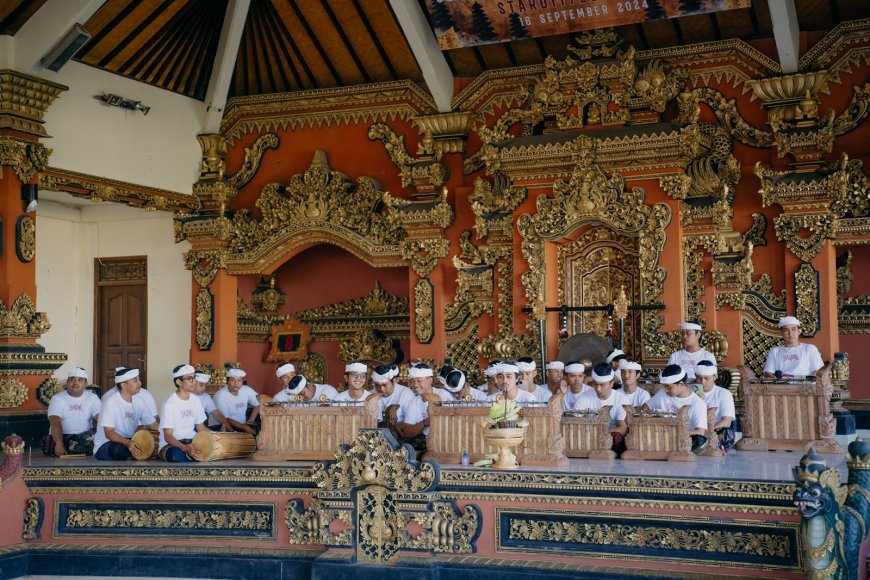
Routine practice (Photo Source: Personal Collection)
This awareness strengthened his determination to continue creating and contributing, particularly to Ungasan Village, which in the past lacked young generations engaged in karawitan. In his artistic journey, the value of ngayah remains his core principle. For him, art cannot be fully measured by material or financial value. While life necessities cannot be ignored, not everything in art should be calculated economically. Ngayah transforms art into a way of life and devotion.
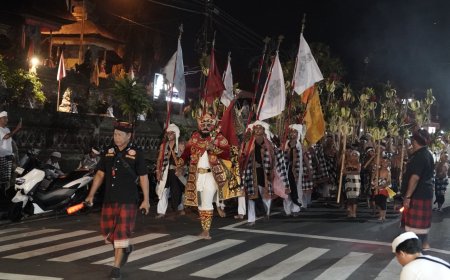
Throughout his involvement in karawitan, he has achieved various accomplishments, both as a composer (penata tabuh) and a performer. Among them are 1st Place Baleganjur (Open Category) at the GWK Penjor Festival 2025, 3rd Runner-Up Baleganjur (Open Category) at the Badung Regency Arts Festival, along with several other achievements at village and regency levels. As a performer, he also earned awards such as 1st Runner-Up Gong Kebyar Children’s Category, Badung Regency (2012) and Favorite Kendang Soloist at Wisba Fest.

GWK Baleganjur Competition (Photo Source: Personal Collection)
However, for him, achievement is not the ultimate goal. Every performance is seen as a learning process. One of his most meaningful experiences was when he first guided two baleganjur groups from scratch in the same competition. Despite limited resources, hard work and togetherness led them to achieve 2nd Place and 1st Runner-Up. This experience proved that commitment matters more than complete facilities.
His perspective on art has continued to evolve. He once believed that financial limitations would hinder artistic processes, but experience showed otherwise. With simplicity, the process can still reach its fullest potential. Money is important, but it cannot buy passion, discipline, or a sense of togetherness.

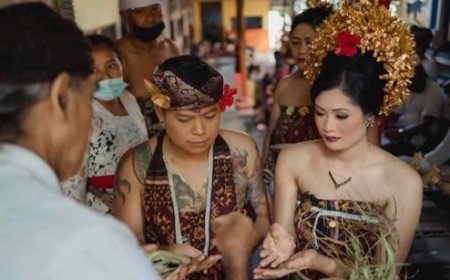
PKB Photoshoot (Photo Source: Personal Collection)
Regarding the younger generation, he actually sees hope rather than decline. Interest in traditional arts, particularly karawitan, is not decreasing. Various training programs aimed at children demonstrate strong enthusiasm. According to him, young artists play a strategic role in sustaining Balinese culture, bringing new ideas without losing the essence and taksu of the art itself.
Looking ahead, he hopes that Balinese traditional arts will continue to be preserved and properly appreciated, including by the tourism sector, so that art is not treated merely as cheap entertainment. He also emphasizes the importance of introducing arts education from an early age, allowing young generations to grow with a deep love for tradition.
From Ungasan Village, his steps may not always appear grand. Yet it is through hands like these young, devoted, and sincere that Balinese karawitan continues to pulse, resonate, live on, and be passed down from generation to generation.