













Preserving the Sound of Tradition: The Story of I Ketut Warsa, a Larasjati Gamelan Craftsman Since the 1980s
I Ketut Warsa is a gamelan craftsman who has devoted his life since the 1980s to preserving and sustaining Balinese gamelan. Rooted in family lineage and early learning, he has become an important figure in the world of gamelan craftsmanship, particularly through his Larasjati gamelan works, which remain alive and meaningful to this day.

I Ketut Warsa’s devotion to the world of gamelan did not emerge suddenly. His long journey as a gamelan craftsman began within his family environment and through a lineage that had long been engaged in traditional arts. From a young age, he grew up surrounded by the sounds of metal bars and gongs, witnessing firsthand the process of crafting gamelan instruments—an activity deeply infused with cultural and spiritual values. These experiences became an indirect yet formative learning process for him.
Since his early years in junior high school, I Ketut Warsa had already been directly involved in gamelan making alongside his parents and relatives. Through this involvement, he gradually learned each stage of the process, from shaping raw materials and crafting the bars to the delicate process of tuning (ngelaras), which requires precision and a refined sense of musical sensitivity. This natural and continuous learning process fostered a strong desire within him to dedicate his life to the art of gamelan craftsmanship.
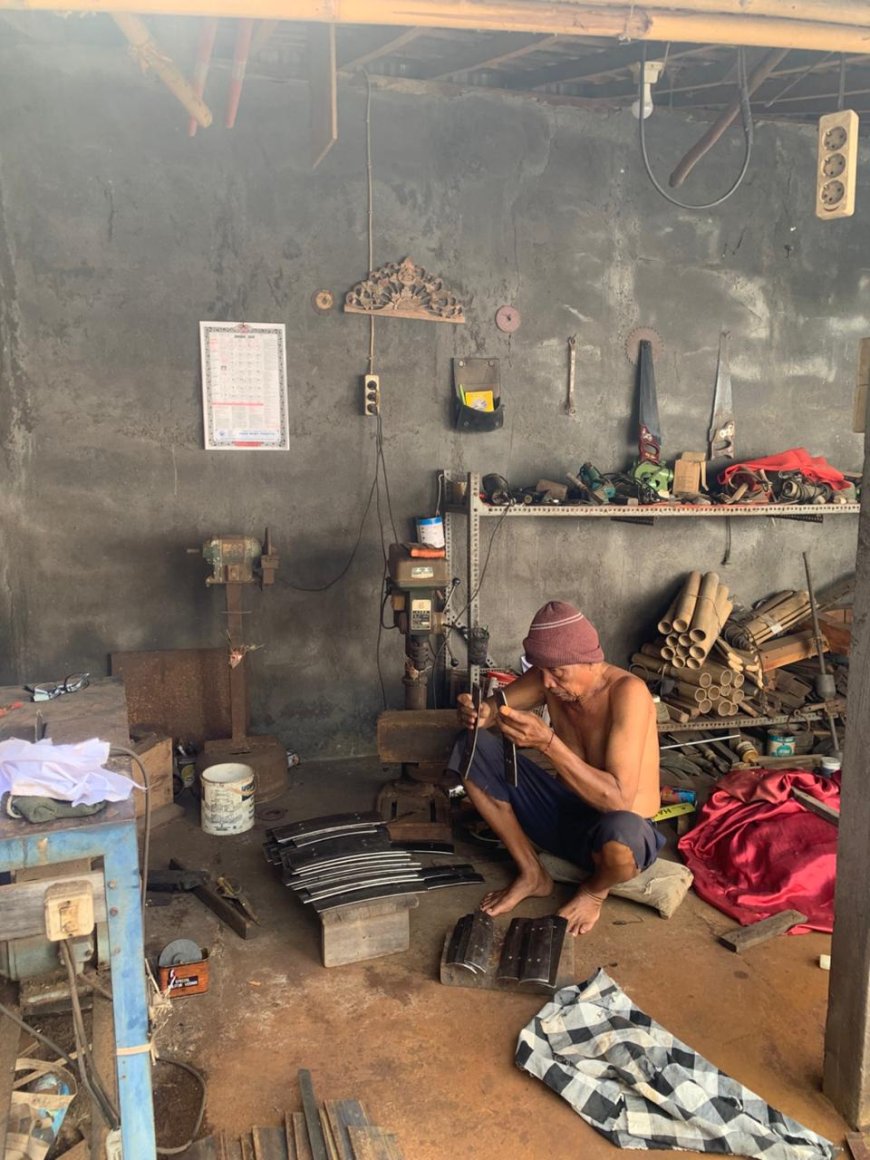
I Ketut Warsa Making Gamelan (Source: Personal Collection)
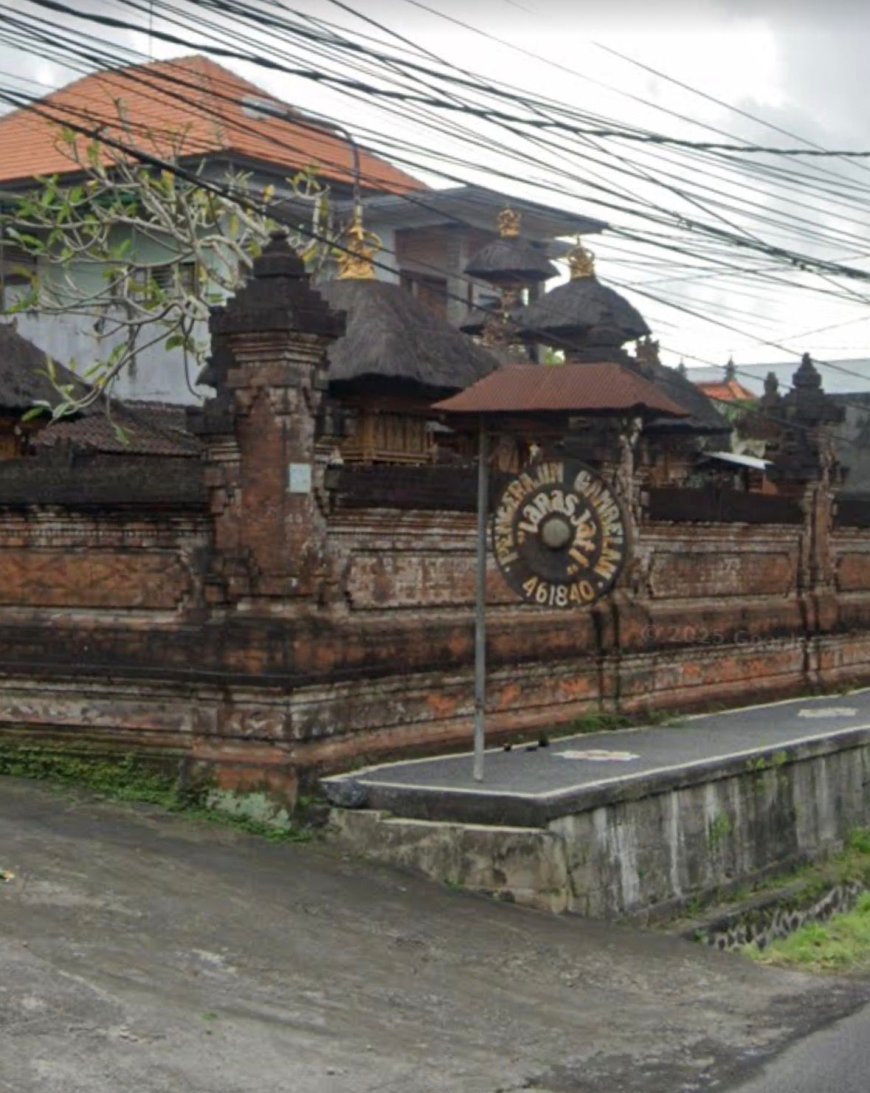
This commitment was later realized through the establishment of Larasjati Gamelan Craft, a name that reflects harmony between laras (musical tuning) and the true identity of tradition. Located in Desa Adat Penatih, East Denpasar District, Denpasar City, Bali, Larasjati continues to function as a space for creative work as well as for the transmission of traditional values.
As a gamelan craftsman, I Ketut Warsa is widely recognized for his extensive and profound expertise. He is capable of producing various types of Balinese gamelan, including Semar Pegulingan, Gong Kebyar, Angklung, Selonding, Gender, and many others. This mastery reflects not only technical skill but also a deep understanding of the character, function, and philosophy behind each type of gamelan.
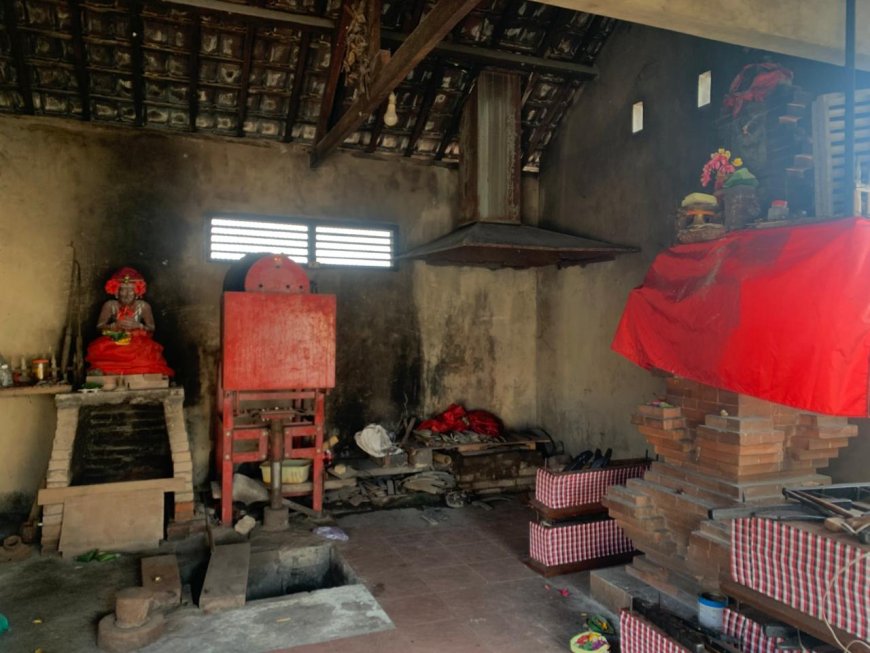
Prapen Blade Ignition Place (Source: Personal Collection)
One of the works most closely associated with I Ketut Warsa is Selonding gamelan. As an ancient and sacred form of Balinese gamelan, Selonding requires exceptional precision, sensitivity, and deep respect for ancestral principles in its creation. I Ketut Warsa is known as the initiator of the development of jegog with double bars, an innovation born from long experience, careful observation, and profound love for traditional sound. This development was carried out thoughtfully through a long process that continues to honor tonal structures, ritual functions, and the spiritual meanings inherent in Selonding gamelan.
The double-bar innovation produces a stronger and more layered sound character while preserving the sacred essence of Selonding as one of Bali’s oldest gamelan forms. This work demonstrates that tradition is not rigid; rather, it can evolve wisely without losing its identity. Through his creations, I Ketut Warsa shows that cultural preservation does not necessarily mean rejecting innovation, as long as such innovation is pursued with respect, awareness, and responsibility toward ancestral values.
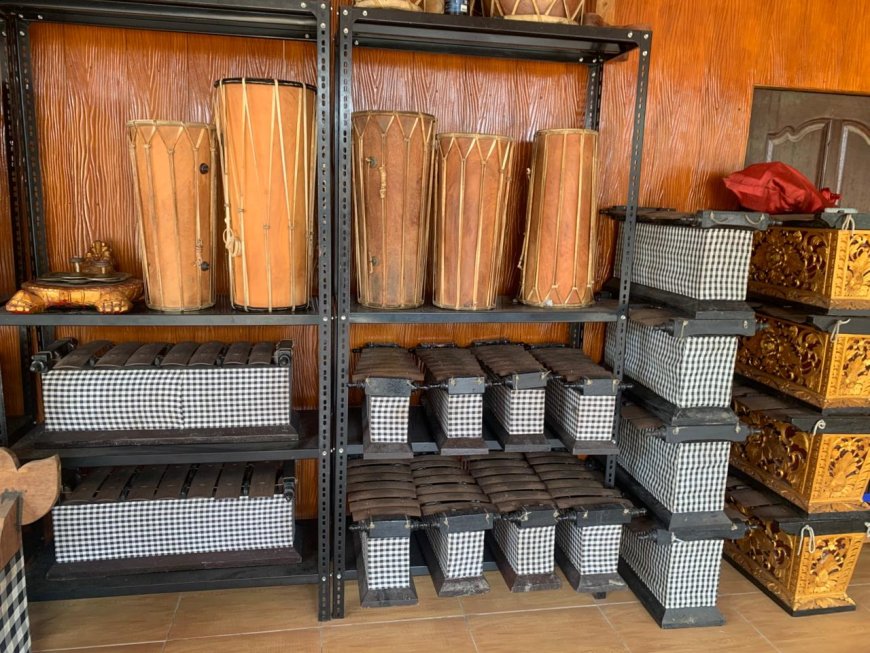
I Ketut Warsa's Gamelan Collection (Source: Personal Collection)
For I Ketut Warsa, crafting gamelan is not merely a means of economic livelihood, but a form of devotion to Bali’s cultural heritage. Every stage of the gamelan-making process is carried out with sincerity, patience, and a strong moral responsibility to maintain the quality of sound and the meaning embedded within it. He believes that gamelan is not simply a musical instrument, but a spiritual medium that connects people with tradition and noble values.
I Ketut Warsa hopes that younger generations will continue and preserve ancestral heritage, particularly in the field of Balinese gamelan craftsmanship. Amid the growing currents of modernization, the sustainability of traditional arts depends greatly on the awareness, care, and active involvement of future generations. By continuing to learn, create, and respect the process, young people are expected to keep the sounds of tradition alive, evolving, and meaningful for the future of Balinese society.