











































Sage Valmiki: From Darkness to Eternal Wisdom
Ratnakara, a robber and killer living in darkness and ignorance, always believed that wealth were everything. However, a magical encounter with a wise Rsi changed everything. Stricken with regret, Ratnakara left his dark path and vowed to change. Through meditation and devotion, he gained recognition from Lord Brahma and was crowned as a Rsi. He also inspired the creation of one of the greatest epics, the Ramayana.

Once upon a time, in the dense forests of India, there lived a robber and murderer named Ratnakara. Ratnakara was known for his brutality and showed no mercy towards anyone. Ratnakara came from a very poor family. Since childhood, he was forced to live in poverty and deprivation. Hunger and poverty made him do bad things to survive. He became a robber and a troublemaker who knew no mercy, plundering the goods of anyone who passed through the forest that was his territory.
He often attacked people passing by on the streets, robbed them, and killed them if they did not fulfill his demands. Moral darkness and cruelty enveloped his life. Ratnakara not only stole and killed, but also lived in terrible habits and did not respect moral values.
One day, Ratnakara was on his way to commit a robbery when he heard a sacred chant of praise to Rama who was the Avatar of Vishnu chanted backwards which should have been Rama becoming Mara which means danger from the voice of a holy hermit, namely Sage Narada Muni. Sage Narada Muni was a highly respected sage and was known for his profound wisdom and spiritual knowledge.

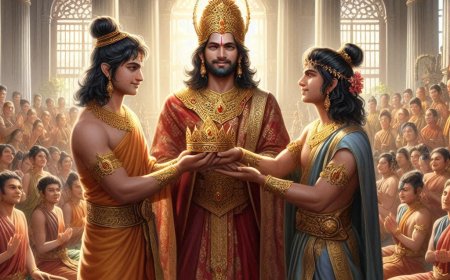
Ratnakara meets Rsi Narada Muni (Source: Personal Collection)
After Sage Narada realized his mispronunciation, he corrected his hymn with full concentration and sincere devotion in his heart. The power of the holy hymn shook the Atma within Ratnakara. When Sage Narada saw Ratnakara, he immediately realized that Ratnakara was living in error and sin. Without fear, Sage Narada approached Ratnakara and said, “O human being, you have ruined your life and the lives of others with your evil. Don’t you know that your actions will lead you to eternal suffering?”
Ratnakara felt offended by Sage Narada's words, but he also felt that there was truth in his words. Moved by Sage Narada's words, Ratnakara decided to question his life and began to reflect on his bad deeds so far.
Sage Narada explained that every bad action would bring bad consequences, and if Ratnakara wanted to change his fate, he had to abandon all cruel ways and begin to atone for all that he had done to others.

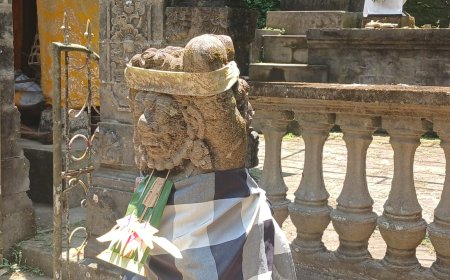
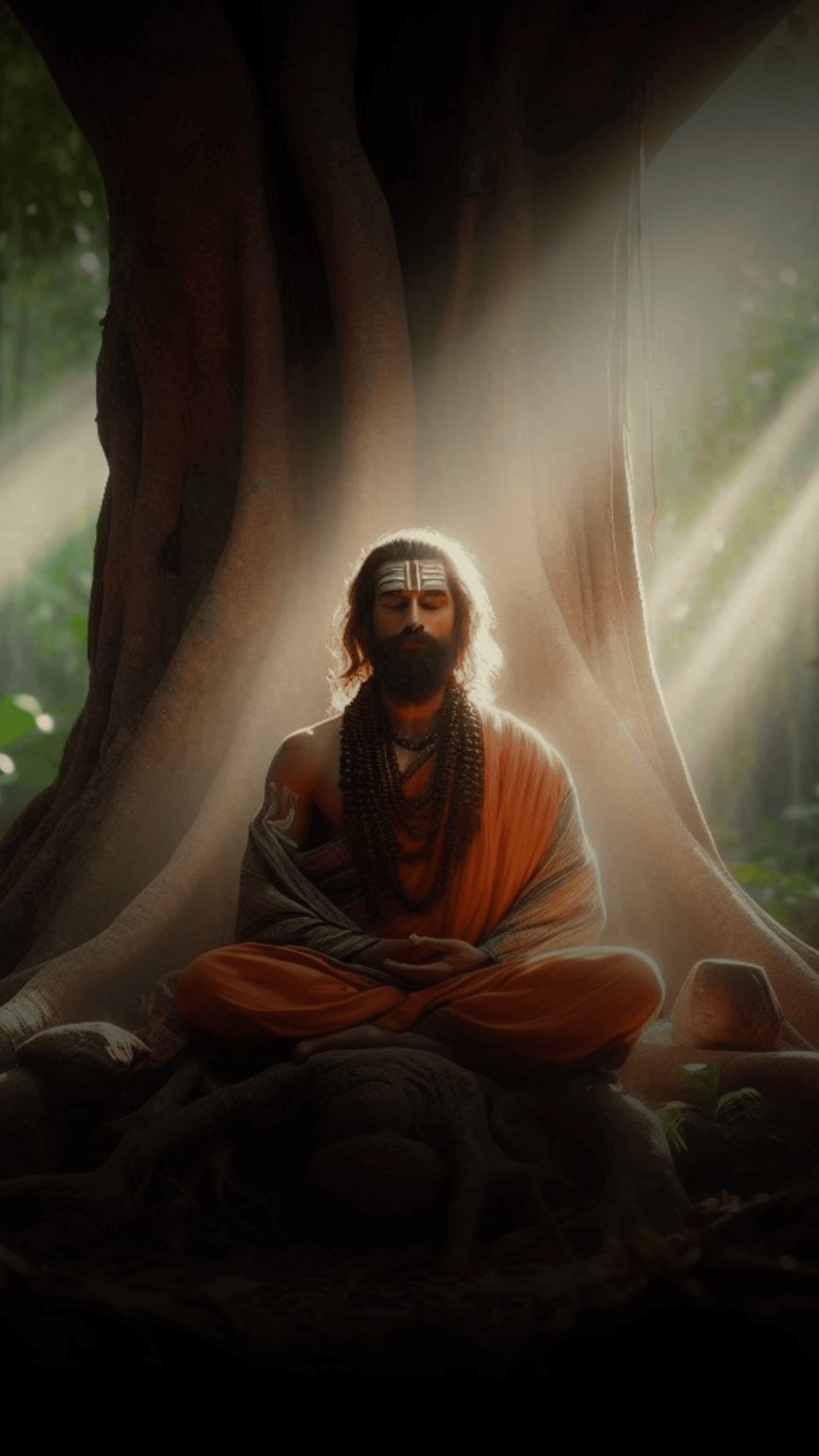
Ratnakara meditating in the middle of the forest (Source: Personal Collection)
He spent many years in the forest, living a very disciplined life, without eating or drinking, and also without sleeping, only to reflect and do Tapa Brata meditation to atone for all the sins he had committed during his life.
One day, while Ratnakara was in deep meditation, he began to experience a profound change in himself. He began to see visions and attain spiritual enlightenment. In meditation, Ratnakara connected himself with divine power and gained a profound understanding of the nature of life and truth.
After years of tapasya, Ratnakara finally attained a very high spiritual level and acquired a new name: Valmiki, meaning "from the anthill," referring to the place where he had spent much time in meditation. After years of meditation, Ratnakara was made into an anthill and dismantled by Sage Narada.
Valmiki gained the ability to write poetry and weave magnificent words. With his newly acquired power and wisdom, Valmiki began to write a very important literary work, the Ramayana.
Ramayana is a great epic that tells the story of the life and adventures of Rama, an incarnation of the god Vishnu, and his love affair with Sita. Ramayana is not only a literary work, but also a moral and spiritual guide that teaches the values of goodness, dharma (duty), and love.
The legend of Sage Valmiki is a story of redemption, transformation and spiritual power. It shows that even a person who has strayed far from the path of righteousness still has the opportunity to improve himself and achieve greatness through effort and sincerity. The story also emphasizes the importance of spiritual guidance and how personal transformation can have a profound impact on humanity.