























The Charm and Distinctiveness of the Peliatan Style of Tari Oleg Tamulilingan in Balinese Dance
Tari Oleg Tamulilingan in the Peliatan style is a form of Balinese dance that has unique characteristics in its movements and presentation. This uniqueness can be seen in the way the dancers portray the character of the tamulilingan through dynamic and detailed movements. Behind the performance, there is a long journey that has kept the Peliatan style interesting to be known until today.

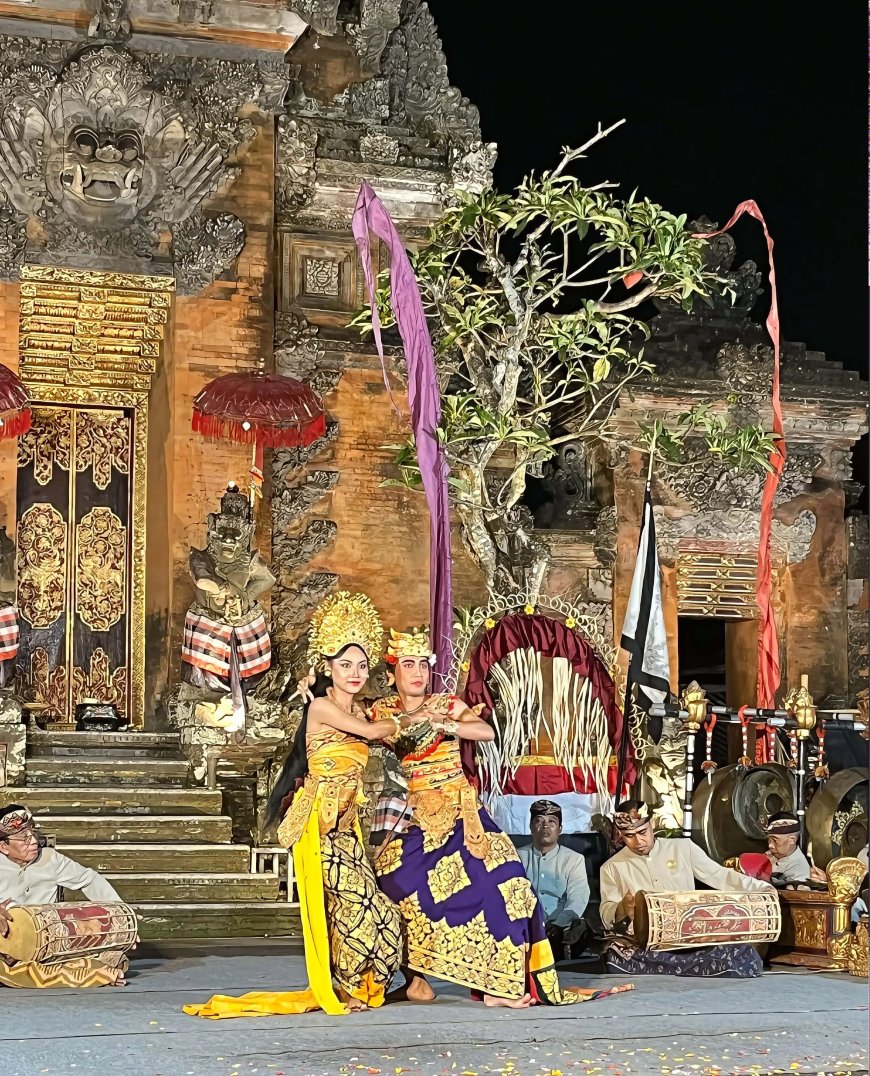
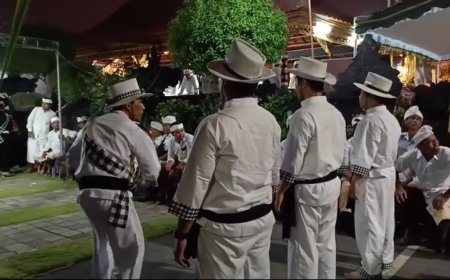
Under the Saturday night sky, the courtyard of Puri Agung Peliatan was filled with gamelan players on the left and right sides. That night, there were several dance performances. One of the most anticipated was Tari Oleg Tamulilingan in the Peliatan style.
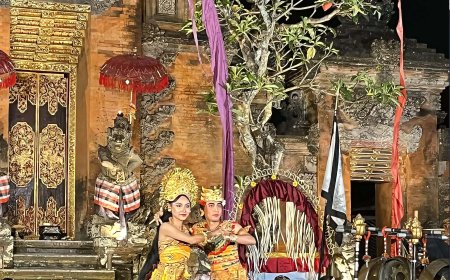
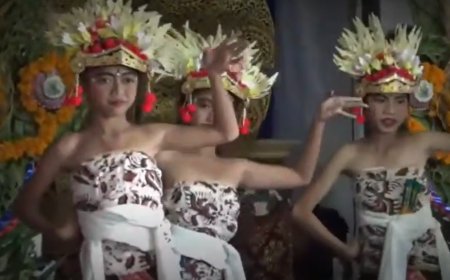
When the dance began, the audience immediately turned their attention to the two dancers. Their movements were agile and dynamic, following the gamelan accompaniment. The firm head movements, rapidly moving fingers (jeriring), and interaction between the male and female dancers made the character of Tari Oleg Tamulilingan clearly visible.
Watching the performance in person provided a different experience compared to simply watching it through a screen. So, what makes Tari Oleg Tamulilingan in the Peliatan style so distinctive?
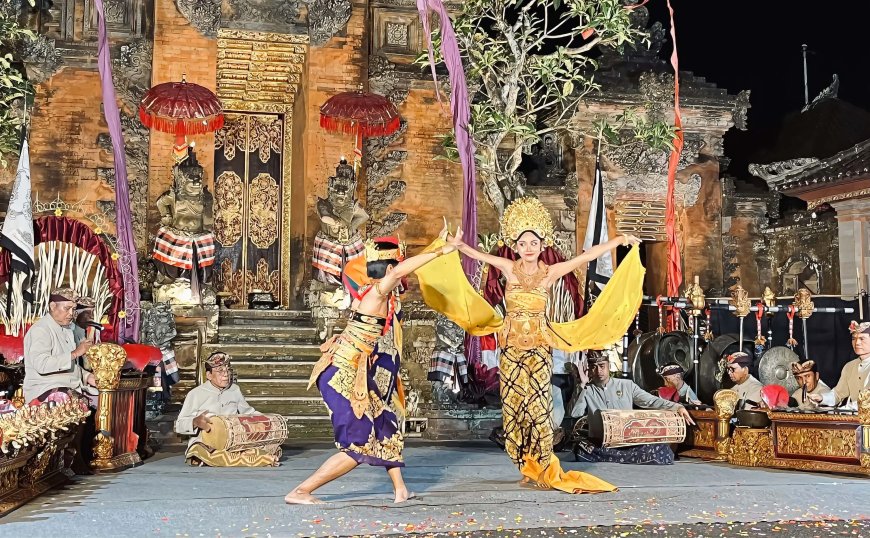 Tari Oleg Tamulilingan in the Peliatan Style (Source: Personal Collection)
Tari Oleg Tamulilingan was created by an artist named I Ketut Marya or I Mario, who came from Tabanan. The dance was first performed in 1952 by Gusti Ayu Raka Rasmi and Sampih. Initially, the dance was called Tari Oleg Tamulilingan Pengisap Sari.
The creation of this dance was closely related to the development of the arts in Peliatan. At that time, Peliatan had the opportunity to carry out an artistic mission abroad. John Coast was someone who was involved in bringing Balinese arts to Europe and America. He then wanted a new dance work.
The creation of this work involved Anak Agung Gede Mandera, who was responsible for the accompanying music, and I Mario as the choreographer. During the process, the dance was inspired by a classical ballet book, which became one of the references in its creation.
After being introduced, artists began performing Tari Oleg in their own styles until several variations emerged. One of them was the Peliatan style, which developed within the artistic environment of Peliatan.
The story of a pair of tamulilingan became an important foundation for understanding the movements of Tari Oleg. According to a Peliatan style Oleg dancer named Citra Aryani, dancers need to understand the characteristics of the animal that serves as the source of the story. Its body shape, movements, and even the movement of its wings can be observed and then translated into dance movements.
The interaction between the two dancers is an important part of portraying the story. At times, they tease each other and sometimes appear to chase each other. Therefore, the movements of the male and female dancers do not stand alone, but complement each other in building the story.
The characteristics of the animal are not made exactly the same as the movements of a bee or beetle, but are translated and adapted to the beauty of Balinese dance.
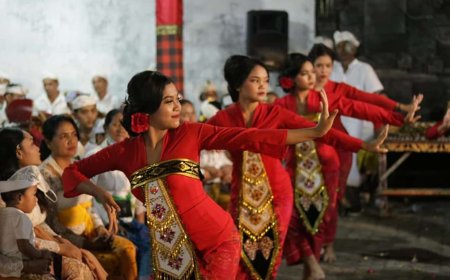
The Peliatan style has a faster accompanying tempo compared to other styles, which can influence the movements of the dancers. According to Citra, there are several interesting aspects of Oleg in the Peliatan style, including the head movements at the beginning of the dance. The movements are quite firm and follow the gamelan. This is related to the head ornament (gelungan) that is used. The gelungan has antennas at the front that move when the head is moved. In addition, there is the ngegol movement with gentle hip movements, which still gives the impression of a bee's movement. There is also the rapid movement of the delicate fingers (jeriring), which gives the impression of small wings in motion.
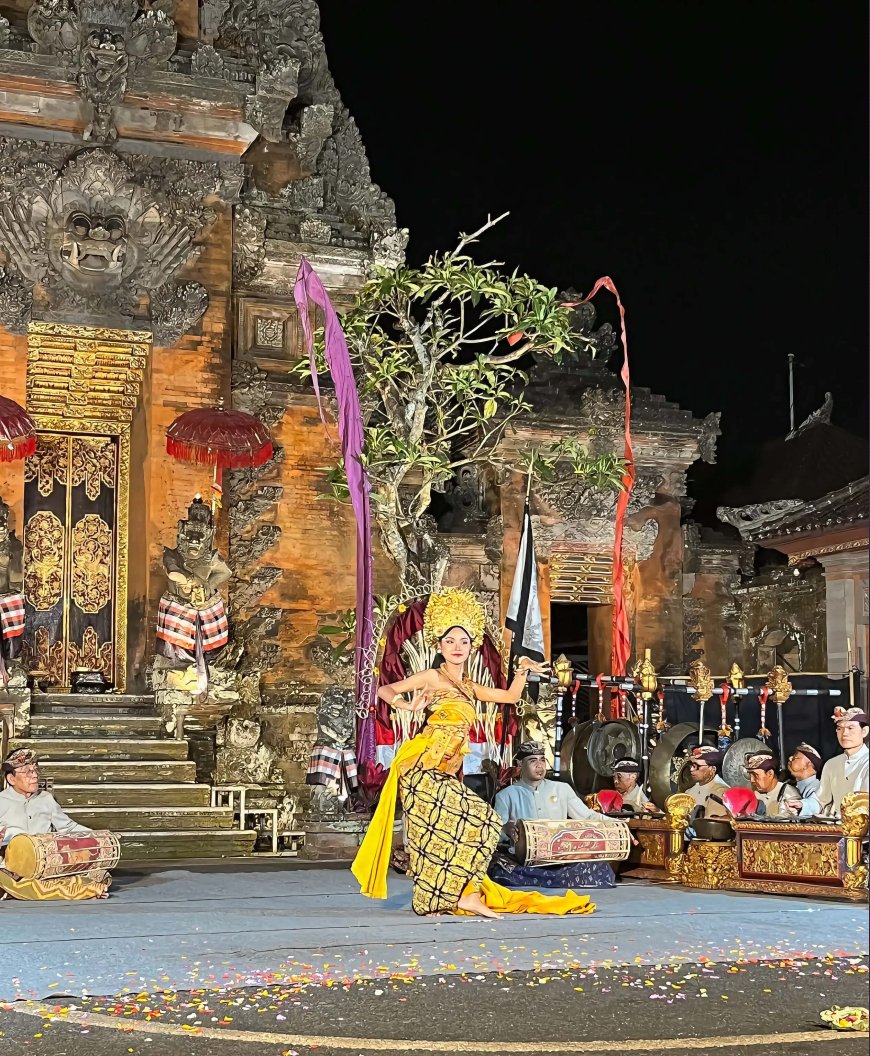 Tari Oleg Tamulilingan in the Peliatan Style (Source: Personal Collection)
In addition, makeup is also a distinguishing aspect of Tari Oleg in the Peliatan style compared to other styles. According to Citra, the Balinese dance makeup commonly used today can still be used. However, in the Peliatan style, the makeup is adapted to the classical character of the dance and earlier references. Older references used simpler makeup, so this style is maintained while still being adjusted to the dancer's facial features.
According to Citra, the correct movements alone are not enough when performing Tari Oleg. This is because an understanding of feeling and character is very important for dancers. Citra began learning Tari Oleg at the age of 12 with Gusti Ayu Raka Rasmi or Niang Raka. One of Niang Raka's teachings that she remembers most is that dancing must involve feeling. Expression, strength, agem, and movement must remain controlled and adjusted to the character of the dance being performed. According to her, foot movements and embodying the character are still some of the more difficult parts of Tari Oleg. This shows that becoming an Oleg dancer requires a continuous learning process rather than simply memorizing the choreography.
The continuity of Tari Oleg in the Peliatan style depends on who will learn it after the current generation. Therefore, Citra considers regeneration to be an important effort that needs to be made today. The younger generation of Peliatan should be increasingly encouraged to learn and continue this dance. However, opportunities are also open to the general public. Amid technological development, social media can be used to introduce Tari Oleg to the wider community. Various Tari Oleg Peliatan workshops are also held outside Bali, giving more people the opportunity to learn. In its development, the pakem must still be maintained. According to her, Peliatan continues to remember how this dance was first introduced. By understanding the foundations and characteristics that have been passed down, the younger generation can continue to develop their abilities without losing the identity of the Peliatan style.
Watching Tari Oleg Tamulilingan in the Peliatan style in person makes the long journey behind a performance easier to understand. A dance that lasts only a few minutes turns out to be the result of a process of creation, learning, and transmission from one generation to the next.
Tari Oleg Tamulilingan in the Peliatan style continues to develop together with the generations who learn it. Performances, training, social media, and workshops can serve as means of introducing the dance to a wider audience. By continuing to understand the inherited character and pakem, Tari Oleg can continue to develop without losing the characteristics that give it a distinctive place in Balinese dance.