

















Moringa in the Lontar Taru Pramana: A Traditional Balinese Remedy for Eye Pain
Who doesn't know moringa leaves? This plant, which is often found in home gardens, is not only used as a food ingredient. In traditional Balinese medicine, moringa is also believed to have health benefits. The Lontar Taru Pramana records moringa as one of the plants that can be processed into a remedy to help treat eye pain. This record is one of the pieces of evidence that a simple plant found around us has long been used in traditional Balinese medicinal knowledge.

Speaking about traditional Balinese medicine, it certainly cannot be separated from various lontar manuscripts that preserve knowledge about plants and their benefits. One of them is the Lontar Taru Pramana, a manuscript that discusses various types of plants that can be used as medicine. In it, each plant has different uses and methods of preparation to help address various health complaints. The knowledge written in this lontar is part of the heritage of traditional Balinese medicine that remains interesting to study today.
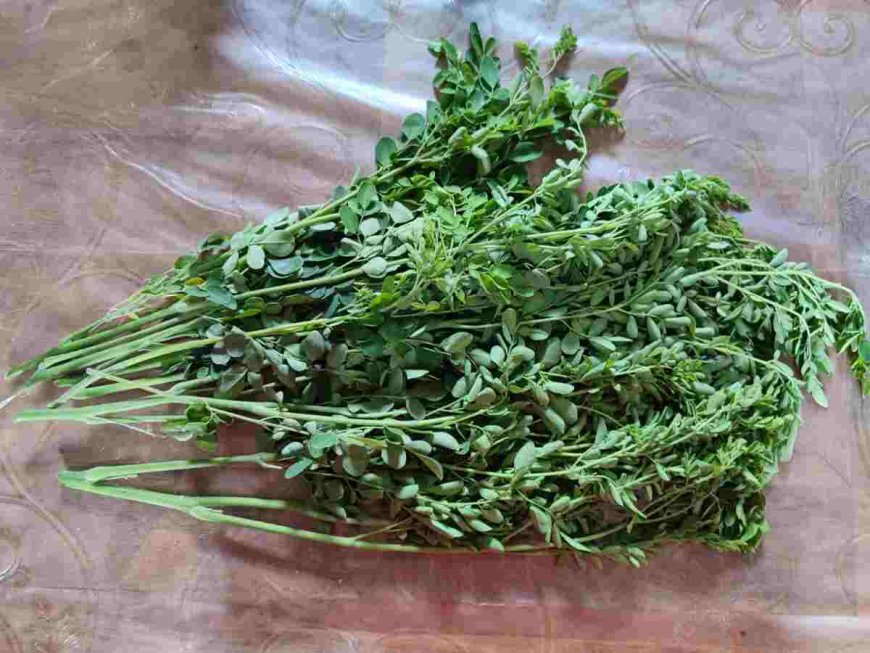
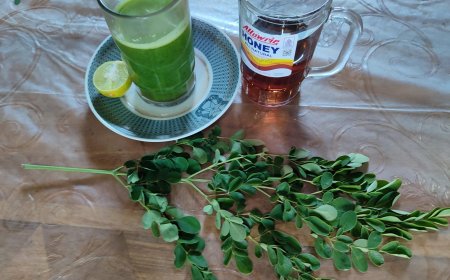
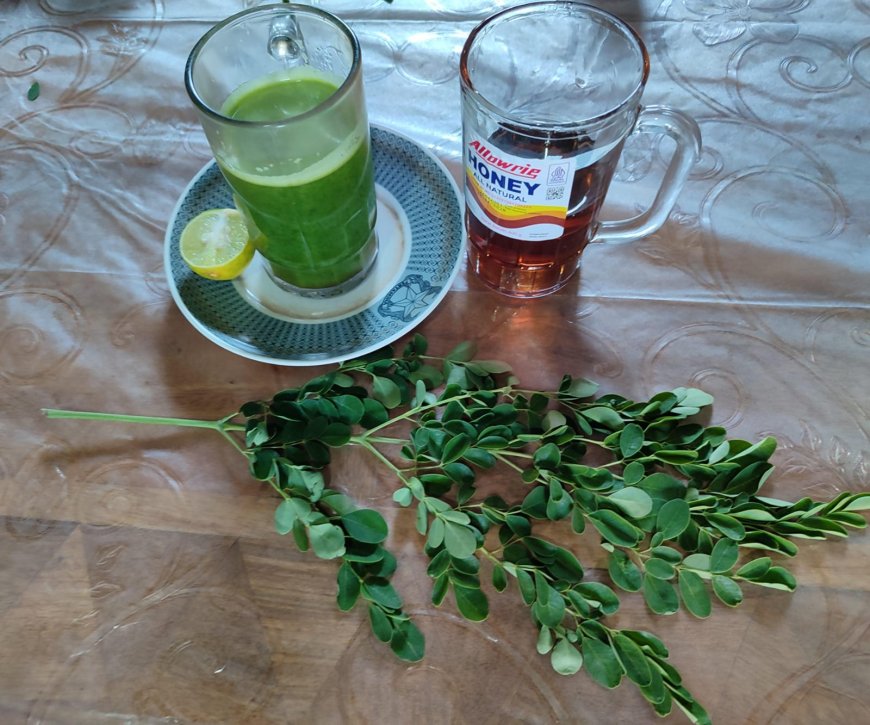
Moringa Leaves (Source: Personal Collection)
One of the plants mentioned in the Lontar Taru Pramana is moringa. This plant, which is quite easy to find in everyday life, turns out to have a place in the knowledge of traditional Balinese medicine. Parts of the moringa plant can be used as ingredients in herbal remedies to help address several health complaints. This shows that moringa is not only known as a plant commonly used in everyday life, but also has a story and medicinal knowledge that has been passed down through the lontar.
An interesting aspect of the Lontar Taru Pramana is its explanation of the use of moringa leaves for eye pain. The lontar states, “Titiang wit kelor... dawun titiange dados anggen tamba sakit mata, rawuhing jeruk lengis, uyah areng saring degdegang, tutuh netrania...” which simply explains that moringa leaves can be used as a remedy for eye pain by mixing them with lime juice and salt. The herbal remedy is then processed and strained, and the liquid is applied to the eyes. This record shows that long ago, Balinese people already possessed knowledge about using moringa as part of traditional medicine.
In this herbal remedy, moringa leaves are the main ingredient used to make the remedy. The moringa leaves are first processed together with other ingredients, and then the result of the preparation is strained to obtain a liquid. This method shows that the use of plants as medicine is not simply done by taking and using the plant directly, but also involves certain processes based on inherited knowledge. Each ingredient used in the herbal remedy has a role in the preparation process, resulting in a remedy that follows the method described in the lontar.
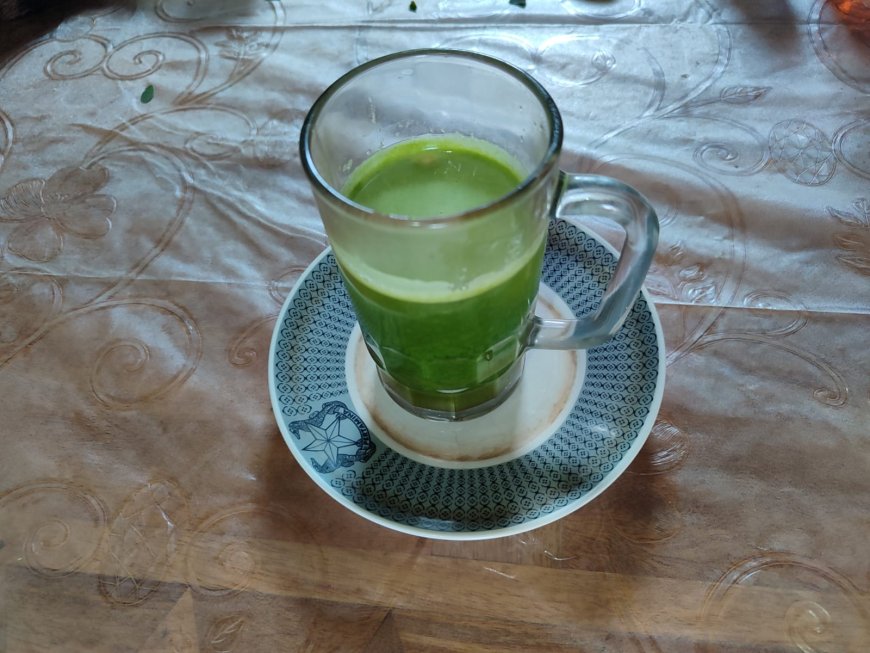
Moringa Loloh (Source: Personal Collection)
In the past, the moringa leaf remedy for eye pain was used by applying it as eye drops. Along with the development of the times, the use of moringa leaves can be introduced in a different form, namely as a drink or loloh. In Balinese tradition, loloh is known as a drink made from natural ingredients, especially plants, and has traditionally been used to help maintain health.
This change in the form of utilization is one way to reintroduce knowledge about moringa to modern society. If people in the past knew the moringa remedy in the form of a liquid applied to the eyes, today moringa leaves can be processed into loloh, which is easier to prepare and consume in everyday life. Processing moringa into loloh also makes the use of moringa leaves feel closer to modern habits, where various types of herbal drinks are already familiar.
Here is one simple way to make loloh using moringa leaves as the main ingredient.
Ingredients:
- Moringa Leaves (2 handfuls)
- Water (250 ml)
- Lime (½ fruit)
- Honey (1 tablespoon)
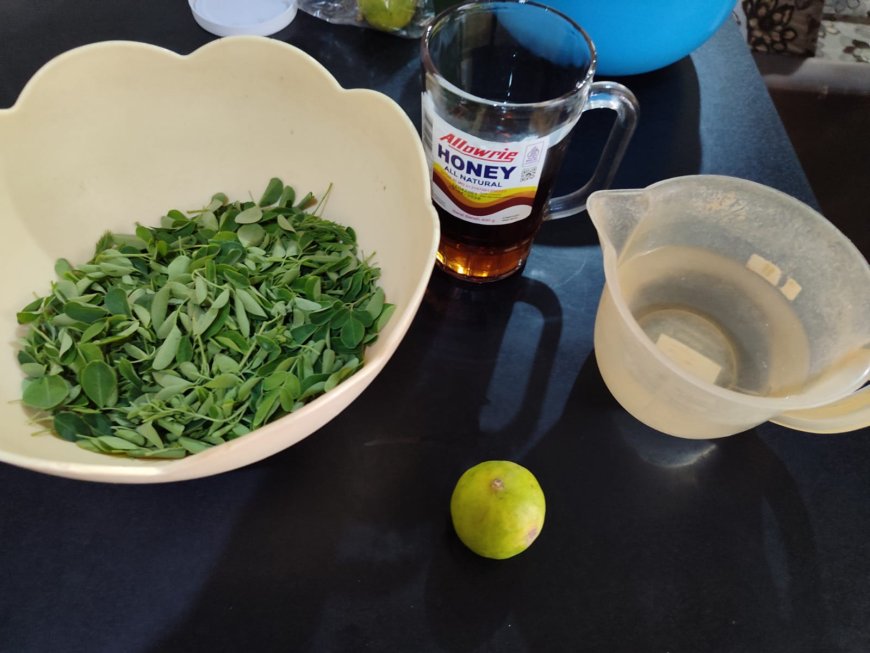
Ingredients Used (Source: Personal Collection)
Tools:
- Strainer
- Glass
- Spoon
- Container
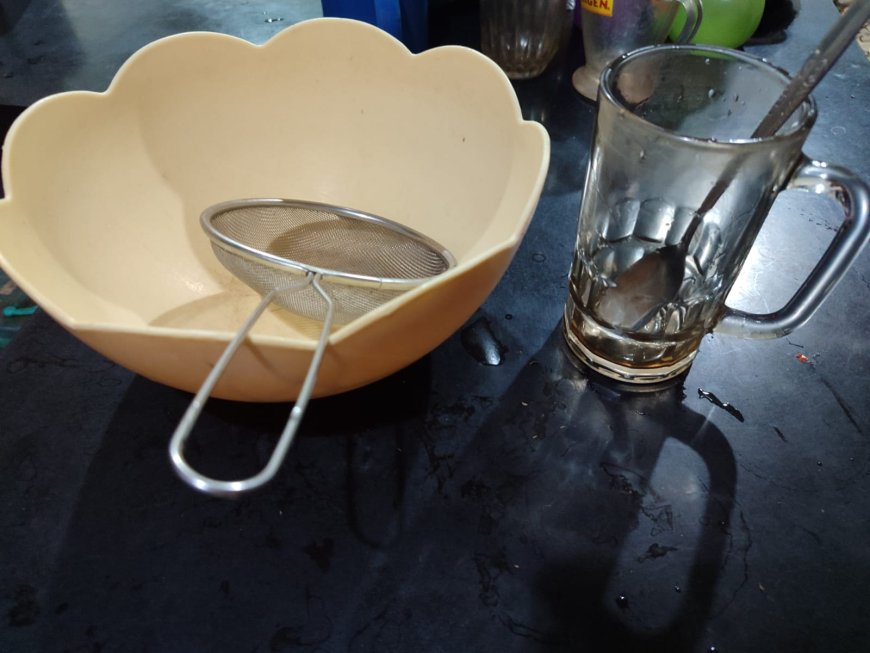
Tools Used (Source: Personal Collection)
Preparation Steps:
1. Preparing and washing the moringa leaves.
Take 2 handfuls of moringa leaves, then separate the leaves from the stems. Wash the leaves thoroughly under running water.
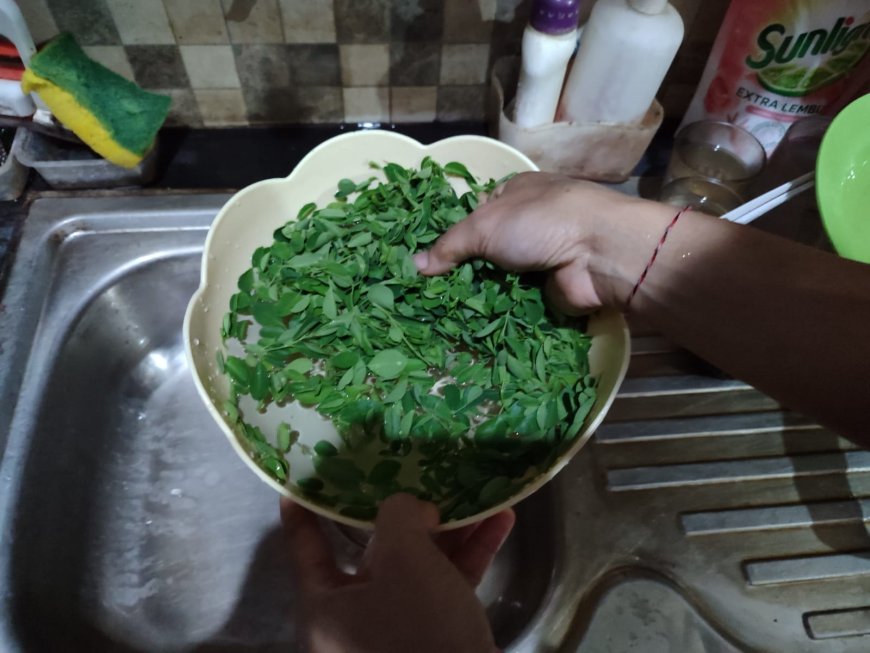
Washing the Moringa Leaves (Source: Personal Collection)
2. Mashing the moringa leaves.
Place the washed moringa leaves into a container, then squeeze or mash the leaves by hand until they become crushed and release their juice. Gradually add 250 ml of boiled water while continuing to squeeze and stir until the moringa leaf extract is mixed with the water. Once the leaves are sufficiently crushed and evenly mixed, the mixture is ready to be strained.
3. Straining the loloh.
After the moringa leaves have been mashed and mixed with 250 ml of boiled water, pour the mixture into a strainer. Gently press and squeeze the moringa leaves by hand so that the extract and liquid come out, then separate the remaining moringa pulp from the liquid.
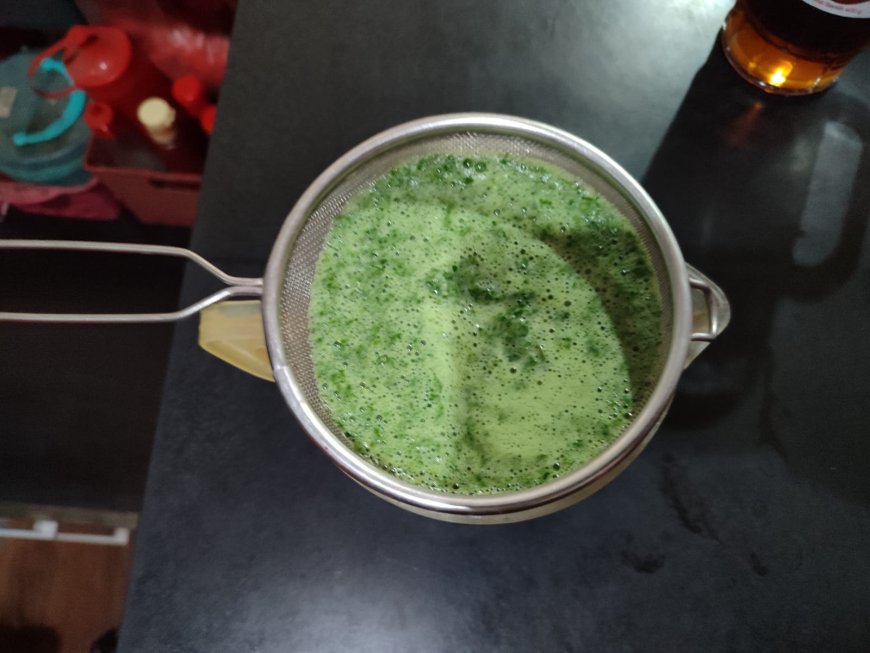
Straining the Mashed Mixture (Source: Personal Collection)
4. Pouring the loloh into a glass.
Pour the strained liquid into a glass.
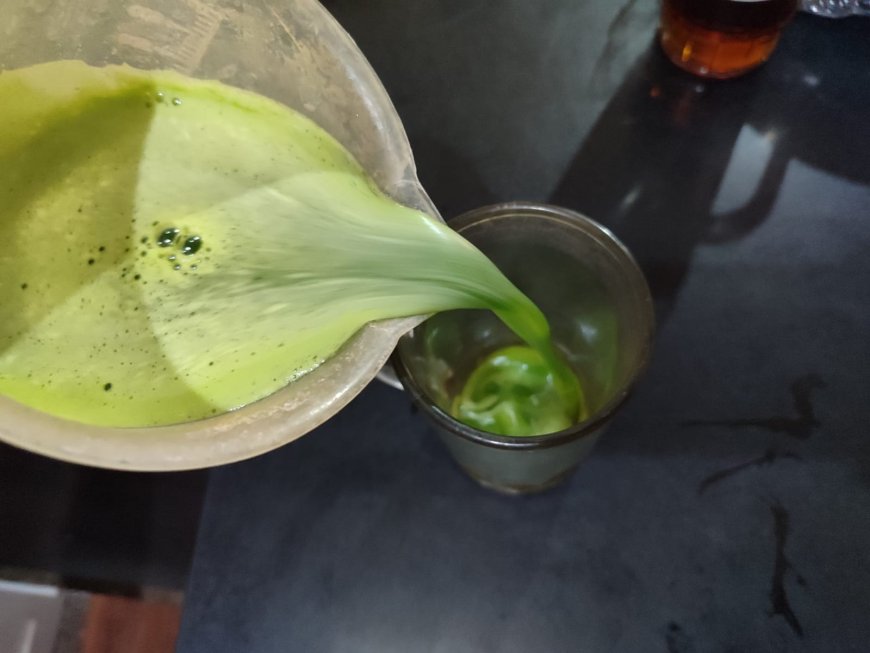
Pouring the Loloh into a Glass (Source: Personal Collection)
5. Adding lime.
Add ½ of a lime to give the drink a refreshing taste.
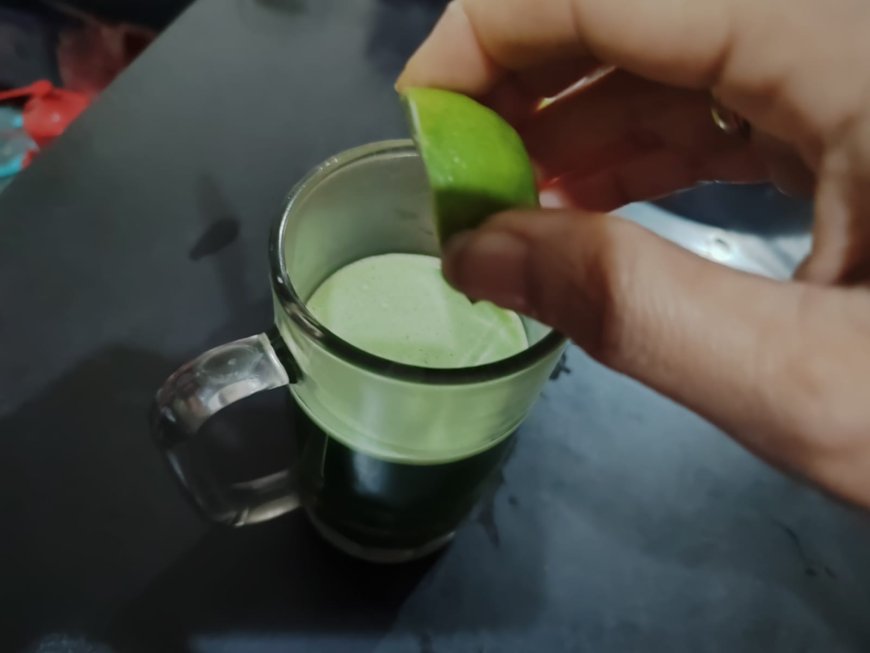
Adding Lime (Source: Personal Collection)
6. Adding honey.
Add 1 tablespoon of honey, then stir until evenly mixed.
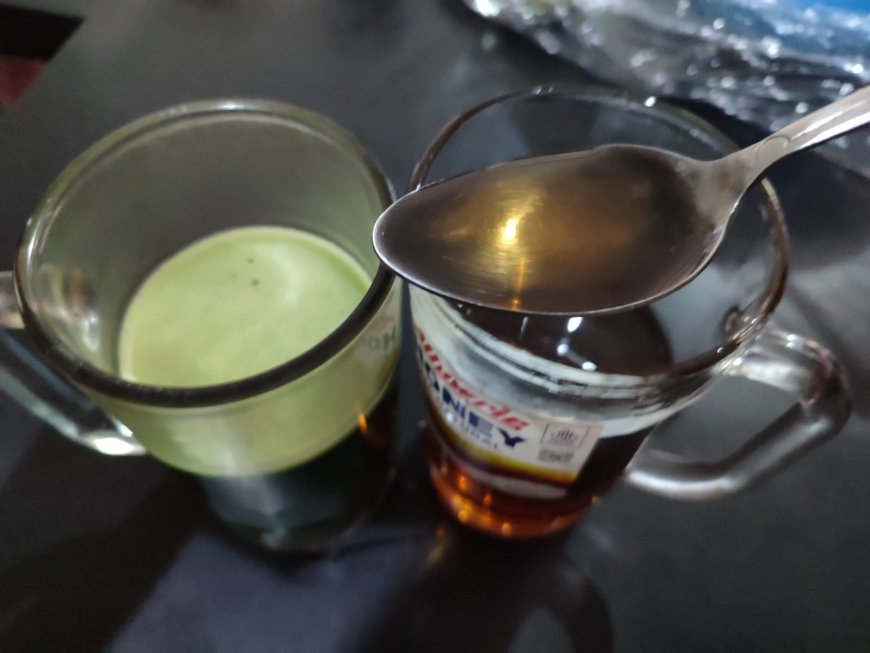
Adding Honey (Source: Personal Collection)
7. Moringa Loloh is Ready to Enjoy
The prepared moringa loloh is ready to be served and consumed.
Moringa Loloh Ready to Enjoy (Source: Personal Collection)
Through this simple process, moringa leaves, which were previously known simply as plants growing around the environment, can be processed into a drink that is easier to consume. This process can also be one way to reintroduce traditional plants to the younger generation in a form that is more simple and closer to everyday life.
Lontar Taru Pramana shows that the richness of traditional Balinese medicine lies not only in the remedies used, but also in the knowledge passed down through it. Moringa is one example of a simple plant that has a story within this knowledge. From its use as a remedy for eye pain to its development into loloh, moringa demonstrates how traditional knowledge can continue to be introduced into modern life. What needs to be preserved is not only the plant, but also the knowledge and cultural values associated with it so that they remain known to future generations.
Source:
Ketut Diah Candra Wedani, A. A. (2022). REINTRODUCE LONTAR USADA TARU PRAMANA DALAM MEMPERTAHANKAN BUDAYA TRADITIONAL MEDICINE BALI DI TRANSISI ERA SOCIETY 5.0. UNMAS, 515-523. Retrieved Agustus 22, 2026, from https://e-journal.unmas.ac.id/index.php/pilar/article/view/4472/3459
Suriyani, L. D. (2024, Maret 12). Taru Pramana, Naskah Bali Klasik tentang Kesaktian Tanaman sebagai Pengobatan. Retrieved from Mongabay: https://mongabay.co.id/2024/03/12/taru-pramana-naskah-bali-klasik-tentang-kesaktian-tanaman-sebagai-pengobatan/