



Cheers and Spears in the Ngerebeg Matiti Suara Blahkiuh Tradition
Bamboo spears, spirited cheers, and processions are all part of the Ngerebeg Matiti Suara in the traditional village of Blahkiuh. This tradition is more than just a celebration, it is a way for the community to reaffirm its bond with Pura Luhur Giri Kusuma. Beneath the festive atmosphere of the procession lie stories of Singasari, tales of victory, and messages passed down to future generations. How, then, do these narratives come together in Ngerebeg Matiti Suara

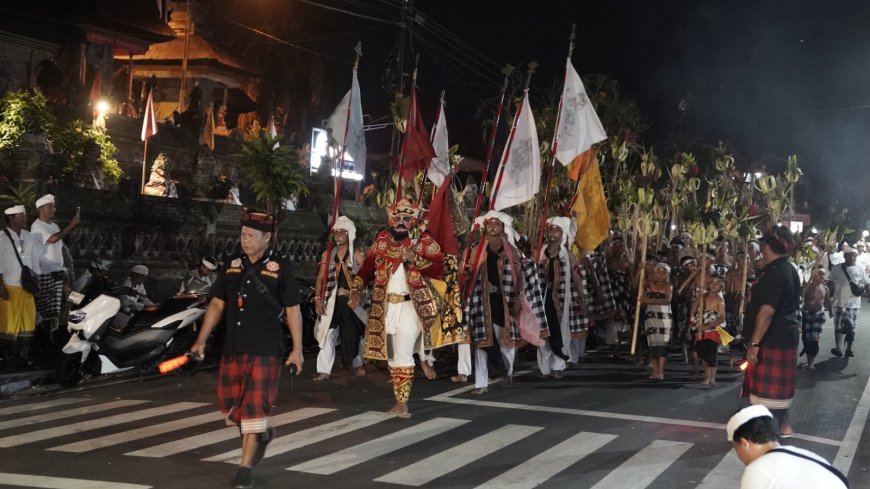
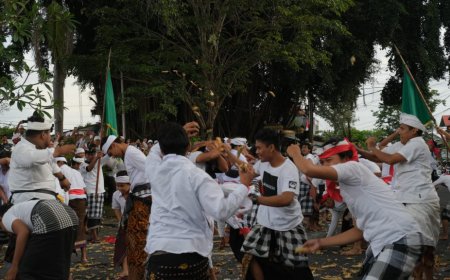
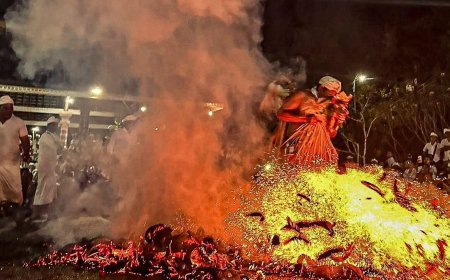
Ngerebeg is a tradition in the customary village of Blahkiuh, observed only during Umanis Kuningan an event that takes place every six months. Cheers erupt as residents set out, carrying spears and sharpened bamboo poles, to circle the village of Blahkiuh. At various points along the route, these shouts ring out again, signaling high spirits and a sense of triumph. At first glance, the atmosphere resembles a festive procession. Yet, for the people of Blahkiuh, Ngerebeg Matiti Suara is far more than just a lively gathering. Behind the spears, the dancing, and the resounding cheers lies a long history concerning Singasari and the Pura Luhur Giri Kusuma temple.
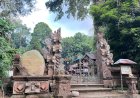
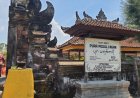
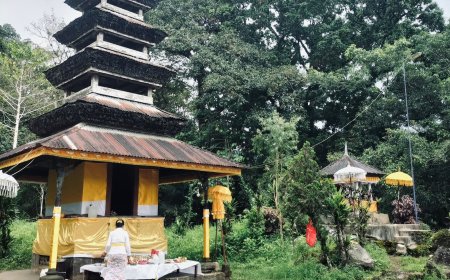
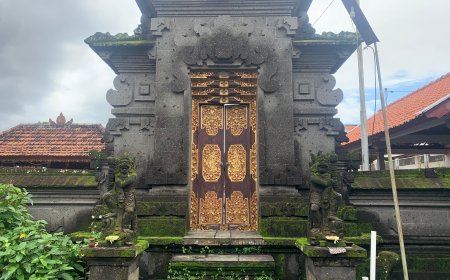
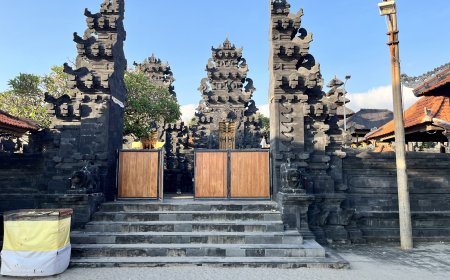
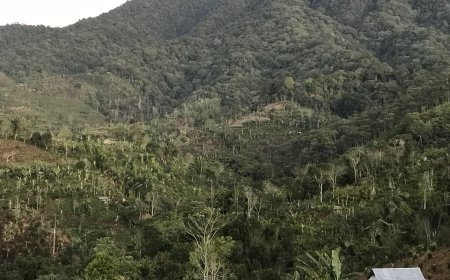
The story of this tradition is inseparable from the existence of Pura Luhur Giri Kusuma; its origins date back to a time when the Blahkiuh region was still dense wilderness. According to accounts drawn from the Lontar (palm-leaf manuscript) of Pura Luhur Giri Kusuma, a figure named Geni Jaya arrived in the area. During a journey northward, he encountered various misfortunes but subsequently received divine guidance to construct a place of worship upon his return to his homeland. This sanctuary came to be known as Pura Luhur Giri Kusuma. The name itself holds specific significance: "Giri" means mountain, "Luhur" denotes something exalted or noble, and "Kusuma" refers to the fragrance of a flower. The wilderness area, previously nameless, was subsequently named Singasari, explains Gusti Ngurah Made Oka.
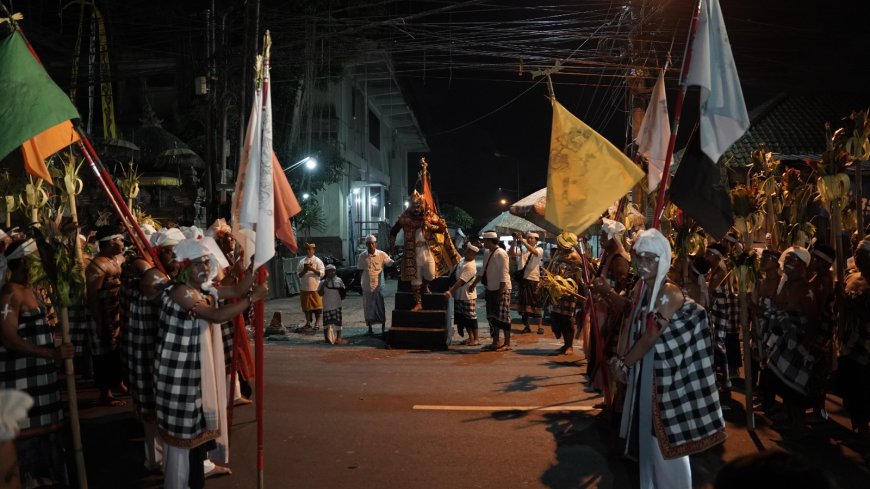
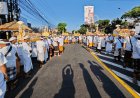
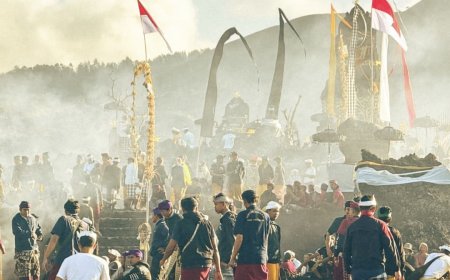
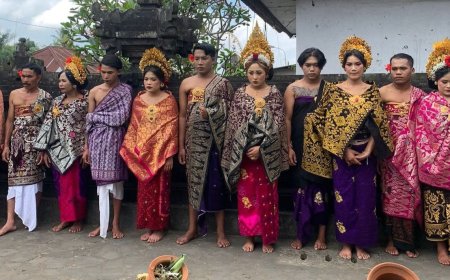
Residents from various banjar in Blahkiuh celebrate the Ngerebeg Matiti Suara tradition. (Source: Traditional custom documentation)
According to Gusti Ngurah Made Oka’s account, the people of Singasari enjoyed a prosperous life; rice harvests were bountiful, and the local economy thrived. However, the community eventually grew complacent in their prosperity and began to neglect the temple, a lapse that was followed by the onset of various misfortunes.
The story continues into the 17th century, when Singasari fell under the dominion of the Kingdom of Mengwi. I Gusti Putu Pacung was stationed in Singasari, accompanied by a group of people. During this period, his child fell ill. Upon seeking an explanation, it was revealed that the illness was linked to the community's growing indifference toward the local temple. Once the relationship with the temple was restored and Pura Luhur Giri Kusuma was renovated, the child's health improved, and the community's well-being was likewise restored.
Singasari was known for its formidable strength during conflicts with neighboring regions. Consequently, Ngerebeg emerged as both a victory celebration and a display of the village's might. The atmosphere of the Ngerebeg characterized by the brandishing of weapons and spirited cheering is thus not without reason, the tradition serves to perpetuate the legacy of that past victory.
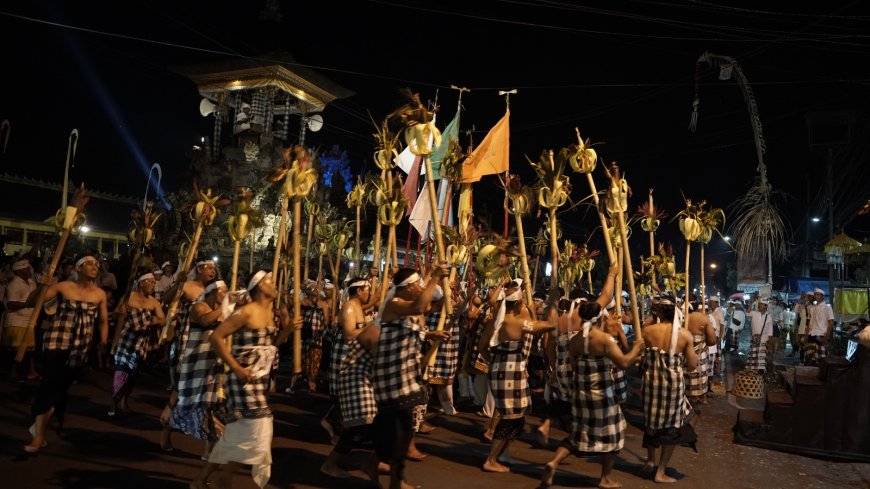
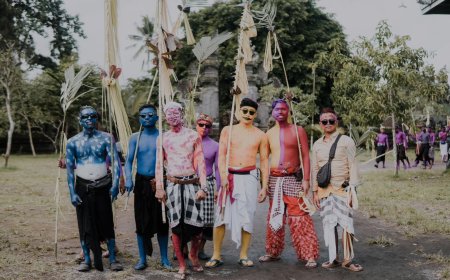
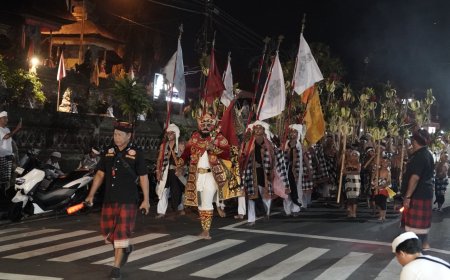
Procession carrying sharpened bamboo spears during the Ngerebeg Matiti Suara tradition (Source: Traditional custom documentation)
Ngerebeg is subsequently held on a regular six-month cycle, specifically on Manis Kuningan. The event is organized by the community of Blahkiuh Village and involves the village's various *banjar* (local community units). Over time, the idea arose to evolve the form of Ngerebeg so that it would not simply repeat the same pattern; this led to the creation of Matiti Suara.
According to Gusti Ngurah Made Oka, Matiti Suara serves as a means to infuse elements of art, faith, and devotion into the Ngerebeg tradition. Each banjar (traditional community organization) has the opportunity to showcase its creativity, with a drive to deliver a performance that surpasses previous ones. Nevertheless, this creativity remains within the bounds of established conventions that cannot be altered.
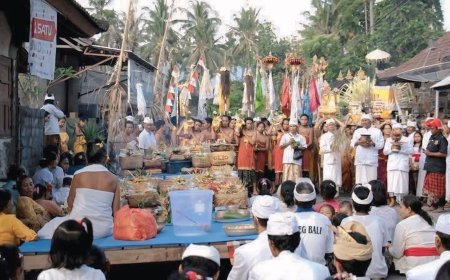
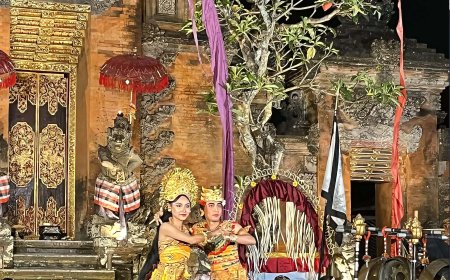
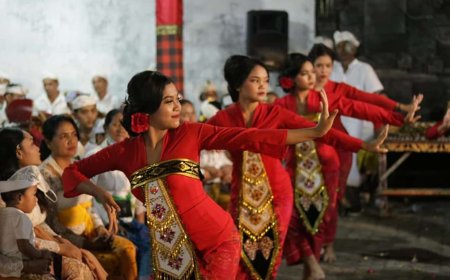
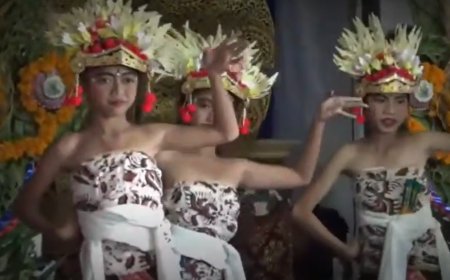
Before the procession begins, there are preparatory and purification stages. Participants assigned to the event gather, bringing spears, gelanggang (ceremonial poles), sharpened bamboo, and other equipment. Afterward, they return to the event site to take part in the series of rituals and performances. Various dances are also featured during the proceedings, such as Rejang Sari, Rejang Renteng, and Rejang Dewa.
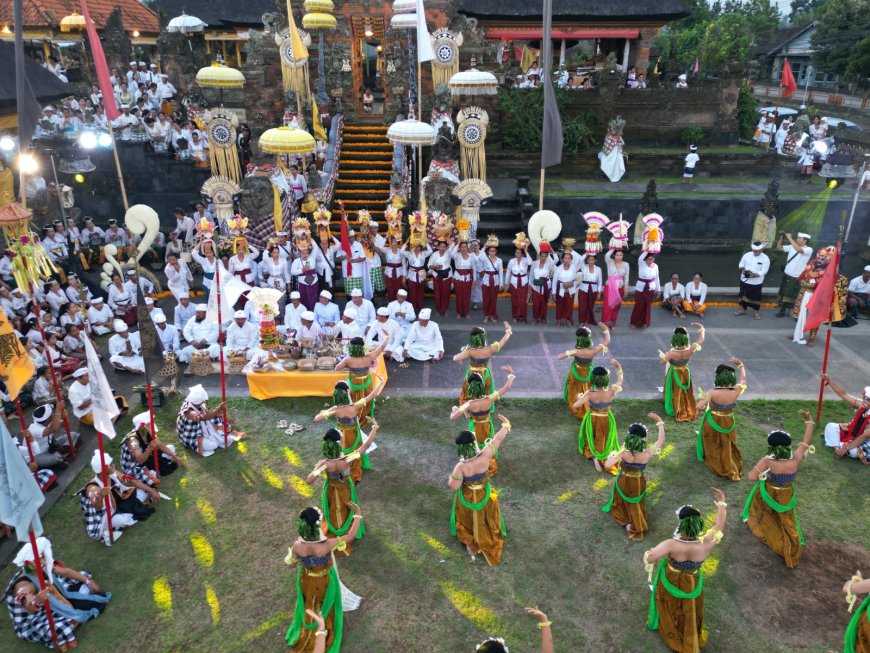
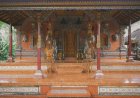
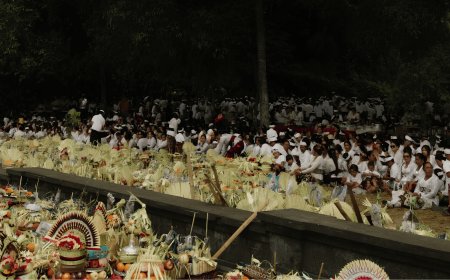
Performance of the Rejang dance at Pura Luhur Giri Kusuma (Source: Traditional custom documentation)
A key element of the Ngerebeg Matiti Suara is the reading of the Purana Giri Kusuma. During the procession, a participant acting as a patih (minister) recites the contents of the Purana (a sacred text). The message serves as a reminder to the community not to forget the existence of Pura Luhur Giri Kusuma. This message is then passed on to the younger generation through a segment containing tutur (traditional teachings or counsel). Thus, Matiti Suara is not merely a performance but also a medium for conveying messages from one generation to the next.
Once this sequence concludes, the community proceeds to circle the village three times in a clockwise direction. At various intersections, they join in collective cheering. After completing the circuit, the group returns to Pura Luhur Giri Kusuma, where they are welcomed by their respective families.
Sharpened bamboo poles and spears are also utilized during the procession. According to Gusti Ngura Made Oka, the spears undergo a ritual preparation process and are sprinkled with Tirta (holy water). They are further adorned with plawa or puring leaves and kwangen (a Balinese ritual offering).
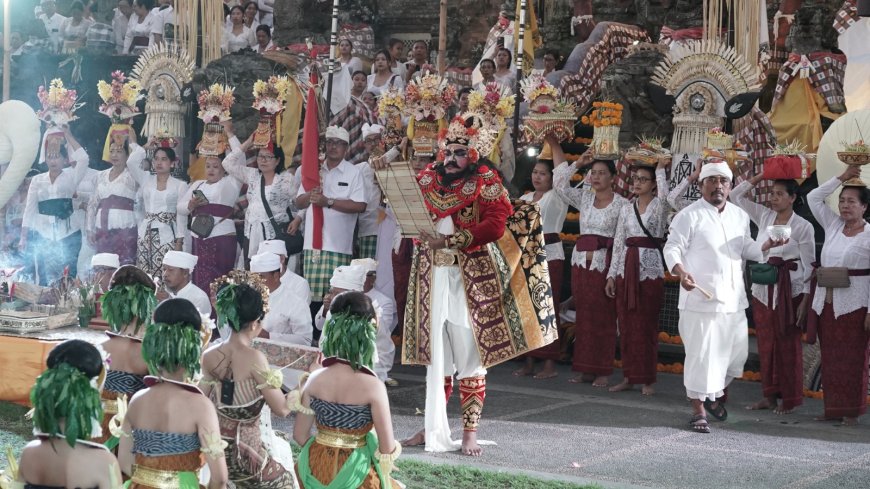
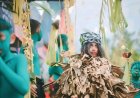
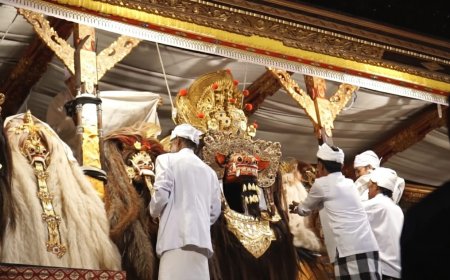
Reading of the Purana Giri Kusuma by the Patih (Source: Traditional custom documentation)
What makes this event particularly interesting is the participation of the seven banjar in Blahkiuh. Each banjar presents its contribution in a unique way, reflecting its specific strengths and resources, some involve a large number of members, even including children. For the community, the involvement of children goes beyond merely assisting with the procession. It is hoped that they will gain firsthand experience of the activities, ensuring the tradition endures beyond the current generation.
Ultimately, Ngerebeg Matiti Suara is about more than just the paraded spears or the sounds echoing through the streets of Blahkiuh. It embodies a story of celebrated victory, the community's bond with Pura Luhur Giri Kusuma, and a message passed down to future generations through the Purana Giri Kusuma. Gusti Ngurah Made Oka, the Bendesa Adat (customary village head) of Blahkiuh, hopes that the younger generation will continue to preserve the Ngerebeg Matiti Suara tradition and care for Pura Luhur Giri Kusuma, thereby ensuring lasting peace and harmony for the community.