







Beji Geduh Temple: A Hidden Sacred Spring That Heals Inner Wounds
In the middle of the rice fields of Sebatu, Tegallalang, there's a beji that has never been crowded, and was never meant to be. Its name is Beji Geduh. To reach it, your feet have to get wet with the morning dew on the paddy paths, and your ears have to accept losing phone signal along the way. Most people who come aren't here for photos. They come for melukat, washing themselves with water believed to ease the weight they've carried in from outside. What makes it compelling isn't just the clarity of its water, but the way it has held on to its stillness amid Bali's increasingly crowded spiritual tourism scene.

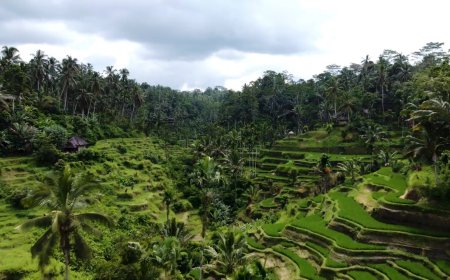
Beji Geduh has no grand gate to welcome visitors. The only way in is a narrow rice-field path in Desa Pujungan Kelod, Sebatu. There's no parking attendant, no souvenir stalls, and phone signal comes and goes. All you hear is the trickle of irrigation water mixed with wind moving through the rice stalks. The deeper you walk, the quieter it gets, as if the fields themselves form a threshold before reaching ground that is more sacred.
For anyone used to visiting well-manicured tourist temples, the walk to Beji Geduh can feel awkward at first, then oddly calming. No one approaches offering photo services or sarong rentals. That absence is exactly what makes the atmosphere feel more genuine, as if time itself slows down the moment your feet touch the path leading to the spring.
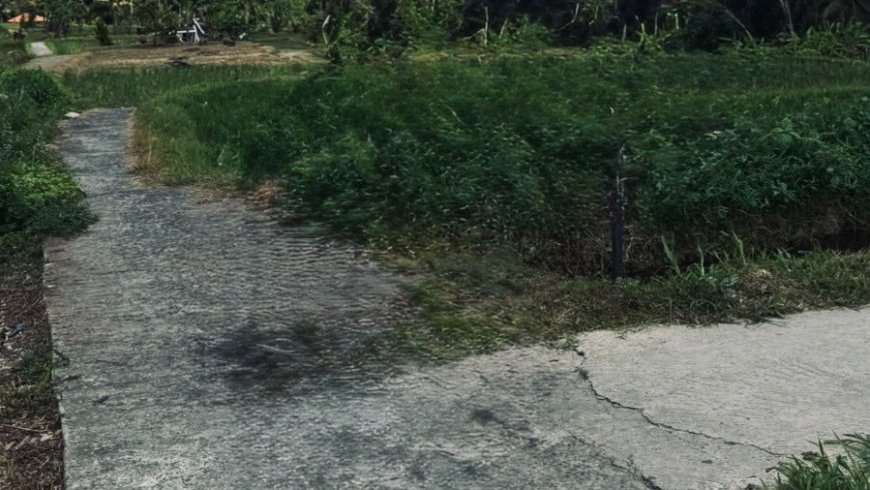
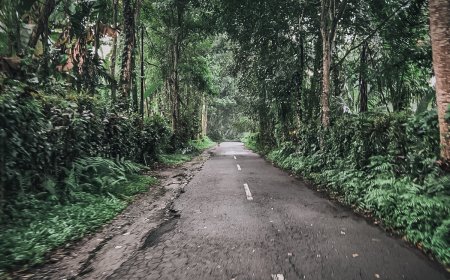
The footpath through the rice fields that must be crossed to reach Beji Geduh. (Photo source: personal collection)
Administratively, Beji Geduh sits within Desa Pujungan Kelod, Sebatu, in the Tegallalang district of Gianyar Regency. The area is known for its many beji, the local term for sacred springs used by Balinese people for melukat, a ritual of washing oneself in holy water as a form of physical and spiritual purification. Not far away stand Beji Dalem Kusti and the Pura Gunung Kawi Sebatu complex, both better known among tourists, along with Pesiraman Dalem Pingit, which went viral after a foreign tourist's much-told discovery story in 2007. Beji Geduh sits among these well-known names, yet has chosen a far quieter path.
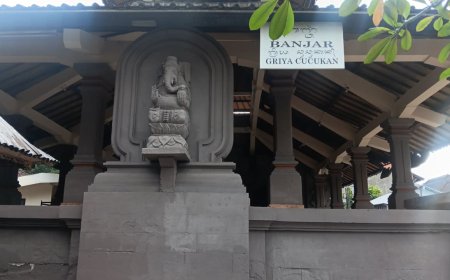
The number of springs clustered in one area isn't just geographic coincidence. Sebatu lies along a water channel running down from the northern slopes of Gianyar, giving the village many natural springs that have long been cared for and treated as sacred sites. Each beji is typically empon, watched over and maintained, by a specific banjar or traditional village unit responsible for its cleanliness and sanctity across generations.
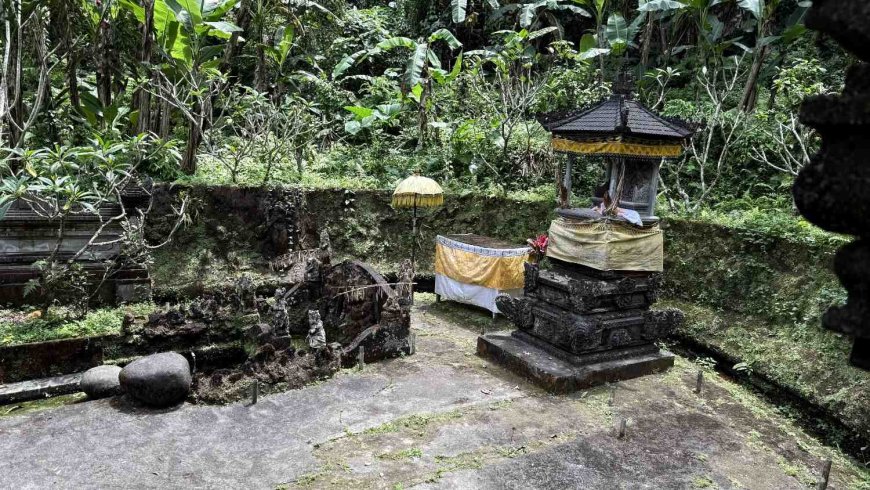
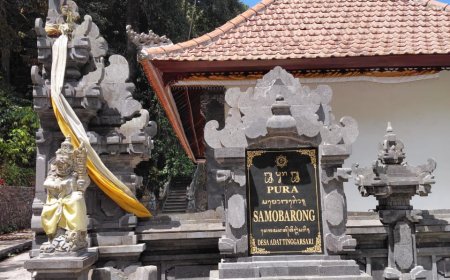
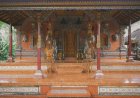
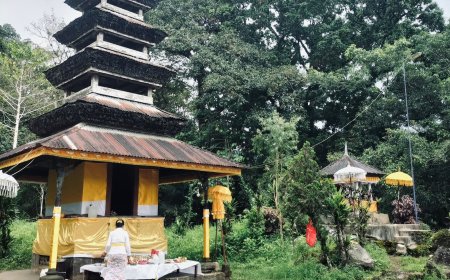
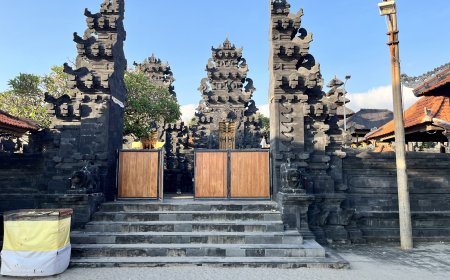
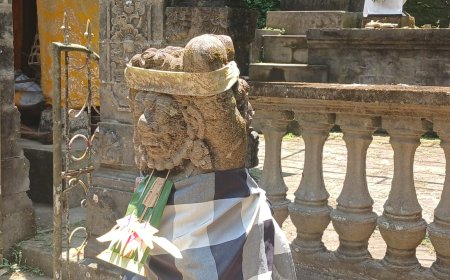
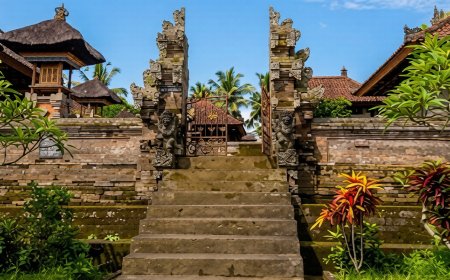
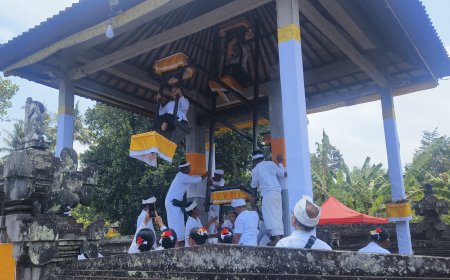
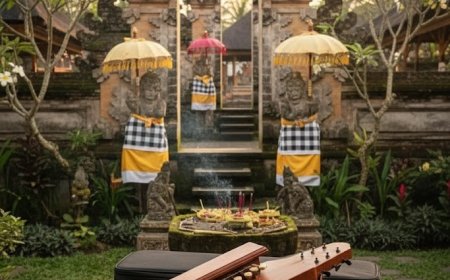
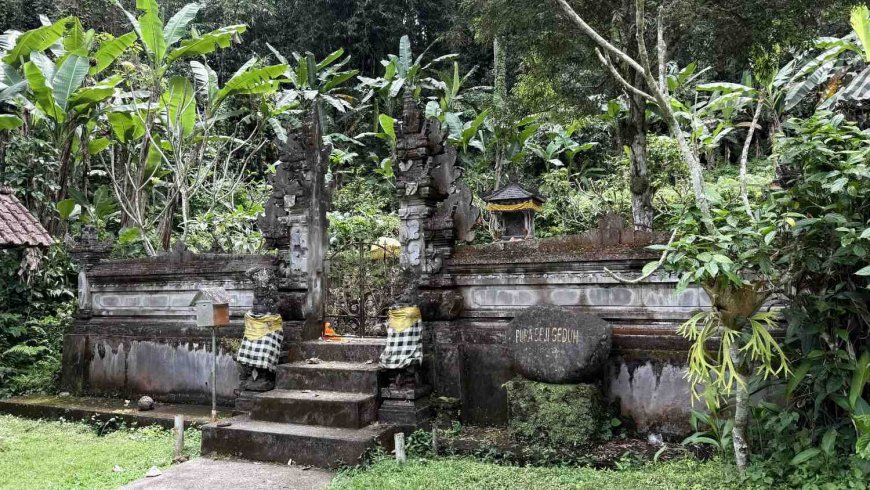
The pelinggih (shrine) area within the Beji Geduh complex, where worshippers offer prayers before melukat. (Photo source: personal collection)
Locals often describe a "strong aura" upon entering Beji Geduh, an impression shared by many visitors, whether they've come to bathe or simply to pray. This isn't something that can be measured scientifically. It's a felt experience passed down through generations, in line with a widespread Balinese belief that springs untouched by heavy human activity tend to hold on to a stronger spiritual energy.
In practice, melukat is often described as a moment of "letting go" of whatever weight someone carries in from outside, whether that's exhaustion, a cluttered mind, or a feeling that's been sitting heavy in the chest. Some worshippers come not just to follow tradition, but because they genuinely want to feel lighter afterward. That sense of relief is usually described as a personal experience, not something promised or sold as a healing service. And that's exactly where the honesty of this place lies: the water at Beji Geduh doesn't promise instant miracles, only a quiet space that's becoming harder and harder to find elsewhere.
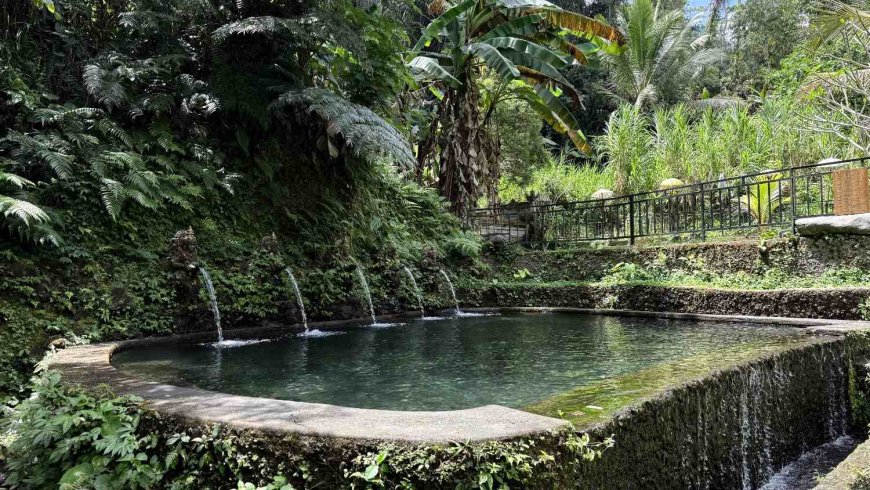
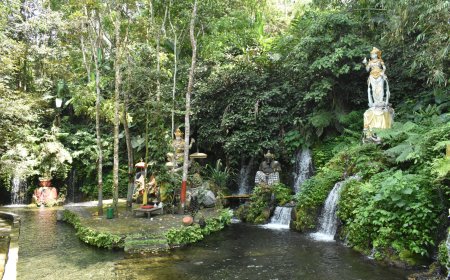
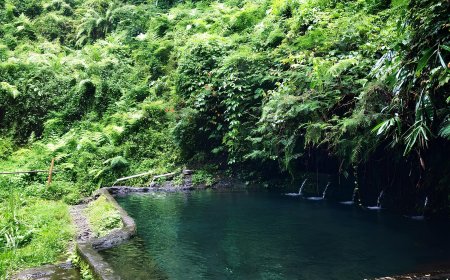
The spout where worshippers bathe at Beji Geduh. The water flows directly from a mountain spring. (Photo source: personal collection)
Compared to its neighboring springs, which already appear frequently in travel articles and on social media, the history and origins of Beji Geduh remain largely undocumented. There isn't much written record, no books, and few sources that explain when this site first became a place of purification, or who first discovered it. What stories do exist have mostly passed by word of mouth among villagers rather than through inscriptions or official documents, a pattern common among small, banjar-scale springs, unlike larger temples whose histories are more often recorded by cultural institutions.
This lack of exposure cuts both ways. On one hand, the site stays better preserved precisely because it hasn't been overrun by large numbers of tourists. On the other, curious outsiders struggle to find complete, accurate information before visiting. Writing like this, ideally paired with direct conversations with local residents or temple caretakers, is one way to help fill in that still-limited record.
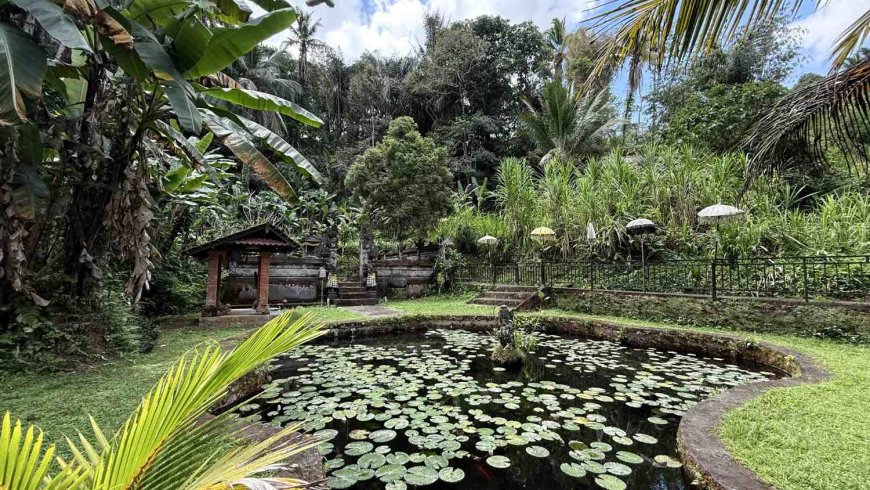
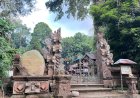
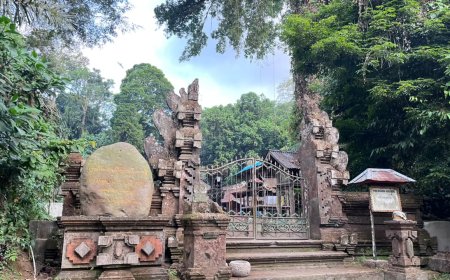
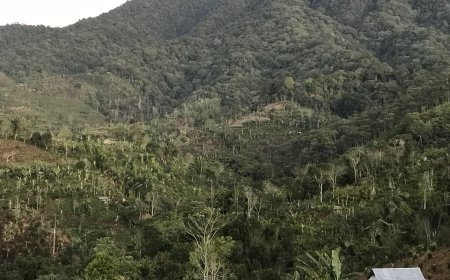
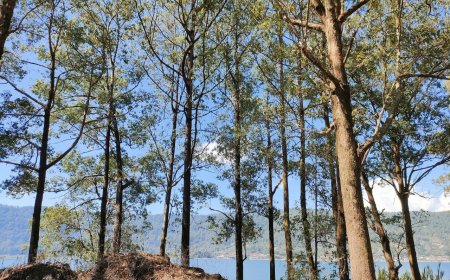
The quiet, largely visitor-free atmosphere at Beji Geduh, surrounded by trees and rice fields. (Photo source: personal collection)
For the people of Sebatu, a beji isn't just a place to visit. It's part of the village's spiritual system, woven into everyday life. Water from the mountain spring is believed to carry sanctity, and preserving it is treated as equivalent to preserving the balance between people and nature, a value the community continues to hold even as tourism in Tegallalang grows rapidly around it.
The rules here are simple but strictly observed: dress modestly, usually with a sarong or sash, avoid coarse language within the sacred grounds, and women who are menstruating are asked not to enter the main prayer area. This isn't an arbitrary restriction. It stems from the concept of sekala-niskala, the balance between what is visible and what is unseen, a principle underlying many customary rules across Bali.
In recent years, melukat tourism has grown more popular, drawing both domestic and international visitors seeking a way to cleanse themselves away from the noise of big-city life. That trend has opened new economic opportunities for local residents, while also requiring them to make sure the sacred function of the spring isn't eroded by excessive commercialization.
Beji Geduh, still tucked out of sight, sits at an interesting crossroads worth watching: will it remain a quiet space for local residents, or will it eventually follow the same path as other springs in Sebatu that are now drawing visitors from all over the world?
Beji Geduh holds on to something increasingly rare in Bali: a stillness that still feels genuine. Set among rice fields far from the crowds, it's a reminder that not every sacred place needs to be widely known to still carry meaning, and that not every kind of peace in Bali has to be found somewhere already full of visitors. For the people of Sebatu, Beji Geduh remains their spiritual home. And for anyone who arrives carrying something heavy, it offers one simple thing: a place to pause and wash it off, whatever "lighter" happens to mean to them.