




















Wong Bedolot: Guardians of Traditional Balance in the Terteran Tradition of Jasri Village
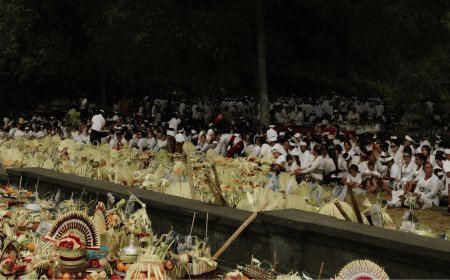
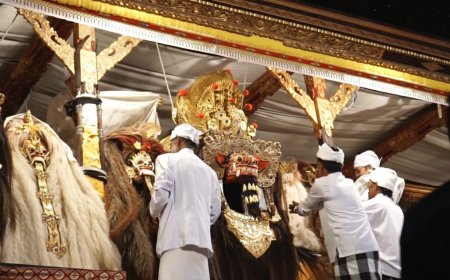
The Terteran tradition in Jasri Village, Karangasem, is a cultural heritage that involves various roles within the community. One of them is Wong Bedolot, whose responsibilities include carrying the caru, accompanying Batara from Pura Dalem, and preparing the necessary caru offerings. These roles make Wong Bedolot an important part of preserving the continuity and balance of the Terteran tradition.

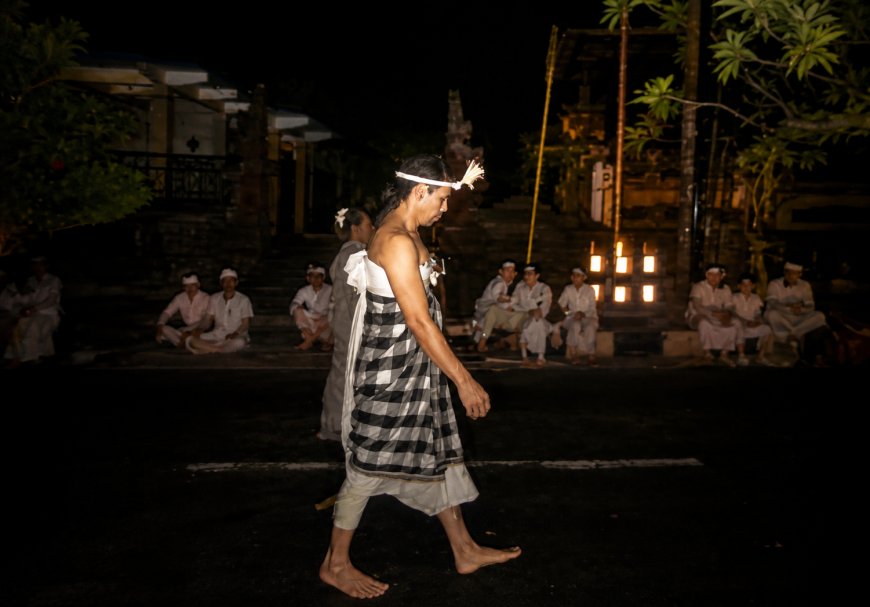
Karangasem is known as one of the regions in Bali that has a diverse range of traditions that are still preserved by its community. One of these is the Terteran tradition, which remains an important part of the life of the people of Jasri Village. This tradition is not only associated with the implementation of rituals but also reflects historical connections and the division of roles within the community that have been maintained for generations.
To understand this connection, it is important to first learn about the existence of Bedolot Village. In the past, the area of Jasri Village was divided into two parts, namely Kajanan Village and Kelodan Village. Kelodan Village later became known as Bedolot Village. The existence of Bedolot Village is believed to date back to the time of the ancestors and is even said to have existed before Jasri Village.
According to stories passed down from generation to generation, the people of Bedolot Village originally came from a hilly area known as Bukit Kayon. This area is still located within the territory of Jasri Village today. From this area, the community gradually moved and established a settlement that later became part of the history of Bedolot Village.
The relationship between Bedolot Village and Jasri Village is not limited to the history of their origins. The two also share a connection with the Terteran tradition, which continues to be practiced by the community to this day.

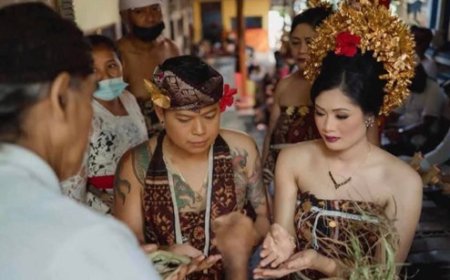
Photo of the Ter-Teran Ceremony Between Village Community Members (Village Documentation)
In this tradition, the people of Bedolot have specific responsibilities that form an important part of the ceremonial process.
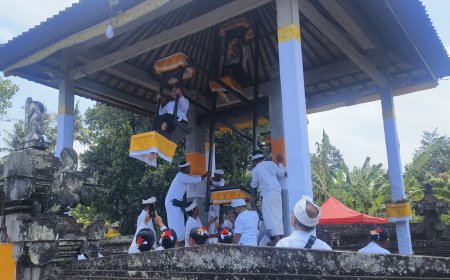
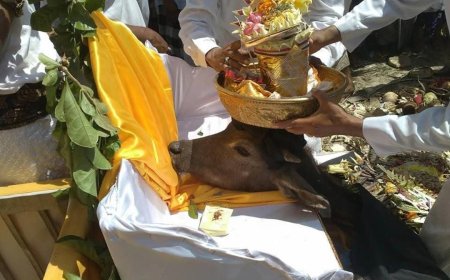
One of the main responsibilities of Wong Bedolot is to carry or melembat the caru to the coastal area. The caru is carried as part of the series of rituals. In addition, Wong Bedolot, or the people of Pekraman Bedolot Village, are also responsible for accompanying Batara, who resides at Pura Dalem.

Photo of Wong Bedolot Carrying the Caru to the Coast (Village Documentation)
The responsibilities of Wong Bedolot also include providing caru when there is a shortage of ritual materials during the ceremony. This responsibility shows that their role extends beyond simply participating in the procession, as they are also involved in ensuring the availability of the materials needed for the ceremony.
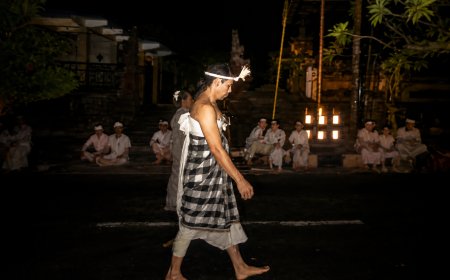
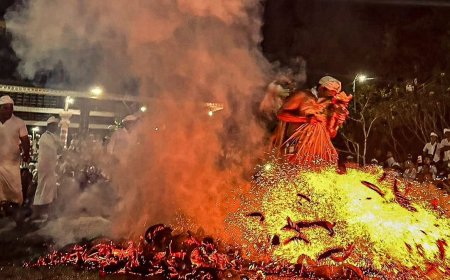
As they carry the caru toward the beach, Wong Bedolot are welcomed with fire by the people of Kajanan Village.

Kajanan Village Welcoming Wong Bedolot with Fire (Village Documentation)
This procession holds a special meaning for the community. The fire used is not only intended to provide illumination but is also believed to drive away Bhuta Bhuti, which is considered capable of disturbing the peace and harmony of Jasri Village.
Fire is also believed to symbolize purification. When Wong Bedolot are welcomed with fire, the community believes that negative elements or Bhuta Kala cannot follow them back to the village. Thus, the procession is not merely part of the journey toward the coast but also carries symbolic meaning related to protection and purification.
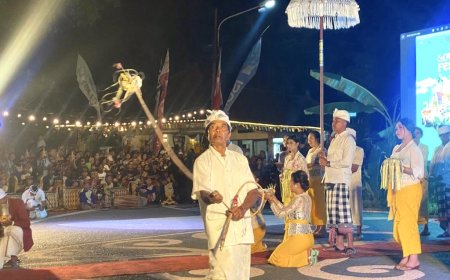
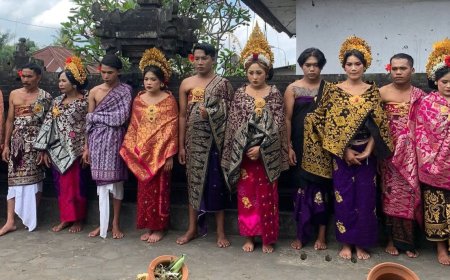
Behind the responsibilities of the male members of Wong Bedolot, the wives of Wong Bedolot also have an important role in the series of activities. They are responsible for performing Nanding Cakep. Before proceeding to Bale Agung of Kajanan Village, the wives first gather at Bale Agung of Kelodan Village, also known as Bedolot Village. Afterward, they walk together toward Bale Agung of Kajanan Village.

Women of Wong Bedolot Walking to Bale Agung Temple in Kajanan Village (Village Documentation)
The journey is carried out in silence. The wives of Wong Bedolot are not allowed to make any sound throughout the journey. Upon arriving at Bale Agung of Kajanan Village, they perform Nanding Cakep. During the activity, they are also only allowed to communicate through gestures and are not permitted to speak.

Nanding Cakep Activity at Bale Agung Temple (Village Documentation)
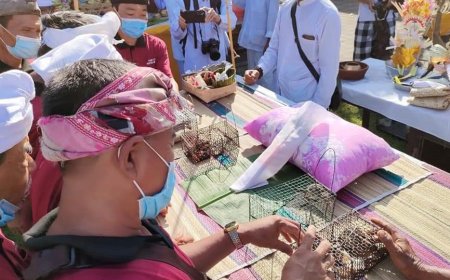
Nanding Cakep is an important part of the tradition because the offerings produced are later used as part of the caru ritual. A total of 1,016 cakep offerings are prepared, consisting of 700 cakep sapi, 250 cakep celeng, and 66 cakep asu blang bungkem.
Every 25 jaitan cakep are then tied together into one roll. These rolls are placed on the caru materials prepared from the three types of animals. Once completed, hundreds of cakep offerings are carried toward the coast or sea by the krama pengerembat caru, also known as Wong Bedolot.

Cakep Offerings Tied and Placed on Each Caru (Village Documentation)
When the entire series of activities is considered, it becomes clear that the Terteran tradition in Jasri Village is not carried out by a single group alone. Kajanan Village and Bedolot Village each have their own roles in the implementation of the tradition. Some are responsible for carrying the caru, accompanying Batara, preparing ritual materials, accompanying the procession with fire, and preparing the cakep offerings that form part of the caru.
This division of responsibilities demonstrates a mutually complementary relationship. Wong Bedolot are not merely participants in the Terteran tradition but also carry responsibilities directly connected to several important stages of the ceremony. At the same time, the involvement of the people of Kajanan Village shows that the tradition continues through relationships between different community groups that have been passed down from generation to generation.
In this context, Wong Bedolot can be seen as an important part of the balance within the Terteran tradition. Their role does not stand alone but serves as one of the elements that complements the roles of other community members. Their existence demonstrates how a tradition can continue to be preserved because each group understands and carries out the responsibilities that have been inherited through generations.
The Terteran tradition in Jasri Village not only reflects the richness of Balinese culture but also illustrates the relationship between history, beliefs, and the division of roles within community life. The existence of Wong Bedolot is an important part of this relationship.
From carrying the caru to the coast, accompanying Batara, and preparing the caru materials to the involvement of the wives of Wong Bedolot in Nanding Cakep, each responsibility has its own place within the series of traditional activities. Meanwhile, the people of Kajanan Village also play a role in welcoming the journey of Wong Bedolot through the mendak fire procession.
The entire series of activities shows that Terteran continues to survive not simply because the ceremony is performed repeatedly, but because the community continues to carry out its roles and responsibilities. Wong Bedolot are one of the groups that help preserve an important part of this tradition.
Therefore, understanding Terteran also means understanding the people behind it. Wong Bedolot are not merely participants in a ceremonial procession but are part of the social and cultural relationships that allow the Terteran tradition to maintain its place in the lives of the people of Jasri Village.