











































Pulung-Pulung Ayam Goreng: Not Just Another Meatball, Bali's Savory Meat Balls Dominated by Grated Coconut
At first glance similar to meatballs, pulung-pulung ayam (Balinese chicken meatballs) actually has its own story in Balinese home kitchens. Most people know it in the form of a broth-based dish, with meat balls floating among pieces of chayote squash. But there is another version rarely discussed: pulung-pulung ayam that is fried and combined directly with basa genep-seasoned grated coconut, producing a texture that is crispy on the outside yet still soft on the inside. It is this blend of basa genep merging with grated coconut that makes the savory flavor run far deeper than the broth version most people are familiar with.

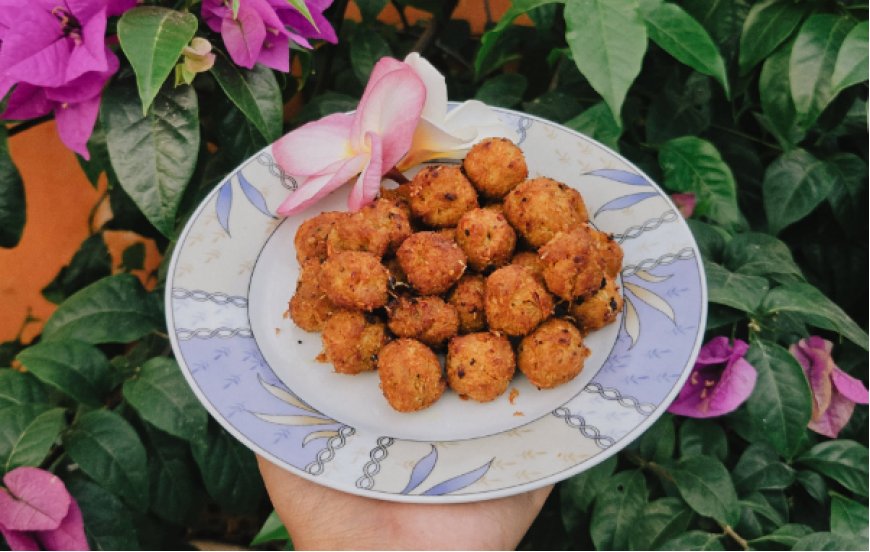
In many Balinese kitchens, one small question often comes up as soon as the name pulung-pulung ayam is mentioned: "the broth one or the fried one?" For those who have never tasted it, the name "pulung-pulung" itself might sound unfamiliar. But the moment a plate of fried pulung-pulung ayam is served, the aroma of basa genep spices immediately rises and stirs the appetite. That is what sets this dish apart from being seen as just "Bali's version of a meatball," as it is often mistaken for. Pulung-pulung ayam has its own spirit of spice, and this fried version reveals another side of Bali's rich chicken cuisine that has rarely been noticed.
Pulung-Pulung, the Meatball That's Often Misunderstood
The word "pulung" in Balinese refers to the way the mixture is shaped into balls by hand, a technique that is also commonly used in making ordinary meatballs. Because of its round shape and meat-based ingredients, many people outside Bali immediately equate pulung-pulung ayam with an ordinary meatball.
Yet the fundamental difference lies in the ingredients and seasoning used. While ordinary meatballs generally rely only on meat, garlic, pepper, and powdered stock, pulung-pulung ayam is instead built from a combination of minced chicken, grated coconut, and basa genep — the complete spice blend that serves as the identity of nearly all Balinese cooking. This difference in ingredients and seasoning is what makes the flavor of pulung-pulung ayam far richer and more layered than an ordinary meatball, even though the shape may look similar at first glance.
Basa Genep and Grated Coconut, a Pairing That Shapes Its Character
Basa genep, which literally means "complete spice blend," is a signature Balinese seasoning made from shallots, garlic, turmeric, ginger, galangal, aromatic ginger (kencur), candlenut, chili, shrimp paste (terasi), and sugar, all ground together into one paste. The presence of kencur and turmeric gives it a sharper, more distinctive aroma compared to the base seasonings of other regional cuisines, while terasi adds a deep, savory layer to the mixture.
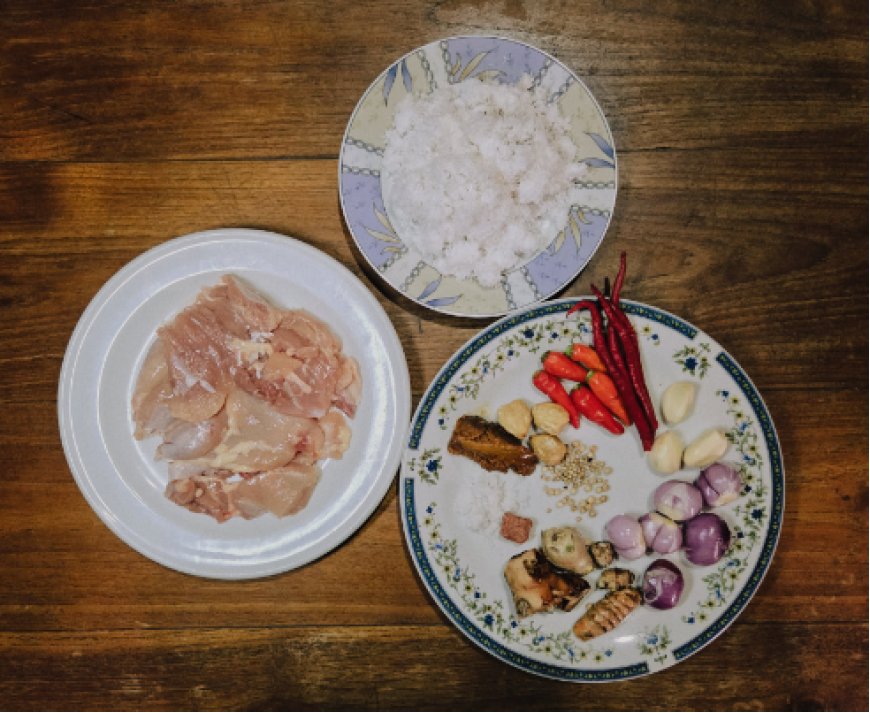
Ingredients for Fried Pulung-Pulung Ayam (Source: Personal Collection)
What makes this fried version of pulung-pulung ayam different is that grated coconut becomes a main ingredient that is blended directly into the meat, rather than serving merely as a garnish or side element. The coconut chosen is usually still fairly young, because its texture is softer and its moisture content more balanced, keeping the inside of the pulung-pulung from turning tough when fried.
This grated coconut is then mixed with basa genep and finely minced chicken to form a single batter. This combination is what gives the pulung-pulung its signature contrast — crispy on the outside yet still soft on the inside once fried. This combination of two textures becomes the central story of this dish — not just an ordinary fried meatball, but a pairing of crispiness and tenderness that complements each other in a single bite.
Basa Genep, a Spice Heritage That Has Existed Since Ancient Bali
Interestingly, the basa genep that gives pulung-pulung ayam its soul is not a seasoning that appeared overnight. Basa genep is believed to have been known since the era of ancient Bali, and is said to have even been recorded in lontar palm-leaf manuscripts under the term usabe. Referring back to the period when Balinese society first came to know the subak irrigation and farming system, this seasoning is estimated to be more than two thousand years old, although no scientific research has yet confirmed that figure with certainty. According to popular accounts, usabe or basa genep was used in the past to season important dishes for royal ceremonies, such as bebek betutu and sate lilit.
Ingredients such as shallots, garlic, turmeric, kencur, and galangal have indeed long grown and been cultivated on Balinese soil. Meanwhile, other spices such as pepper, nutmeg, and cloves do not actually grow in Bali, and are thought to have only become known to Balinese society through inter-island and international trade routes in the past. This blending of local ingredients and imported spices is believed to be the origin of basa genep as it is known today — the seasoning that unifies nearly all Balinese cooking, including pulung-pulung ayam. Because there is no written record that fully confirms its origins in detail, this account is best understood as part of knowledge passed down orally within the community, rather than as fully verified historical fact.
The Process of Making Fried Pulung-Pulung Ayam with Coconut
The process of making fried pulung-pulung ayam with coconut actually begins long before the chicken is even touched — it starts with preparing the basa genep. Ingredients such as shallots, garlic, turmeric, ginger, galangal, kencur, candlenut, chili, terasi, and sugar are ground first, either using a traditional stone mortar or a blender, until the texture is completely smooth so the seasoning can blend perfectly into the mixture later. This finely ground basa genep is then dry-roasted without oil in a pan until its aroma is released and its color darkens slightly, a step that allows the spices to develop a deeper, more mature flavor.
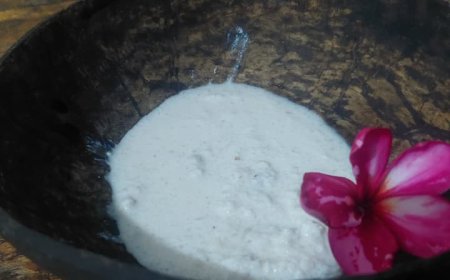
Once the basa genep is ready, the chicken is then prepared. The chicken meat, usually breast or thigh, is finely minced or ground beforehand. The young grated coconut is then mixed together with the roasted basa genep and the minced chicken, along with a little salt to intensify the flavor. These three ingredients are combined and kneaded by hand until fully blended, ensuring the seasoning is distributed evenly throughout the mixture rather than just coating the surface.
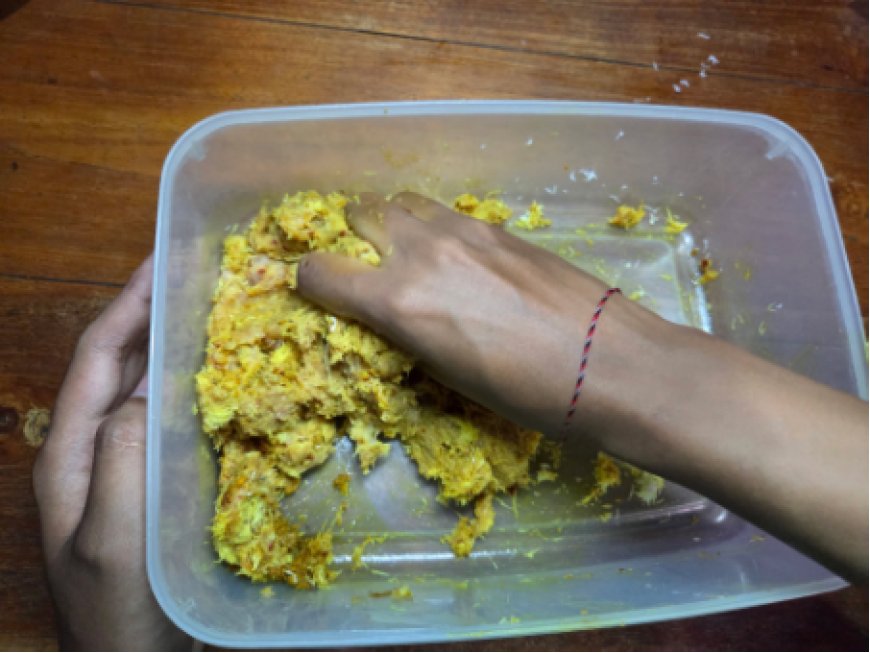
Mixing the Pulung-Pulung Ayam Batter (Source: Personal Collection)
Once the batter is evenly mixed, it is shaped into small balls using the hands or with the help of a spoon, much like forming ordinary meatballs. This shaping process is usually done one by one by hand, so the size of each ball may vary slightly — and it is precisely this that gives the dish its distinctly "homemade" feel. The pulung-pulung balls are then deep-fried in hot oil until golden brown and crispy on the outside, while the inside remains soft and savory thanks to the moisture retained from the young coconut and the chicken.
This dish is quite flexible in how it can be served. Fried pulung-pulung ayam can be enjoyed as a side dish with rice, just like its broth-based counterpart, but it also works well as a snack, given its bite-sized portions and crispy exterior. This flexibility is one of the advantages the fried version holds over the broth version, which is generally only eaten as a warm, soup-based side dish.
Why Fried Pulung-Pulung Ayam Still Deserves Attention
The existence of this fried pulung-pulung ayam shows that the richness of Balinese flavor can actually be found in simple, everyday forms. This dish requires no expensive ingredients or complicated process — only the patience to prepare basa genep properly and the care to fry it until the grated coconut turns truly crispy and the meat inside is cooked through evenly.
Fried pulung-pulung ayam with coconut proves that ingredients as simple as chicken, grated coconut, and basa genep can create a flavor experience entirely different from its broth-based version. Crispy on the outside, soft on the inside, and carrying a savory spice flavor that lingers on the palate — that is what makes this humble home-style dish deserving of wider recognition, not merely as a "Balinese-style meatball," but as another form of the richness that basa genep brings to the soul of Balinese cooking. Beneath its simplicity, fried pulung-pulung ayam is a reminder that not every piece of Balinese culinary heritage needs to be grand to deserve introduction. Sometimes, it is enough for it to come from a home kitchen, shaped by hand, and fried until golden.