
















Interlocking Traditions: How Endogamy Preserves Tenganan's Ancestral Land
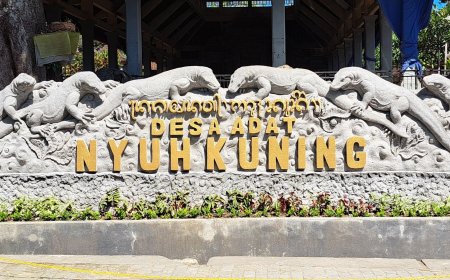
In Tenganan Pegringsingan Traditional Village, Karangasem, a marriage rule exists that is found nowhere else in Bali. As one of only three surviving Bali Aga villages, its residents are required to marry fellow villagers to keep the ancestral land intact. If a young man dares to marry a woman from outside the village, he must be ready to lose a great deal yet the fate of Tenganan women who do the same is far harsher. So, what really happens to those who dare to break this rule?

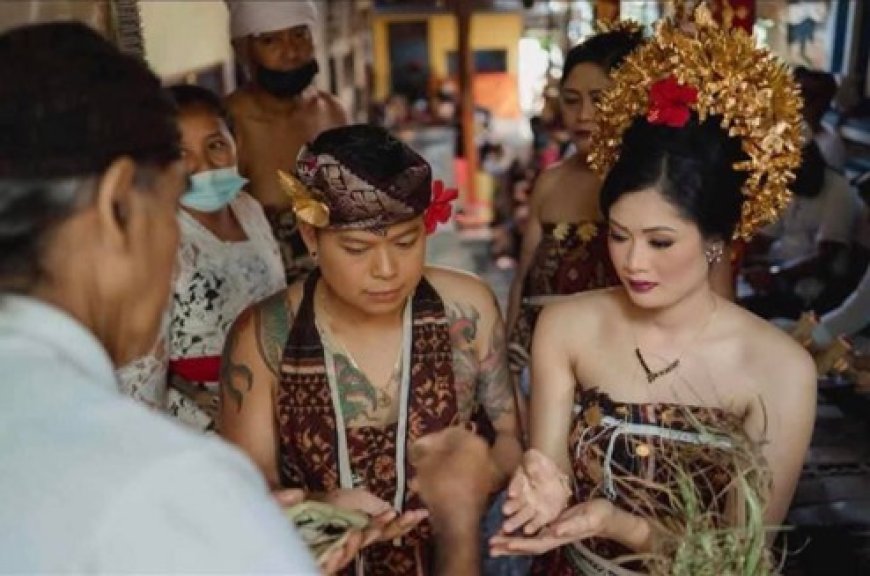
Before a young man from Tenganan can propose to the woman he loves, he must first join the sekeha teruna and undergo the meteruna nyoman ceremony. This is a coming of age ritual in which young men temporarily live in the village dormitory and are guided directly by the traditional elders. The woman he wishes to marry goes through a similar process through the sekeha daha and the medaha ceremony. Without completing these two rituals, a young man or woman is not yet considered ready for marriage.
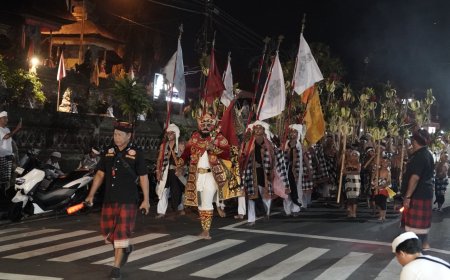
Once both are ready, the proposal process begins, with the groom's family bringing base suhunan, a bundle of betel leaves, areca nuts, tobacco, sugarcane, and Balinese sugar to the bride's family home. Once the offering is accepted and turned into a porosan, the woman's status officially changes to gelan, or formally engaged. If the time between engagement and marriage is long, this process is repeated every full moon until the mebyakaon ceremony is held and the marriage is officially recognized by the traditional village.
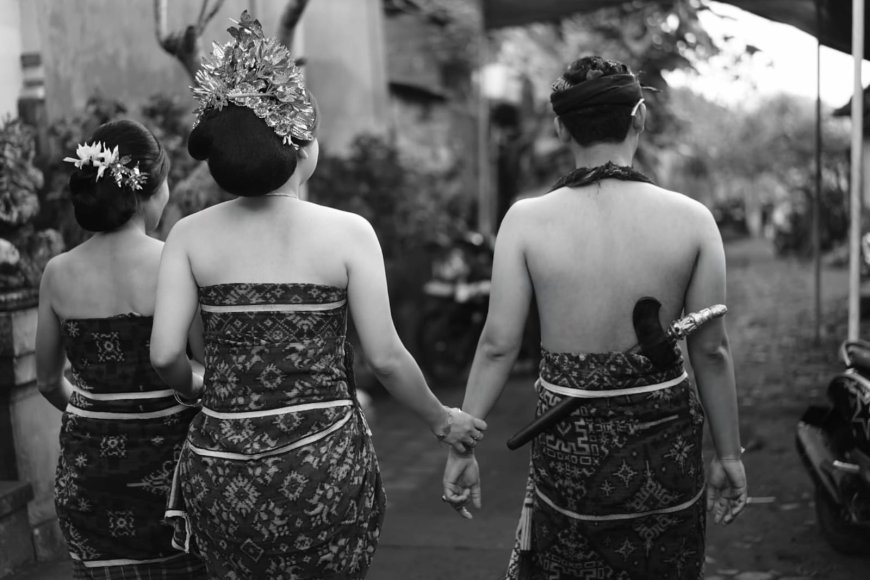
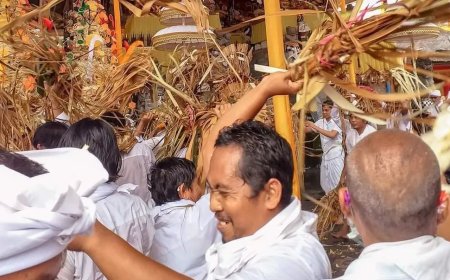
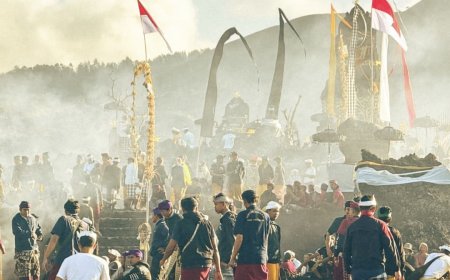
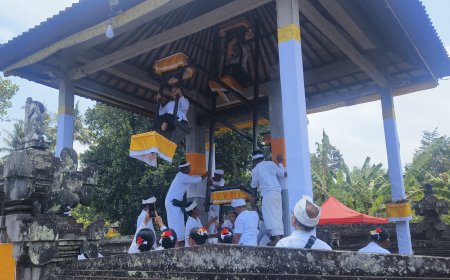
The Procession Toward the Mebyakaon Ceremony Before the Marriage Is Officially Recognized by the Traditional Village
(Source: Personal Collection)
What sets this process apart from marriage elsewhere is the requirement that a Tenganan man must marry a woman who is also from Tenganan. This binding rule is called endogamy, and breaking it means facing customary sanctions. Even so, the rule allows for one exception women from the Pasek clan, or those holding the title Dayu (a title for high-caste women in Bali), may still be married and brought to live in Tenganan. This is due to a shared element in the ngaben (cremation) ritual, where both groups use a living damar kurung and cremate the deceased a similarity considered to keep them "aligned" spiritually with Tenganan's traditional order.
Outside this exception, a young man immediately loses his status as krama desa. The people of Tenganan are divided into three social tiers, like krama desa, the highest tier, entitled to sit in the Sangkep Bale Agung council and required to perform full ngayah (communal temple duties) at Pura Bale Agung, krama gumi pulangan, those who marry someone from the Pasek or Dayu group and may still live in Tenganan but lose their rights as krama desa, and krama gumi, those who lose their rights from birth due to certain physical conditions. This difference in status is not merely symbolic on paper. Its impact is felt daily from a smaller share of rice-field harvests compared to krama desa, to ngayah duties no longer performed in full at Pura Bale Agung, but only on certain designated days.
Yet while the consequences for men can still be "negotiated" through the krama gumi pulangan status, the fate of women who marry outside the village is far more severe. She is immediately considered to have left the Tenganan Traditional Village and loses all her rights. In addition, her family will be fined in accordance with Article 6 of Tenganan's awig-awig, which states: "Whoever, a person of the village, allows (permits marriage outside the traditional village of) his child or sister, or assists or provides the opportunity for it, is entirely forbidden and shall be fined by the village." In the past, this fine was paid in the form of 2,000 kepeng coins, but today it has been replaced with Rp75,000, paid by the parents every year for the rest of their lives. Furthermore, if the woman later divorces, the door to becoming a krama desa of Tenganan again is closed for good.
So, what does this have to do with keeping ancestral land intact? Endogamy in Tenganan is not merely about preserving bloodline purity it is the village's way of ensuring land ownership stays in the hands of its native people. Every couple who marries according to the rule is entitled to a plot of land roughly 200 square meters, permission to cut timber from the customary forest to build a house, and a share of rice from the village's own fields. The moment someone's status drops to krama gumi pulangan, all of these rights disappear along with it.
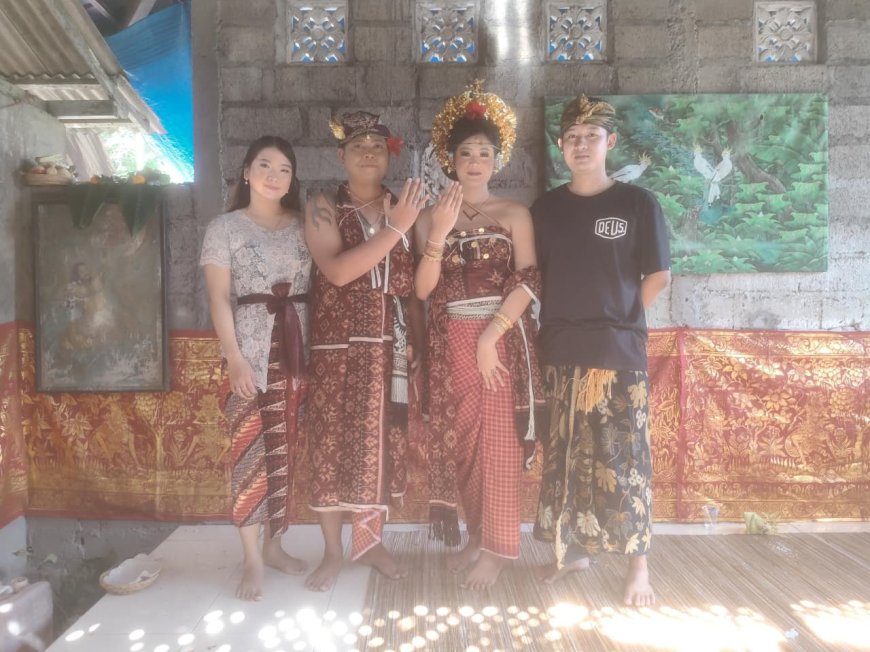
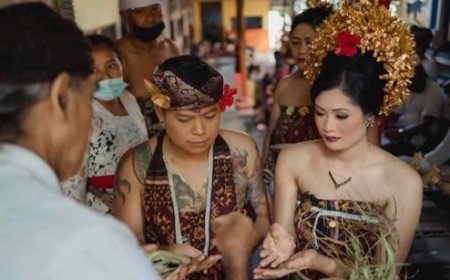
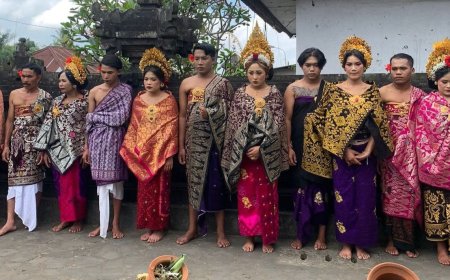
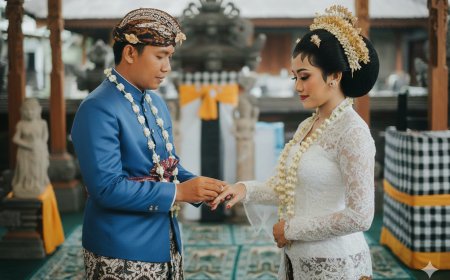
A Tenganan Couple After Their Wedding Ceremony, Living Proof of the Endogamy Tradition That Endures to This Day
(Source: Personal Collection)
In the end, the endogamy rule in Tenganan is not simply a rigid inheritance upheld for tradition's sake alone. It is a deliberately designed survival strategy that binds marriage and land ownership into a single, mutually reinforcing system keeping the village intact both socially and physically, even as the world around it continues to change. For the people of Tenganan, choosing a life partner is no longer a purely personal matter, but a decision that determines whether ancestral land will remain for future generations, or gradually slip away. As long as its people continue to see this rule as part of their identity, rather than simply a rule to be feared, endogamy will keep living on in Tenganan for generations to come.