






















Neelkanth: Sacrifice of The Blue-Necked God Shiva
The gods and demons bowed to Lord Shiva, begging for His help. Without thinking twice, Lord Shiva drank the deadly poison. Immediately, His neck turned a deep blue, and from that day forward, He was known as Neelkantha, the Blue-Necked God.

In the dawn of creation, the universe teetered on the precipice of balance. The Devas (gods) and Asuras (demons) were locked in an eternal struggle for cosmic supremacy. Though they had strived mightily in their own ways, both sides realized they needed a greater force to alter their destinies. One day, the great sage Narada suggested to both the Devas and Asuras that the only way to attain supreme power was to acquire the Amrita, the nectar of immortality, hidden deep within the cosmic ocean known as the Ksheera Sagara (Ocean of Milk).
However, extracting this nectar of immortality was no task for the Devas or Asuras alone. In fact, they would have to cooperate. Reluctantly, the Devas and Asuras forged a temporary alliance and agreed to churn the cosmic ocean together to obtain the Amrita. This event would later be known as the Samudra Manthan, the churning of the ocean.
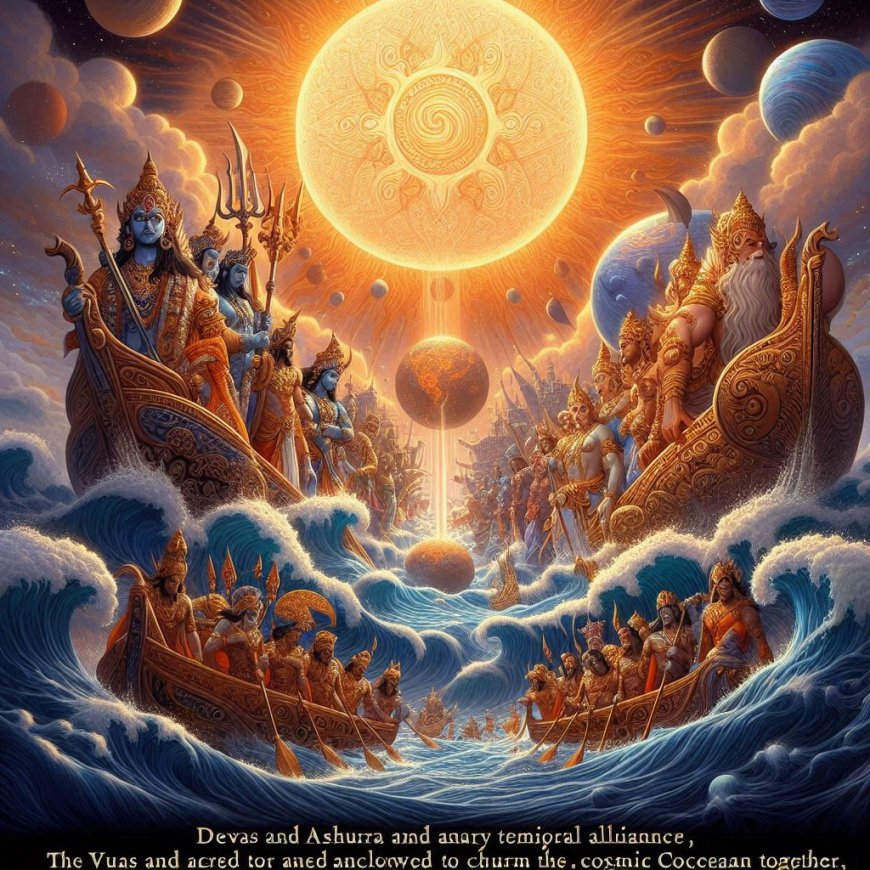
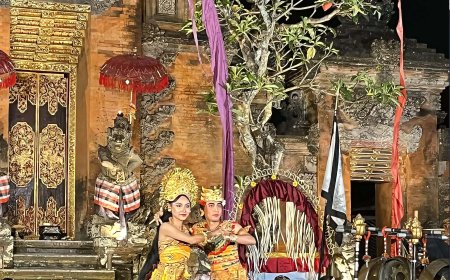
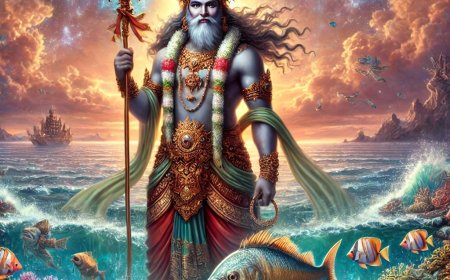
Samudra Manthan (Source: Personal Collection)
To churn the vast cosmic ocean, the Devas and Asuras needed a churning rod. They chose Mount Mandara, a towering and immensely strong mountain, as the churning staff. The great serpent Vasuki, king of the nagas and mount of Lord Shiva, volunteered to be the churning rope. The Devas held Vasuki's tail, while the Asuras, eager for power, held his head. Together, they began the arduous task of churning the cosmic ocean, creating waves that shook the foundations of the universe.
As they churned, many treasures and divine objects surfaced. Among them were Kamadhenu, the divine cow that granted all wishes, Airavata, the mighty white elephant that served as the mount of Indra, and the Kaustubha gem, which was taken by Lord Vishnu. Beautiful celestial beings, such as the Apsaras, also emerged, as well as the Kalpavriksha, the wish-fulfilling tree. Each treasure brought joy and hope to the gods and demons, who eagerly awaited the emergence of the nectar of immortality. But suddenly, something unexpected and terrible happened.
Before the Amrita could be obtained, dark and ominous clouds began to rise from the depths of the ocean. What emerged was not a treasure, but a deadly substance known as Halahala, a poison so dangerous that a single drop could destroy all life in the universe. Halahala spread rapidly, its fumes darkening the skies and causing great suffering to all who were near it.
The Devas and Asuras were filled with fear. The poison was so potent that it threatened to consume the entire cosmos. The gods and demons who had churned the ocean fell silent in terror as the fumes of Halahala began to spread to the three worlds—heaven, earth, and the underworld.
Facing the threat of annihilation, the Devas appealed to the only being powerful enough to stop this catastrophe—Lord Shiva, the destroyer and protector of the universe.
Upon hearing the Devas' plea, Lord Shiva, residing atop the sacred Mount Kailash, was moved by their distress. He understood that if the poison were left unchecked, all creation would perish. Realizing the perilous situation, Shiva resolved to bear the burden alone. Without hesitation, he descended from Kailash and approached the ocean. The Devas and Asuras watched with trepidation as the great god confronted the deadly poison. With a calm demeanor, he consumed the entire Halahala poison.
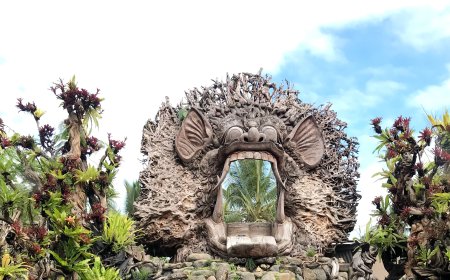
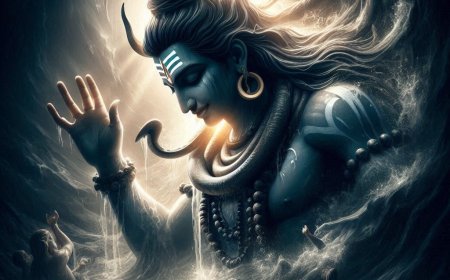
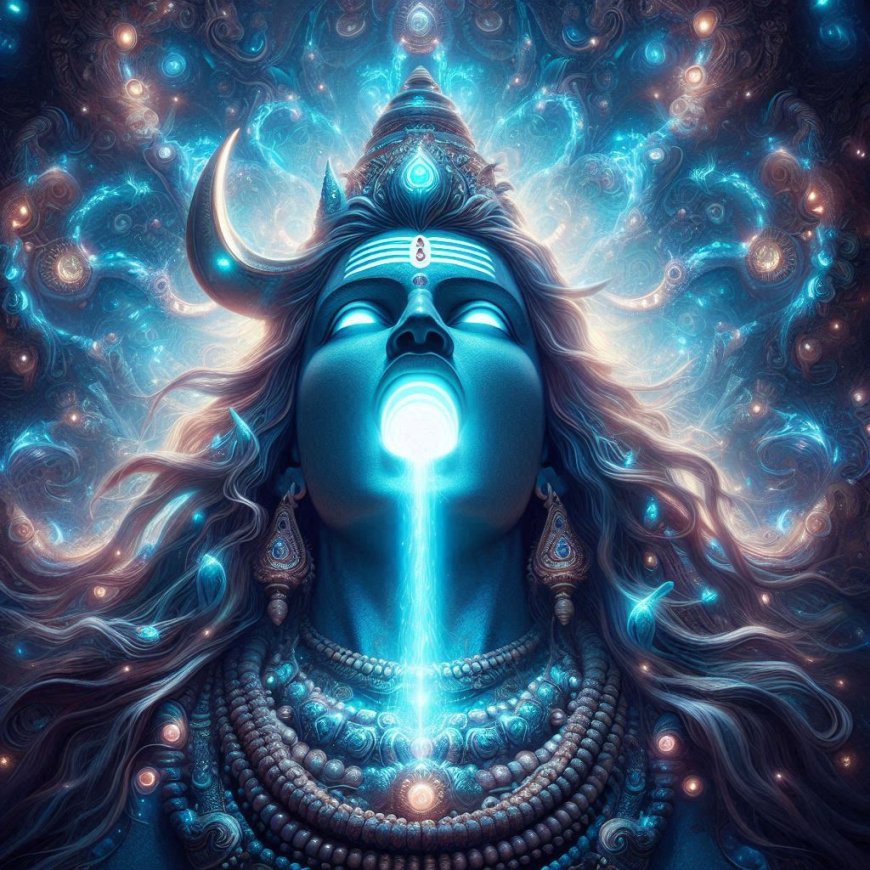 Lord Shiva while drinking the Halahala poison (Source: Personal Collection)
As the poison coursed through Shiva's throat, its deadly effects became apparent. His throat burned with a fiery blue flame, and his neck turned a striking shade of dark blue. Despite the excruciating pain, Shiva remained unyielding. His divine power prevented the poison from spreading further into his body, halting it before it reached his heart or vital organs.
Seeing the danger, Parvati, Shiva's consort, swiftly intervened. With a loving touch, she placed her hand on Shiva's throat, preventing the poison from spreading any further. Her gentle yet powerful touch sealed the Halahala within Shiva's throat, forever trapping it but rendering it harmless. From that day forward, Shiva was known as Neelkantha, the "Blue-Throated One," a testament to his supreme sacrifice for the welfare of all beings.
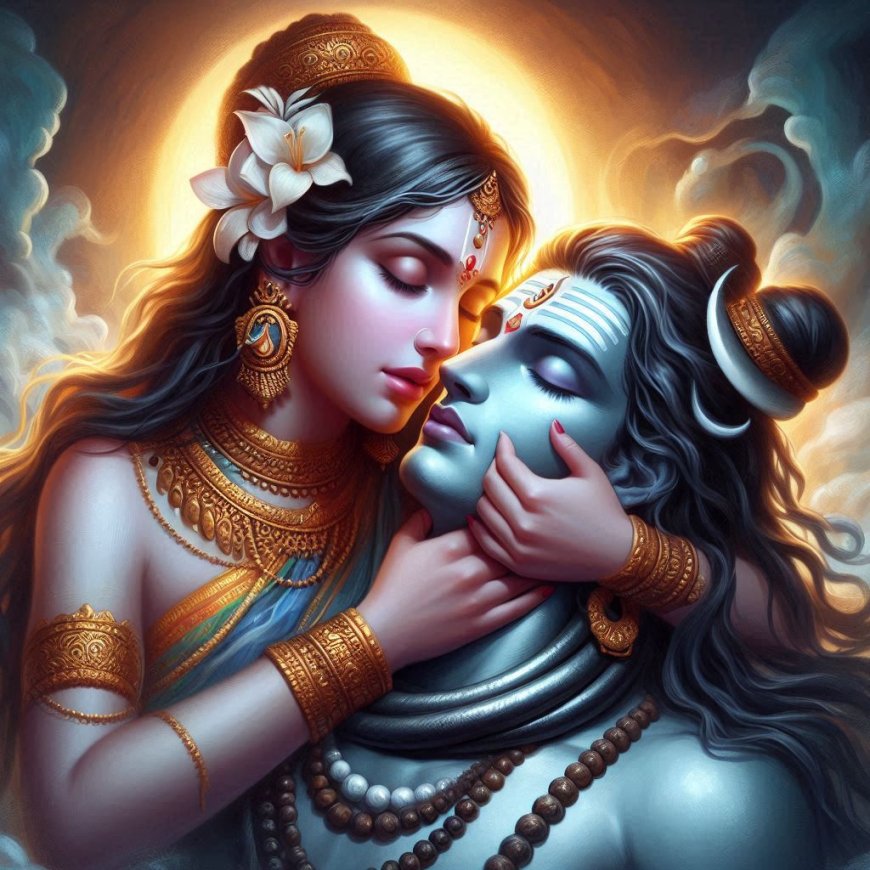
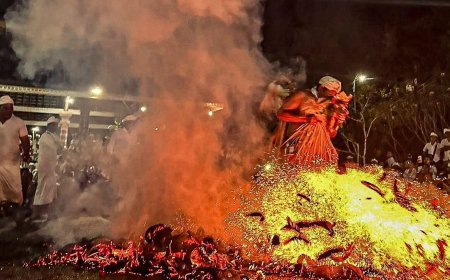
Goddess Parvati holding back the Halahala in Lord Shiva's throat (Source: Personal Collection)
Shiva's act of consuming the Halahala and containing its power within himself saved the universe from utter destruction. The Devas and Asuras prostrated themselves before him in gratitude, realizing that without his intervention, the cosmos would have perished. Yet, Shiva remained humble, claiming neither the Amrita nor any other treasure for himself. His sole desire was to protect the world and maintain cosmic balance. He returned to Mount Kailash, his neck eternally adorned with the blue hue, a symbol of his immense compassion and selflessness.
With the Halahala safely contained within Shiva's throat, the Devas and Asuras resumed their churning of the cosmic ocean. Soon, the coveted Amrita emerged, radiant with the promise of immortality. The Asuras, driven by their desire for power, sought to seize the nectar by force.
However, Lord Vishnu, in the guise of the enchanting Mohini, intervened. With his divine beauty and charm, he distracted the Asuras and distributed the nectar to the Devas, ensuring that only the righteous would receive the boon of immortality. Thus, cosmic balance was restored, and the order of the universe was preserved.
The legend of the Samudra Manthan remains one of the most celebrated tales in Hindu mythology, symbolizing the eternal struggle between good and evil, as well as the divine intervention that safeguards cosmic harmony.
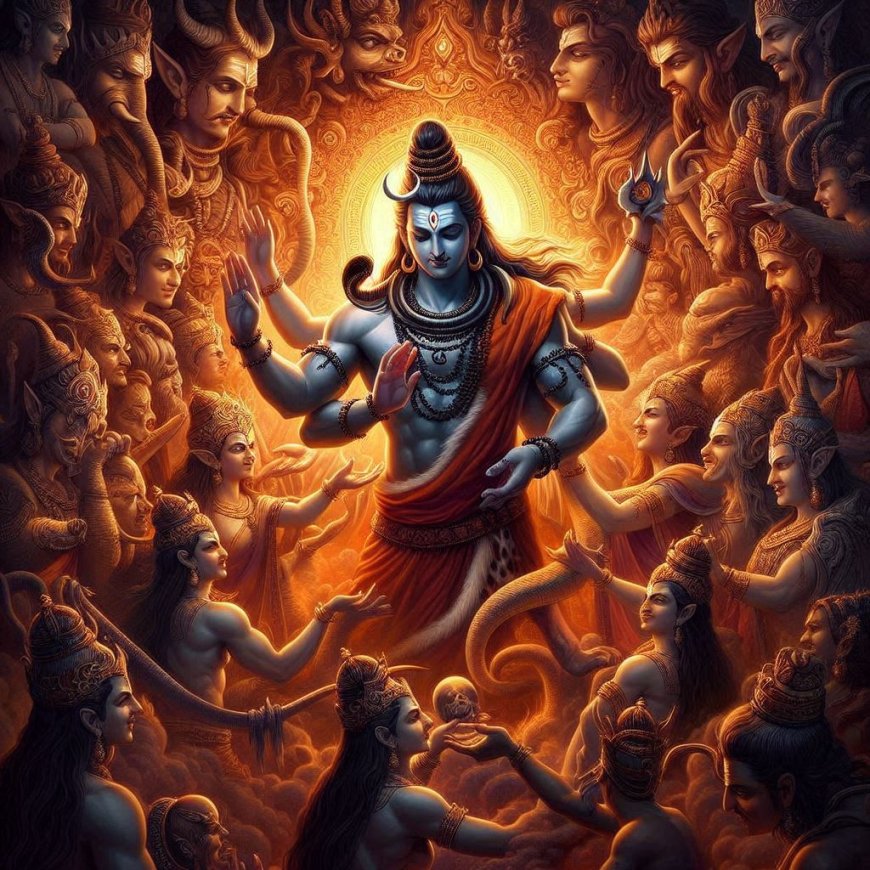
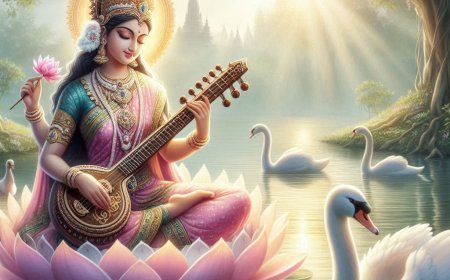
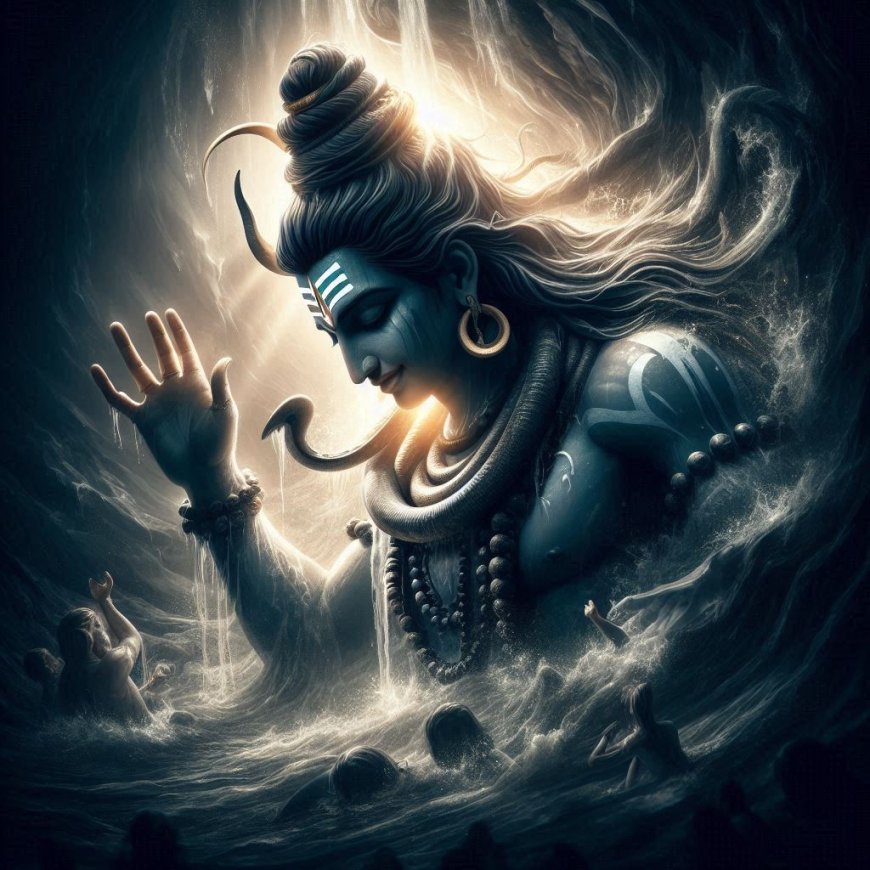
All beings express gratitude to Lord Shiva (Source: Personal Collection)
The story of Neelkantha is more than just a narrative of cosmic churning and divine nectar. It is a profound reminder of Lord Shiva's boundless compassion and sacrifice. By willingly consuming the poison and saving the universe, Shiva epitomized the role of the supreme protector and destroyer of evil.
In Hindu tradition, Shiva as Neelkantha represents the idea that even the most toxic aspects of life can be overcome and transformed through sacrifice, wisdom, and divine intervention. His blue-hued neck serves as a testament to the fact that, despite facing immense challenges and dangers, a true leader protects others without seeking personal gain.
Thus, the legend of Neelkantha, the "Blue-Throated One," stands as an eternal symbol of Lord Shiva's grace, power, and unwavering commitment to preserving the existence and balance of the universe.