










Revealed from the Rice Fields: The Story of the Rediscovery of Pura Agung Manik Batu
Beginning with an accidental discovery in the middle of rice fields, Pura Agung Manik Batu rose again from oblivion. This article tells the story of its rediscovery, its spiritual meaning, and the revival of a sacred place that preserves the traces of Bali’s ancestral heritage.

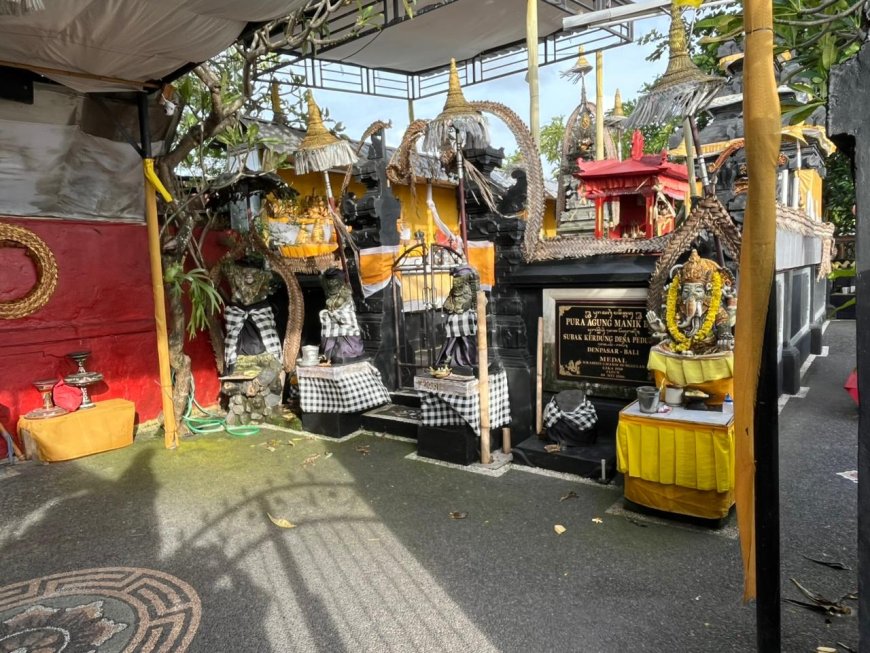
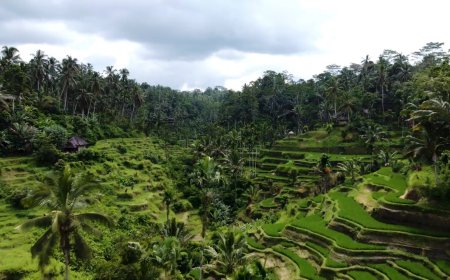
In the midst of Denpasar’s ever-growing bustle, there lies a spiritual story that began from a simple rice field. This story is not only about the discovery of a sacred site, but also about collective memory, faith, and ancestral heritage that had long been buried by time. Pura Agung Manik Batu is now a sacred place visited by many devotees, yet it had once “disappeared” for decades before being rediscovered in an unexpected way.
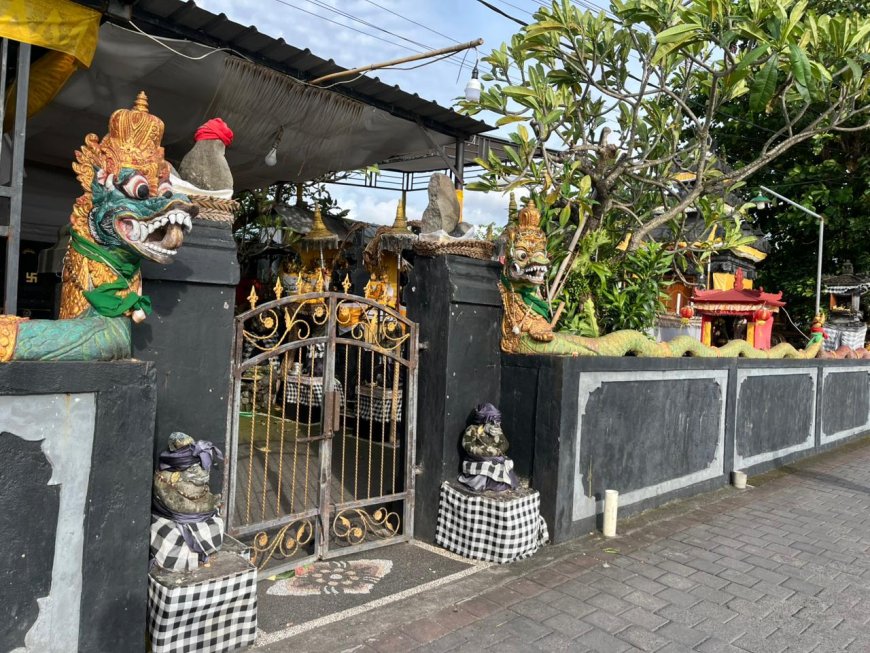
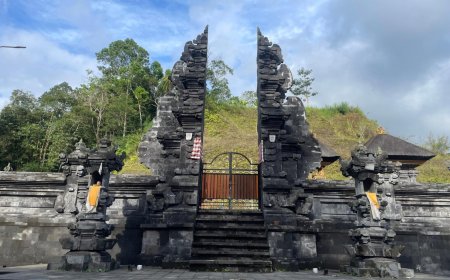
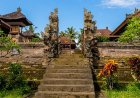
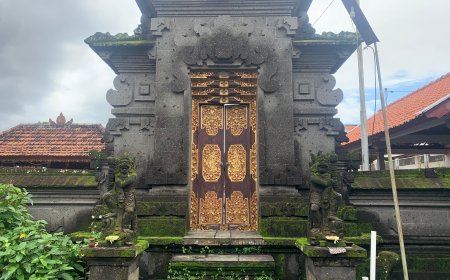
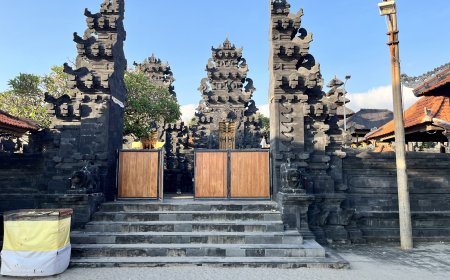
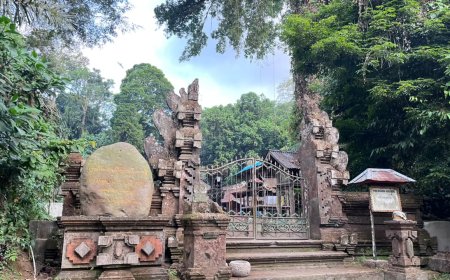
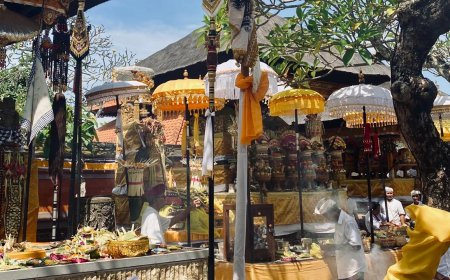
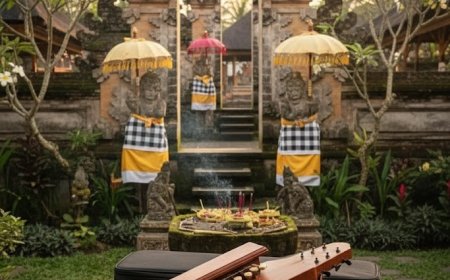
The Sacred Guardian Gate of Pura Agung Manik Batu (Source: Personal Collection)
Around 2006, a farmer named Jro Mangku Nyoman Dauh was working in the rice fields of Subak Kerdung, Banjar Pitik, Pedungan Village, South Denpasar. While digging the soil, he found an unusual arrangement of stones. Upon closer inspection, the stone structure resembled the foundation of a sacred building.
This discovery soon drew the attention of local residents and village elders. Through further investigation and the revival of oral traditions, it was revealed that a temple had once stood on this site, long forgotten and buried by time.
Over time, the area was cleared and restored. From this point, Pura Agung Manik Batu was rebuilt and revived as a place of worship. The name “Manik Batu” is believed to refer to the sacred value and special nature of the site, like a gem that had long been hidden beneath the earth.
The existence of this temple serves as a reminder that the spiritual traces of Balinese ancestors never truly disappear, but merely wait for the right time to be rediscovered.
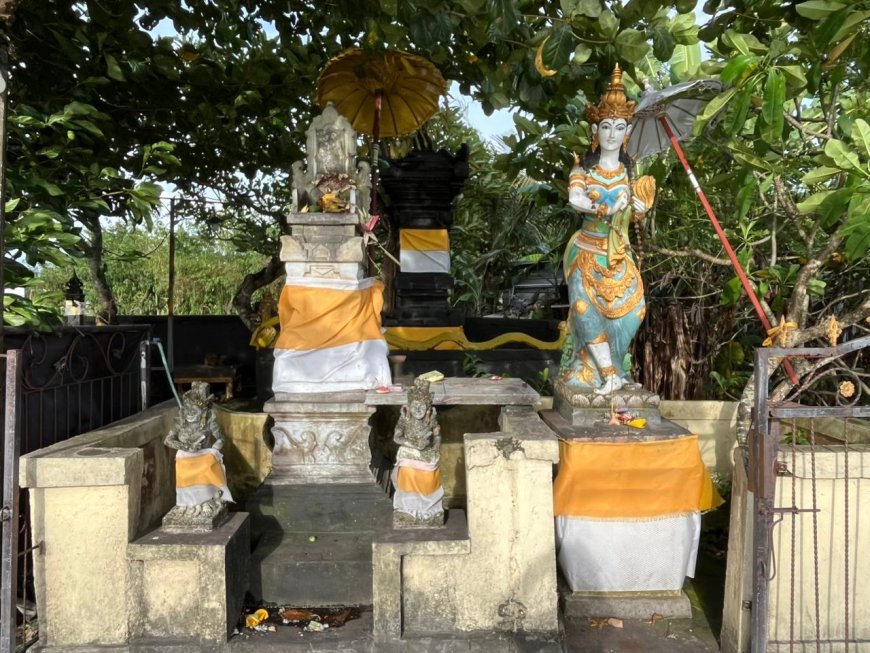
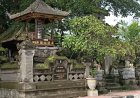
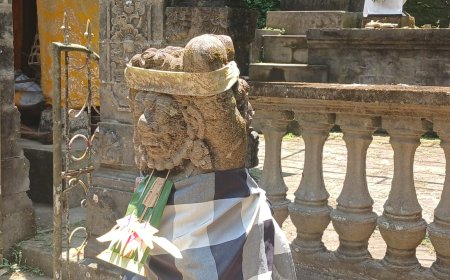
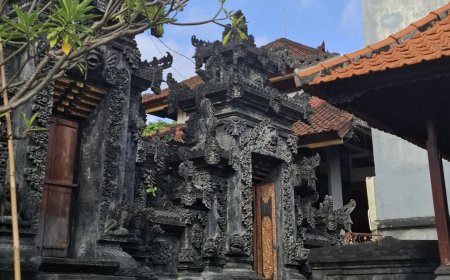
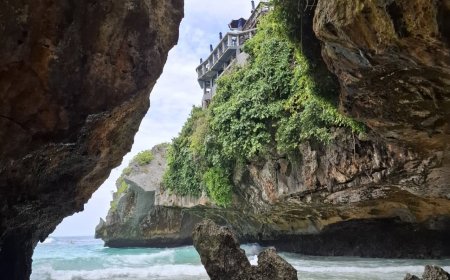
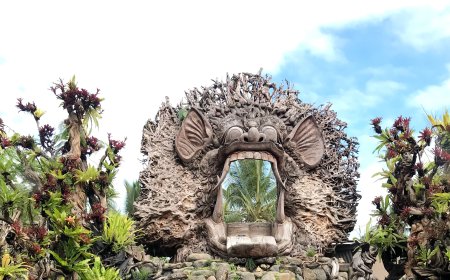
Sacred Protectors Beneath Nature’s Canopy (Source: Personal Collection)
Initially, Pura Agung Manik Batu was closely associated with the subak irrigation system and the worship of Dewi Sri, the goddess of prosperity and fertility. This is only natural considering its location in the middle of rice fields.
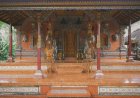
However, as time went on, several shrines were also built within the temple complex to worship various manifestations of God, including the Tri Murti (Brahma, Vishnu, and Shiva) as well as other goddesses. This is what makes Pura Agung Manik Batu a place of worship with broad spiritual functions.
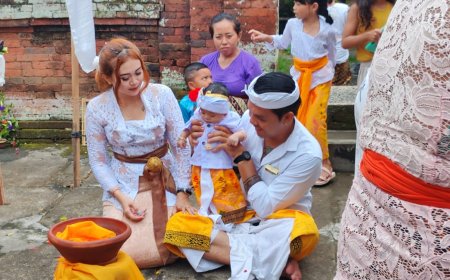
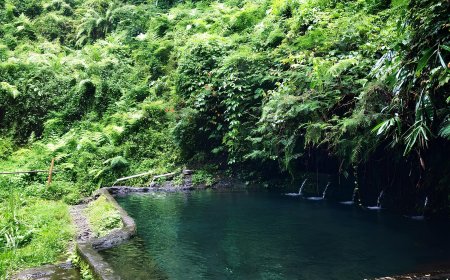
Today, the temple is widely known as a place for melukat (ritual purification). Many devotees come to seek inner peace, smoothness in life, healing, and success in important exams or life decisions.
Stories about spiritual experiences at Pura Agung Manik Batu spread from mouth to mouth. Many people claim to feel calmness, clarity of mind, and even inner transformation after praying at this sacred place.
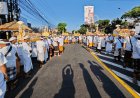
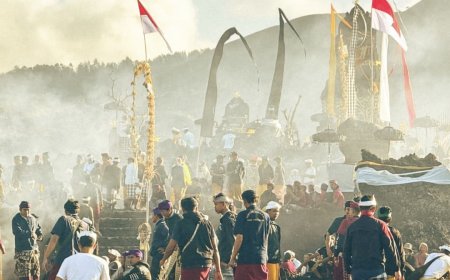
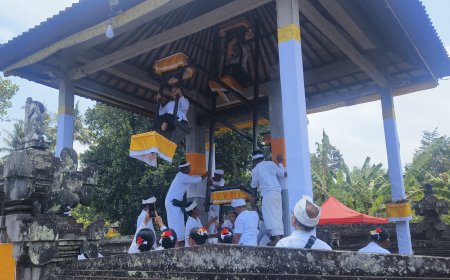
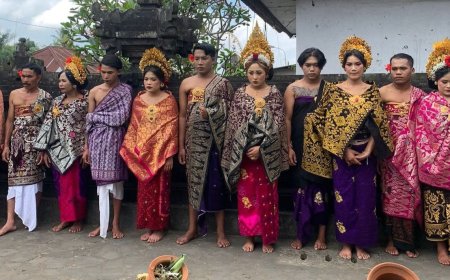
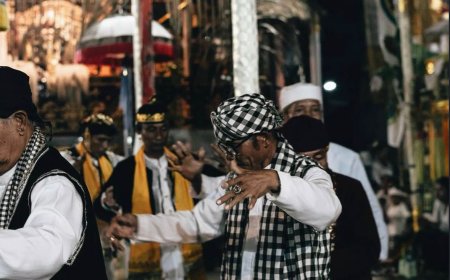
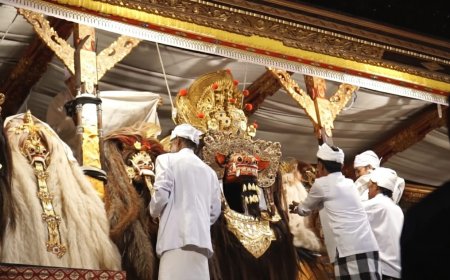
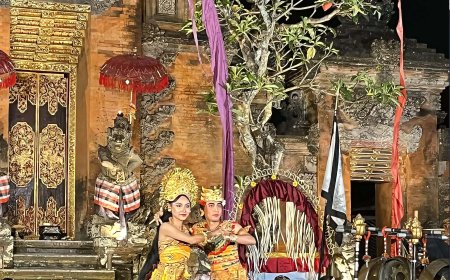
On holy days such as Purnama, Tilem, and during temple anniversaries (piodalan), the atmosphere of the temple becomes even more lively and solemn. Worshippers come from various parts of Bali, bringing offerings, prayers, and hopes of their own.
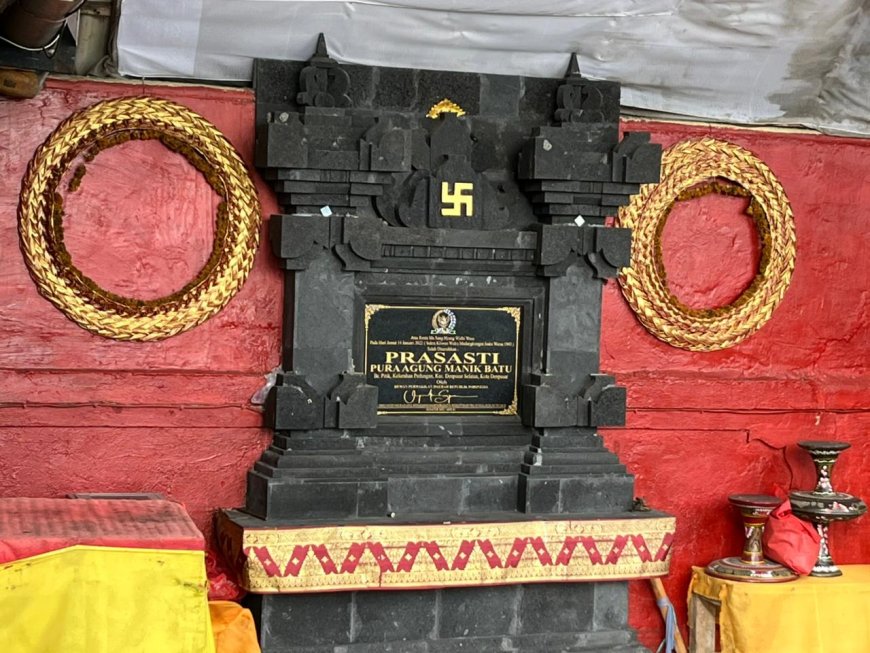
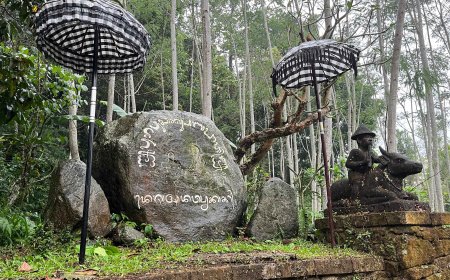
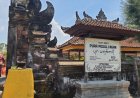
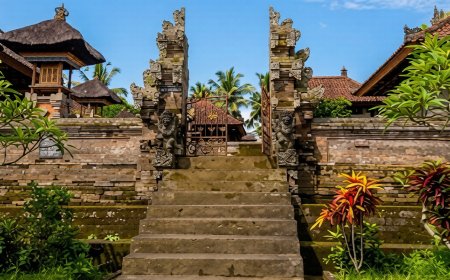
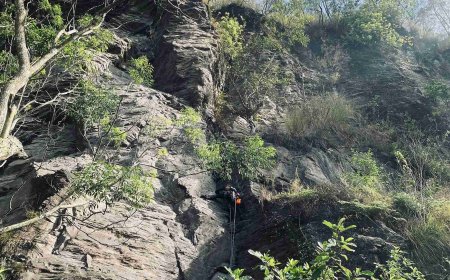
The Inscription of Pura Agung Manik Batu (Source: Personal Collection)
The story of Pura Agung Manik Batu is not only about the physical rediscovery of a sacred structure, but also about the revival of spiritual memory and the relationship between humans, nature, and ancestral heritage.
From land that was once merely cultivated as rice fields, now stands a sacred place that has become a meeting point between history, faith, and the search for inner peace.
Pura Agung Manik Batu teaches us that in Bali, the land is not merely a place to stand, but also a keeper of history and sacredness. What was once buried by time can one day be revealed again and come back to life among new generations.