



























Traces of Traditional Life in the Spatial Layout of Ancient Balinese Houses
The spatial layout of traditional Balinese houses reflects the integration of spiritual, social, and ecological values in Balinese life. It is guided by the concepts of Tri Hita Karana and Sanga Mandala, which determine spatial functions and levels of sacredness. The house is understood as a microcosm embodying local wisdom that remains relevant today.

The spatial layout of traditional Balinese houses is a direct reflection of the Balinese worldview, which integrates spiritual, social, and ecological dimensions of life. A house is not only understood as a physical shelter, but also as a spiritual space that connects humans with God, fellow human beings, and the universe. This understanding is rooted in local wisdom that perceives life as an interconnected whole, so that every spatial arrangement within a traditional Balinese house is governed by customary norms, traditional architectural guidelines, and ritual practices passed down through generations via oral traditions, lontar manuscripts, and customary practices.
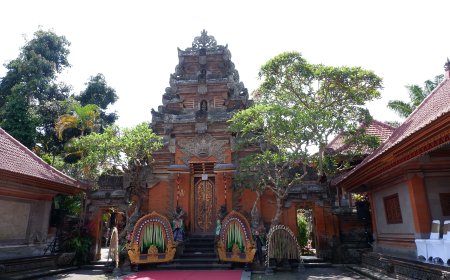
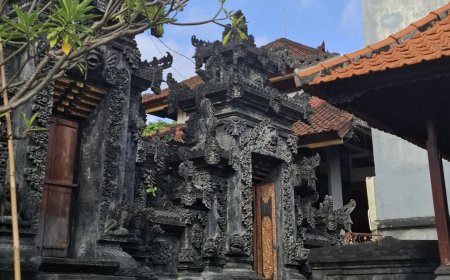
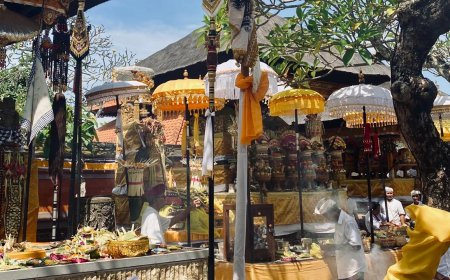
The fundamental concept that forms the main foundation of traditional Balinese house spatial organization is Tri Hita Karana, which refers to the three sources of harmony in life: parhyangan, pawongan, and palemahan. Tri Hita Karana is not only understood as a philosophical teaching, but also serves as a practical guideline for spatial arrangement, social relations, and environmental management at the household level. In the context of a dwelling, parhyangan is manifested through the presence of a sanggah or merajan as the family’s spiritual center; pawongan is reflected in the arrangement of living spaces for family members; while palemahan is realized through the management of the yard, courtyard, and the house’s physical environment. Thus, the house is viewed as a miniature cosmos that reflects the ideal order of life according to the Balinese perspective.
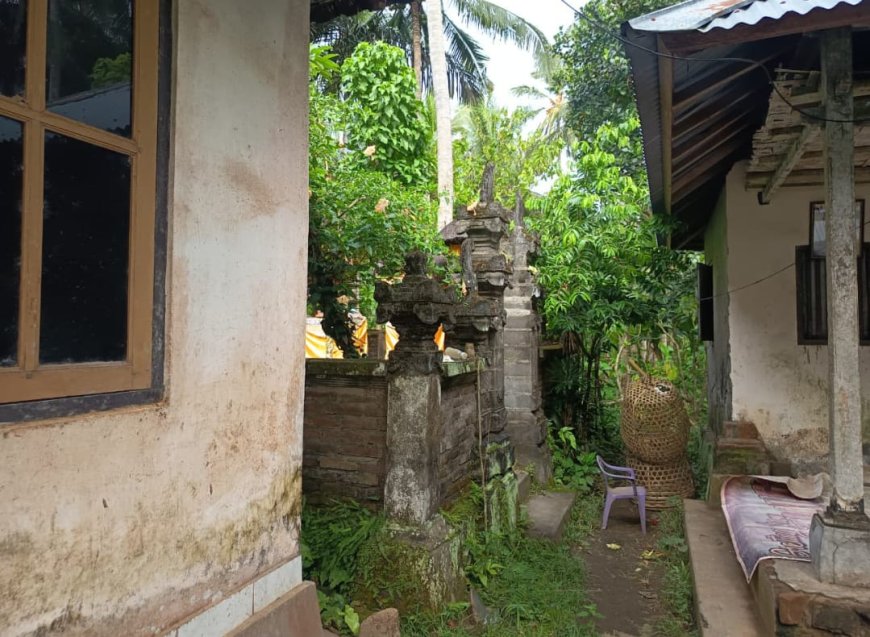
Family Shrine (Source: Personal Collection)
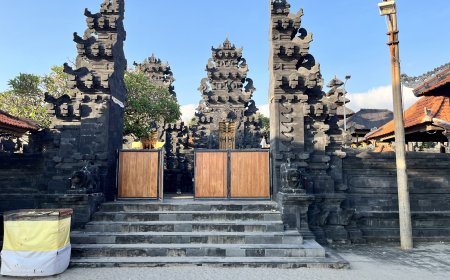
In addition to Tri Hita Karana, the spatial layout of traditional Balinese houses is also influenced by the concept of Sanga Mandala, which divides space into nine sectors based on cardinal directions and a hierarchy of sacredness. Each direction carries symbolic values and different levels of importance, so the placement of buildings within the compound is not done arbitrarily. The main mandala zone is generally located in the kaja–kangin direction (north–east), which is considered the most sacred and serves as the location for the sanggah or merajan, while zones with lower levels of sacredness are used for profane and utilitarian activities.
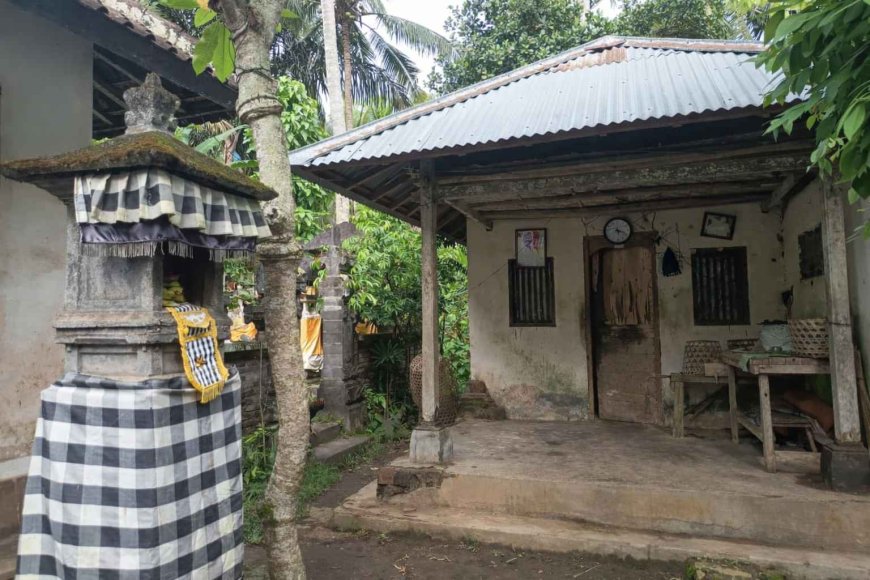
Bale Meten, the main sleeping space in a traditional Balinese house (Source: Personal Collection)
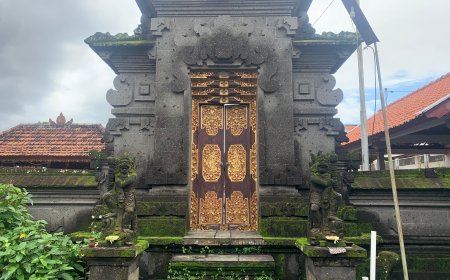
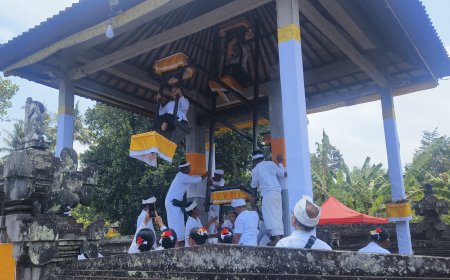
Within a traditional Balinese house compound, buildings are not unified into a single mass, but are separated according to their functions and levels of sacredness. Bale dangin is used for customary ceremonies and family rituals, bale daja or bale meten serves as the sleeping quarters for parents or the head of the family, bale dauh functions as a space for interaction and receiving guests, and the paon is placed in the nista mandala zone. The presence of the natah as a central courtyard functions as the spatial orientation center and a connector between buildings. Natah also becomes the space for daily activities, family interactions, and preparations for customary ceremonies, thus playing an important role in maintaining balance between sacred and profane spaces.
The spatial layout of traditional Balinese houses is closely related to the social structure and kinship system of Balinese society. A single compound is generally inhabited by an extended family within one lineage, so the spatial division reflects age hierarchy and roles within the family. Parents occupy more primary and sacred areas, while younger generations reside in zones with lower levels of sacredness. This division simultaneously instills values of respect, etiquette, and character education through spatial experience. The spatial arrangement also supports the implementation of various life-cycle rituals, ranging from birth, tooth-filing ceremonies, marriage, to death, with specific spaces designated according to their level of sacredness.
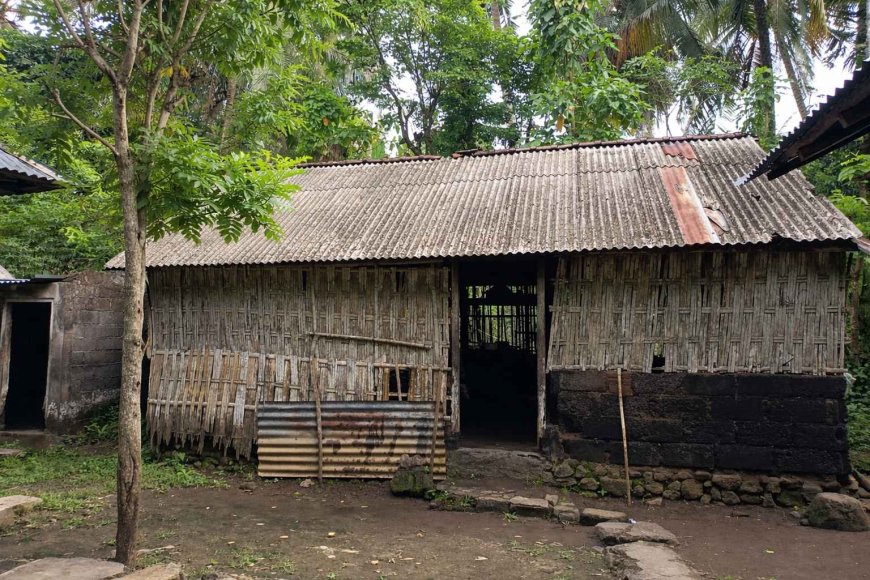
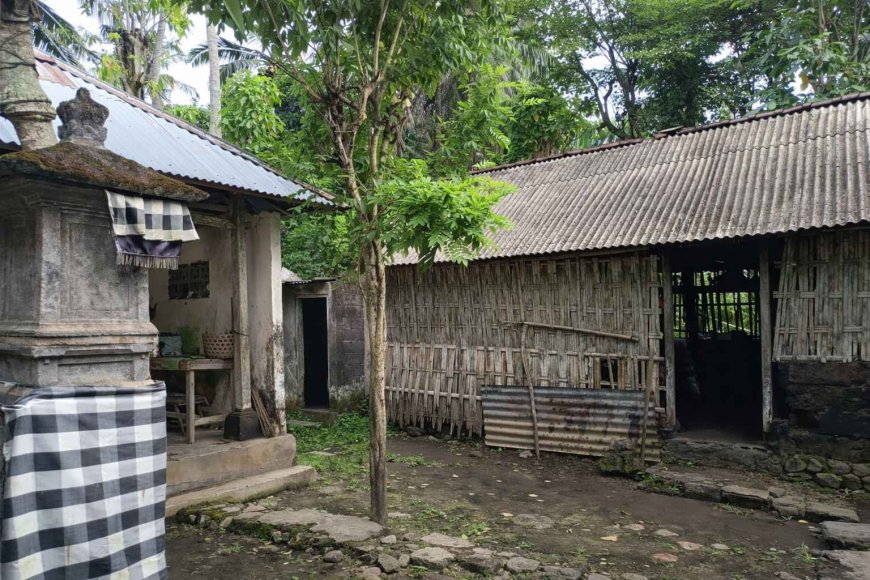
Paon (kitchen) in the spatial layout of a traditional Balinese house (Source: Personal Collection)
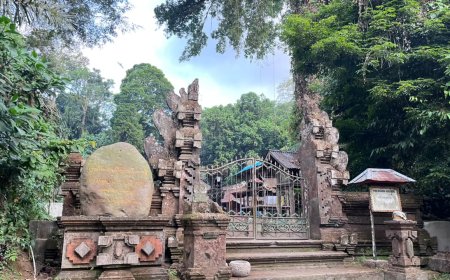
In terms of materials, traditional Balinese houses are built using natural materials such as wood, bamboo, sandstone, clay, as well as alang-alang or ijuk roofing. The use of these local materials reflects the Balinese people’s knowledge in adapting to the environment and tropical climate. The building structure also follows the guidelines of Asta Kosala Kosali, which regulate the size, proportions, and orientation of buildings. The house construction process generally begins with the selection of an auspicious day and the performance of customary ceremonies as a form of prayer for safety and harmony.
Amid the development of modern architecture and limited land availability, the physical presence of traditional Balinese houses has indeed been decreasing, especially in urban areas. However, the values of local wisdom embedded in their spatial organization continue to be preserved and adapted into modern house designs as well as tourism buildings. Through the spatial layout of traditional Balinese houses, traces of traditional Balinese life can be understood as a unity of spiritual, social, and ecological dimensions. This heritage holds not only architectural value, but also contains local wisdom that remains relevant in preserving Balinese cultural identity amid changing times.