









Dangsil, Pendet, Telek: The Sacred Sequence within the Napak Pertiwi Tradition of Kiadan, Plaga Village
Napak Pertiwi in Kiadan Traditional Village is a sacred tradition symbolizing the descent of Hyang Widhi to bestow prosperity. This ritual features the Barong and Rangda as cosmic manifestations maintaining the balance between the visible (sekala) and invisible (niskala) worlds. The article explores the unique procession, from the Dangsil offering to the Telek Dance, highlighting the preservation of Balinese cultural identity.

Napak Pertiwi comes from the word napak which means to step or tread, and pertiwi which means earth or the world. The concept of Napak Pertiwi can be interpreted as the descent of Hyang Widhi (God) and all His manifestations and symbolic forms, to bestow life and prosperity upon all living beings.
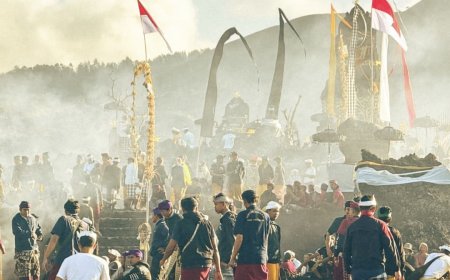
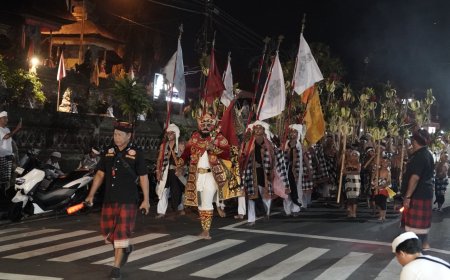
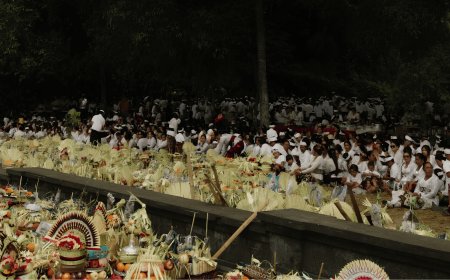
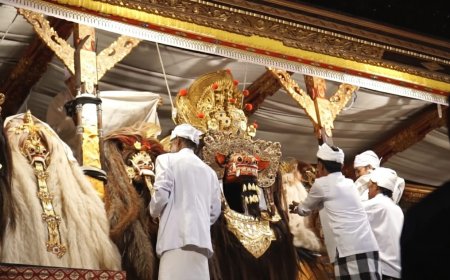
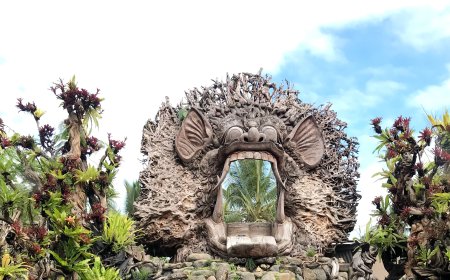
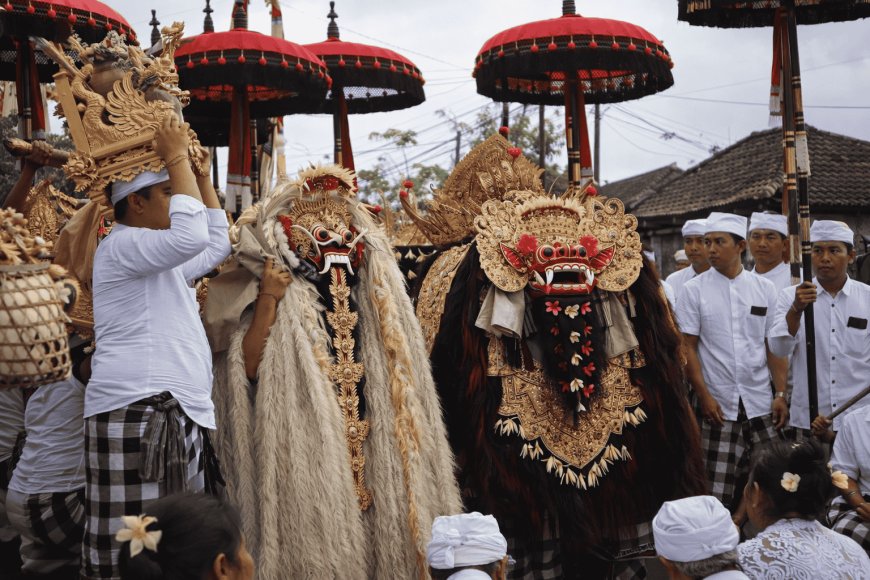
In Desa Adat Kiadan (Kiadan Traditional Village), Napak Pertiwi is one of the sacred traditions that is still preserved to this day. This tradition is passed down through generations by ancestors and continues to be carried out as a form of community devotion to Ida Sang Hyang Widhi Wasa and respect for the universe. The uniqueness of this tradition lies in the sacred dance that presents the manifestation of Ida Bhatara Ratu Sesuhunan of Desa Adat Kiadan in the form of Barong and Rangda tapakan. In this context, Barong and Rangda are not merely symbols, but manifestations of cosmic power believed to be the guardians of the balance between sekala (the visible world) and niskala (the invisible world). The sacredness of Napak Pertiwi lies in the combination of gamelan musical compositions, sacred dances, and a series of ceremonies full of spiritual meaning.

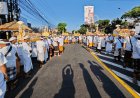
The sacred procession of Ida Bhatara Ratu Sesuhunan in the form of Barong and Rangda tapakan, believed to be the balancers of cosmic forces. (Source: Private Collection)
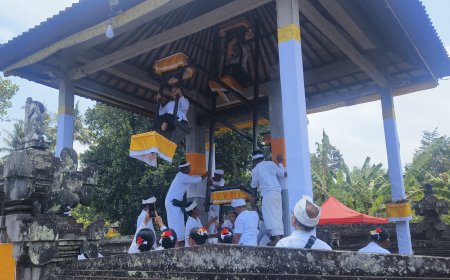
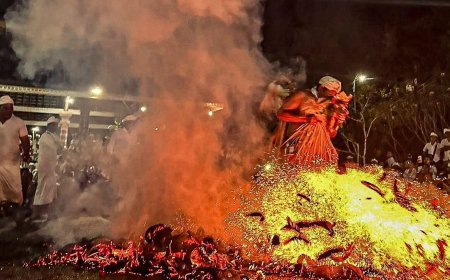
The series of Napak Pertiwi processions begins with the opening gamelan composition known as Dangsil. Dangsil is not only viewed as a music and dance performance but is also laden with philosophy. This performance symbolizes a form of offering and the community's gratitude for the gift of fertility and the abundance of the harvest.
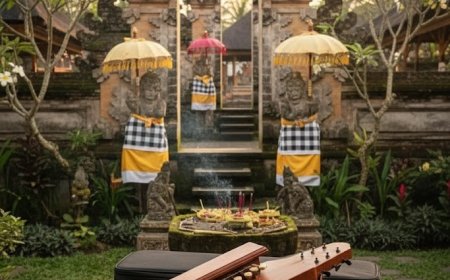
Dangsil itself is made from woven bamboo decorated with various offerings, signifying the close relationship between humans and nature that provides life. The musical composition in Dangsil is divided into three main parts: kawitan (opening), pengawak (body/main part), and pengecet (finale).

Dangsil, made of woven bamboo decorated with offerings, symbolizes the community's gratitude for fertility and the abundance of the harvest. (Source: Private Collection)
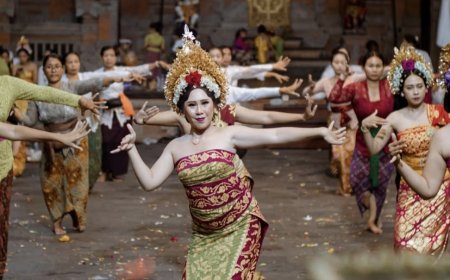
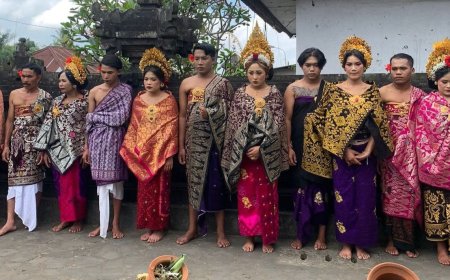
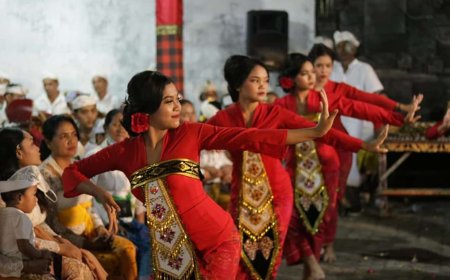
After the Dangsil performance, the procession continues with the Pendet Pemendak Ratu Dance. This dance has the main function of a holy offering to welcome the presence of Ida Bhatara Ratu Sesuhunan in the form of Barong and Rangda. The presence of the Pendet dance is not merely entertainment, but a purification ritual for the place where the Napak Pertiwi tradition is carried out.
This dance usually begins with the appearance of the Wijil character, who delivers stories full of local wisdom values. The main message conveyed is about the importance of guarding and preserving the culture inherited from ancestors, while simultaneously affirming the identity of the Desa Adat Kiadan community. Through this dance, it is clearly seen that Balinese performing arts are not only aesthetically beautiful but also have a sacred role in spiritual and social contexts.
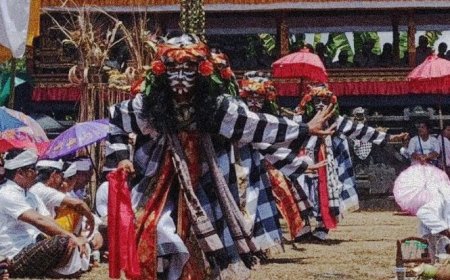
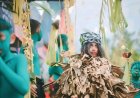
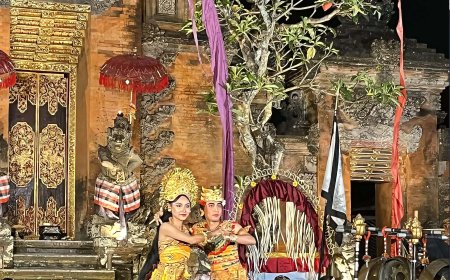
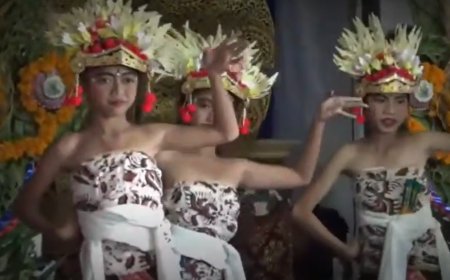
As the closing of the Napak Pertiwi series, the Telek Dance is performed. This dance raises a very profound cosmic story, namely the descent of Sang Hyang Tri Semaya to the world to quell the negative forces of Dewi Durga and Kala Ludra who met at Setra Gandamayu.
At that time, Brahma, Dewa Wisnu, and Dewa Iswara descended to the world by transforming into the forms of Jauk, Telek, and Barong; where Dewa Brahma manifested as Jauk, Dewa Wisnu as Telek, and Dewa Iswara as Barong. The presence of these three deities symbolizes the cosmic power working together to neutralize negative energy, restore balance, and maintain the harmony of the universe. Thus, the Telek Dance becomes not only visual entertainment but also a ritual medium to affirm the community's belief in the holy power that protects life.

The Telek dancer with distinctive expressions and movements, symbolizing the presence of holy power protecting life. (Source: Private Collection)
With the entire series of events, Napak Pertiwi in Desa Adat Kiadan, Plaga, becomes a tradition full of meaning. It is not just a religious ritual, but also a reflection of the life philosophy of the Balinese people who always respect the balance between humans and nature. This tradition also shows that dance and gamelan music cannot be separated from spirituality, because both are media of communication with the niskala world.
Furthermore, Napak Pertiwi serves as tangible proof that Balinese culture is capable of surviving amidst the currents of modernization, while simultaneously becoming the identity and pride of the Desa Adat Kiadan community.