






Reviving the "Voice" of Palm Leaves: SASKARA's Digital Journey, Transliterating Balinese Script on Palm Leaves into Latin Text
Behind the palm leaves lie thousands of years of Balinese history and philosophy, but now the voices of the ancestors are beginning to fade as many young people find it difficult to read them. The SASKARA project serves as a digital bridge to revive Balinese script, ensuring that messages from the past remain audible and accessible to current generations.

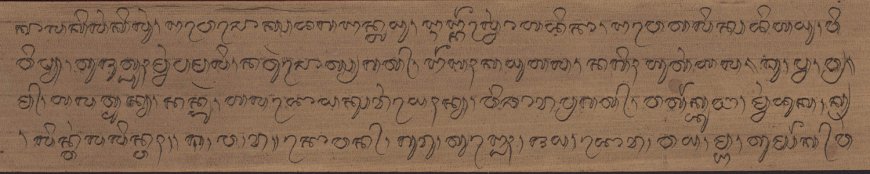
Behind the curved lines etched on palm leaves lie thousands of years of history, philosophy, and the identity of the Balinese people. However, this great heritage is now whispering in silence; a bitter reality shows that more than a third of our younger generation now find it difficult to even spell Balinesse Script. Balinese script is not merely writing; it is the “voice” of the past, threatened with extinction by the passage of time.
The desire to reconnect this broken line of communication gave birth to SASKARA (Script Adaptive Scanner for Knowledge and Revitalization Aid). This project is not just a string of computer code, but a digital bridge designed through four main stages to bring messages from the past to the screens of today's mobile phones:
Digital Eyes that Recognize Character Curves
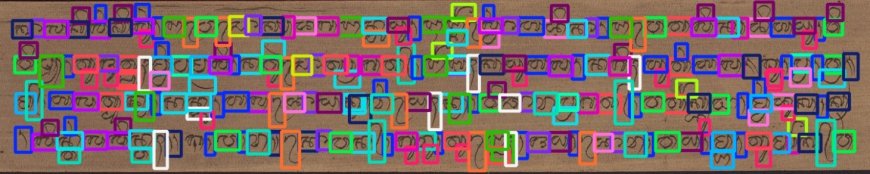
Results of Balinese Script Detection (Source: Private Collection)
The journey begins with an artificial intelligence “eye” called YOLO. This technology is tasked with recognizing every curve of Balinese characters with a very high level of precision, reaching 94%. It is trained not only to read rigid digital text, but also to recognize characters on lontar manuscripts that are full of natural noise and very personal handwriting.
Finding the Main Line in Palm Leaf Manuscripts
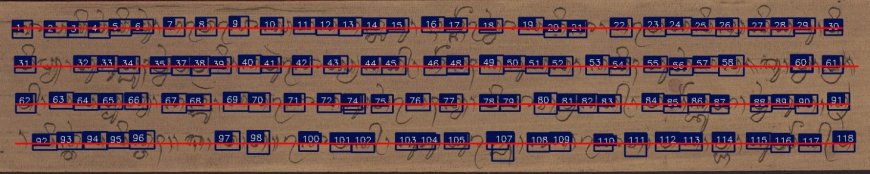
Major Line Detection Results (Source: Personal Collection)
Once the characters have been recognized, the challenge is to arrange them in order. Unlike modern paper, palm leaf manuscripts often have dynamic writing positions. This is where the Major Line algorithm comes into play. This algorithm works like a road guide, determining the main reference line so that the system knows exactly the order in which to read the characters, ensuring that no “sounds” are mixed up or jump from their original lines.
Stringing Together Syllables that Follow Tradition
Balinese script has complex writing rules, where a basic character can change its sound or form when it meets a hook or other sound characters. SASKARA applies strict phonological rules at this stage. The sequenced character fragments are then assembled into syllables that are valid according to Balinese writing rules, ensuring that the integrity of the original grammar is maintained.
Assembling Words into Complete Meanings
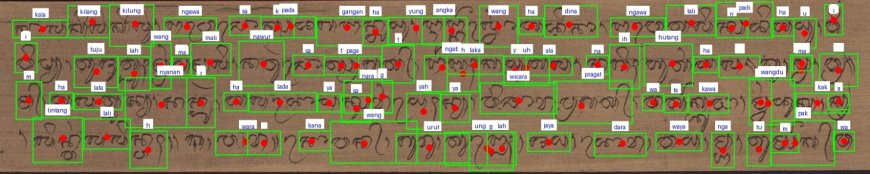
Word Composition Results (Source: Personal Collection)
The final stage is to give “soul” to the series of syllables through an intelligent algorithm. Because lontar manuscripts are often written without spaces, this algorithm plays an important role in dissecting and reassembling syllables into meaningful whole words. The result is a transliteration into Latin text that reads organically, making it easy for anyone to understand the content of the manuscript as if reading a modern text message.
SASKARA is clear proof that cutting-edge technology does not have to kill tradition. On the contrary, it breathes new life into the fragile palm leaves, ensuring that the wise voices of the past will continue to be heard clearly by future generations.