






















Padang Padang Beach, Uluwatu: Unique Landscapes and the Development of Coastal Tourism in Bali
Padang Padang Beach in the Uluwatu area is known as a coastal tourism destination with unique landscape, featuring a hidden beach surrounded by limestone cliffs and clear seawater. Its natural beauty attract both domestic and international tourists. Padang Padang Beach represents sustainable coastal tourism in Bali.

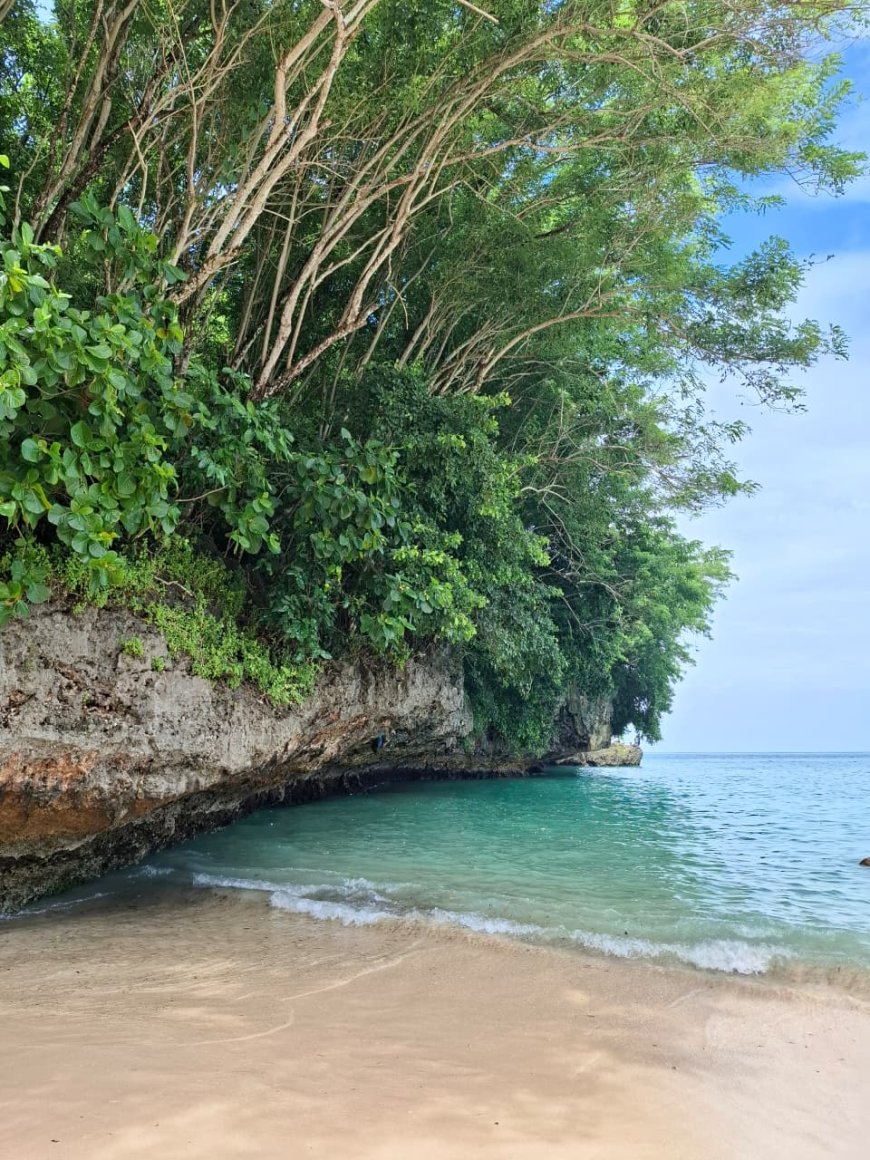
Padang Padang Beach is one of the coastal tourist destinations with a unique character in the Uluwatu area of Bali. This beach is widely known for its distinctive natural beauty, featuring a stretch of white sand hidden behind limestone cliffs, as well as clear seawater with a blue–green color gradient. These unique characteristics make Padang Padang Beach an attractive destination not only for domestic tourists but also for international visitors.
The existence of Padang Padang Beach cannot be separated from the development of tourism in the Uluwatu area. Along with the increasing interest of tourists in nature-based tourism and beaches with distinctive landscapes, Padang Padang Beach has grown into one of the iconic coastal destinations of South Bali. Although it was once known as a hidden beach, its popularity has increased significantly after frequently being used as a venue for international surfing events and as a filming location for movies and tourism promotions.
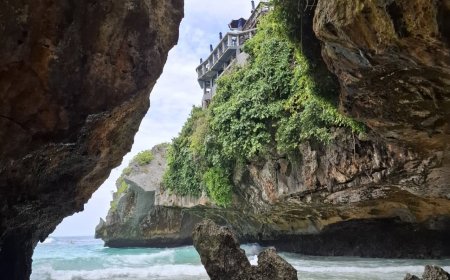
Physically, Padang Padang Beach possesses a very distinctive natural landscape. The beach is surrounded by high karst cliffs, forming a natural corridor that serves as the main access to the beach area. This narrow passage flanked by limestone walls is a defining feature that distinguishes Padang Padang Beach from other beaches in Bali. After passing through the rock gap, visitors are presented with a view of fine white sand and relatively large waves, especially in the central and outer parts of the beach. These waves make Padang Padang Beach one of the favorite locations for surfers.
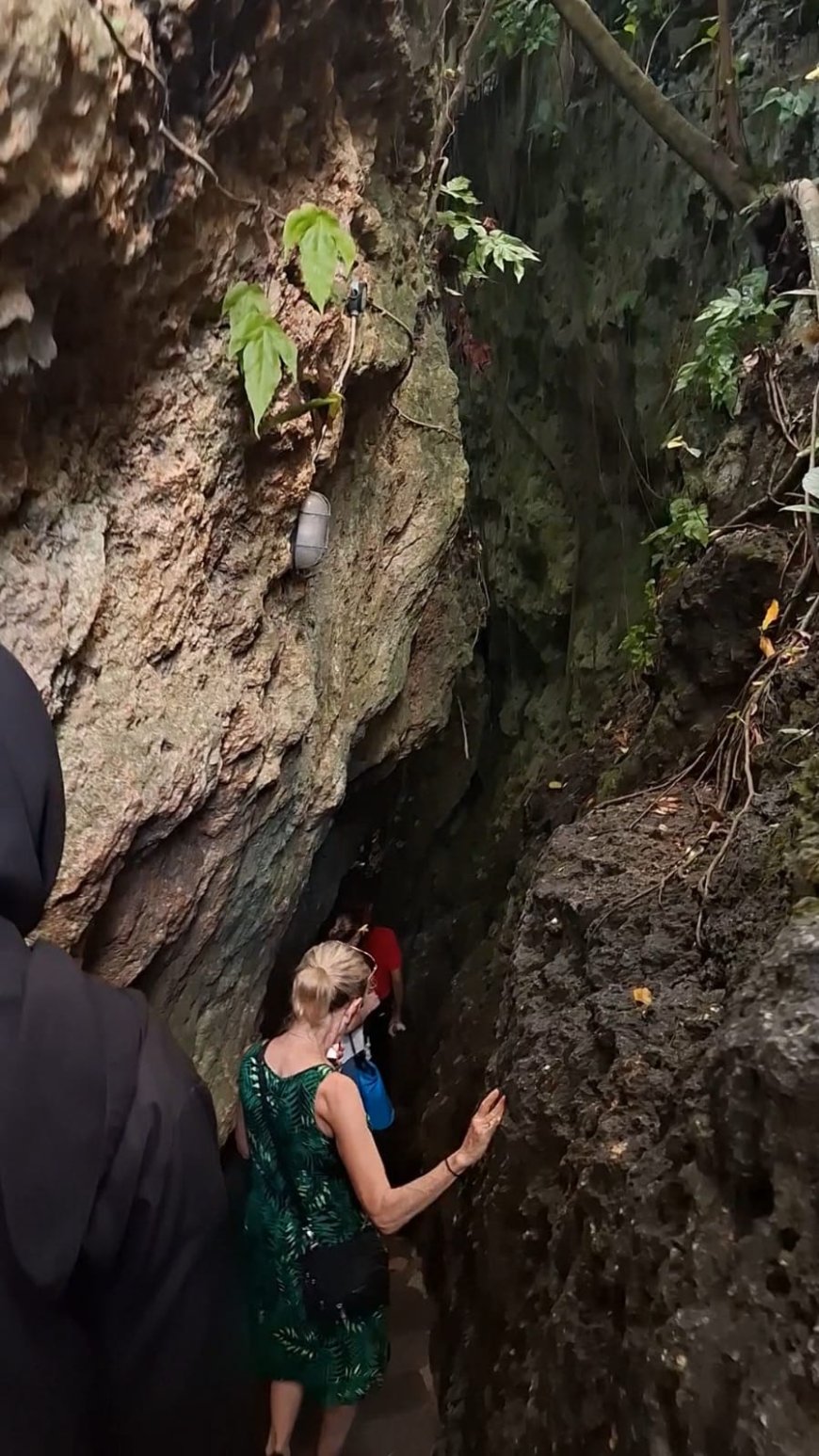
Access to the Limestone Corridor Leading to the Beach (Source: Private Collection)
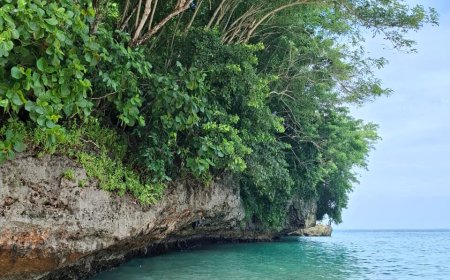
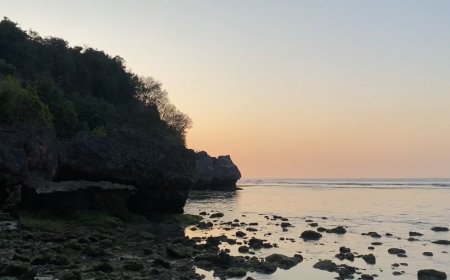
In addition to its scenic beauty, Padang Padang Beach also holds important ecological value. The coastal environment is still dominated by natural elements such as coral rocks, coastal vegetation, and shallow marine ecosystems. The clarity of the seawater allows visitors to see the seabed in several parts of the beach, particularly during low tide. These conditions make Padang Padang Beach not only attractive for recreation, but also a natural learning space for understanding Bali’s coastal and marine ecosystems.
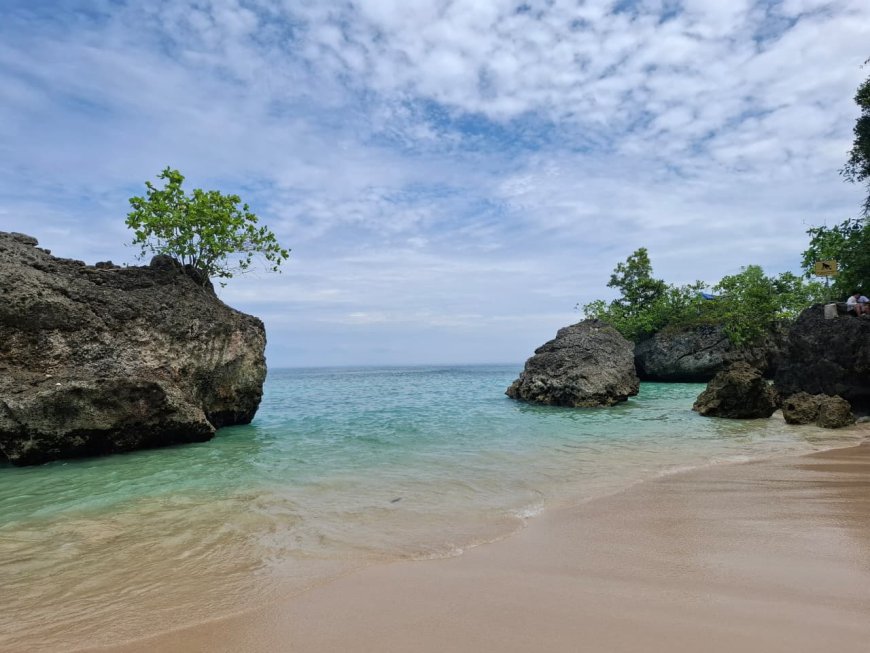
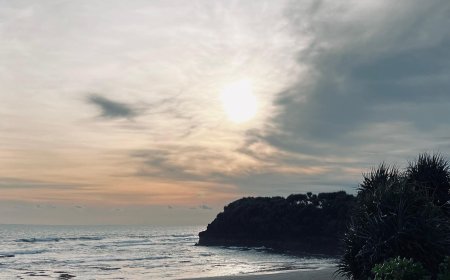
View of Padang Padang Beach (Source: Personal Collection)
Padang Padang Beach is located in Pecatu Village, South Kuta District, Badung Regency, Bali. Its location is not far from Pura Luhur Uluwatu, one of the most important temples in Bali and a major spiritual tourism destination. Geographically, the beach lies within a limestone hill region that stretches along the southern coast of Bali. Access to Padang Padang Beach is relatively easy, with paved roads that can be reached by private vehicles or rental transportation. From the Kuta or Denpasar areas, the journey to Padang Padang Beach takes approximately one to one and a half hours, depending on traffic conditions.
The development of tourism at Padang Padang Beach also involves the active participation of the local community. Local residents take part in managing the beach area through the provision of parking services, surfboard rentals, and small food and beverage stalls. This community involvement reflects a reciprocal relationship between tourism and local socio-economic life. Tourism provides economic opportunities, while the local community plays a role in preserving the coastal environment to ensure it remains attractive and sustainable.
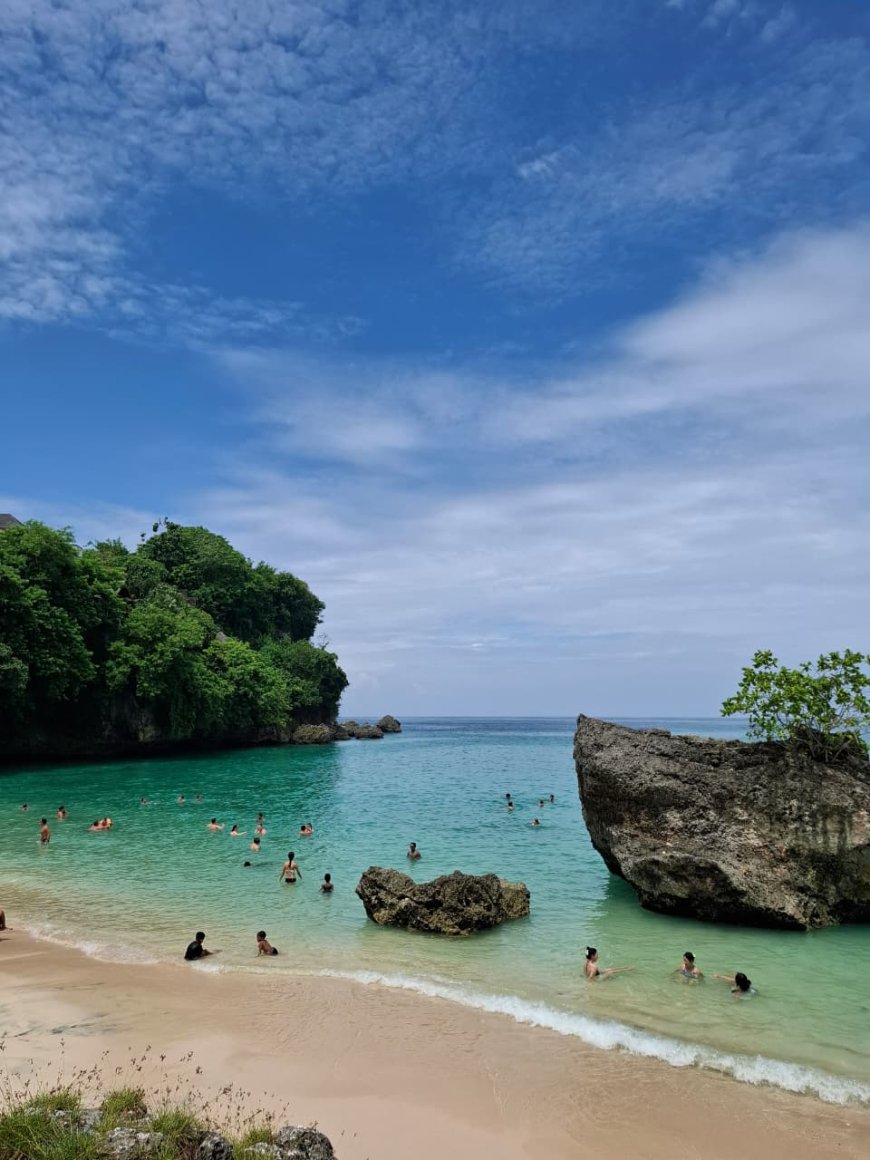
Interaction between Tourists and the Natural Landscape of the Beach (Source: Personal Collection)
In the broader context of Bali tourism, Padang Padang Beach reflects a shift from mass tourism toward nature-based and experience-oriented tourism. Visitors come not only to enjoy the scenery, but also to experience the natural atmosphere, explore the unique landscape, and engage in activities such as surfing and nature photography. This trend aligns with sustainable tourism principles that emphasize a balance between the utilization of natural resources and their conservation.
Padang Padang Beach is not merely a coastal tourism destination, but also a representation of Bali’s coastal landscape that holds aesthetic, ecological, and social value. Its unique natural formations, strong support from the local community, and its role in the development of Uluwatu tourism make this beach an example of successful coastal tourism in Bali that continues to grow without losing its natural character. With sustainable management, Padang Padang Beach is expected to remain a harmonious tourism space where nature, culture, and tourism activities coexist.