





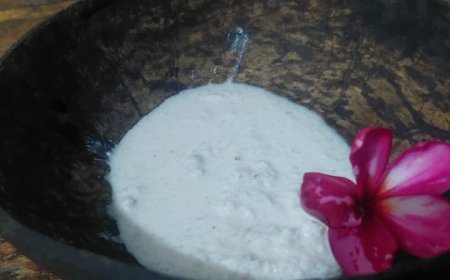


Behind Pura Dalem Suniantara: The Legacy of Dang Hyang Nirartha in the Story of the Flash Flood in Batan Nyuh Village
Pura Dalem Suniantara on Jalan Imam Bonjol, Denpasar, preserves a story passed down through generations about Dang Hyang Nirartha and a devastating flash flood in Batan Nyuh. According to the tradition, Dang Hyang Nirartha helped the community affected by the flood by planting his wooden staff, or teteken, at the mouth of the floodwaters. The teteken was later believed to have been enshrined at the site, becoming part of the legacy of his journey that continues to be remembered today.
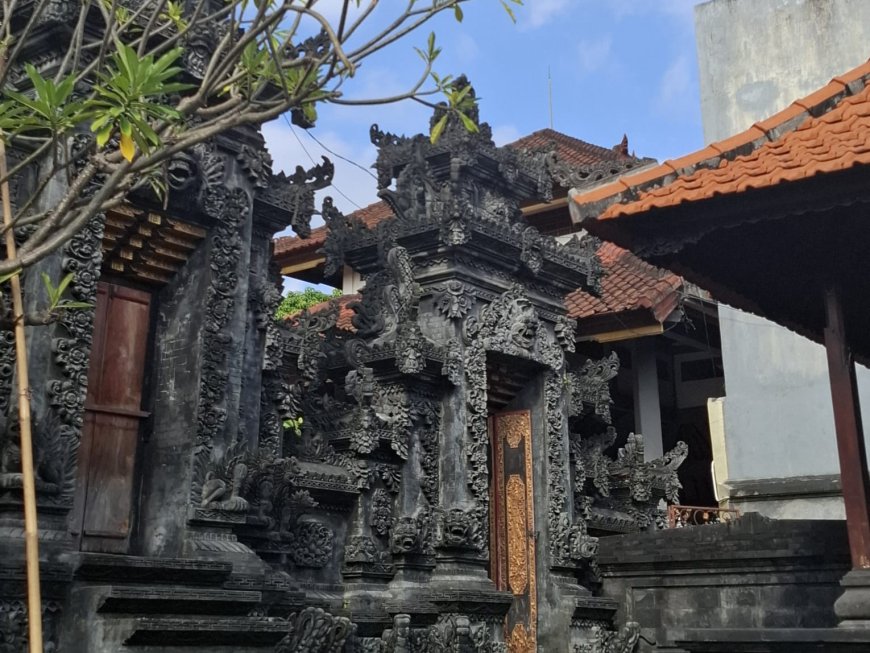
The water that came from the east was more than a flood flowing through the streets. According to a story passed down through generations in Batan Nyuh, a flash flood once became a serious threat that forced the villagers to seek help. Amid the disaster, a holy priest who was traveling through the area stopped at a parahyangan in Batan Nyuh. He was Dang Hyang Nirartha, a revered Hindu priest whose spiritual journey left traces in various parts of Bali.
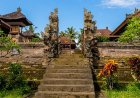
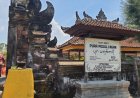
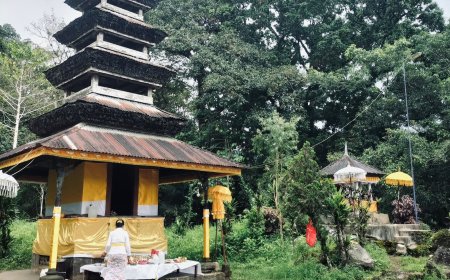
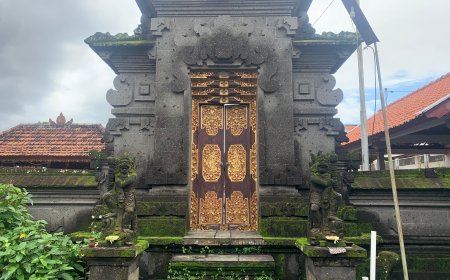
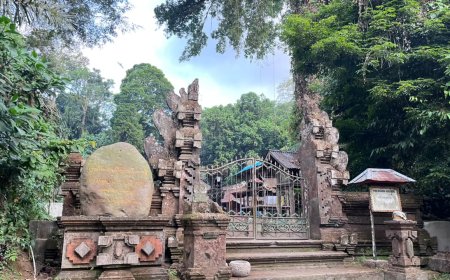
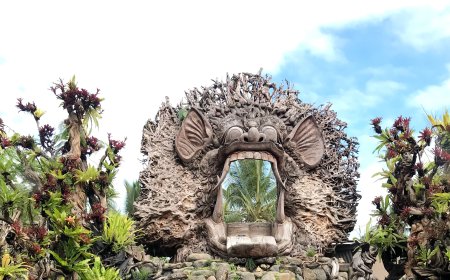
Today, the traces of that story remain in the midst of a rapidly changing urban landscape. Pura Dalem Suniantara stands on Jalan Imam Bonjol, directly across from the Fire Department office. Surrounded by traffic and the growth of the city, the temple preserves the story of an event that connects the journey of a revered figure with the experience of a community facing a natural disaster. Here, the memory of Dang Hyang Nirartha's arrival continues to be preserved.
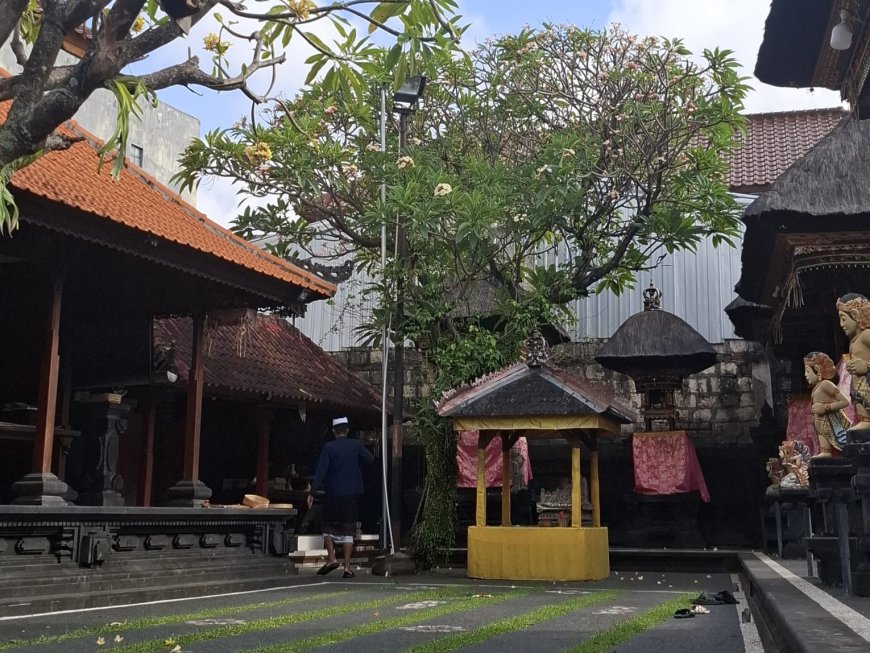
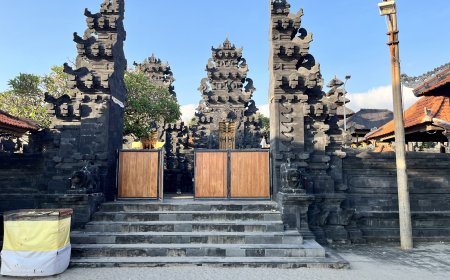
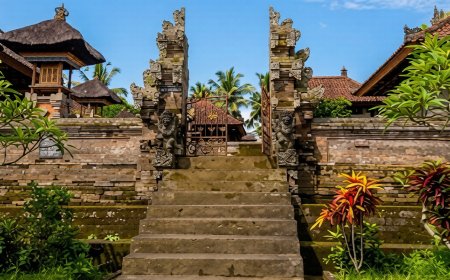
The Main Courtyard of Pura Dalem Suniantara (Source: Personal Collection)
According to the story surrounding the temple's origins, Dang Hyang Nirartha's journey toward the Badung region was interrupted by a great flood. Upon reaching Buagan Village, he stopped at a parahyangan at Batan Nyuh Temple because the powerful current prevented him from continuing his journey. Villagers came from the eastern side of the road, crossing a suspension bridge to approach the priest. They offered their prayers and asked for his help because their homes had been overwhelmed by the flood.
Seeing the condition of the people affected by the disaster, Dang Hyang Nirartha is said to have responded with compassion. He gave them a piece of wooden staff that had been ritually inscribed, and instructed them to plant it at the mouth of the flood. According to the story, once the staff was planted, the water that had been surging violently began to move toward the west until the road was cut off.
The story did not end when the floodwaters receded. The teteken, associated with Dang Hyang Nirartha's journey is believed to have been enshrined at a particular site. From this belief emerged the connection between the journey of the revered priest and the existence of Pura Dalem Suniantara, a connection that has remained part of the collective memory of the community.
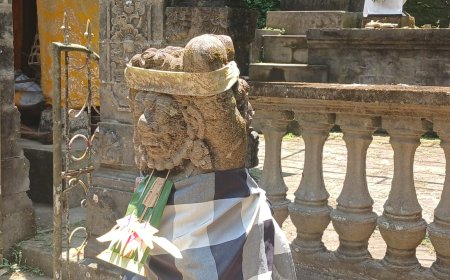
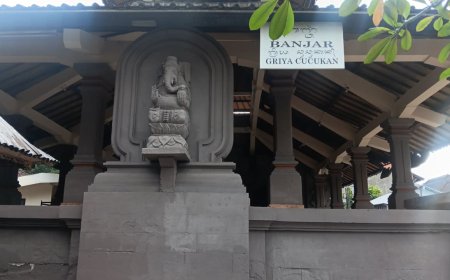
The legacy is not preserved only through oral tradition. Local people also speak of Dang Hyang Nirartha's teteken, which is believed to have grown into a kayu tiga ron tree that still survives today. There are also several statues and other historical remnants associated with the site. Their presence allows the temple to function not merely as a place of worship, but also as a space where memories of the past continue to be preserved.
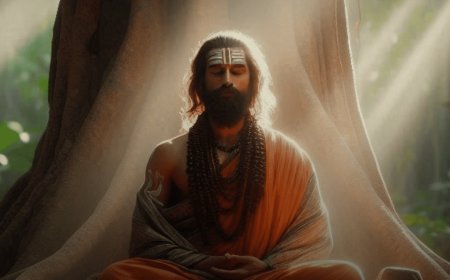
Dang Hyang Nirartha is also known by several names, including Pedanda Shakti Wawu Rauh and Danghyang Dwijendra. He is a revered Hindu figure whose arrival in Bali is associated with the reign of Dalem Waturenggong. According to the traditions surrounding his journey, he arrived in Bali from Blambangan around Saka 1411, or 1489 CE. His journey later became an important part of the religious and cultural narratives preserved across various parts of Bali.
In the context of Pura Dalem Suniantara, this journey is not understood merely as the movement of a holy figure from one place to another. A journey gains meaning when it leaves a connection with the places and communities it passes through. The story of the flash flood in Batan Nyuh illustrates how an event experienced by a community became attached to a sacred space. A place that once formed part of such a story was not allowed to become merely a distant memory, but was instead preserved through the existence of the temple and the rituals carried out there.
The relationship between the temple and the community also demonstrates that the preservation of tradition is not carried out by a single group alone. The temple is disungsung, or collectively cared for and worshipped, by residents of Denpasar, while the people of Batan Nyuh play a role in reminding the community about the aci-aci held on major religious occasions. This shared role reflects an enduring social relationship between the sacred site, its worshipping community, and the people whose surroundings remain connected to its history.
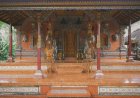
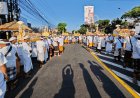
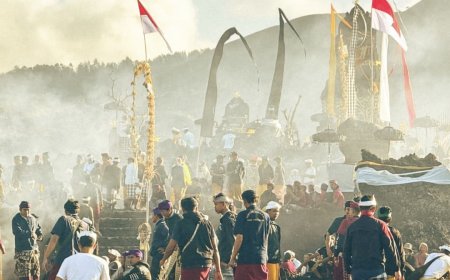
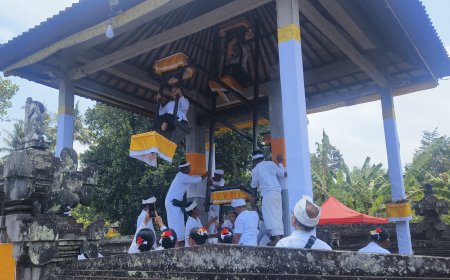
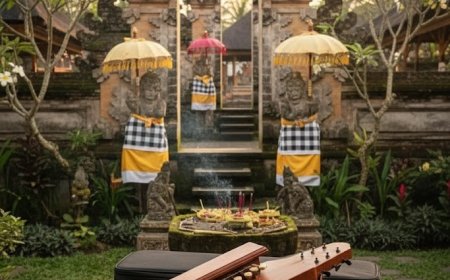
The life of the temple follows the rhythm of the Balinese religious calendar. Its wali ceremony is held once every six months, on Redite, or Sunday, Kliwon Watugunung. Within the temple, the main shrine is the Padma Tiga, which serves as the stana, or sacred abode, of Sang Hyang Tri Purusa: Siwa, Sadha Siwa, and Parama Siwa.
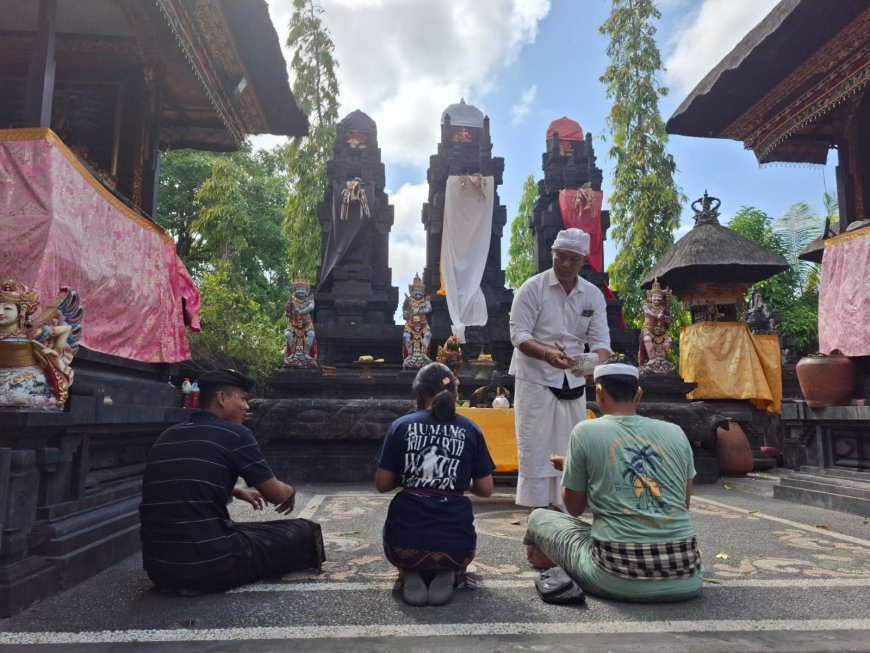
Padma Tiga Pura Dalem Suniantara (Source: Personal Collection)
The Padma Tiga itself carries a deeper meaning than simply being three shrines standing side by side. In the Balinese Shaivite understanding of Hinduism, Padma Tiga, also known as Padma Bhuwana, is a shrine dedicated to the worship of Tri Purusa, rather than Tri Murti as it is sometimes commonly understood. Tri Purusa refers to three aspects of the Divine within the concept of Siwa: Parama Siwa, Sadha Siwa, and Siwatma. Parama Siwa is understood as the highest reality of Siwa, beyond human conception and beyond the limits of thought. Sadha Siwa represents the aspect of Siwa through which His divine powers can begin to be understood. Meanwhile, Siwatma refers to the presence of Siwa within every living being as atman. Thus, Padma Tiga represents a philosophical understanding of one divine reality through three aspects, rather than three separate gods.
This understanding is part of the religious tradition of Balinese Hinduism and can be found in a number of sacred places, each within its own context. One of the most widely known examples is found at Pura Besakih. At Pura Dalem Suniantara, the presence of Padma Tiga as the main shrine forms an important part of the temple's identity and religious structure. It is not merely a prominent architectural feature, but also introduces a philosophical dimension to the temple, where history, tradition, sacred space, and an understanding of the Divine come together.
Today, as urban areas continue to expand and traditional spaces face the changes taking place around them, Pura Dalem Suniantara raises a broader question: How can a community preserve its memory when the world surrounding it continues to change? The answer can be seen in the continued existence of the temple itself. The roads and surroundings that once formed part of an older landscape have become part of the modern city, yet the sacred site remains, and its traditions continue to be practiced.
For this reason, preserving Pura Dalem Suniantara means more than maintaining its physical structures. What is also being preserved is the story of how the place acquired its meaning, the objects associated with Dang Hyang Nirartha's journey, and the traditions that keep the relationship between the past and the present alive. Cultural preservation, in this sense, is not merely about safeguarding historical remnants. It is also about preserving a community's ability to remember.
Ultimately, the story of the flash flood in Batan Nyuh cannot be separated from the way the community understands its history, religious traditions, and inherited cultural heritage. In the midst of a city that continues to move forward, the temple seems to remind us that not every trace of the past needs to move with the changing times. Some survive precisely because they are cared for, respected, and retold. As long as people continue to come, offer their devotion, observe the wali, and pass the story on to the next generation, the journey of Dang Hyang Nirartha through Batan Nyuh will never truly belong to the past. It continues to live in the collective memory preserved at Pura Dalem Suniantara.