
















Ki Gusti Panji Sakti: From Local Legitimacy to the History of the Kingdom of Buleleng
The genealogy and struggles of Ki Gusti Ngurah Panji Sakti and his family in building and ruling the Kingdom of Denbukit in Bali. Beginning with the birth and supernatural powers of Ki Barak Panji, who later became Ki Gusti Ngurah Panji Sakti, this story traces his life journey, the conquest of Denbukit, the subjugation of Blambangan, the establishment of the capital in Singaraja, and the division of the kingdom among his descendants. The tale also highlights the bravery, wisdom, mystical powers, and leadership of Ki Gusti Ngurah Panji Sakti, which brought prosperity and loyalty from his people, as well as the inheritance of the kingdom by the next generations who upheld the glory of Denbukit and Singaraja.


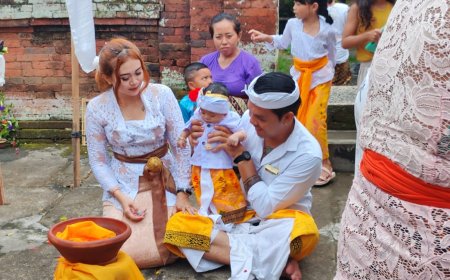
In the village of Panji, Denbukit, Buleleng, there lived a woman named Si Luh Pasek. She worked as a sahaya (panjroan — palace servant) at the Gelgel Palace. At that time Dhalem Sagening was already advanced in years (wreda). One day an event occurred that made Dhalem Sagening fall in love with Si Luh Pasek. Because of that growing love, Dhalem Sagening married Si Luh Pasek. Some time after their marriage, Si Luh Pasek became pregnant. However, one day Dhalem Sagening realized that he was very old and that death was approaching. He felt he had not yet repaid the great debt of gratitude owed to Ki Arya Jlantik, a very loyal and devoted follower. Therefore Dhalem Sagening presented the pregnant Si Luh Pasek to Ki Arya Jlantik as a token of repayment. There was, however, one condition: while the baby in Si Luh Pasek’s womb had not yet been born, Ki Gusti Ngurah Jlantik was not to marry her. After the child was born, the child would be handed over to Ki Arya Jlantik to be raised as his son. When the time came, Si Luh Pasek gave birth to a baby boy who, at birth, shone a light from his crown — a sign that the child would one day possess great power and future glory. After the birth, ceremonies and rites were held according to the customary practices always observed by Arya Ngurah Jlantik. The baby was then named “Ki Barak Panji.” At that time, however, Ki Ngurah Jlantik’s wife could not accept the situation. Her heart was filled with worry and fear that her own biological child might be overshadowed, perhaps lacking the authority or power of the newborn. Because of this, sadness and sorrow shrouded Ki Ngurah Jlantik’s wife.

AI illustration, The Birh of Ki Gusti Panji Sakti (Source: Private Collection)
After Ki Barak Panji grew up, he went to the palace to serve Dhalem Sagening. There he joined the sons of other Aryas who also served as sahaya in the palace environment. One night, at the stroke of midnight, Sri Dhalem and the queen went out to enjoy the night air. At that time the queen suddenly saw a light radiating from the head of one of the children who was sleeping deeply among the group. Seeing this, Sri Dhalem marked that child with chalk, and then the light disappeared. The next morning, all the children were examined one by one. It turned out that the child marked by the chalk was Ki Barak Panji. Sri Dhalem then grew more certain of the truth of what Ki Gusti Ngurah Jelantik had previously said. From that event, Sri Dhalem’s affection for Ki Barak Panji increased. Yet in her heart she remained anxious and fearful that in the future Ki Barak Panji’s presence might eclipse the authority of her own biological son, whom she hoped would later succeed as King of Bali. As time went on and Ki Barak Panji matured, the worries of Dhalem Sagening and the queen increased, as did the concerns of Ki Gusti Ngurah Jelantik and his wife. They observed Ki Barak Panji’s abilities, bravery, and mystic powers, and thus conceived a plan to prevent future discord or conflict over position and authority. Finally they decided that Ki Barak Panji should be returned to his mother’s village, Panji in Denbukit. Before his departure, Dhalem Sagening prepared an escort of 40 selected men known for their courage and invulnerability; this escort was led by Ki Dumpiung and Ki Dosot to ensure Ki Barak Panji’s safe journey.
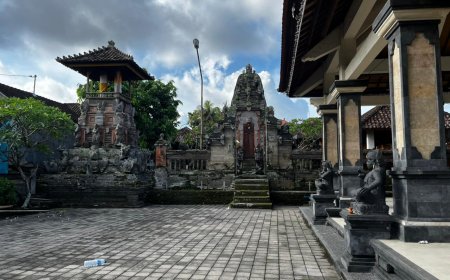
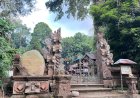
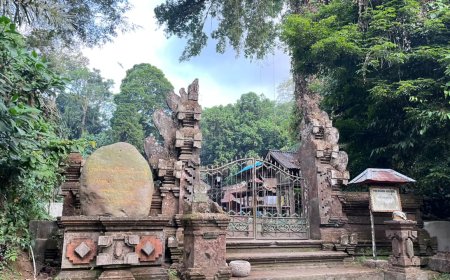
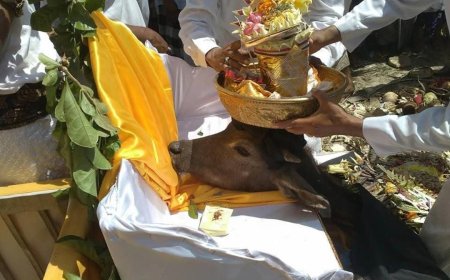
Before they set out, the entire escort was gathered and each man was given a kris. After distribution, forty men had received their krises, but one kris remained. The krises were recounted and it was confirmed that the number was exactly forty — neither more nor less. When distributed again, there was still one kris left: the Mundarang Cacaran Bang, which astonished everyone. Dhalem Sagening decided that this remaining kris was indeed meant for Ki Barak Panji and would become his heirloom, and so it was given to him. In addition, Dhalem Sagening bestowed upon Ki Gusti Barak Panji a spear (suligi) named Ki Tunjung Tutur and a banner called Pangkajatatua. When the time came, Ki Gusti Barak Panji and his mother departed for Denbukit escorted by the forty guards led by Ki Dumpiung and Ki Dosot, carrying the Pangkajatatua banner. On their journey they stopped at the village of Jarantik to offer prayers at the place of his ancestral blood, then continued north, turning west through Samprangan and Kwisunya (Mengwi), entering Bandanegara (Tabanan), and continuing north until reaching Lake Beratan. The journey took four days, and in the late afternoon they finally arrived at Watusaga (Batumejan), in the Denbukit area. They stopped in a place to eat provisions of ketupat. While eating, a piece of ketupat became lodged in Ki Barak Panji’s throat, causing his retainers to panic in search of water to help him. However, finding water on top of a hill at 1,220 meters elevation was very difficult unless they descended to the lake. At that moment Si Luh Pasek Panji took the Pangkajatatua banner and planted it in the ground as if to stake it. By the grace and power of Hyang Widhi, suddenly a sacred spring gushed forth from that spot and was dug until it formed a spring as high as a cooking pot and wide enough to draw from, and it flowed continuously without ceasing. The spring remained abundant even though its water was bucketed many times and did not flow away to other places. That spring was named Banyu Anaman or Tirtha Ketipat, and to this day it is honored and revered by all Hindus in Bali, especially by the descendants of Ki Gusti Ngurah Panji and the descendants of Ki Pasek Panji.

AI illustration, History of Tirtha Ketipat (Source: Private Collection)
After they finished eating, they continued their journey toward the northwest. The sun had set and night was falling when they reached the ridge behind Lake Buyan, where suddenly something extraordinary appeared — known as Panji Landung — which, with its power, seized Ki Gusti Barak Panji and lifted him high upon its shoulder so that Ki Barak Panji felt as if he were in the sky. Panji Landung commanded Ki Barak Panji to look east, and he saw the Tianyar mountains; to the north, he saw only the sea; to the west he saw Mount Banger in Blambangan; and when asked to look south, Ki Barak Panji begged to be put down because he could not bear to hear the cries of his mother and his retainers. Eventually he was set down, and Panji Landung bestowed upon him the gift that all the lands he had seen would become Ki Gusti Barak Panji’s domains. Then Panji Landung vanished mysteriously. Everyone, especially his mother, rejoiced greatly, and they continued on their way. The next day they arrived at the village of Panji and went to his mother’s family home, where they were joyfully welcomed. After Ki Gusti Barak Panji settled in Panji, thirty-eight of his guards returned to Gelgel; only Ki Dumpiung and Ki Dosot remained because of their loyal love for their master. From then on, the still-childlike Ki Gusti Barak Panji often wandered about carrying the heirloom kris given by Dhalem Sagening, which he used to pry up crickets and sweet potatoes, accompanied by his two retainers in the routine of daily life.
The village of Panji was led by Ki Pungakan Gendis, whose palace was in the village of Gendis; the people all respected and feared him. He was known for being always joyful. One day he went to cockfights in a village riding his gendis rateng horse, whose coat resembled cooked sugar. He was flanked and escorted by his servants and used a ceremonial umbrella as he headed north. Coincidentally at that time Ki Barak Panji was strolling with his two retainers, always carrying his kris to pry up sweet potatoes and crickets. Suddenly a disembodied voice spoke to him: “Hey Barak Panji, do not be afraid, do not use me only to dig up sweet potatoes, yams and crickets; do not doubt me, because at the tip of my kris there is the Pasupati sastra, a weapon that can take life, which will one day make you great on earth and beloved by the people. Look and test my powers. There is an enemy named Pungakan Gendis who rules in Gendis and who ought to be killed by you. Do not hesitate — try him!” Thus the voice spoke to Ki Barak Panji and his retainers. After the cockfight finished, Pungakan Gendis returned accompanied by his servants. Ki Gusti Barak Panji hid by the roadside behind a tree. When Pungakan Gendis approached, Ki Barak Panji thrust the tip of his kris and uttered “tar semang,” then slipped away. Immediately, Pungakan Gendis died and his body stiffened, but no one knew what had happened. When he arrived at the palace, Pungakan Gendis lay motionless on his horse. Only later was it discovered that he had died. He left behind two children, a daughter named Ki Dewa Ayu Juruh and a young son who would one day replace his father. Therefore, the administration of the village was temporarily handled by Ki Bendesa Gendis as acting official.
Some time later, a wrecked ship was found on the shore at Penimbangan (Pura Segara Panji). The ship belonged to a Chinese merchant named Ki Dompu Awang (San Po Kong) in the 16th century. They asked Ki Bendesa Gendis for help in hauling the ship ashore, promising to give all of the ship’s cargo as a prize — various cloths, ceramics, and precious objects. Ki Bendesa Gendis then mobilized his people with hauling equipment, but the ship would not budge at all, so they became despondent and finally returned. News of this reached Ki Barak Panji, so he went to the beach accompanied by Ki Dumpiung and Ki Dosot. There he found Empu Awang grieving and swearing that anyone who could salvage the ship would be given all its contents. Ki Barak Panji agreed to help, walked up to the ship, drew his kris, and suddenly heard a voice say “Ayua semang,” meaning “do not hesitate,” which strengthened his spirit and his faith in the greatness and omnipotence of Hyang Widhi Wasa. Ki Barak Panji then pushed the ship while sweeping with his kris, and by the grace of Sang Hyang Widhi the ship was freed from its obstruction and moved safely to the sea. All aboard cheered, especially Empu Awang, who was amazed and overjoyed at Ki Barak Panji’s power. The ship then sailed back to the shore near Empu Awang, who fulfilled his promise by handing over the entire cargo to Ki Barak Panji. From that incident, trust in Ki Barak Panji increased because of the potency of his heirloom kris, which was then named “Ki Tarsemang,” meaning “not hesitant,” and Ki Barak Panji became exceedingly wealthy, lacking nothing.

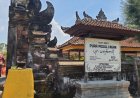
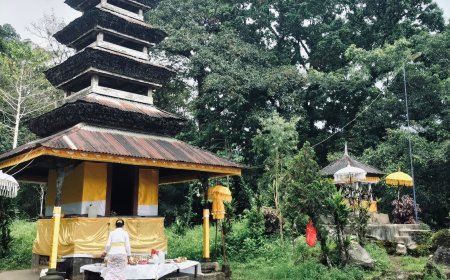
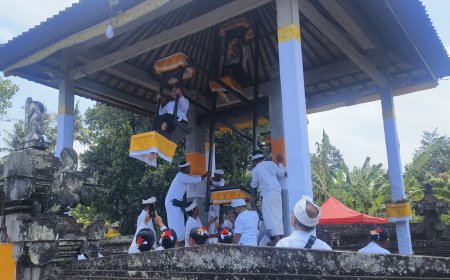
Pura Tirta Ketipat (Source: bulelengkab.go.id)
When Ki Gusti Panji reached the age of twenty, his fame grew and he became well known. He was renowned for being friendly, polite, courteous, and generous. As a result, the people of Gendis respected and loved him. The people devoted themselves to him, and eventually Ki Gusti Panji was proclaimed king by the people with the title Ki Gusti Ngurah Panji. He then moved the village together with the main sacred shrine, Agung Gendis, with the agreement and cooperation of the community, relocating them to the village of Panji. This occurred in the era Saka nora-menga-sagara-bumi: 1490–1568. During his reign, the king created a complete set of musical instruments, each with its own name and special function. These instruments included Juruh Satukad, whose sound was extraordinarily beautiful and sweet like flowing honey; a pair of gongs called Bentar Kedaton whose sound split the earth; Kala or bende named Ki Gagak Kora because its sound resembled the cries of thousands of crows; kenuk or kajar named Ki Tundung Musuh because its sound inspired fear in enemies; trompong named Glagah Katunuan; and kendang named Gelap Kesanga. When played together, these instruments created vibrations that struck fear into enemies.
In 1489, during the reign of Dhalem Batur Enggong (who ruled from 1460 to 1550 CE), Danghyang Nirarta came to Bali with his children and settled in Kemenuh, Blahbatuh. One of his daughters, named Swabhawa, lived invisibly in Pulaki and was known as Batari Melanting, who became queen of the invisible beings (gamang). His son, Danghyang Wiragasandhi, took residence in the village of Tarupinge (Kayuputih) in the Denbukit area to practice asceticism. He was celebrated for his wisdom and magic, particularly in forging extremely powerful krises, famed by the name “Pakarya Kayuputih.” One son of Danghyang Nirarta was appointed by Ki Gusti Ngurah Panji as the royal purohita with the title Pendeta, given a position in Banjar Ambengan and authority to govern the people to the west of the village Kalibukbuk, whose population numbered some 3,000, receiving the title “Pedanda Sakti Ngurah.” He also received lodging to the east of Sukasada called the house “Romaarsana.” After some time, Padanda Sakti Ngurah died in Kayuputih, a place of great virtue. His position was then replaced by his son, who also became the royal purohita and bore the title Padanda Sakti Ngurah. Like his father, he was wise and expert in making powerful krises, famous by the name “Pakarya Banjar,” possessing extraordinary power especially related to “guna pangan” (food-provisioning powers). The palace at Sukasada during that period is recorded in 1584. Padanda Sakti Ngurah highly respected and was loyal to Ki Gusti Ngurah Panji Sakti, and so he made an agreement called “sengkera,” meaning mutual loyalty in joy and sorrow, where heavy burdens are borne together and light ones are carried together. This agreement was made at the Romaarsana residence, which to this day is known as “Sangket.” Padanda Sakti Ngurah also brought the Brahmana Kemenuh lineage to Denbukit. Ki Gusti Ngurah Panji Sakti had several sons with Ki Dewa Ayu Juruh: Ki Gusti Ngurah Panji Gede as the firstborn, followed by Ki Gusti Ngurah Made as the second, and Ki Gusti Ngurah Panji Wala as the third, as well as other sons from his other wives.
Ki Gusti Ngurah Panji Sakti’s kingdom was peaceful and prosperous. However, he harbored the intention to attack Blambangan in the land of Jawadwipa, in accordance with the war-grant that had once been given to him by Ki Panji Landung. He already had 800 chosen war heroes who were powerful and invulnerable; these were later increased to 1,600 selected fighters called “Truna Goak,” serving as fighting champions, and 11,000 trained people’s militia for war. Those forces were commanded by 20 leaders, among whom the three prominent ones were Tambelang Sampun, Ki Gusti Made Batan, and Ki Macan Gading. One day the king held a large assembly attended by all the Truna Goak and the militia. Ki Gusti Ngurah Panji Sakti invited the Truna Goak to play “goak-goakan” or the dragon-snake game, in which each goak could make a request of the king which would be granted. The Truna Goak lined up forming a dragon-snake while shouting “goak, goak, gaak, gaak.” The king asked, “Hey goak, what do you ask for?” The goak answered, “Goak, gaak, gaak, I ask for clothing,” and the request was granted. The king asked again, “What else do you ask for, Goak?” The goak answered, “Gaak, gaak, gaak, I ask for ornaments and perfume!” All these requests were granted, and then the king became Goak. The people asked again, “Hey Goak, what do you ask for?” While dancing the Goak replied, “Goak, gaak, gaak, I ask that Blambangan be attacked, so that it will be subdued under my rule, gaak, gaak, prepare now! gaak, gaak.” Hearing that request, all the Truna Goak and the people cheered and agreed to attack Blambangan.
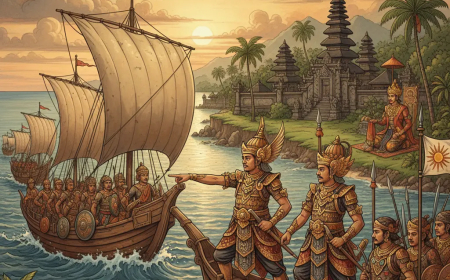
After preparations were complete, the Caturangga or the Truna Goak armed forces together with the people’s militia readied equipment, weapons, provisions, and transport in the form of prahus, working busily day and night. When they were fully on standby, they only awaited the king’s command. The king himself waited for guidance from the Pendita to determine an auspicious day and time to attack the enemy. On a day deemed favorable according to Pendita Bagawanta, the First Army of Ki Gusti Ngurah Panji Sakti set out to attack Blambangan. Two Ranjar-crafted spears named Ki Baru Ketug carried by Ki Tamblangsampun and Ki Baru Sakti carried by Ki Gusti Made Batan were taken along. The army sailed west via Gili Manuk, Segara Rupek, and Batu Sondol, then landed at Candigading, the Tirtharum shore (Banyuwangi), while the land forces reached Gilimanuk before crossing. Having arrived, Ki Gusti Ngurah Panji Sakti and his army attacked Banger (Probolinggo), which was immediately taken because the attack was sudden. At that time the Panji Sakti army met fierce resistance from the Blambangan forces, resulting in a fierce battle. Both sides were equally strong and neither would retreat, but the blows of Panji Sakti’s troops, especially the Truna Goak led personally by Ki Tamblang Sampun, Ki Gusti Ratan, and Ki Macan Gading under Panji Sakti’s command, finally allowed the city of Blambangan to be captured. The King of Blambangan, Prince Mas Tawang Alun, fell in battle and was killed by Ki Panji Sakti. The people of Blambangan could not hold out and surrendered, while the royal family along with two sons, Ki Dewa Mas Sedah and Ki Dewa Mas Pahit, fled to Solo. Thus in 1691 CE the kingdom of Blambangan fell into the hands of Ki Gusti Ngurah Panji Sakti, and everything was reorganized. After a while there and once conditions were calm, Ki Gusti Ngurah Panji Sakti appointed his son Ki Gusti Ngurah Wayan as king of Blambangan, accompanied by six hundred Balinese soldiers. Yet Panji Sakti grieved because another son, Ki Gusti Ngurah Nyoman (Danudresta), fell in battle. The King of Solo learned of Ki Gusti Ngurah Panji Sakti’s success and drew close to him, and eventually a friendship developed; Panji Sakti was given an elephant by the King of Solo, which may have been a ploy to learn of Panji Sakti’s weaknesses. Afterwards Panji Sakti, escorted by the Truna Goak and the people’s militia, returned to Bali. On the way home, Ki Panji Sakti stopped to attack Jembrana, which he managed to subdue. After conquering Jembrana, Panji Sakti returned to Denbukit, whose capital was at Sukasada.
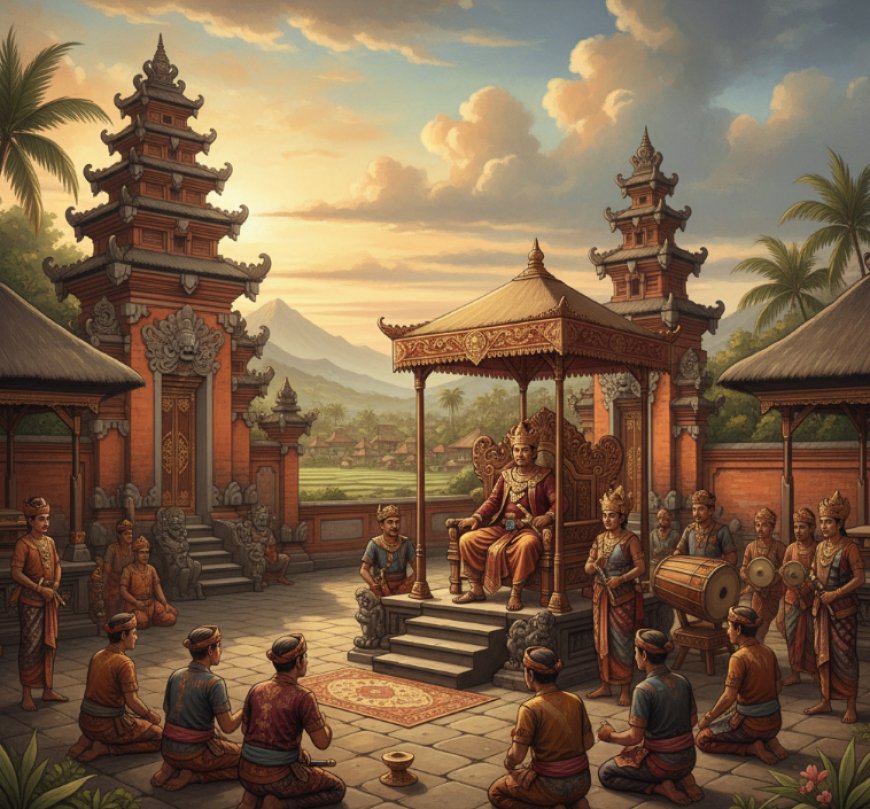
AI illustration, Buleleng Kingdom during the reign of Ki Gusti Panji Sakti (Source: Private Collection)
During Ki Gusti Ngurah Panji Sakti’s rule, the people cleared fields in Jenggala Blalak — a place where people planted bululeng (a type of corn) north of Sukasada. After the work was finished, the king built a palace there and government officials together with the people helped erect structures around it. The new place was named “BULULUNG,” because it had previously been a field of bululeng. Since then the center of the kingdom was moved from Sukasada to Buleleng, and the capital was named “SINGARAJA,” because the king was strong and brave like a lion, Ki Gusti Ngurah Panji Sakti. The elephant used by Ki Gusti Ngurah Panji Sakti was housed in a stable or “petak” north of Singaraja city, and that place later became known as “Banjar Petak.” The elephant keepers were three people from Solo, Java; two lived north of Banjar Petak and the area became known as “Banjar Jawa” to this day, while the other settled near the mouth of the Banyumala River, from Probolinggo, and that place became known as “Lingga.” Between Banjar Petak and Banjar Jawa arose Banjar “Peguyangan” (Pekubangan), because that was where elephants wallowed. Over time, more Javanese settled in Banjar Jawa, and the king moved them to a place near the mountains called the forest “Pegatepan,” meaning “Pegayaman (Teep),” which today remains a boundary guard in the south. The kingdom of Denbukit enjoyed peace and prosperity thanks to the wisdom of Ki Gusti Ngurah Panji Sakti. When his time came, Ki Gusti Ngurah Panji Sakti passed away, leaving behind sons and daughters, among them Ki Gusti Ngurah Panji Gede who replaced his father and remained dwelling in Sukasada, his brother Ki Gusti Ngurah Panji Made, and Ki Gusti Ayu Panji, born of Ki Dewa Ayu Juruh and married to the king of Mengwi. Other children included I Gusti Alit Oka and I Gusti Made Padang whose mother was a Wesya from Banjar Ambengan Radung, as well as I Gusti Wayan Padang and I Gusti Made Banjar whose mother was from Panji. Ki Gusti Ngurah Panji Gede had a daughter called Ki Gusti Ayu Jlantik Rawit, while Ki Gusti Ngurah Panji Made had several children: I Gusti Ngurah Panji Bali, I Gusti Panji Tanuk, I Gusti Made Munggu, I Gusti Nyoman Panji, and I Gusti Oka Panruju. I Gusti Ngurah Panji Bali married Ki Gusti Ayu Jlantik Rawit, and after Ki Gusti Panji Gede and Ki Gusti Ngurah Panji Made passed away, his son I Gusti Ngurah Panji Bali became king in Denbukit while still residing at Sukasada. The palace in Singaraja was well guarded as a secondary residence. Ki Gusti Ngurah Panji Bali had two sons, Ki Gusti Ngurah Panji and Ki Gusti Ngurah Jlantik. At that time, the kingdom of Denbukit was divided into two regions: Ki Gusti Ngurah Panji became ruler in Sukasada while his younger brother Ki Gusti Ngurah Jlantik became ruler in Singaraja.
References
Admin disbud. (2024, May 17). CIKAL BAKAL NAMA KERAJAAN BULELENG. Retrieved from disbud.bulelengkab.go.id: https://disbud.bulelengkab.go.id/informasi/detail/artikel/94_cikal-bakal-nama-kerajaan-buleleng
Annisa, R. (2020). PENINGGALAN SEJARAH ISLAM DI BULELENG BALI. Jurnal Pendidikan dan Sejarah, 3–4.
Simpen, I. W. (1989). BABAD KERAJAAN BULELENG. Denpasar.