




















Bloody Ocean: The War of Gelgel and Gowa-Tallo (1618–1640 AD)
The history of the Indonesian Archipelago is a history of the sea. In the 17th century, maritime kingdoms measured their power by the strength of their fleets to control trade routes and project influence across the seas. Among them, two kingdoms with very different characteristics emerged as dominant powers: the Kingdom of Gowa-Tallo (Makassar), which flourished as a cosmopolitan trading hub, and the Kingdom of Gelgel in Bali, which inherited the agrarian-maritime traditions of Majapahit.


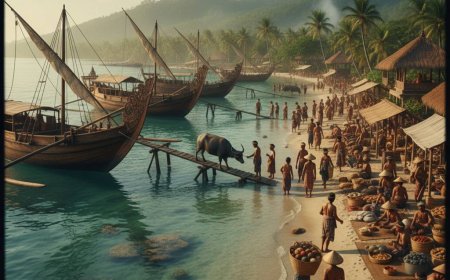
The Kingdom of Gowa-Tallo, located on the southwestern coast of Sulawesi,Gowa tallo transformed from an agrarian polity into an international trading port following the fall of Malacca in 1511. Under the leadership of visionary sultans, the port of Somba Opu emerged as the heart of maritime trade in the Indonesian Archipelago. Through its policy of free trade, Makassar became a magnet for merchants from Europe, China, India, and Arabia, fostering a vibrant and prosperous port city.

AI Illustration of The Gowa-Tallo Kingdom in 1618 (Source: Personal Collection)
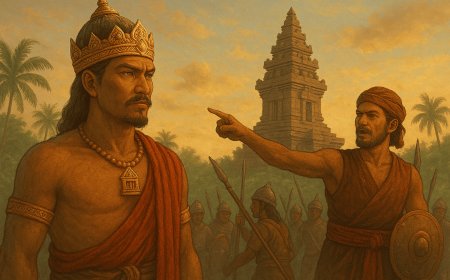
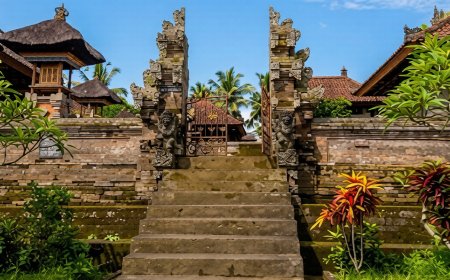
The Kingdom of Gelgel in Bali was an Agrarian-Maritime power centered on culture. Under the legendary reign of Dalem Waturenggong in the 16th century, Gelgel reached the height of its glory. Its principal strength did not lie in long-distance trade, as in the case of Gowa-Tallo or Ternate, but rather in its rice surplus, military power, and strong cultural influence.

AI Illustration of The Gelgel Kingdom in 1618 (Source: Personal Collection)
The power of Gowa-Tallo’s Makassarese hegemony extended through its control of strategic maritime routes. The formidable Bugis-Makassarese fleets dominated the Flores Sea, the Banda Sea, and the Makassar Strait. Its influence was strongly felt along the eastern coast of Kalimantan, much of Sulawesi, and the Nusa Tenggara Islands.Gelgel’s authority, by contrast, was territorial in nature. Its influence reached Lombok, West Sumbawa, and Blambangan at the eastern tip of Java. Its naval strength was employed to safeguard political supremacy and to project its cultural influence across surrounding regions.The war between the Kingdom of Gowa-Tallo and the Kingdom of Gelgel found its fiercest arena in Nusa Tenggara. Gowa-Tallo’s eastward expansion, aimed at securing food supplies and trade networks, directly clashed with Gelgel’s sphere of influence in Lombok and Sumbawa. Battles on both land and sea frequently erupted as each side sought to gain control over these contested territories.
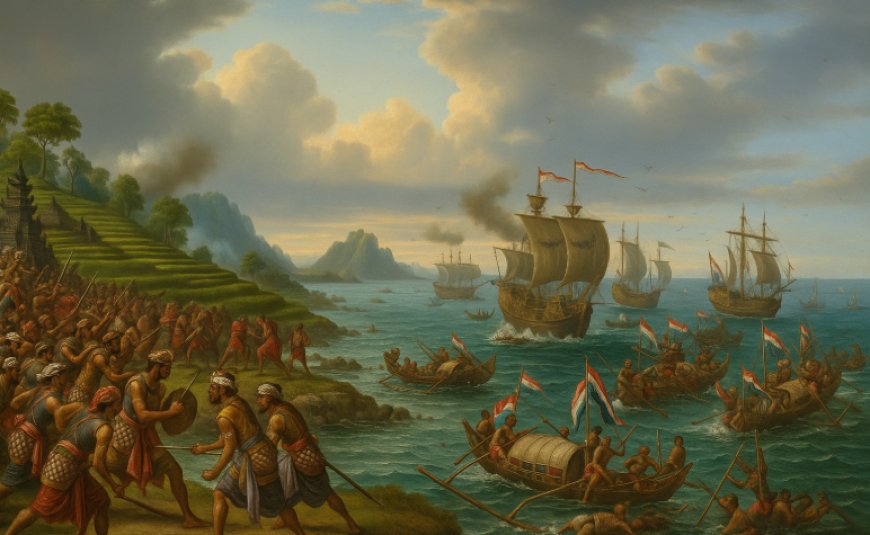
AI Illustration of The War Between the Gelgel Kingdom and the Gowa-Tallo Kingdom (Source: Personal Collection)
The VOC regarded the Kingdom of Gowa-Tallo as the principal obstacle to its quest for absolute monopoly. In Makassar, the principle of free trade, upheld through its open trade policy, directly undermined the VOC’s monopoly over the spice trade. This conflict culminated in the Makassar War, which ultimately ended in the defeat of Sultan Hasanuddin.The VOC’s interactions with Bali during the Gelgel era were markedly different. Bali did not possess the spices sought by the VOC. Due to Bali’s strong resistance, the VOC did not pursue military conquest. Instead, they established commercial relations, opening a trading post (loge) in Klungkung, purchasing rice,and recruiting Balinese warriors renowned for their toughness as mercenaries.
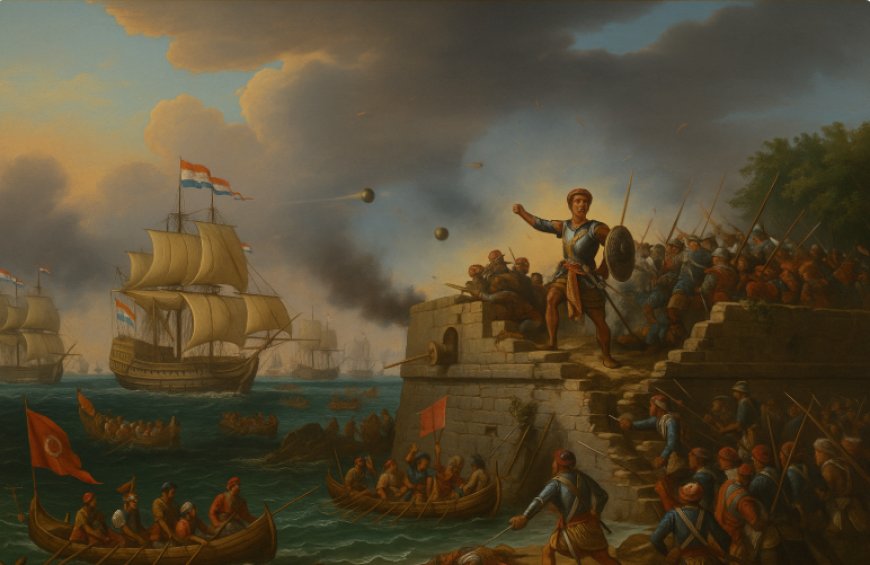
AI Illustration of Makassar Against the VOC and Its Allies (Source: Personal Collection)
The downfall of the Kingdom of Gowa-Tallo was primarily driven by external factors. Its defeat in the Makassar War and the signing of the Treaty of Bongaya in 1667 effectively ended its maritime sovereignty. Ternate likewise was weakened and reduced to a vassal state after the VOC succeeded in fully monopolizing the spice trade.In contrast, the collapse of Gelgel’s hegemony was largely the result of internal factors. The rebellion of Patih I Gusti Agung Maruti in the late 17th century triggered a civil war that devastated the kingdom’s center of power. As a consequence, the Kingdom of Gelgel fell, and Bali fragmented into several smaller polities, such as Klungkung, Karangasem, and Buleleng.
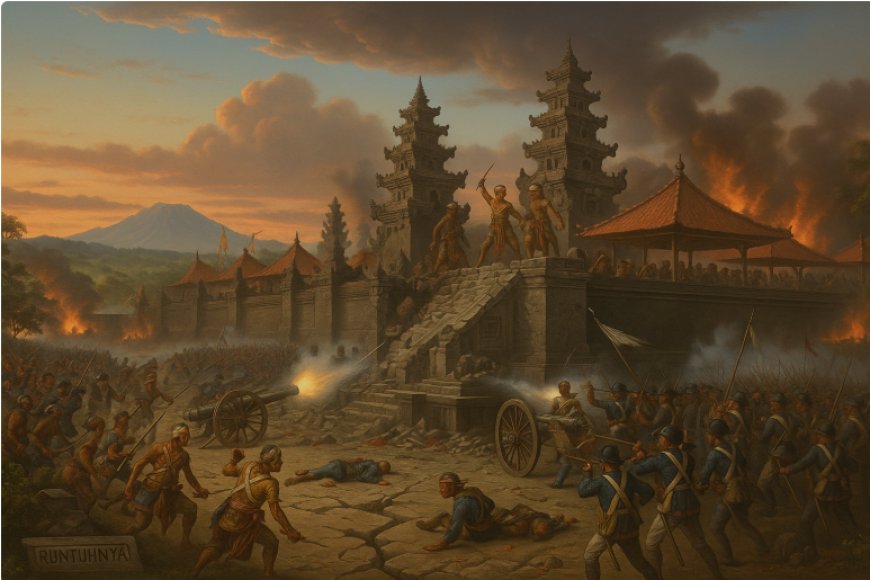
AI Illustration of Makassar Against the VOC and Its Allies (Source: Personal Collection)
The kingdoms of Gowa-Tallo and Gelgel were two archetypal models of maritime power in the Indonesian Archipelago built upon commercial strength, commodity wealth, and cultural influence. Both, however, met their downfall one was subdued by the superior military and economic might of the VOC, while the other collapsed from within due to internal divisions. Their trajectories serve as a valuable lesson that, beyond external threats, internal stability and unity are the fundamental keys to sustaining a hegemony.
REFERENCES
Handoko, W. (2017). Dunia kemaritiman di Kepulauan Maluku: Peran laut dan sungai dalam jaringan pelayaran, perdagangan, dan islamisasi pada abad XV–XVII.
Suwitha, I. P. G. (2017). Teluk Benoa dan Laut Serangan sebagai “laut peradaban” di Bali. Jurnal Kajian Bali (Journal of Bali Studies). Universitas Udayana.
Sritimuryati, & Suryaningsi, T. (2021). Perdagangan maritim di Makassar abad XVI–XVII. Walasuji: Jurnal Sejarah dan Budaya. Balai Arkeologi Sulawesi Selatan.