

















The Pukuh Inscription: A Silent Witness to the Victory of King Sri Kesari Warmadewa of Bali, Marking the Pinnacle of His Glory in Bangli
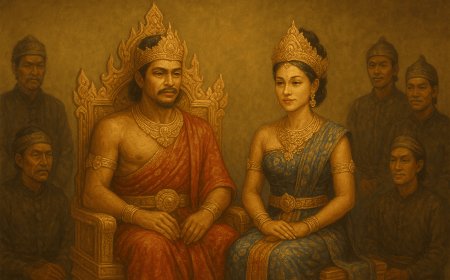
The history of Ancient Bali is largely based on inscriptions (prasasti) from the past, which serve as important sources for understanding the glory of ancient kings. One of the historical relics discovered is the Pukuh Inscription. This inscription stands as a silent witness to the victory of King Sri Kesari Warmadewa in Bangli. It is one of four inscriptions issued by King Sri Kesari Warmadewa, simultaneously affirming his position as the first King of the Ancient Bali Kingdom.

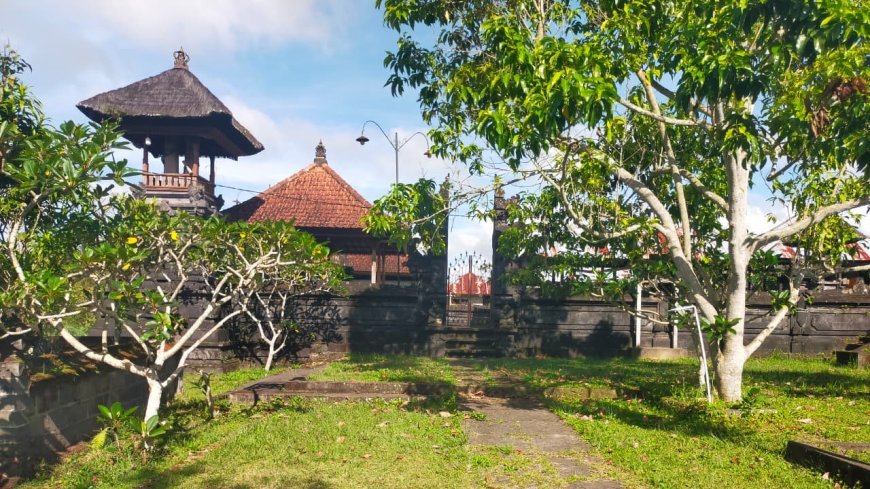
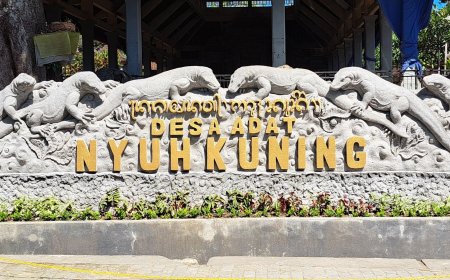
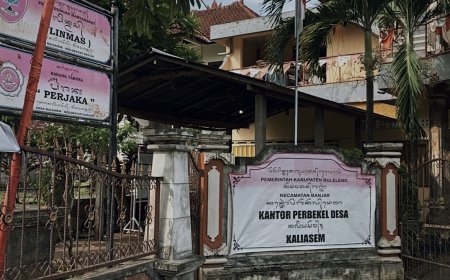
The Pukuh Inscription was discovered in 2020 in the Pukuh Traditional Village (Desa Adat), Tiga Village, Susut District, Bangli Regency. This inscription attracted significant attention because it is the latest discovery among the inscriptions issued by King Sri Kesari Warmadewa. Previously, only three inscriptions had been found: the Blanjong Inscription in Sanur, the Panempahan Inscription in Panempahan Village, and the Malet Gede Inscription in Gianyar. With this latest discovery, the historical record of King Sri Kesari Warmadewa has become more complete.
Regarding the date, the Pukuh Inscription mentions the year 835 Saka or 913 AD, which is the same year mentioned in the Blanjong and Malet Gede inscriptions. However, the exact year of the Panempahan inscription cannot be identified due to damage to the part of the inscription where the year was written. Despite this, experts strongly suspect that the inscribed year is the same as the other three inscriptions.

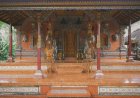
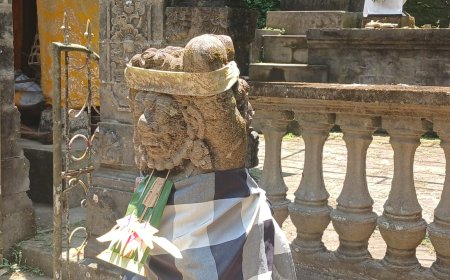
The Form of the Pukuh Inscription (source: personal collection)
The form of the Pukuh Inscription is cylindrical, which is suspected to be a jayastambha or victory pillar. This reinforces the hypothesis that this inscription was created to commemorate the success of King Sri Kesari Warmadewa in conquering his enemies in the northern region of Bali. This victory is estimated to be part of King Sri Kesari Warmadewa's grand mission to expand his influence and power in Bali. With this victory, King Sri Kesari Warmadewa strengthened his authority and affirmed his position as the King of Bali.

The Script on the Pukuh Inscription (source: personal collection)
The Pukuh Inscription contains text written in Ancient Balinese script using the Ancient Balinese language. In Latin transliteration, this inscription reads: “i śaka 835 wulan phalguṇa kṛsna pakṣa putha(-)raska parhajyan śri khesari laḥ me la – – – hli musuḥ ka ingkaḥ sda – – – cihnan – – – wudpakadya kadya maka tka di tunggalan.” Translated, the content of the Pukuh inscription states that in the year 835 Saka or 913 AD, specifically in the month of Phalguna, during the dark half of the moon (Krishna Paksha), King Sri Kesari Warmadewa defeated all his enemies up to the northern region, thereby uniting that territory under his rule.

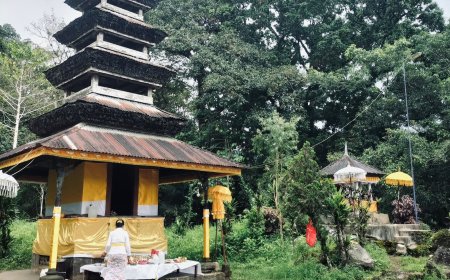
King Sri Kesari Warmadewa's Victory Monument (source: personal collection)
This translation reinforces that the Pukuh Inscription is a victory pillar recording the triumph of King Sri Kesari Warmadewa in conquering his opponents and uniting Bali. More than just a historical record, this inscription is also a symbol of the power of King Sri Kesari Warmadewa, who succeeded in uniting Bali under his authority. With the discovery of the Pukuh Inscription, it becomes even clearer that under the leadership of King Sri Kesari Warmadewa, great achievements occurred which formed the foundation for the establishment of the Warmadewa Kingdom.
Ultimately, the Pukuh Inscription is not merely an inscribed stone, but a historical document that affirms the traces of greatness of King Sri Kesari Warmadewa in Bali. This discovery provides an understanding of how the Ancient Bali Kingdom was established and developed, and reminds us that past glory began with the struggle, victory, and authority of a visionary King.
basabali. (n.d.). Prasasti Pukuh. Retrieved from basabali: https://dictionary.basabali.org/Lontar_Prasasti_Pukuh
Rastana, I. D. (2021, November 1). Musuh di Wilayah Utara Singhadwala. Retrieved from baliexpress: https://baliexpress.jawapos.com/balinese/671172113/musuh-di-wilayah-utara-singhadwala