






Sri Kesari Warmadewa & the Blanjong Stone Inscription (913M): The Early Written Traces of Bali
Bali is not only known for its natural beauty and culture, but also has a written and very meaningful historical heritage. One example is the Blanjong Inscription which is recognized as the oldest inscription in Bali. Its uniqueness lies in the use of two languages and two scripts simultaneously, and also utters as a sign of the king's victory. The existence of the Blanjong Inscription serves as important evidence regarding the development of culture and political history of Balinese society in the past.

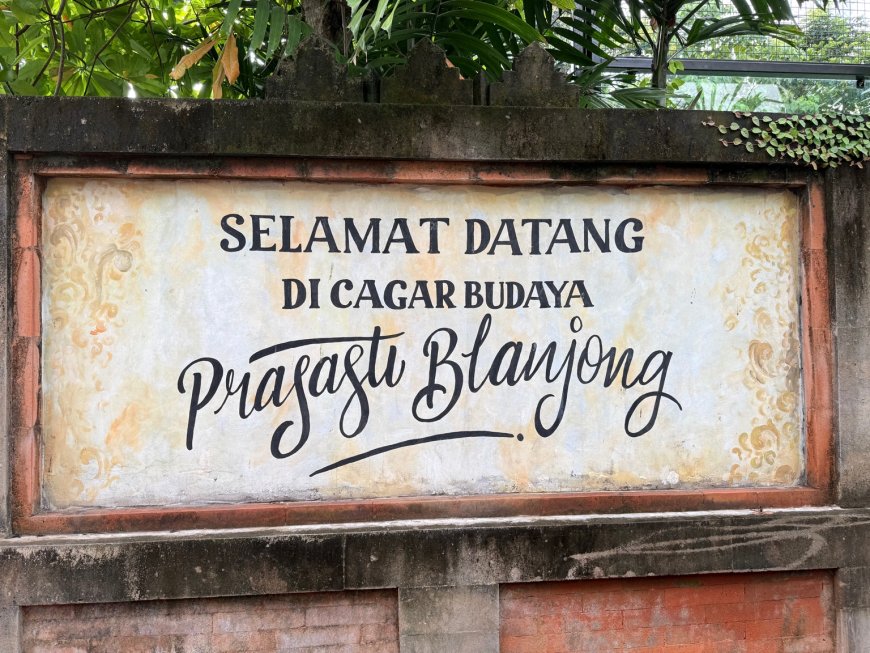
The Blanjong inscription was created in 835 Śaka or (914 M). The term blanjong comes from the word Blahjung. Blah, or split, refers to something broken, while Jung means boat. This leaking boat then ran aground and eventually wrecked near Sawang. The term sawang refers to a deep sea trench, now known as Semawang. Overall, Blanjong describes the location where the leaking boat ended up stranded and wrecked not far from Semawang.
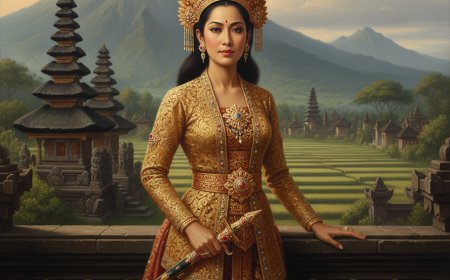
The Painting Located on the Blanjong Sanur Inscription ( Source:Personal Collection)
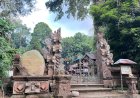
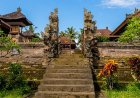
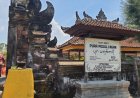
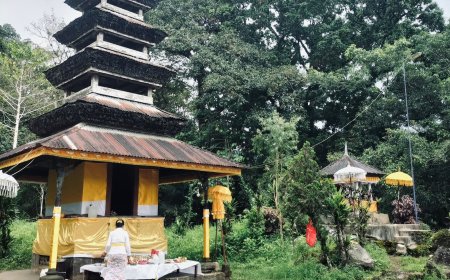
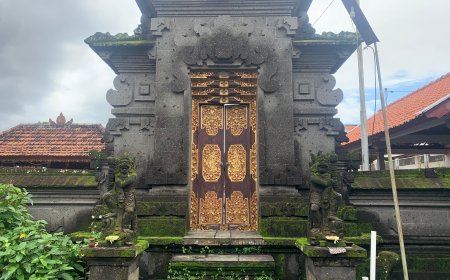
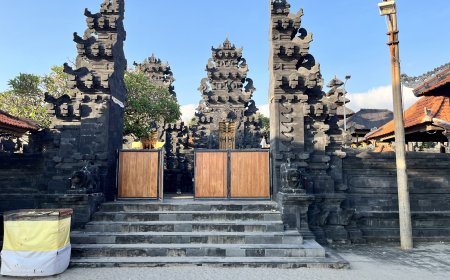
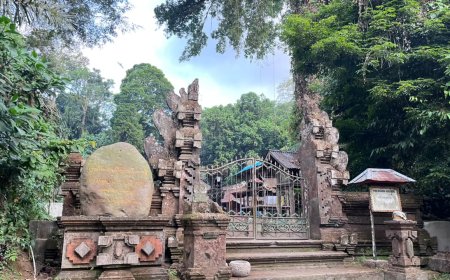
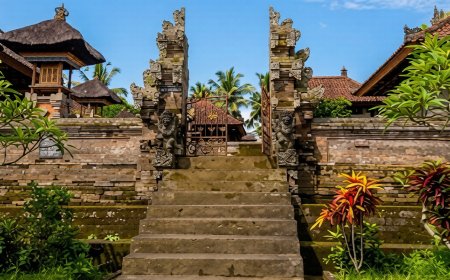
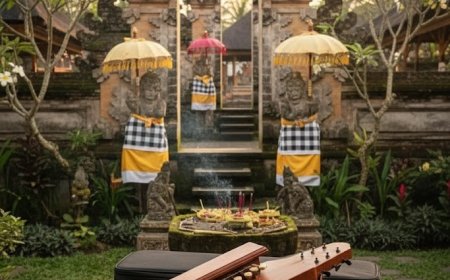
This inscription is located at Blanjong Temple, located in Sanur Kauh Village, South Denpasar District, Denpasar City, Bali. As one of the signs of the temple's existence in the Ancient Balinese era, Blanjong Temple features a dwi mandala design consisting of the jaba sisi (nista mandala) as the open area and the jeroan (main mandala). This conforms to the architectural patterns of ancient temples from the Warmadewa Dynasty in Bali.
- Blanjong Temple also houses various other important historical artifacts dating from the Ancient Balinese period to the Majapahit era. These discoveries include:
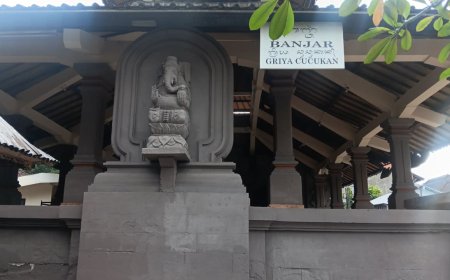
- Ganesha Statue: A statue of the god Ganesha believed to date from the Majapahit era (13th-14th centuries).
- Lingga Yoni: A sacred Hindu symbol representing the god Shiva and the goddess Parvati, once used for ceremonial purposes.
- Nandini (Ox) Statue: A statue depicting an ox, considered the vehicle of Lord Shiva.
- Ceramic Shards: A number of ceramics (kereweng) from several Chinese dynasties (such as the Sung, Yuan, and Ching) as well as local ceramics were also discovered. These discoveries confirm that Blanjong was a very busy port between the 10th and 14th centuries.
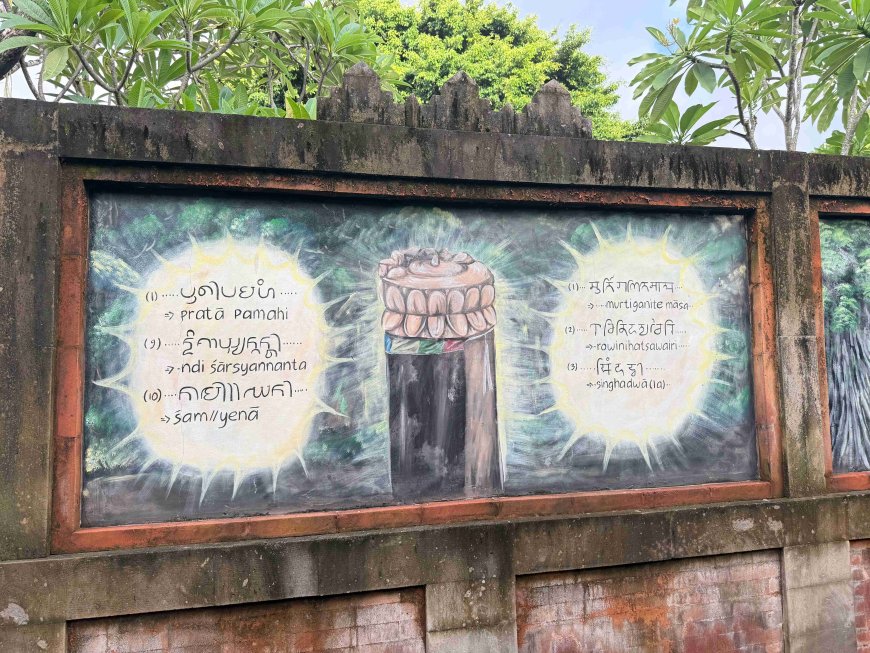
The Blanjong Inscription is a stone tablet known as a sila inscription, shaped like a stone pillar or lotus flower. The inscription is 177 cm tall and approximately 62 cm in diameter. The inscription is carved on both sides. On the northwest side, there are 6 lines of inscriptions using the Pre-Negara script common in North India and the Old Balinese language. Meanwhile, on the southeast side, there are 13 lines of inscriptions written in the Old Balinese script (Kawi) and Sanskrit.
The Painting Located on the Blanjong Sanur Inscription ( Source:Personal Collection)
The inscription reads:
"In the year 835 Saka, not Phalguna, a king with power throughout the world resided at the Sanghadewa Palace. His name was Sri Kesari, who defeated his enemies in Gurun and Swai. This must be known until later times." Currently, the written script is illegible because the carvings have faded or become damaged.
From the language and writing elements found on the Blanjong Inscription, it can be seen that this cultural heritage reflects local wisdom in science and technology, as well as aspects of power (politics). The use of two languages and two types of script demonstrates the expertise, mastery, and understanding of the knowledge of the people during the Sri Kesari Warmadewa kingdom in the 10th century AD.
The discovery of an inscription like this is very special and is the only one in Bali. Overall, inscriptions found in Bali are generally written in Sanskrit using Pre Negari letters, or in Old Balinese with Old Balinese (Kawi) letters, but the Blanjong Inscription is written in two languages and two writing systems. In addition, the uniqueness of the Blanjong Inscription is the writing method that uses Silang, where Sanskrit is written in Old Balinese (Kawi) letters, while Old Balinese is written using Pre Negari letters. This shows that the author of the inscription (citralekha) is a person who is very skilled in language and writing methods, especially in the two types of languages and scripts that have been mentioned. This skill is certainly the result of the traditions and cultural background that existed at that time and the heritage that existed before.
The Painting Located on the Blanjong Sanur Inscription ( Source:Personal Collection)
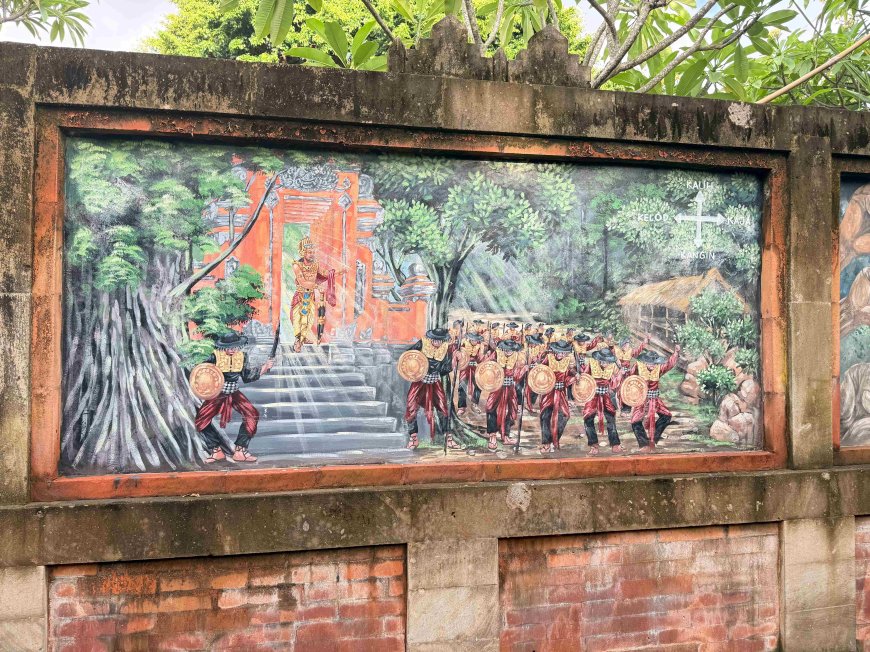
The Blanjong Inscription was issued by King Sri Kesari Warmadewa in. Historically, the Blanjong Inscription covers the grant of land by King Sri Kesari Warmadewa to a Hindu priest named Rakai Rayan. Furthermore, this inscription also reflects King Sri Kesari Warmadewa's victory over his enemies in Gurun (Nusa Penida) and Swal (Ketewel Beach). King Sri Kesari Warmadewa erected two victory monuments: one in Blanjong Village, Sanur, Denpasar, and the other in Puseh Malet Gede Temple, Penempahan Village, Tampak Siring, Gianyar.
Although some claim that the location is in Lombok. The kingdom of King Sri Kesari Warmadewa was known as Singhadwala (Singhadwalaputra), and included Kuturaja (city center) and the island of Bali (Walidwipa).
In addition to its historical value, Pura Blanjong serves a variety of roles in the community. These roles include:
- Religious Role: As the main place of worship
- Social Role: As a meeting place and a 'bond' of social solidarity
- Cultural Role: As a center for cultural development
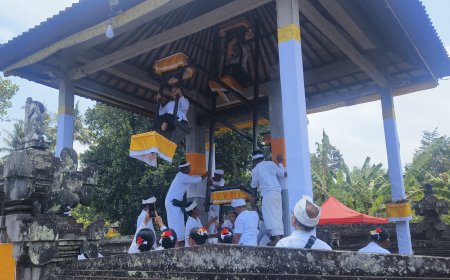
- Educational Role: As a place for the younger generation to learn how to make ceremonial instruments (upakara) such as banten (banten) and penjor (penjor).
Blanjong-Sanur is also known as an ancient port, where ceramics from various eras indicate centuries of trade and cultural interaction. This strongly supports why the inscription is often considered evidence of Bali's cultural progress and political history in the past.
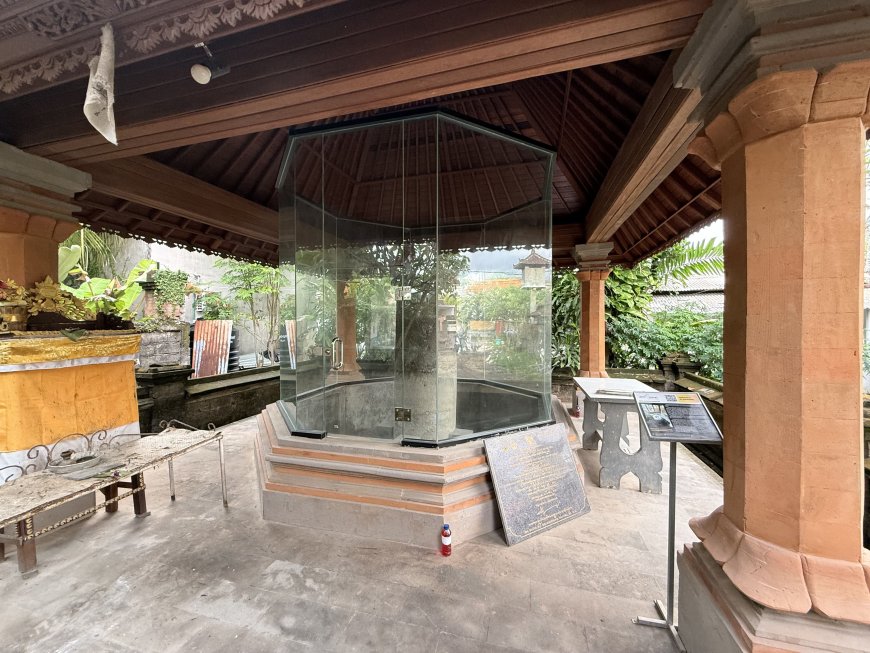
The Blanjong Inscription has now been designated a Cultural Heritage Site by the Decree of the Mayor of Denpasar, number 188.45/825/HK/2019, issued on April 15, 2019. The inscription is housed in a protective glass case in the Blanjong Temple area for its safety.
bibliography :
- A.A. Pt. Sintya Gita Permatasari; Putri Cahaya Dewi; I Putu Satria Adi Wiryawan; I Gede Made Ari Raditya. Kajian Etnomatematika pada Prasasti Blanjong Sanur. 2024. Journal on Education.
- Ni Putu Budiartini; Ketut Sedana Arta; Desak Made Oka Purnawati. Pura Blanjong di Desa Sanur Kauh, Denpasar Selatan, Bali (Sejarah, Struktur, Fungsi dan Potensinya Sebagai Sumber Belajar Sejarah di SMA). 2020. JJPS – e-Journal Undiksha.
- Hendra Santosa. Prasasti Blanjong dan Gamelan Gong Beri. t.t. (tahun tidak tercantum). Program Studi Seni Karawitan, ISI Denpasar
- Dinas Pariwisata Kota Denpasar. Prasasti Blanjong. 2023. Ebooks Denpasar Tourism (Denpasar Tourism)https://ebooks.denpasartourism.com/prasasti-blanjong/
- UPTD Monumen Perjuangan Rakyat Bali. Pengenalan Diorama Monumen Perjuangan Rakyat Bali: Diorama 5 — Era Pemerintahan Sri Kesari Warmadewa. 2021. Diorama Bali (Blogspot). https://dioramabali.blogspot.com/2021/10/era-pemerintahan-sri-kesari-warmadewa.html