






















Sri Janasadhu Warmadewa: Continuing the Political Legacy of the Ancient Balinese Dynasty (975 AD)
Sri Janasadhu Warmadewa was a king of Ancient Bali who ruled around 975 AD from Bedahulu. He continued the legacy of the Warmadewa Dynasty by maintaining political stability, ensuring the security of key villages such as Julah and Sembiran, and supporting the religious practices of Hindu-Shaivism and Mahayana Buddhism. His policies included improving infrastructure, organizing defense systems, and overseeing trade routes. His reign brought peace and laid a strong foundation for future generations up to the era of Dharma Udayana.

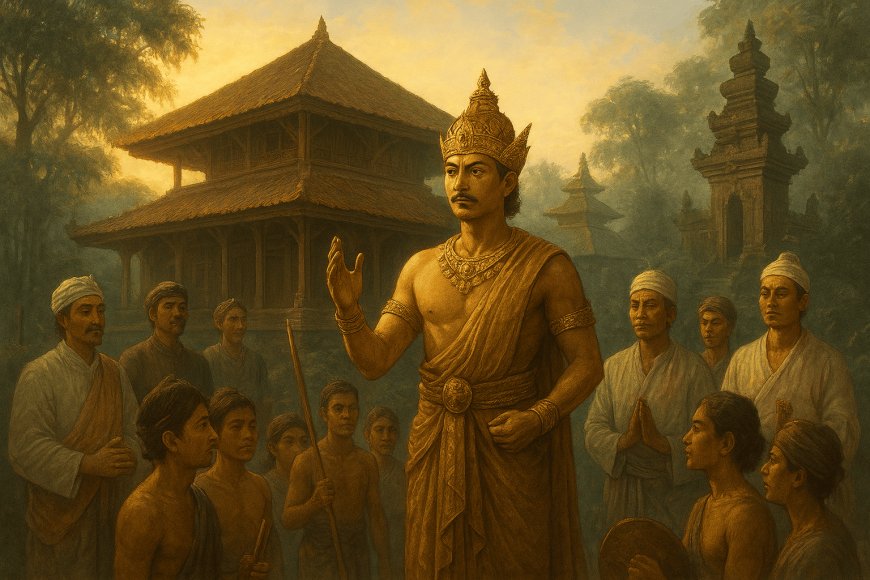
The center of Sri Janasadhu’s power was located in Bedahulu, a strategic site for governing Central Bali and the northern coastal regions. From there, he oversaw various villages, including Julah, Indra Pura (Depeha), Buhun Dalem (Julah), and Hiliran (Tejakula). On April 6, 975 AD, Sri Janasadhu, together with high-ranking officials and village leaders who had recently returned from exile, held an important council meeting. In the resulting decree, he emphasized that public structures such as temples, cemeteries, fountains, bathing places, shrines, and roads must be repaired if damaged, with the costs borne by the respective villages. This illustrates the king’s deep concern for the social and religious infrastructure that supported the life of his people.
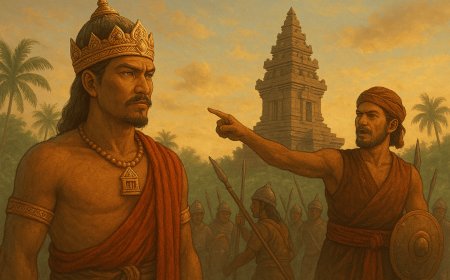
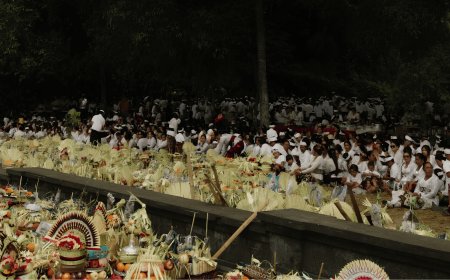
In addition, Sri Janasadhu also established security regulations: if a robbery occurred at the Dharmakuta hermitage, all the residents of Julah Village were required to be prepared with full weapons to protect the hermitage’s inhabitants. This policy emphasized the active role of the community in maintaining the security of their region while demonstrating the king’s ability to mobilize his people for the sake of collective safety. Contributions for temple ceremony expenses were also regulated in accordance with the decisions of previous kings, ensuring that religious traditions continued to run harmoniously. All of these decrees were inscribed on bronze by his scribe, Banacri, becoming official laws for the villages concerned.
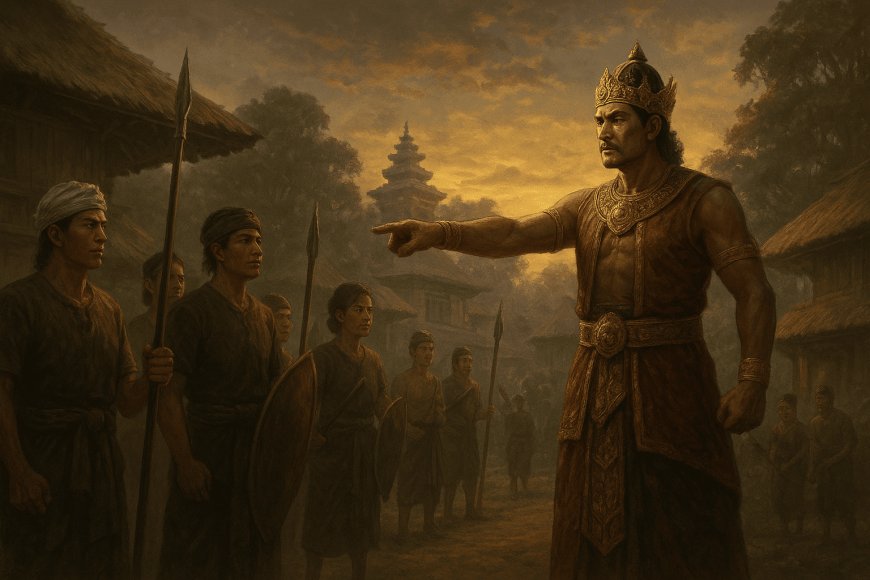
AI Illustration: Sri Janasadhu orders the people to guard the Dharmakuta hermitage (Source: Personal Collection)
These policies proved to be effective. From the reign of Sri Janasadhu until the era of Dharma Udayana Warmadewa (1011 AD), Julah Village and its surrounding areas remained safe and peaceful, free from robbery and unrest. This security demonstrates that a united people who respond swiftly to the king’s commands can create long-term stability. During the same period, King Dharmawangsa ruled in Java, marking an era in which Bali and Java each maintained their own political dynamics while still being connected through maritime routes.
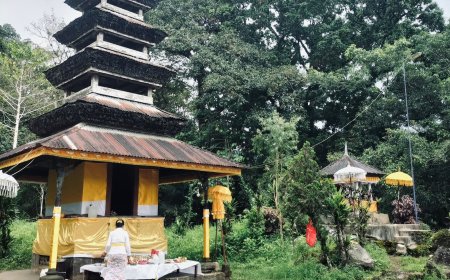
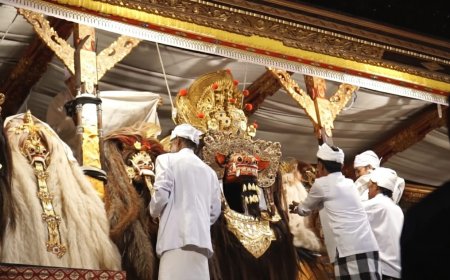
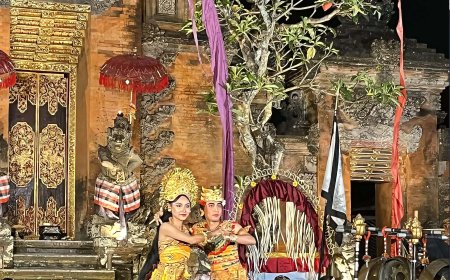
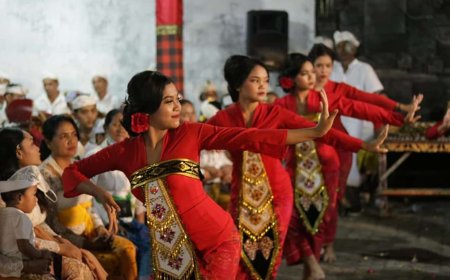
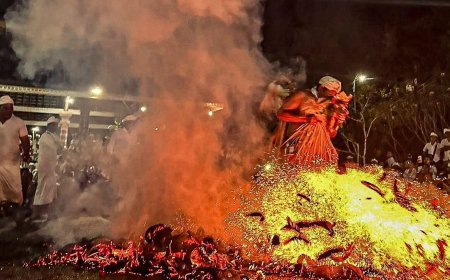
Beyond politics and security, Sri Janasadhu also emphasized the importance of spirituality. Bali at that time was characterized by the coexistence of Hindu-Shaivism and Mahayana Buddhism. The king supported the construction and maintenance of temples, the performance of rituals, and the education of Brahmins, showing that politics and spirituality worked hand in hand to ensure legitimacy and the well-being of society.
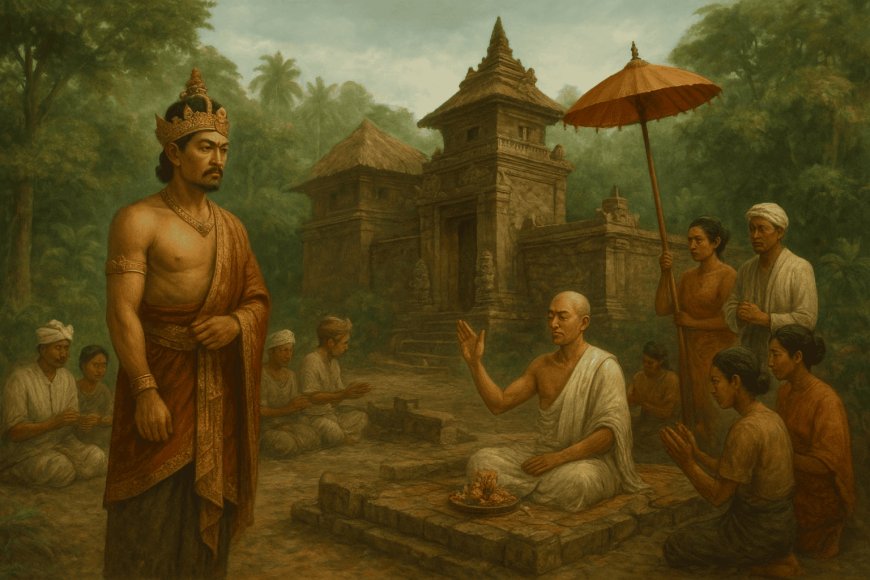
AI Illustration: Sri Janasadhu witnessing the performance of a religious ritual (Source: Personal Collection)
Beyond internal affairs, Sri Janasadhu recognized the importance of external relations. As a strategically located island within the Southeast Asian trade network, Bali needed to maintain connections with other kingdoms in Java as well as major trading centers in India and China. Sri Janasadhu dispatched envoys to monitor trade routes and establish political alliances to ensure that these routes remained open and smooth.
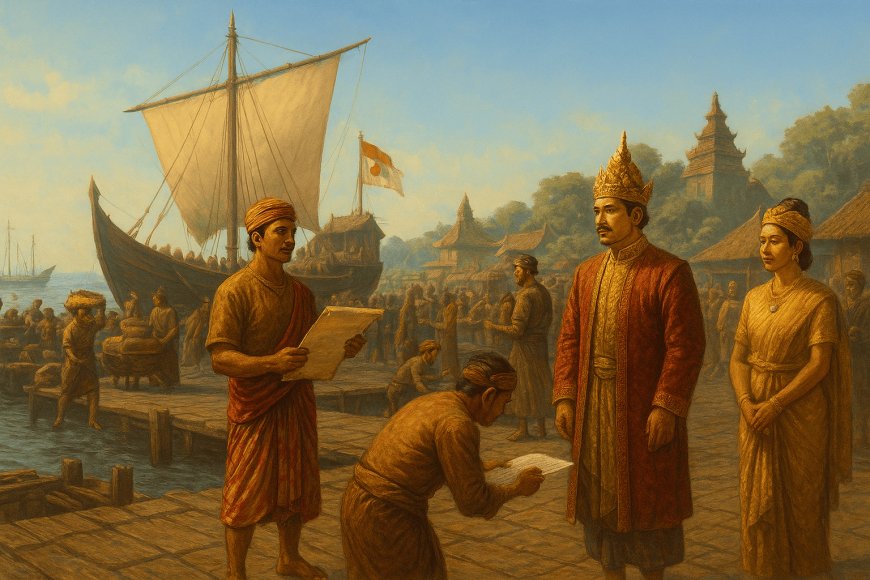
AI Illustration: Envoys of the Ancient Balinese Kingdom and foreign envoys meet at the port (Source: Personal Collection)
Sri Janasadhu’s success is evident in the continuity of governance he left behind. He prepared a successor and strengthened local administration so that his heirs could continue ruling without major disruptions. This political strategy emphasized the importance of long-term stability over military expansion.
The legacy of Sri Janasadhu demonstrates that the strength of a kingdom does not always come from warfare or territorial expansion, but from the ability to maintain strong political, social, and spiritual governance.
References
Ardika, I Wayan. Archaeological Research in Northeastern Bali. ISEAS, 1991.
Setiawan, I Ketut. Socio-Political Aspects of Ancient Julah. Göttingen University.
"Sejarah Desa Julah." Pemerintah Desa Tejakula, Buleleng. https://tejakula.bulelengkab.go.id
Menyelami Warisan Tradisi Bali Aga di Bali Utara. Jurnal Culture, STAHN Mpu Kuturan.
Kemaritiman Nusantara dan Forum Arkeologi. Repositori Kemendikbud.