























Singhamandawa: Traces of Ancient Bali Before the Rise of the Warmadewa Dynasty
The Singhamandawa Period (882–914 CE) marked the beginning of a Hindu-Indian patterned kingdom in Bali. Centered in the Kintamani highlands, this kingdom is known from Old Balinese inscriptions, although no ruler’s name was mentioned. The identity of the monarch only appeared with Sri Kesari Warmadewa (913 CE), marking the start of the Warmadewa Dynasty and the organization of the Ancient Balinese governmental system.

The beginning of the establishment of a Hindu-Indian patterned kingdom in Bali took place from the year 882 to 914 CE. This period is known as the Singhamandawa Period, because most of the inscriptions issued at that time mention Singhamandawa as the center of government or the capital. From this, the name of the period was derived. Within this span of time, seven important inscriptions were recorded, namely Prasasti Sukawana A I (804 Saka/882 CE), Prasasti Bebetin A I (818 Saka/896 CE), Prasasti Trunyan A I (883 Saka/911 CE), Prasasti Trunyan B (833 Saka/911 CE), Prasasti Bangli Pura Kehen A, Prasasti Gobleg Pura Desa I (836 Saka/914 CE), and Prasasti Angsari A (836 Saka/914 CE). These inscriptions were written in the Old Balinese language and script, but never mentioned the name of the ruling king. Scholars suspect that Singhamandawa was the center of government or the capital of the kingdom, located in the Kintamani area, Bangli. This assumption arises due to the density of archaeological findings, both inscriptions and other artifacts, spread across that region.
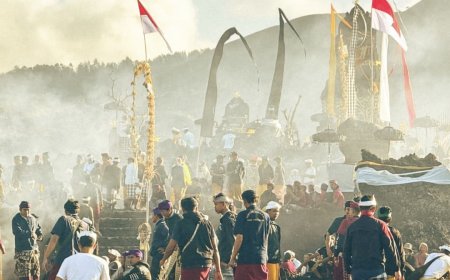
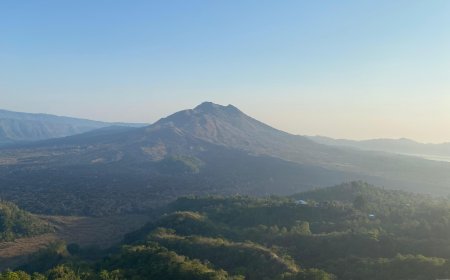
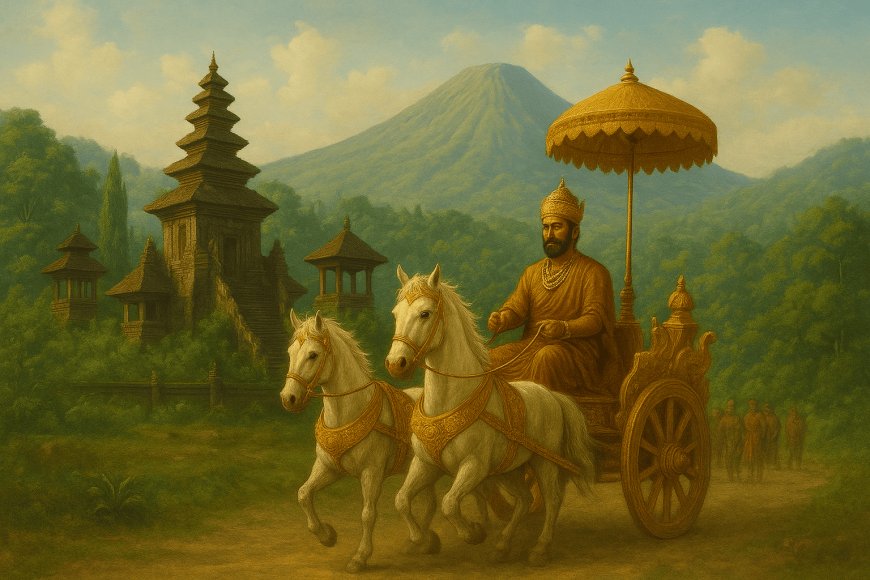
At that time, the center of the kingdom was deliberately placed in the mountainous area. This was related to the Hindu-Buddhist culture that developed during that period, in which the mountain was considered the central point of the universe according to the teaching of Mount Mahameru. For this reason, the Kingdom of Singhamandawa was located in the mountains, which were believed to be sacred and holy places.

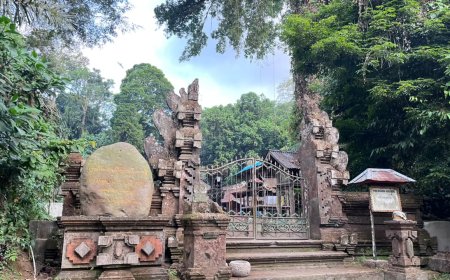
AI Illustration of the Kingdom’s Location in the Mountainous Region (Source: Personal Collection)
In Bali, various artifactual remains and written sources in the form of inscriptions have been discovered, providing an overview of the past. From this evidence, it can be understood that the Kingdom of Singhamandawa was the first state institution in Bali with an Indian cultural pattern. A number of inscriptions from this kingdom were written in the Old Balinese language and script, but interestingly, none of them mentioned the name of the ruling king. Information about the king only appeared later in the Prasasti Blanjong 913 CE, which recorded the name Sri Kesari Warmadewa. This figure was later recognized as the founder of the Warmadewa Dynasty in Bali. After the era of Kesari Warmadewa, Old Balinese inscriptions began to mention the names of subsequent kings, some bearing the Warmadewa title and some not, complete with their royal officials. From this record, it is evident that the governmental system in Ancient Bali was already well organized.

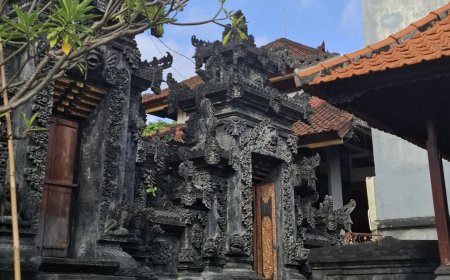
AI Illustration of the Atmosphere of the Ancient Balinese Kingdom (Source: Personal Collection)
Another indication of the existence of a governmental structure in Ancient Bali is found in the mention of several law books in the inscriptions, such as the Uttara Widhi Balawan, Raja Wacana, and Manawa Sasanadharma. These texts contained rules and teachings derived from Hindu law and values. Their existence shows that state life at that time was not only based on the king’s authority, but also on legal norms and religious principles that provided legitimacy and direction for society.