





Death as Enduring Evidence of Life: Sarcophagi and Ancestral Conceptions of Death Since 25.000 Years Ago
The Sarcophagus Museum in Bedulu Village, Gianyar, preserves traces of life from 25,000 years ago through 33 prehistoric coffins first collected by archaeologist R. P. Soejono. Made from soft volcanic stone, the sarcophagi function not only as burial containers but also as symbols of social status and respect for prominent community figures. Grave goods such as jewelry, weapons, and beads reveal the artistry and beliefs of ancient Balinese society regarding life after death.

Bali Sarcophagus Museum
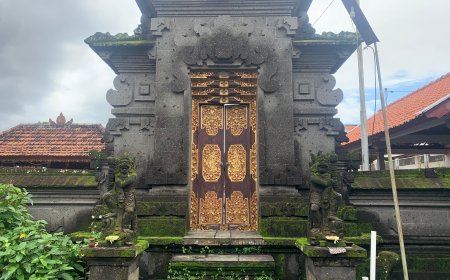
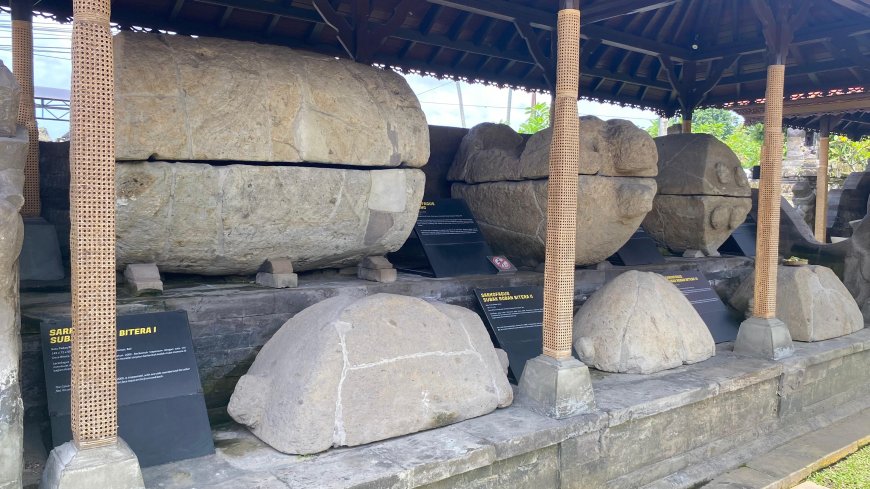
The Bali Sarcophagus Museum is located in Bedulu Village, Blahbatuh District, Gianyar Regency, Bali. The museum was officially inaugurated on February 27, 2025, by the Minister of Culture of the Republic of Indonesia, Mr. Fadli Zon, as part of an effort to preserve the cultural heritage and historical legacy of the Indonesian archipelago. The museum houses 33 sarcophagus collections originating from various regions across Bali. These collections were first gathered in 1958 by senior Indonesian archaeologist R. P. Soejono, who played a significant role in prehistoric archaeological research in Indonesia. The presence of this museum serves not only as a storage space for artifacts but also as an educational medium for understanding the burial system of ancient Balinese society, which developed approximately 25,000 years ago.
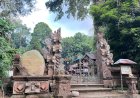
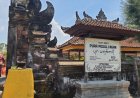
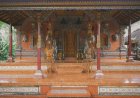
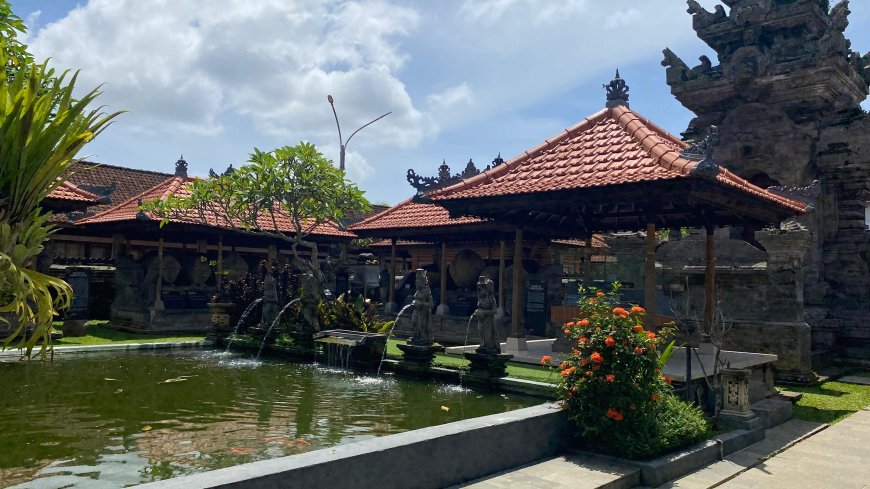 Gianyar Sarcophagus Museum (Source: Private Collection)
The term sarcophagus originates from the Greek words sarx (flesh) and phagein (to eat), literally meaning "flesh-eating." This term refers to the belief that the body placed inside would decay and eventually disappear. Sarcophagi are coffin-like burial containers originating from the prehistoric period. During this time, specialized artisan groups (undagi) developed according to their respective fields. In Bali, sarcophagi are made of soft volcanic stone (batu padas) and are commonly referred to as palungan (ancient feeding troughs for livestock), while in Java they are often called pendeman buda or pendeman wong kalang. The terms buda or kalang are used to denote ancient burial sites.
Burial practices involving sarcophagi represent one form of respect shown by humans toward the individuals interred within them. Generally, those buried in sarcophagi were respected community figures, such as tribal leaders. The sarcophagus burial system is estimated to have originated during the Protohistoric period (the transitional phase leading into recorded history or the final phase of prehistory), known as the Perundagian period.
The typical placement of bodies within Balinese sarcophagi is in a flexed position. Some scholars associate this posture with the fetal position in the womb. In the lateral position, the knees are drawn up toward the waist, the forearms are aligned with the thighs, and the head is slightly bowed. In the dorsal position, the legs are folded toward the chin, both arms are crossed over the chest, and the head is gently inclined downward.
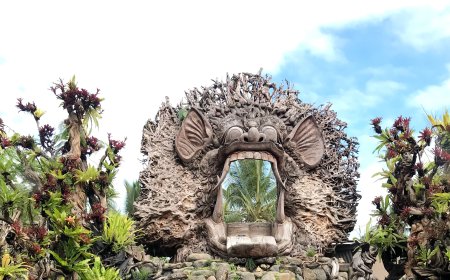
A sarcophagus consists of a container and a lid of identical and corresponding form, each with a hollow interior. In terms of religious function, decorative motifs on sarcophagi are generally depicted as masks (facial effigies) with open mouths and protruding tongues. These motifs carry symbolic meaning as protectors of the deceased from evil spirits, ensuring that the journey to the spirit realm proceeds smoothly.
Forms of Sarcophagi and Their Distribution
Sarcophagi in Bali can be classified into three main types based on size and shape: Type A, Type B, and Type C. Type A is small in size and features protrusions on the front and back of both the container and the lid. Type B is medium-sized and lacks protrusions, while Type C is large and has protrusions on the sides of the container and lid.
Based on their distribution and frequency of discovery in certain regions, these types are further categorized. Type A (80–148 cm) is referred to as the Bali type due to its wide distribution across the island. Type B (150–170 cm) is known as the Cacang type and is primarily found in the mountainous areas of Central Bali, particularly around Cacang Village. Type C (200–268 cm) is called the Manuaba type, as it is predominantly found in the Manuaba region and its surroundings.
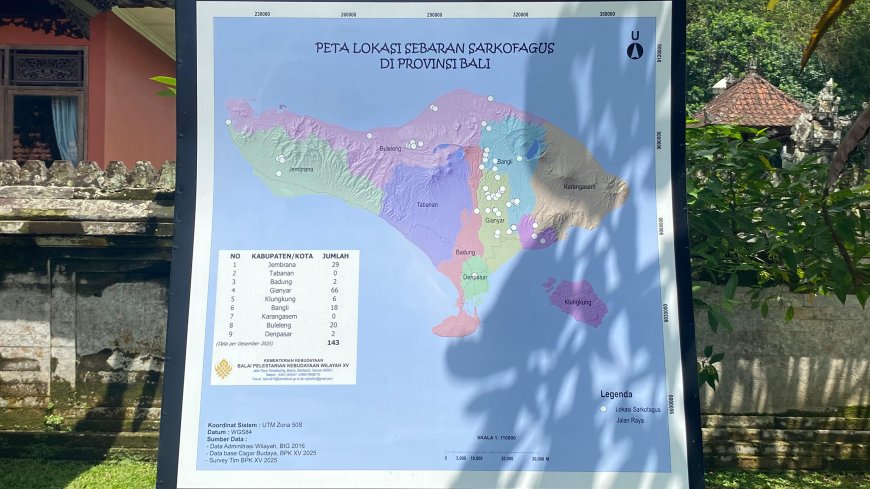 Map of Sarcophagus Distribution in Bali (Source: Private Collection)
The distribution of sarcophagus locations shown on the map above is based on recorded coordinate data from the cultural heritage database of the Cultural Preservation Center (Balai Pelestarian Kebudayaan / BPK) as well as data collected during documentation activities conducted in 2025. However, according to research records by R. P. Soejono and subsequent studies carried out by the National Research and Innovation Agency (BRIN), the total number of sarcophagi in Bali is estimated to be far greater than those currently documented on the map. The data presented remain partial and are highly dependent on the extent of research and recording conducted to date.
Materials and Craftsmanship Techniques
Sarcophagi are generally made from soft volcanic stone (batu padas or tuff), although some are constructed from pebble-bearing stone, breccia, coral stone, or sandstone. Type A (small) and Type B (medium) sarcophagi typically use batu padas, except in locations where such material is unavailable. In such cases, the stone was likely quarried elsewhere and transported to the burial site for final shaping. The manufacturing process is believed to resemble contemporary Balinese stone-carving techniques.
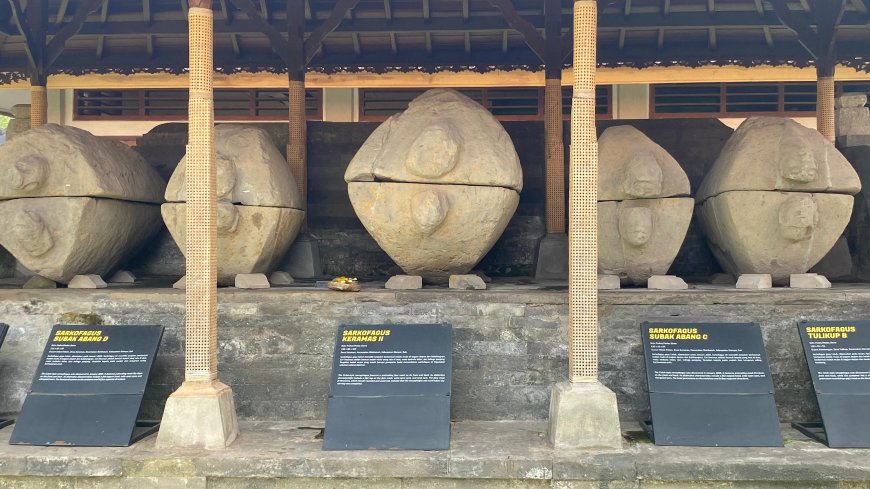 Sarcophagus Burial Site (Source: Private Collection)
Sarcophagi made from organic materials, such as wood, represent a unique discovery in Bali. The only known wooden sarcophagus was found at the Temukus Site in Temukus Village, Buleleng. Preliminary information suggests that the wood emitted a fragrant aroma, although no official report or publication regarding this finding has yet been released. Currently, the wooden sarcophagus is managed by BRIN in Jakarta. Further research is required to complete the data on Balinese sarcophagi, particularly those made from organic materials.
Grave Goods
Balinese sarcophagi generally contain grave goods in the form of bronze objects, carnelian beads, and iron fragments. Distinctive bronze items such as twisted necklaces, tendrils, and tajak are frequently found in small sarcophagi (Type A) and occasionally in medium sarcophagi (Type B), especially in Central and Western Bali. Pottery fragments are also commonly found around sarcophagi, likely constituting part of the burial offerings.
Bronze grave goods include bracelets and anklets, earrings, ceremonial axes, spiral chains, tendrils, necklace beads, finger guards, and wrist coverings. Some objects were discovered inside ceramic vessels placed within the sarcophagus. Glass marble beads are rarely found. Research indicates that the inclusion of grave goods such as jewelry and weapons is a universal phenomenon that dates back to the hunting-and-gathering era and is associated with beliefs in an afterlife.
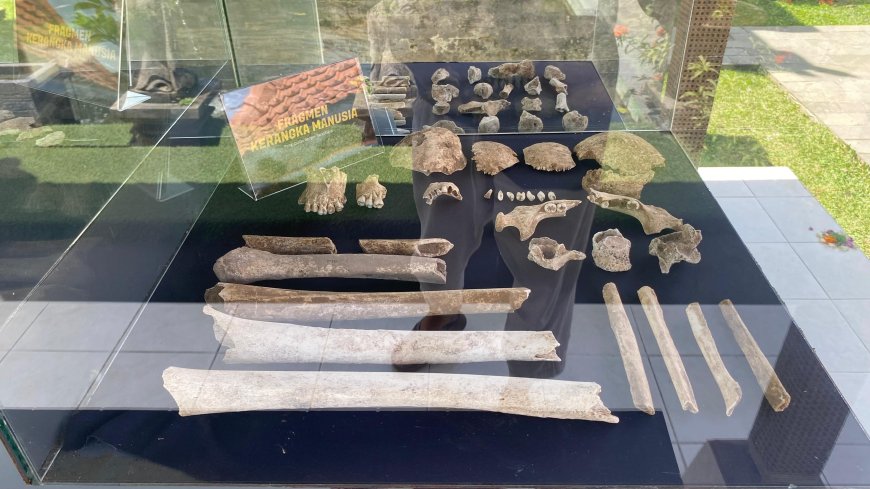 Fragments of Human Skeletons Inside a Sarcophagus (Source: Private Collection)
In certain cases, the deceased were buried wearing ceremonial attire, maintaining their social status in the afterlife. In Bali, sarcophagi are often found with grave goods that reflect the owner’s means, ranging from bronze bracelets to pottery vessels and carnelian beads. Excavations at Cacang uncovered human remains still adorned with bracelets, anklets, bronze tajak, and spiral object fragments. Some bronze grave goods and spiral fragments were found damaged or incomplete, possibly due to being made from imitation materials such as wood or as a result of exchange with simpler objects.
Several sarcophagi have been found already disturbed, a condition believed to have occurred since ancient times. Local residents have no knowledge of these disturbances, and there is speculation that intertribal conflicts may have led to the looting of grave contents, similar to cases documented in Sumba. Many sarcophagi in Bali have been discovered in damaged condition, containing only soil mixed with fragments of their lids.