




















Traces Of Homo erectus In Bali: The Earliest Inhabitants Who Opened The Ancient Story Of The Island Of The Gods
The prehistoric traces in Bali, ranging from hand axes to sarcophagi, show that humans have long lived and developed culture on the Island of the Gods. These artifacts are not only evidence of the past but also serve as a reminder for today’s generations about the importance of knowledge, technology, and traditions that continue to evolve to this day.

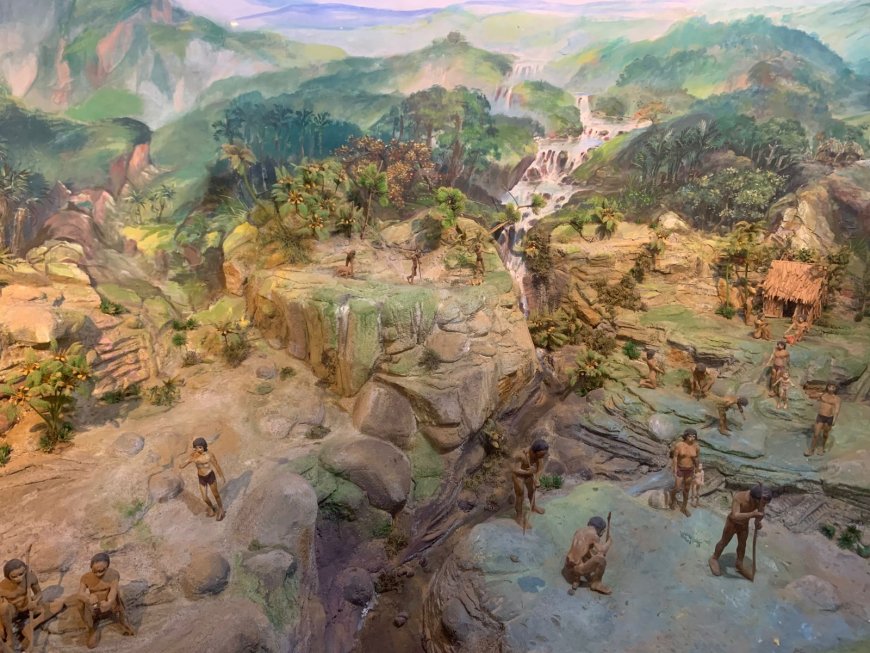
Bali, widely known for its natural beauty and rich culture, also holds a fascinating prehistoric past. Archaeological discoveries reveal that the island was already inhabited around one million years ago by the early humans known as Homo erectus.
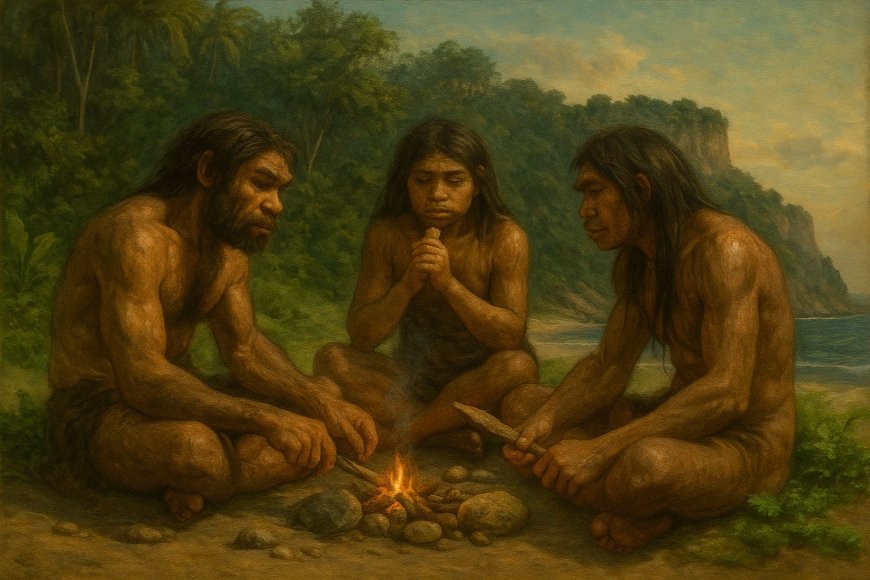
AI Illustration of Prehistoric Life in Bali (Photo Source: Personal Collection)
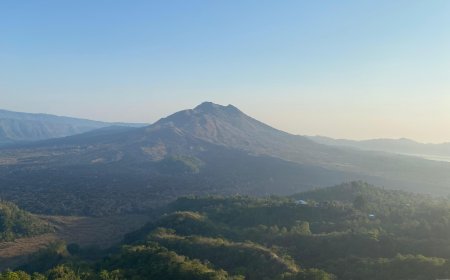
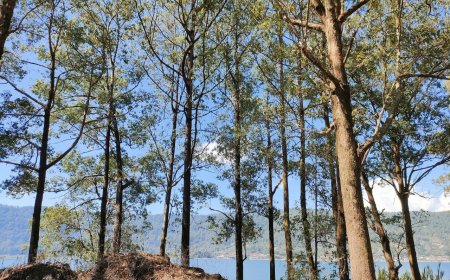
Evidence of the existence of prehistoric humans in Bali can be traced through the discovery of various stone tools, particularly hand axes and choppers. These artifacts were found in several key locations, such as Sembiran, the eastern and southeastern edges of Lake Batur, the Kintamani area, and the village of Trunyan. These discoveries indicate that from very early times, Bali had already become one of the habitats of prehistoric humans. Similar findings have also been uncovered in other parts of Indonesia, including Pacitan (East Java), Sumatra, Kalimantan, and Flores, illustrating the widespread patterns of prehistoric human life across the archipelago.
The distinctive feature of the stone tools discovered in Bali is their rough form, with cutting edges that were not finely polished. This characteristic indicates that the tools originated from the Paleolithic era, or the Old Stone Age, which is estimated to have lasted around one million years ago. Research on Paleolithic tools in Bali was first conducted by the archaeologist R.P. Soejono in 1961 in the Sembiran area. In this study, he discovered various pebble tools made of basalt stone. These valuable findings were later collected and are now part of the permanent collections at the Archaeological Museum (BP3) in Bedulu, Gianyar, as well as the Buleleng Museum, where they can be studied and appreciated by future generations.
Further studies have explained that the characteristics of the Paleolithic tools from Sembiran and the Lake Batur area share similarities with tools believed to have been made by Homo erectus, prehistoric humans who lived between 0.7 and 1.8 million years ago. These similarities can be seen in their shapes, functions, and stone-flaking techniques, which are identical to those found in Pacitan. For this reason, the culture is referred to as the Pacitanian Culture, marking one of the significant stages in the development of prehistoric human life in Indonesia, including in Bali.
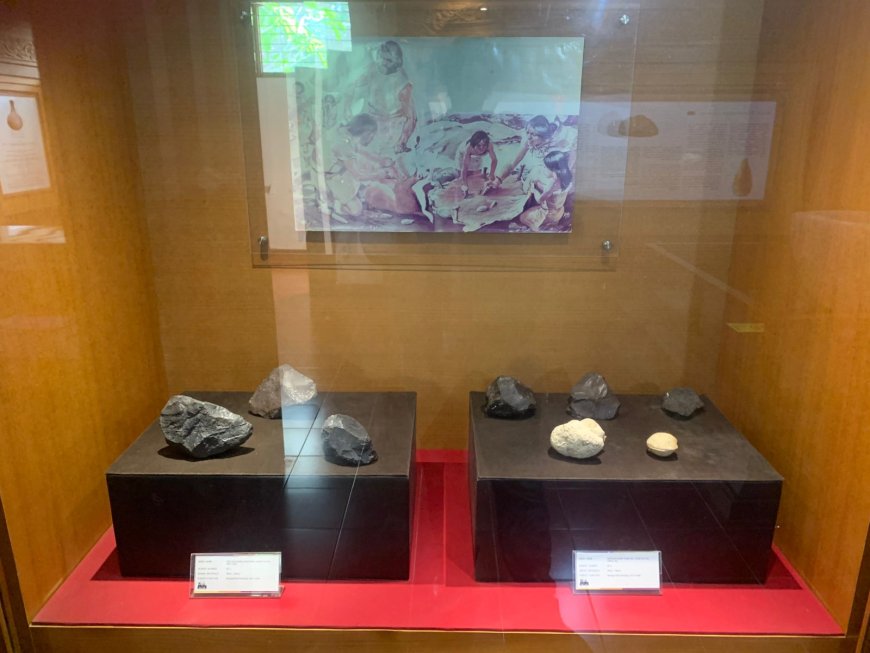
Replica of a Stone Chopper at the Bali Museum (Photo Source: Personal Collection)
In addition, traces of more advanced prehistoric life were also discovered in Selonding Cave, Pecatu. At this site, archaeologists found various microlithic tools made from bone, shells, and stone. These discoveries indicate the development of prehistoric humans’ skills in utilizing natural materials from their surroundings. Similar artifacts were also unearthed in the limestone hills around Jimbaran, suggesting that the area once served as one of the centers of prehistoric human activity in Bali.
Not only in Pecatu and Jimbaran, evidence of prehistoric life also appears in the discovery of stone axes from the Neolithic period. These findings signify a higher level of technological advancement compared to earlier periods. The axes were used not only for daily needs but are also believed to have been connected to the farming practices that prehistoric humans had begun to develop at that time.
Furthermore, a number of more advanced artifacts, believed to date from the Mesolithic period, were also discovered in Gua Gede, Nusa Penida, as well as in several cave dwellings in the Jimbaran hills, one of which is Ceruk Gua Gong Barat. During the Mesolithic era, more diverse stone tools emerged, including flakes and blades. These tools were crafted from a variety of materials such as limestone, chert, basalt, chalcedony, and jasper.
In addition to stone tools, artifacts made from bone and antler were also found at the same sites. These discoveries demonstrate that prehistoric humans in Bali were already capable of processing various types of materials into practical tools to meet their daily needs. The presence of these artifacts confirms that the technological development during the Mesolithic and Neolithic periods in Bali occurred in parallel with other regions of the archipelago, highlighting the continuity in the cultural evolution of prehistoric humans across the Indonesian islands.
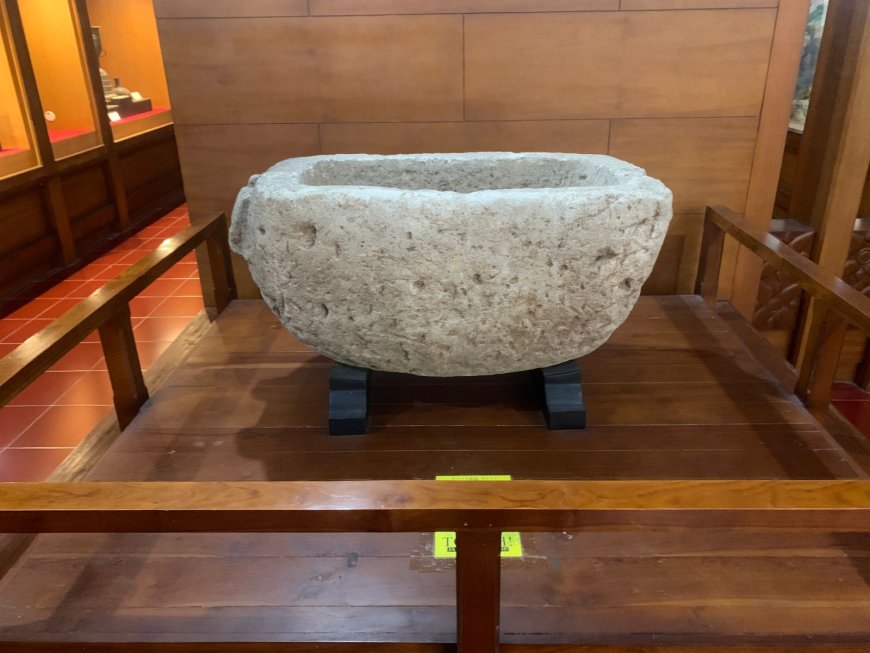
Sarcophagus from Bali (Photo Source: Personal Collection)
The development of prehistoric culture in Bali can also be observed through the burial systems practiced by its ancient communities. Prehistoric humans had already known the use of sarcophagi, which are large stone containers used to place human remains. These sarcophagi have been found in various regions, both inland and coastal, indicating that this tradition was widely practiced by prehistoric societies in Bali.
Most sarcophagi feature protrusions on the front and back. These protrusions were often decorated with carvings in the form of masks or faces, depicted with distinctive expressions such as humorous features, protruding tongues, gaping mouths, and bulging eyes. In addition, some sarcophagi also display stylized carvings of female genitalia on the upper or lower surfaces.
These decorations suggest that sarcophagi were not only practical containers for burials but also carried symbolic and magical meanings closely tied to the belief systems of the time. Through this burial tradition, it becomes evident that from the arrival of Homo erectus to the advanced hunting stages, prehistoric humans in Bali had not only mastered technology but also developed spiritual systems aligned with the broader cultural progress of other prehistoric societies in the Indonesian archipelago and even the world.