




















The Periodization of Ancient Bali
Exploring the golden age of Ancient Bali, this piece highlights the evolution of governance, social structure, economy, and religion that laid the foundation of Balinese civilization. From consensus-based leadership to the Catur Warna system, it portrays a society built on harmony, spirituality, and order. Its enduring legacies reflect the wisdom and brilliance of Bali’s ancestors.

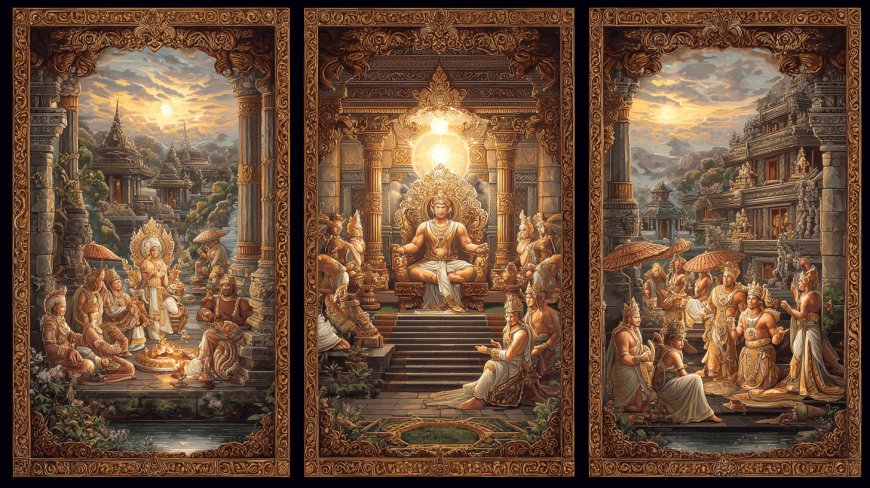
The Ancient Bali era marks the early development of civilization on the island, when writing systems began to be introduced and used in governmental and religious affairs. Generally, this era is divided into several periods: the Singhamandawa Period (before the Warmadewa Dynasty), the Warmadewa Dynasty Period, and the Wangsa Jaya Period, which was a branch of the Warmadewa line.
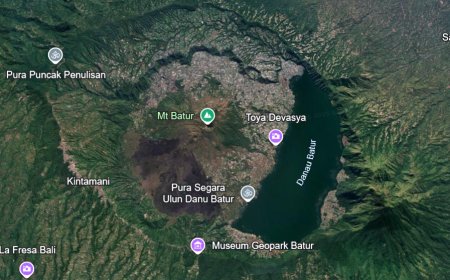
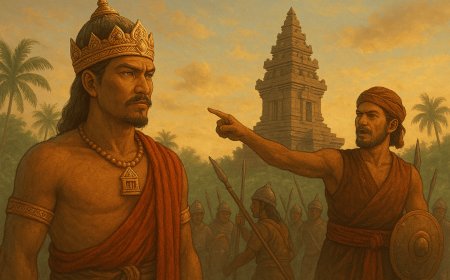
During the Singhamandawa Period, around Saka 804–836 or 882–995 CE, several important inscriptions were issued by the Panglapuan institution in Singhamandawa. Among these were the Sukawana A1 (804 Saka), Bebetin A1 (818 Saka), and Trunyan A1 (833 Saka) inscriptions. The contents reveal the king’s attention to the construction of sacred places, the welfare of his people, and the demarcation of hermitage boundaries at Mount Cintamani. The king also granted tax exemptions and specific duties to monks, regulated inheritance rights for married couples, and paid attention to the condition of Bharu Village in northern Bali, which had once been attacked by bandits. At the beginning of this period, there were four main royal offices: sarbwa, dinganga, nayakan makarun, and manuratang ajna. Over time, these high offices increased in number to accommodate the growing complexity of governance.

The King of Singhamandawa Observing the Condition of Bharu Village (Source: Personal Collection)
After the Singhamandawa era ended, the Warmadewa Dynasty emerged, founded by Sri Kesari Warmadewa, a follower of Mahayana Buddhism who was assigned from Java to rule Bali. This dynasty played a significant role in shaping the political, social, and cultural life of Ancient Bali. The Blanjong Inscription records that Sri Kesari Warmadewa successfully conquered the regions of Gurun and Suwal whose exact locations remain uncertain but are believed to be in Lombok or Nusa Penida. The languages used during this period were Sanskrit and Old Balinese, as evidenced by various inscriptions from that era. Bali during this time had become a sovereign and autonomous kingdom, governing itself independently of any foreign power. According to the Pejeng and Cempaga A Inscriptions (1103 Saka/1181 CE), the terms Walipuram (the Bali Kingdom) and Balidwipanagara (the Nation of Bali) were used. Historians later identified this kingdom as the Bedahulu Kingdom, with its capital located in the village of Bedahulu.
The extent of the kingdom’s territory is not explicitly recorded, but inscriptions indicate that it encompassed all of Bali’s mainland and its surrounding waters. The governmental structure of Ancient Bali was relatively simple, consisting of a central government (prahajyan) and village administrations known as banua, wanua, thani, or desa. The term banjar referred to a territorial and communal unit. Villagers were called anak wanua, tanayan thani, or karaman. In this system, the king held the highest authority as protector and ruler of the kingdom. A Balinese king was expected to embody the Asta Brata virtues, serving as a moral model for his people. The king was also regarded as an incarnation of a deity, reinforcing his divine legitimacy. In taxation and labor matters, the king prioritized the welfare of his subjects according to the teachings of the Niti Sastra.

King Anak Wungsu as the Incarnation of Lord Vishnu (Source: Personal Collection)
Interestingly, the system of governance in Ancient Bali was not authoritarian. Inscriptions reveal that kings often consulted the kingdom’s high council and made decisions through deliberation involving royal officials and representatives of local communities. This indicates that the concept of consensus-based decision-making (musyawarah mufakat) had already been practiced in Bali at that time. Within the bureaucratic hierarchy, there were several important groups, such as the Senapati (comparable to Punggawa during the Gelgel Kingdom era), the Samgat (judicial officials), the priests of Siwa and Buddha sects, and the Dhikara (judges), along with other key officials.
During the reign of King Anak Wungsu, Balinese society was divided into two main classes: the Catur Warna and the Kahula (Kaula), or slaves, who were outside the color system. The Catur Warna consisted of the Brahmana, who were scholars and priests leading religious rituals and promoting knowledge; the Ksatriya, who were rulers and warriors protecting the land; the Waisya, who were merchants and traders fostering prosperity; and the Sudra, who were laborers serving the upper three classes. Marriage between classes was strictly regulated. Women of higher caste were prohibited from marrying below their rank (a practice known as nyerot). If such a marriage occurred, a fine called pamucuk was imposed for violating caste norms.

Balinese Society under the Catur Warna System (Source: Personal Collection)
In social and economic life, Ancient Bali developed various professional guilds or occupational groups known as swagina. Among them was the kasuwakan, or subak, a traditional agricultural organization managing irrigation systems. There were also undahagi (craftsmen), divided into undahagi watu (stonemasons), undahagi kayu (carpenters), and undahagi rumah (architects). The pande were metalworkers who made weapons and jewelry, while the bhandagina were performing artists musicians and puppeteers who entertained both in royal courts and public settings. Textile artisans, such as juru mangjahit kajang, produced ceremonial fabrics used in rituals like cremations. Artists serving in royal courts received higher compensation than common performers.
Economically, Ancient Bali was an agrarian kingdom producing commodities such as rice, coconuts, candlenuts, oranges, cardamom, and taro. Trade activities flourished, as evidenced by the existence of markets (peken), typically located at crossroads or beneath large banyan trees. A currency system was already in place, using uang kepeng (Chinese-style coins) denominated in suwarna (su), masaka (ma), and kupang (ku), which functioned as both a medium of exchange and a measure of value.

Illustration of a Market (Peken) in Ancient Bali (Source: Personal Collection)
Religiously, the majority of Ancient Balinese people adhered to Shaivism (Siwa) and Buddhism. Leaders of both faiths, known as Mpungku Sewasogata, played vital roles in spiritual and governmental matters. The principal deities of the Tri Murti were already worshiped during this period. Inscriptions describe King Anak Wungsu as an incarnation of Lord Vishnu, while Lord Brahma was honored through various catur muka statues. The Gobleg Inscription also records the existence of the Waisnawa sect, worshipers of Vishnu in Tamblingan Village.
Archaeological remains from this era include Pura Pegulingan, Pura Tirta Empul, Candi Gunung Kawi, and Goa Gajah, all of which stand as lasting testaments to the spiritual, cultural, and architectural achievements of the time.
The final stage of Ancient Bali’s chronology is the Wangsa Jaya Period, a continuation of the Warmadewa line, ruled by King Jayapangus. His reign saw cultural assimilation between Balinese and Chinese traditions, evident in relics found at Pura Dalem Balingkang. The rule of Wangsa Jaya ended when Bali was conquered by the Majapahit Kingdom under Sri Astasura Ratna Bumi Banten, marking the close of the Ancient Bali Kingdom era.