


































Julah Village in the Course of Balinese History: From Ancient Harbor to Bali Aga Village
Julah Village in Buleleng, Bali, is a Bali Aga settlement with a historical legacy dating back to the 10th century as a maritime trade hub. Ancient inscriptions record its economic activities, customary laws, and social organization during its golden era. Although it later declined due to natural factors and invasions, Julah has preserved its Bali Aga identity through spatial layout, rituals, and cultural traditions. Today, it stands as a “living museum” that bridges ancestral heritage with Bali’s modern dynamics.


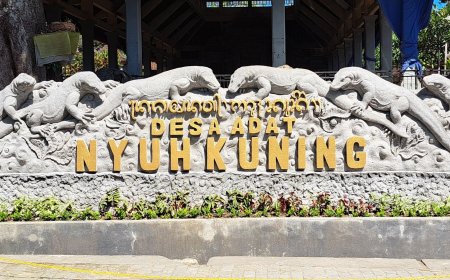
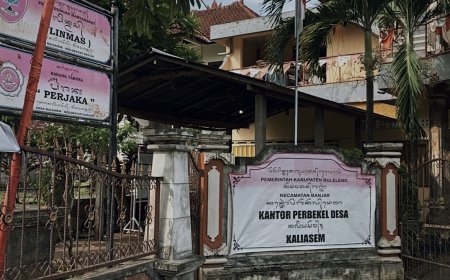
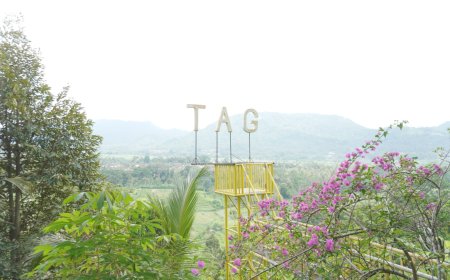
Bali Island is widely known for its cultural richness, traditions, and layered historical heritage that spans from prehistoric times to the modern era. One of the regions that preserves an important trace of this long journey is Julah Village, an ancient settlement located on the northern coast of Bali, specifically in Tejakula District, Buleleng Regency. Julah is often referred to as a Bali Aga village—a designation for Bali’s original communities who have long safeguarded ancestral traditions, even as great kingdoms and external powers rose and fell. However, the history of Julah does not end with its identity as a traditional village. Since the 10th century CE, this village once thrived as one of the centers of maritime trade in North Bali. The traces of Julah’s golden era as a port are recorded in several ancient inscriptions that mention economic activities, social structures, and customary regulations in effect at the time. Thus, the story of Julah represents two faces of Bali: as a hub of ancient trade and as a bastion of enduring Bali Aga traditions.

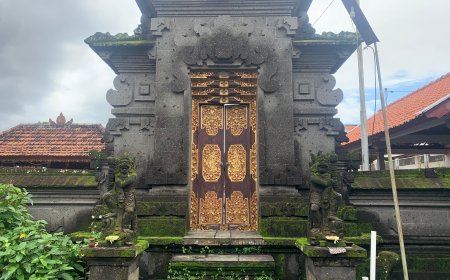
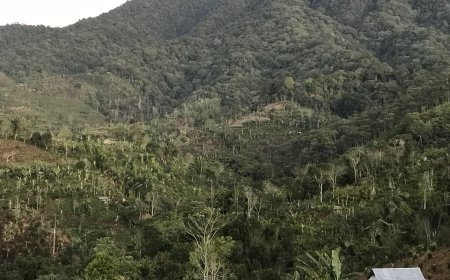
The Beauty of Julah Village (Source: Private Collection)
Julah’s geographic position on the northern coast made it strategically significant as a trade route. At that time, the waters of North Bali served as a stopover point for trading ships traveling along the maritime routes connecting Java, Nusa Tenggara, and even Southeast Asia. The Sembiran A IV inscription, dating to 987 CE, provides concrete evidence that Julah was an active port. The inscription mentions rules regarding the unloading of livestock along Julah’s coast. Such regulations show that trading activities were not carried out carelessly but were already governed by specific management systems. Another inscription also mentions the term ser pasar (market official) and undagi lancang (boat builder). This indicates the presence of a complex socio-economic organization: a market supervised by official authorities, and a shipbuilding industry that supported maritime activities. These conditions affirm that Julah was not merely a coastal village but rather a thriving economic center. Daily life at that time is believed to have been bustling with merchants, craftsmen, and fishermen engaged in inter-island trade networks.

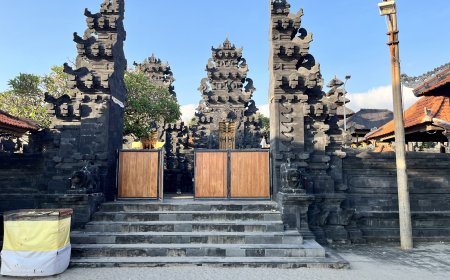
Inter-Island Trade Network (Source: Private Collection)
However, Julah’s golden age as a port gradually declined around the 12th century. Natural factors were the main causes. Sedimentation and coastal erosion altered the shoreline, reducing Julah’s viability as a natural harbor. In addition, shifts in maritime trade routes across the archipelago significantly decreased Julah’s activity. Inscriptions from later periods even recorded enemy attacks that forced Julah’s residents to flee. These invasions not only disrupted social stability but also destroyed the economic infrastructure that had once been well established. From this point, the people of Julah began to reaffirm their identity by strengthening their bonds with customary laws and ancestral traditions.
By the 14th century, Bali was undergoing major political transformations. The Majapahit Kingdom of East Java succeeded in conquering Bali, bringing with it a new royal system of governance with hierarchical structures. Many villages and local kingdoms in Bali adapted to Majapahit’s rule. However, unlike the southern villages that generally followed the new political order, Julah remained steadfast as a Bali Aga village. Its social system emphasized collective deliberation in decision-making rather than rigid royal hierarchies. Community life continued to revolve around traditional institutions, with customary rules passed down through generations. This resilience made Julah a symbol of Bali’s indigenous cultural endurance amid waves of external assimilation.

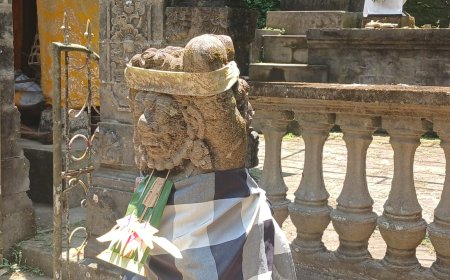
The Majapahit Kingdom Conquers Bali (Source: Private Collection)
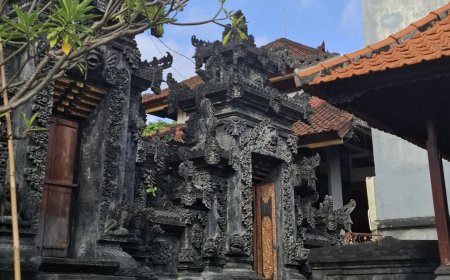
One concrete expression of Julah’s determination to preserve its Bali Aga identity lies in its settlement layout. Houses in Julah still adhere to the concept of hulu–teben, a spatial division based on the orientation toward the mountain and the sea. Sacred areas such as the kemulan (ancestral shrine) and bale meten (the family’s main building) are always placed toward the mountain (north), while profane areas like the kitchen are located toward the sea (south). Restrictions against building multi-story houses or expanding core yards are still in place today. These rules are not merely technical but also symbolic, representing respect for ancestors and harmony with the environment. Julah’s architecture, therefore, illustrates the continuity of traditions handed down across generations.

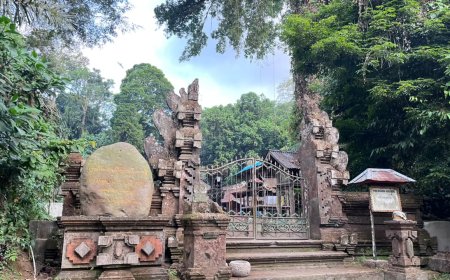
Architecture of Julah Village (Source: Private Collection)
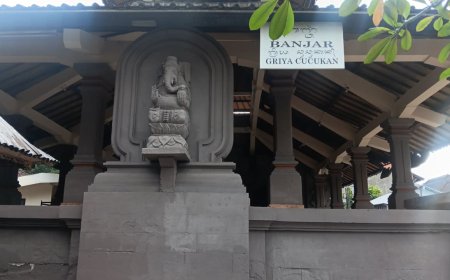
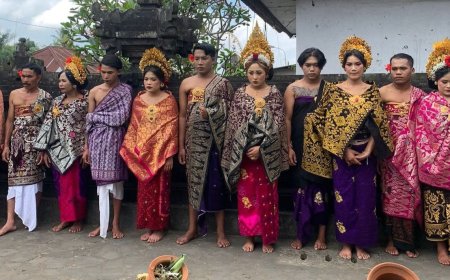
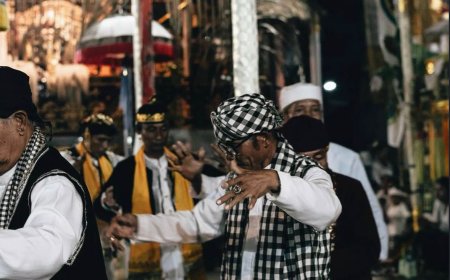
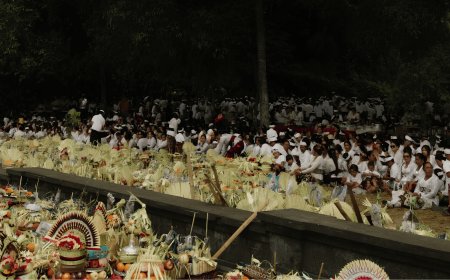
Beyond spatial planning, Julah is also renowned for its intangible cultural heritage. The Melianin or Medagang Jaje ceremony, for instance, is still regularly performed for newborn babies as part of the Manusa Yadnya life-cycle rituals. This ceremony is not only a religious practice but also a means of reinforcing social bonds within the community. Julah also maintains a distinctive weaving tradition passed down through generations. These woven fabrics serve not only daily needs but also carry symbolic significance in various customary ceremonies. Furthermore, the presence of megalithic relics in the Julah area reflects the continuity of its long history, stretching from prehistoric times to the Hindu-Buddhist era.
Amid Bali’s modernization and tourism boom, Julah strives to preserve the authenticity of its traditions. Its Bali Aga identity is upheld not only through customs but also through spatial governance and daily social practices. Nonetheless, the community does not entirely isolate itself. Some younger generations engage in modern education, tourism, and creative industries while continuing to respect customary laws. In this way, Julah becomes a meeting point between ancient traditions and modern dynamics. The village functions not only as a place of residence but also as a “living museum” that showcases the continuity of Bali’s history.
The story of Julah is one of identity resilience. From a bustling port in the 10th century, through decline and invasion in the 12th century, to its reaffirmation as a Bali Aga village in the 14th century, Julah demonstrates how a community can endure by relying on ancestral traditions and customary law. Its existence proves that Bali’s history was not solely shaped by the grandeur of southern kingdoms but also by northern villages that preserved maritime legacies alongside cultural heritage. Thus, Julah deserves recognition as one of the vital nodes in the mosaic of Balinese history and culture.
References
Ardika, I Wayan. (2018). World Cultural Heritage: History and Archaeology. Denpasar: Udayana University Press.
Ardika, I Wayan. (1987). Bronze Artifacts and the Rise of Complex Society in Bali. Canberra: The Australian National University.
Ardika, I Wayan. (1993). Sapatha in the Relations of Power and Disciplinary Practices in Ancient Balinese Society (9th–14th Century). Jakarta: Directorate General of Primary and Secondary Education.
Goris, Roelof. (1954). Prasasti Bali I. Bandung: Masa Baru.
Mundardjito. (1993). Archaeological Study – Macro Spatial Scale. Yogyakarta: University of Indonesia.
Sukarma, I Wayan, et al. (2019). Ethno Medicine and Medicinal Plants Research of Bali Aga Ethnic Group in Bali Province as an Indigenous Knowledge Preservation Effort. UM Library.