























Legend of Goddess Shitala: The Protector from Plague and Disease
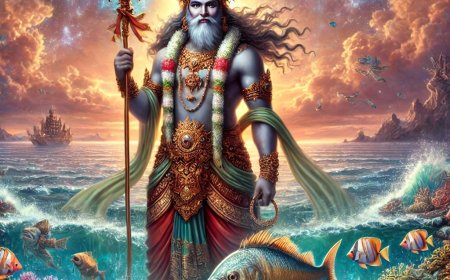
Goddess Shitala is a deity worshipped in Hindu tradition. She is known as the goddess of disease, specifically smallpox, as well as a healing deity who brings health to those who honor her. The name "Shitala" comes from Sanskrit, meaning "cool" or "soothing," referring to her power to calm fevers and cure illnesses.

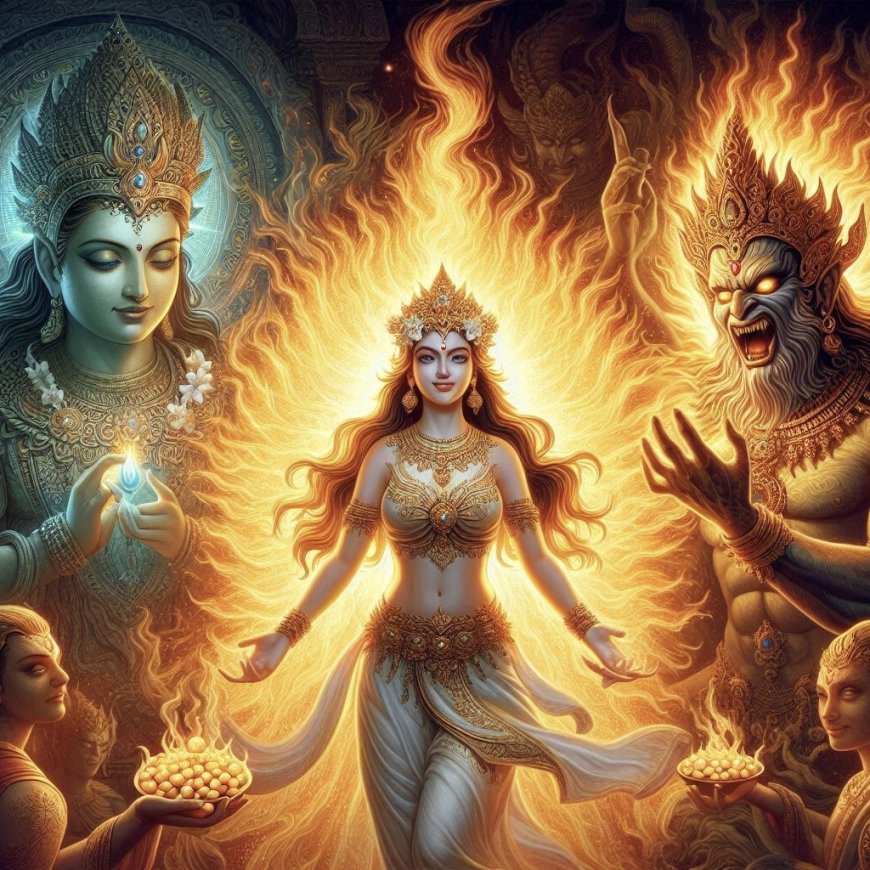
Goddess Shitala, a revered figure in Indian mythology, holds an important role as the goddess who controls diseases, particularly smallpox. Her legend begins with a sacrifice performed by Brahma, the creator god of the universe. As the sacrificial fire blazed, Goddess Shitala emerged from the flames, her face calm and serene. Seeing this birth as a good omen, Brahma gave her a sacred lentil seed, symbolizing life and balance. Brahma promised that as long as Shitala kept this lentil, humanity would always honor and worship her. Initially, this lentil brought fortune, but its fate changed drastically during her journey through the realm of the gods.
After receiving the lentil, Goddess Shitala began her journey with Jvarasura, the fever demon. Together, they wandered the universe, visiting other gods in various realms. Initially, their journey was peaceful. However, unexpectedly, the lentil, once sacred and full of hope, began to transform. Slowly, the lentil turned into a deadly smallpox germ. Every place they visited became infected with the disease, and the gods grew worried about the destructive power that Shitala now carried.
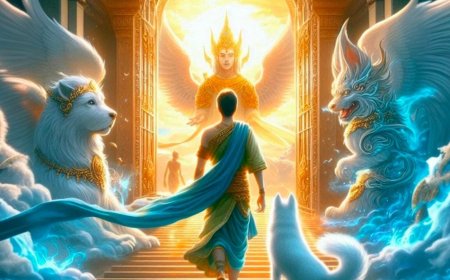
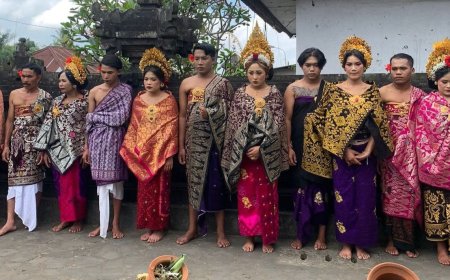
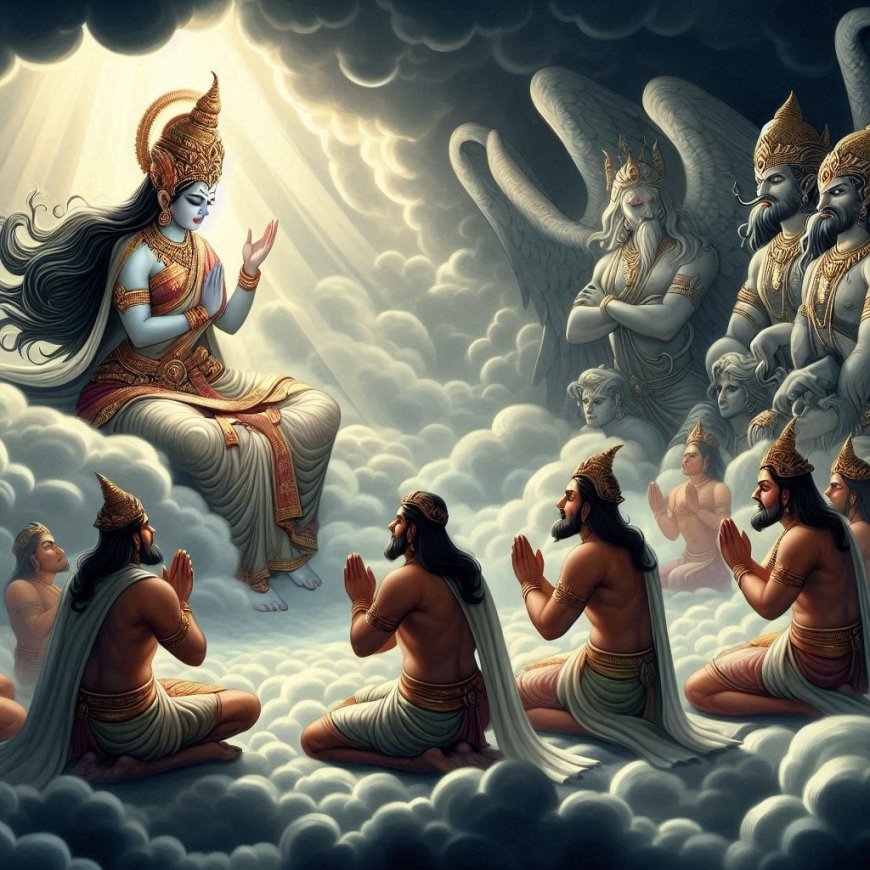 The Gods Beg for Goddess Shitala's Mercy (Source: Personal Collection)
Realizing the danger spreading among them, the gods convened to find a solution. They feared that if the smallpox germ spread further, life in the divine realm would be in great peril. So, they decided to plead with Goddess Shitala to stop spreading the germ in the realm of the gods. The gods, who were usually all-powerful, now bowed before Shitala, begging for her mercy. They asked her to take the smallpox germ down to earth and cease its spread in the divine world.
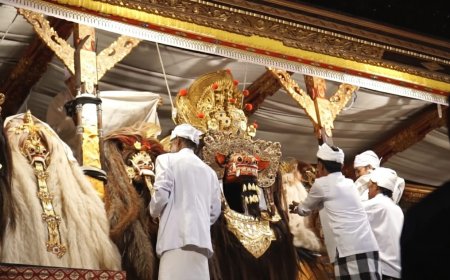
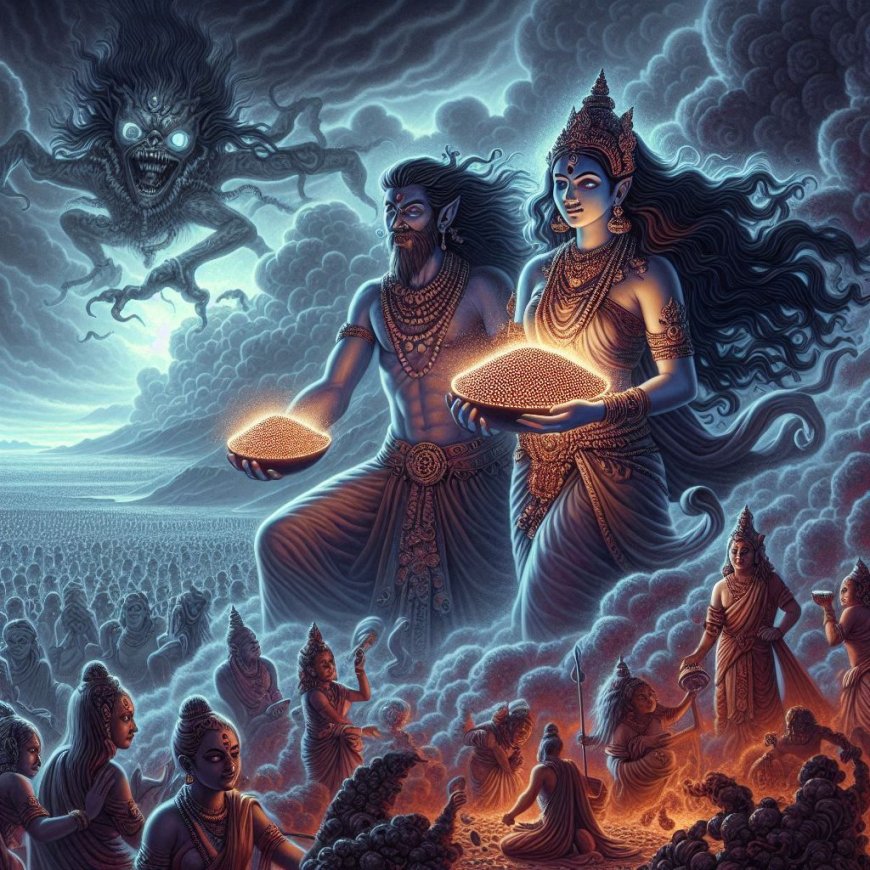 Goddess Shitala and Jvarasura Journey to Visit the Gods (Source: Personal Collection)
Goddess Shitala, who had not intended to cause chaos, eventually listened to the gods' pleas. Though disappointed by their fear, she agreed to take the smallpox germ to earth. With Jvarasura by her side, Shitala descended from the heavens to earth, with a mission to bring the disease to humanity. On earth, she arrived in the kingdom ruled by King Birat, a ruler known for his devoutness and loyalty to Lord Shiva, the destroyer and protector in Hindu mythology.
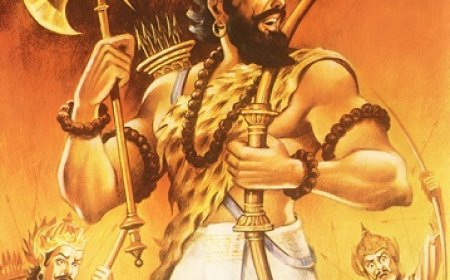
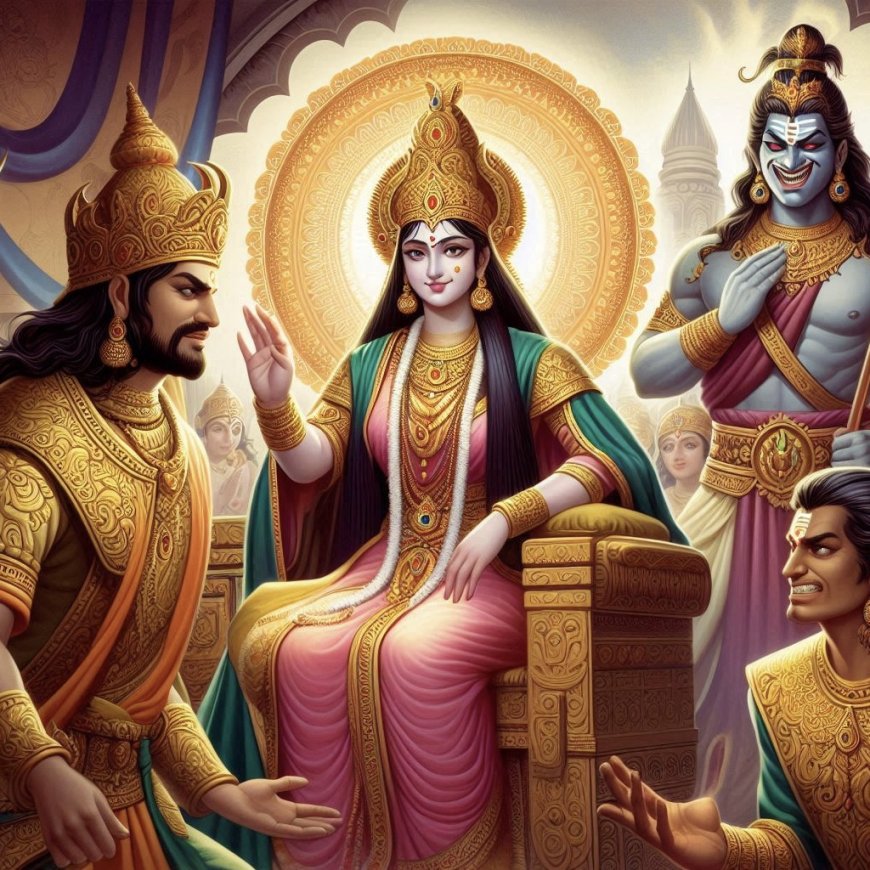 Goddess Shitala Visits King Birat (Source: Personal Collection)
King Birat ruled his kingdom with virtue and righteousness. Throughout the land, the people lived in peace, prosperous under the protection of Lord Shiva. When Goddess Shitala arrived in this kingdom, she asked King Birat to worship her as the supreme goddess, above all other gods, including Shiva. However, Birat, loyal to Shiva, refused this request. For him, Shiva was the highest god, and no one could surpass his power. This rejection insulted Shitala. She saw it as an affront to her power and her significant role as the ruler of diseases.
Feeling angry and slighted, Goddess Shitala warned King Birat that if she was not given the proper reverence, his kingdom would be struck by a plague. However, King Birat stood firm in his decision. He would not place Shitala above Shiva, viewing the threat as a test of his faith in his protective deity. Undeterred, he believed that Shiva would protect him and his kingdom from any danger that might come.
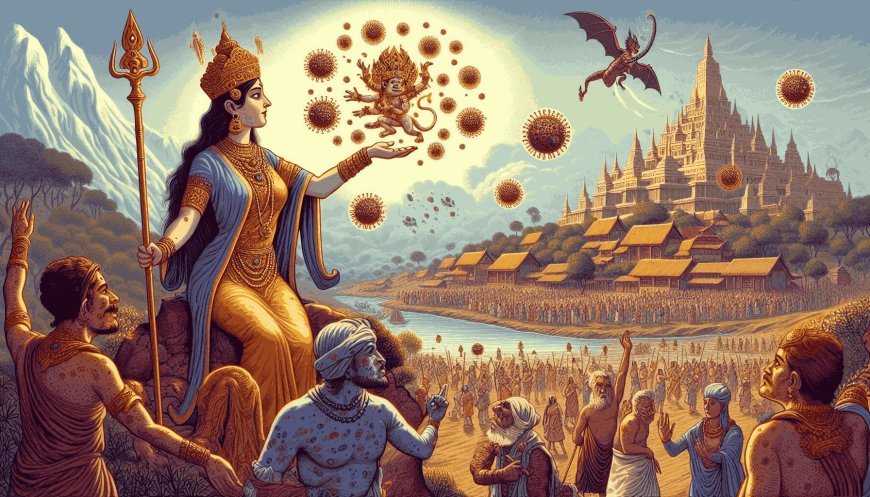 Goddess Shitala Spreads Disease in King Birat's Kingdom (Source: Personal Collection)
But Shitala did not remain passive. With her anger boiling, she summoned 75 different types of smallpox from the germ she carried. In no time, the disease began to spread throughout King Birat’s kingdom. The people fell ill with horrifying symptoms: high fevers, bodies covered in sores, and many succumbed to death. Smallpox spread like an uncontrollable fire, destroying life in the villages and cities.
As the disease ravaged the land, chaos and fear spread throughout the kingdom. The once-peaceful citizens were now consumed by suffering and grief. Each day, more people died, and the survivors were left living in constant fear of their impending death. King Birat watched his people's suffering with a broken heart, yet he still held out hope that Lord Shiva would intervene and save them from this catastrophe.
Days passed, but there was no sign of Shiva coming to their rescue. Over time, King Birat realized that the suffering of his people was unbearable. The sheer number of deaths and the cries of his people in pain shook his conviction. Finally, in deep despair, Birat decided to submit to Goddess Shitala. He understood that this was no longer about honoring one god but about saving the innocent lives of his people.
 King Birat Submits to Goddess Shitala (Source: Personal Collection)
With a heavy heart, King Birat went to Shitala’s temple and prostrated before her. He begged for the goddess’s mercy and acknowledged her power. He promised to worship her as a healing goddess and recognized her role in maintaining the balance of the natural world. Satisfied with his submission, Shitala decided to end the plague. With her powers, she eradicated the smallpox germ from the entire kingdom, healing the remaining people and restoring their health.
The smallpox sores began to disappear from the people’s bodies, and the high fevers that had ravaged them subsided, bringing life back to those who had been on the brink of death. Slowly but surely, the people recovered, and within a few weeks, the kingdom returned to normal. The peace that had been lost was now restored, thanks to the compassion of Goddess Shitala.
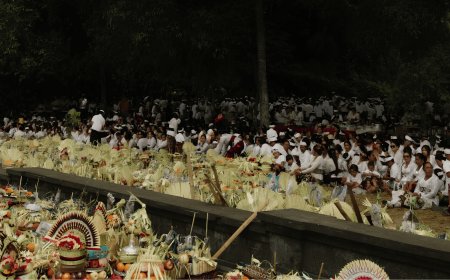
 The Villagers Rejoice After the Plague Subsides (Source: Personal Collection)
The people, freed from the grip of the deadly disease, began to celebrate their new lease on life. Villages once filled with weeping and lamentation were now full of laughter and joy. The citizens held grand festivals to show their gratitude to Shitala. They offered flowers and food at her temple, as a mark of respect for the healing she had provided.
From that moment on, Goddess Shitala was not only known as the bringer of disease but also as the healer goddess. Worship of Shitala became an essential part of life, especially during times of plague and disease. To them, Shitala was not just a fearsome figure but also a compassionate protector who brought balance between life and death.
This legend of Goddess Shitala teaches an important lesson about faith, humility, and the ability to accept forces greater than ourselves. King Birat, who initially refused to acknowledge Shitala’s power, eventually realized that in life, sometimes we must bow to the forces of nature that we cannot control. Goddess Shitala symbolizes how life and disease are interconnected and that there are divine forces that govern both.