







Behind the Curtain of Sanggar Seni Cilinaya Denpasar: Young People Preserving Balinese Dance
For 19 years, Sanggar Seni Cilinaya Denpasar has been a nurturing space for Bali’s younger generation. From dance to gamelan, children from kindergarten to junior high school are trained to appreciate and cherish their ancestral culture. Their spirit shines through regular practice and artistic performances in the community, serving as a sincere expression of dedication.

The Beginning of the Sanggar
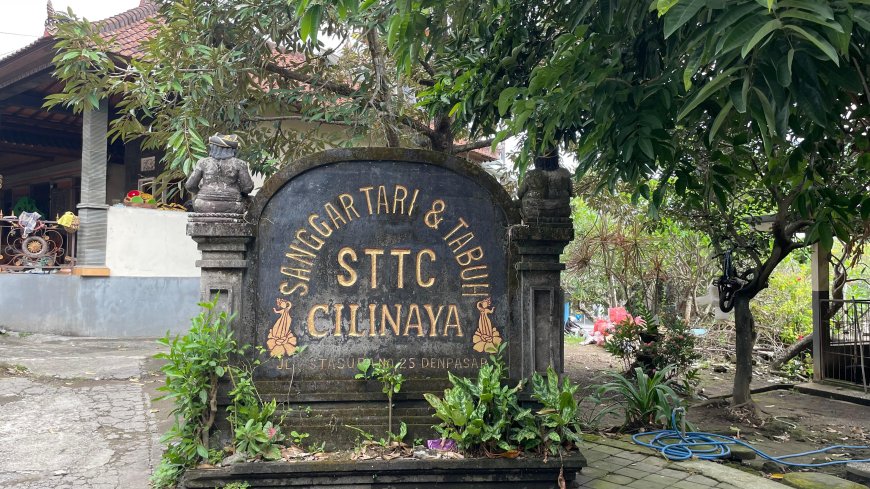
Sanggar Seni Cilinaya founded in the year 2006 in Denpasar at the initiative of Mr. Ketut. At the beginning, the activities were held modestly in a banjar with the aim of preserving art and culture of Bali, especially dance. At that time, only about 15 children joined the practice. Although simple, the spirit that was built was to guide the younger generation so they would not forget the cultural identity of their ancestors.
After five years, the number of participants continued to grow so that the space in the banjar was no longer sufficient. The sanggar was finally moved to the house, so the activities could continue better. This step became an important milestone in the journey of the sanggar towards sustainability. Until now, Sanggar Seni Cilinaya still exists as a creative space for young people who consistently engage in Balinese performing arts.
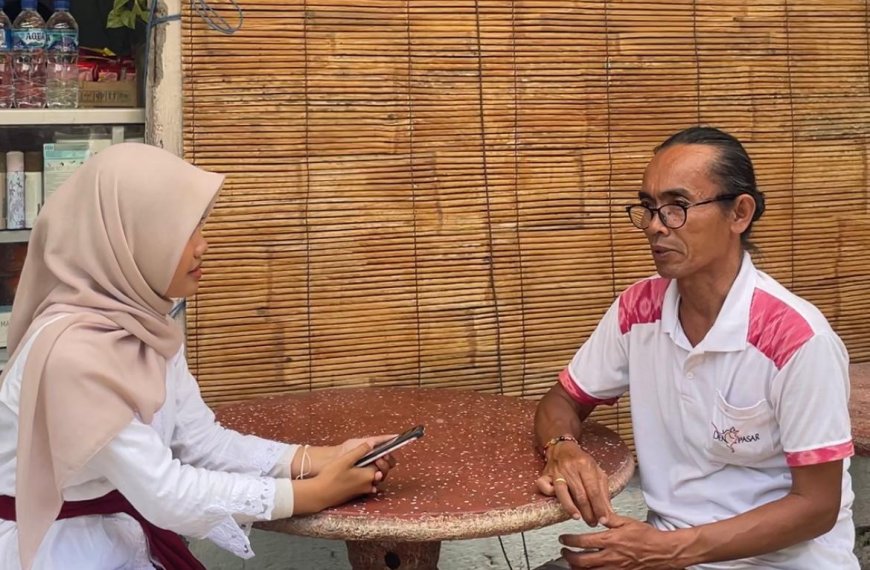
Interview with Mr. Ketut, founder of Sanggar Seni Cilinaya
(Source: Private Collection)
Development of Dance and Gamelan Activities
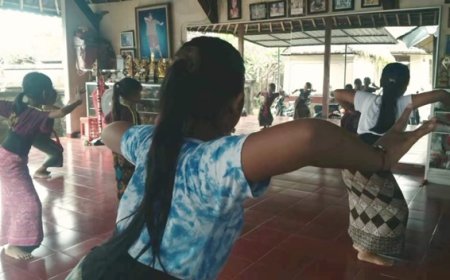
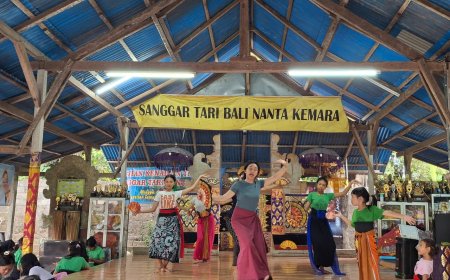
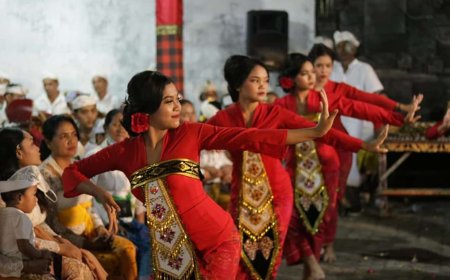
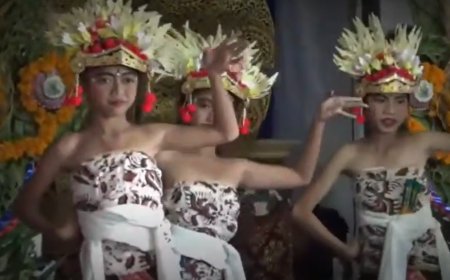
Since the beginning, Sanggar Seni Cilinaya only focused on dance. Now, dance activities have been running for 19 years, with participants from various age levels starting from kindergarten to junior high school. Various types of Balinese dance are taught according to the children’s abilities, so that they can learn basic techniques, movements, and expressions in dancing. Through these activities, children are given space to develop artistic skills while at the same time preserving local culture.
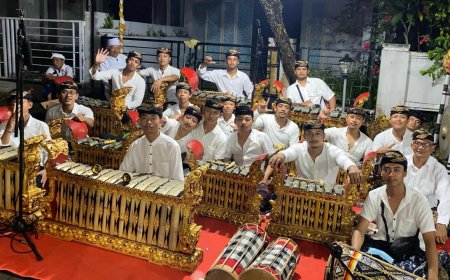
About 11 years ago, the sanggar began to develop tabuh or gamelan activities. Tabuh participants generally consist of children from elementary to junior high school. Since then, tabuh has become an important part of the sanggar’s activities until now. The presence of tabuh complements the role of the sanggar as a space for learning performing arts that unites dance movements and the rhythm of gamelan.
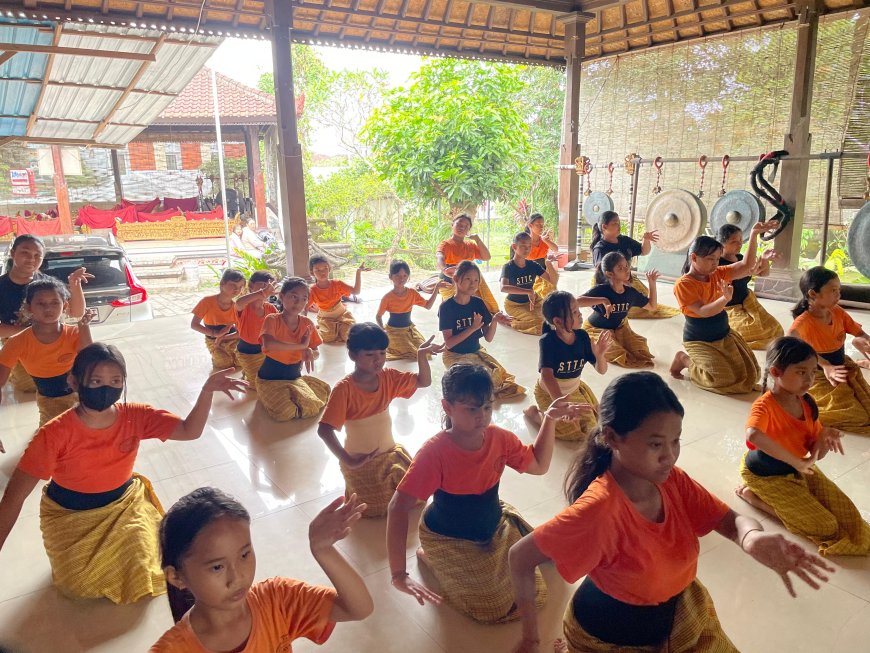
Children practicing dance at the sanggar (Source: Private Collection)
Routine Practices and Artistic Performances
Practice activities are scheduled regularly three times a week, namely on Thursday, Saturday, and Sunday. The schedule provides space for children to balance school activities and art training. Through disciplined practice, participants are taught to have a sense of responsibility and consistency from an early age.
In addition to practicing, children are also actively performing in art activities in the community, including at Puputan Field which usually presents many dance sanggar. Through this opportunity, they not only channel their artistic talents, but also learn spiritual values, togetherness, and dedication.
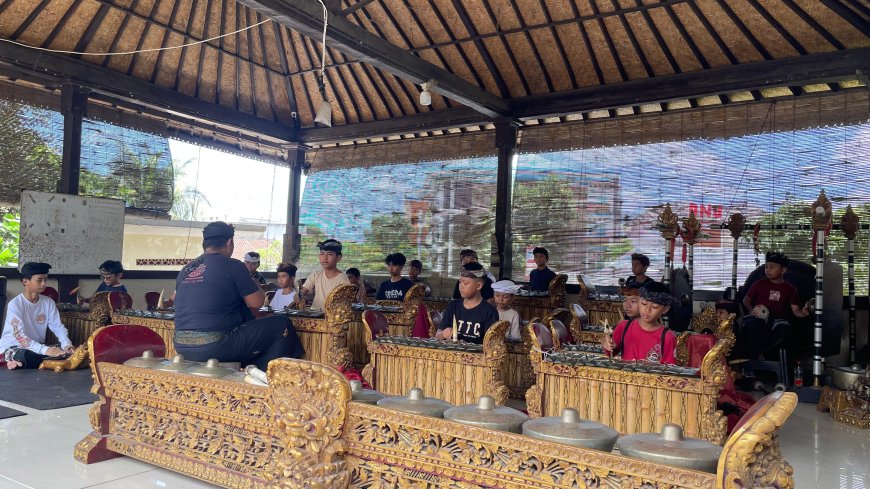
Children practicing tabuh at the sanggar (Source: Private Collection)
Hopes for the Future
As the founder, Mr. Ketut hopes that Sanggar Seni Cilinaya can continue to grow in both dance and gamelan. With the spirit of the younger generation that keeps developing, the sanggar is expected to become a fortress for preserving Balinese arts as well as a creative space that can adapt to the changes of time.
The existence of Sanggar Seni Cilinaya for almost two decades is living proof that Balinese cultural arts remain alive, growing, and passed on through the younger generation. The spirit nurtured in this sanggar is an inspiration that traditional arts not only endure, but also flourish in modern society—standing as a strong fortress that protects the belief to remain steadfast on the path of dharma, whatever the challenges may be.