



















From the Footsteps of Wayan Rindi to Balinese Dance Diplomacy: The Journey of Maestro Ni Ketut Arini
At the age of 82, Ni Ketut Arini's spirit for preserving classical Balinese dance has never waned in the slightest. The maestro remains faithfully dedicated to teaching the younger generation in person, ensuring that this ancestral heritage stays alive and breathing amidst the changing times. She is living proof that sincere devotion to culture knows no age limits.

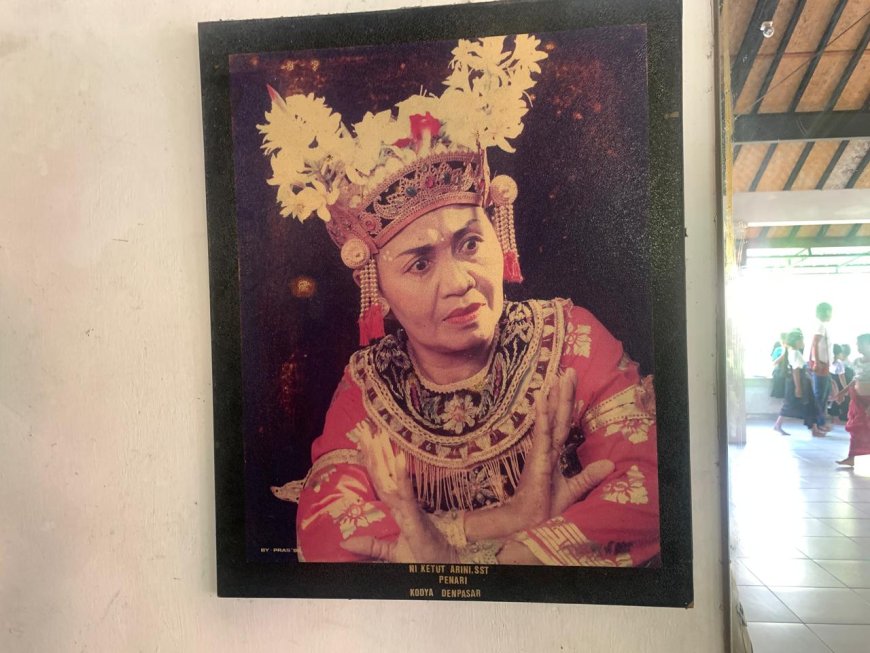
Denpasar felt warm that afternoon, but not nearly as warm as the welcome that came from a house in Soka Alley, Kecubung Street. There, an 82-year-old woman still appeared incredibly energetic. Dressed in a bright yellow kebaya and a brownish-green kamben, her eyes still radiated a burning spirit. She is Ni Ketut Arini, a figure whose name has become a guarantee of quality in the world of classical Balinese dance. Who would have thought that behind her graceful movements and powerful taksu (spiritual charisma), lies a long story of struggle that began with rejection and eventually led her to travel the globe as a cultural ambassador for the nation.
Arini's love affair with the art of dance was not a smooth story from the start. Born in Denpasar on March 15, 1943, the young Arini was actually doubted by many. Her own family initially did not allow her to dance. The reason was quite painful for a child, her posture was considered not tall enough, and her complexion was deemed a bit too dark. However, that very doubt became fuel for her fire. Instead of backing down, the young Arini became even more motivated to prove herself. The artistic blood flowing from her father, I Wayan Saplug (a gamelan musician), and the strong influence of the legendary dance maestro who was also her close relative, Wayan Rindi, could not be contained.
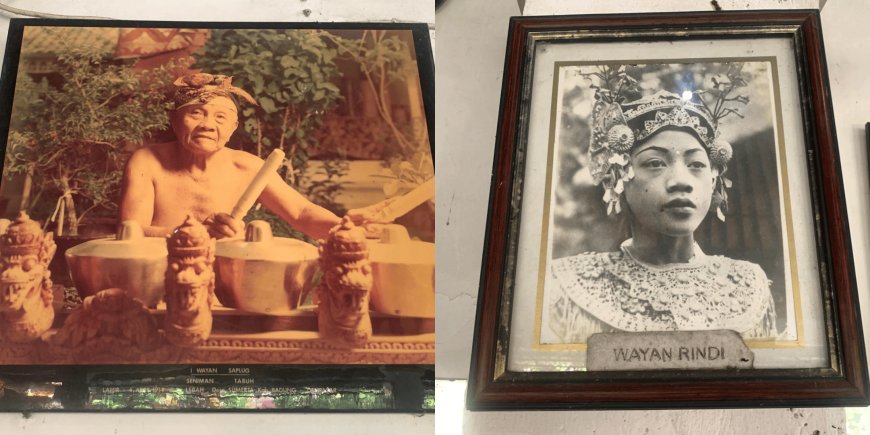 I Wayan Saplug and Wayan Rindi, two pivotal figures in Arini’s career journey. (Photo Source: Personal Collection)
The figure of Wayan Rindi played a very central role in Arini's life journey. Since the age of three, little Arini would often steal glances while the maestro was teaching dance. She deeply admired Rindi, who was not only a skilled dancer but also a patient educator. Rindi taught the philosophy that a teacher must never belittle their students and must teach with their heart. These values eventually shaped Arini's character. For her, dancing is not just about physical movement, but a journey of the soul and a moral responsibility to pass on the ancestral heritage.
The turning point in Arini's life occurred in 1957. At that time, she was selected to be a Sang Hyang Dedari dancer in Banjar Pande, Sumerta Kaja Village. This was no ordinary achievement. In those days, becoming a Sang Hyang Dedari dancer was a sacred honor. The dancers were regarded as sanctified celestial nymphs and were highly respected by the community. That moment became Arini's proof to the world that physical appearance was not a barrier to artistic creation. Since then, her path as a professional dancer opened wide. She deepened her knowledge academically at KOKAR Bali (now SMKI) and STSI Denpasar, and studied under other great names like I Nyoman Kaler, who educated her with strict discipline yet full of love.
Arini's reputation skyrocketed as the maestro of the Condong dance, a role depicting the attendant of the princess that always appears in Balinese dance dramas such as Legong, Gambuh, and Arja. Moreover, she is also known as the savior of the Classic Legong dance, which was on the verge of extinction. Imagine, out of the fourteen styles of Legong dance in Bali, Arini masters six of them fluently, ranging from Legong Pelayon, Lasem, Kuntul, Kuntir, Jobog, to Semarandhana. These six rare dances were even documented in 2010 as teaching materials for the next generation at ISI Denpasar, ensuring that this heritage will not be lost to time.
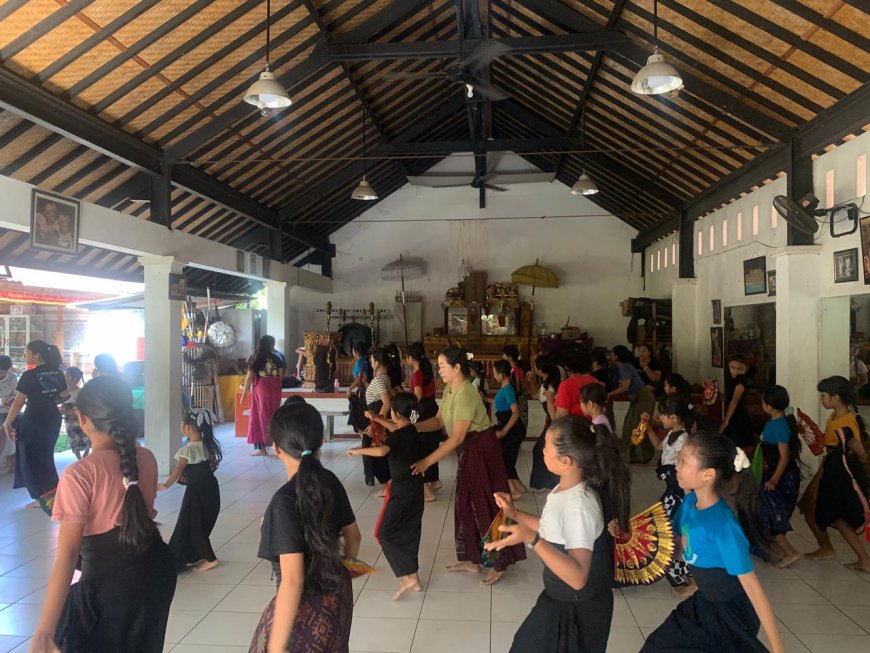 The training atmosphere at Warini Dance Studio (Photo Source: Personal Collection)
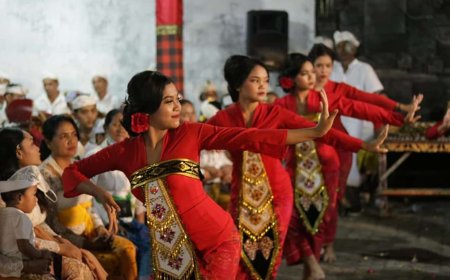
Arini's love for dance education manifested in the establishment of Sanggar Tari Warini (Warini Dance Studio) in 1973. The name "Warini" itself holds deep historical meaning, being a combination of the name of her mentor, Wayan Rindi, and her own name, "Arini". In this studio, she applies a unique teaching method. Arini does not like using numerical counts like "one-two-three" when teaching movements. She prefers using live gamelan and gong accompaniment. For her, dancing is about feeling. By listening to the music, her students automatically feel they are dancing, not just memorizing mathematical movements. This approach has proven effective in making children more enthusiastic, dancing with their souls rather than just empty technique.
Her work did not stop in her homeland. Since 1965, Arini has actively undertaken cultural missions to various countries. Together with her students, she has crossed continents, from Japan and the United States to European countries like Switzerland. She was not merely dancing, she was conducting cultural diplomacy, introducing the friendly and highly artistic face of Indonesia to the global community. She even collaborated with foreign artists to revitalize her teachers' works that had vanished from circulation.
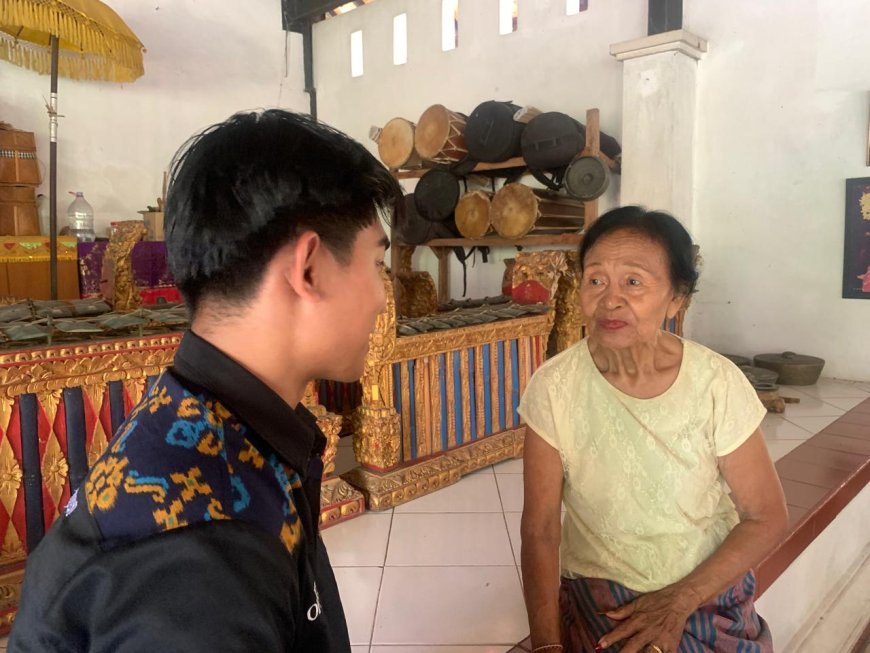 The moment of the author's interview with Ibu Arini at her dance studio. (Photo Source: Personal Collection)
While chatting casually at her dance studio, one could feel how great Arini's hope is for today's young generation. Her message is very simple yet striking. She does not want Balinese dance to stop only at competition stages or school exams. Ibu Arini wants the younger generation to truly love Balinese dance and implement it in real life. For her, the peak of learning dance is when a dancer can perform "ngayah" an offering their dance sincerely during religious ceremonies at temples and contribute to advancing Bali's tourism.
Now, in her twilight years, Ni Ketut Arini has transcended material achievements. She is undergoing a spiritual journey through art. For her, dancing is a form of meditation and prayer. Sanggar Tari Warini, which she nurtures, is not just a training ground, but a crucible to mold a generation that is not only skilled in flexible body movements but also possesses ethics and love for their own culture. Arini is living proof that perseverance, love, and devotion to ancestors will bear sweet fruit, an invaluable legacy for Indonesia.