
















Grasping Ancestral Heritage: The Role of Sanggar Sandhi Swara in the World of Balinese Puppetry
Explores the role of Sanggar Sandhi Swara as a space for preserving Balinese puppetry by nurturing younger generations through an enjoyable, tradition-based learning approach. Founded by I Made Raka Sukada and developed alongside young puppeteer Alit Widi Ariadnyana, the studio integrates mastery of puppetry techniques, the use of traditional performance equipment, and a vision for arts management to ensure Balinese wayang remains alive and relevant in a changing era.

Amid the rapid flow of modernization and changing tastes among younger generations, Balinese puppetry continues to find its place. One such vital space is Sanggar Sandhi Swara, a traditional puppetry studio that has grown and developed in the city of Denpasar. The studio functions as a place for learning, creative practice, and the preservation of Bali’s ancestral cultural heritage.
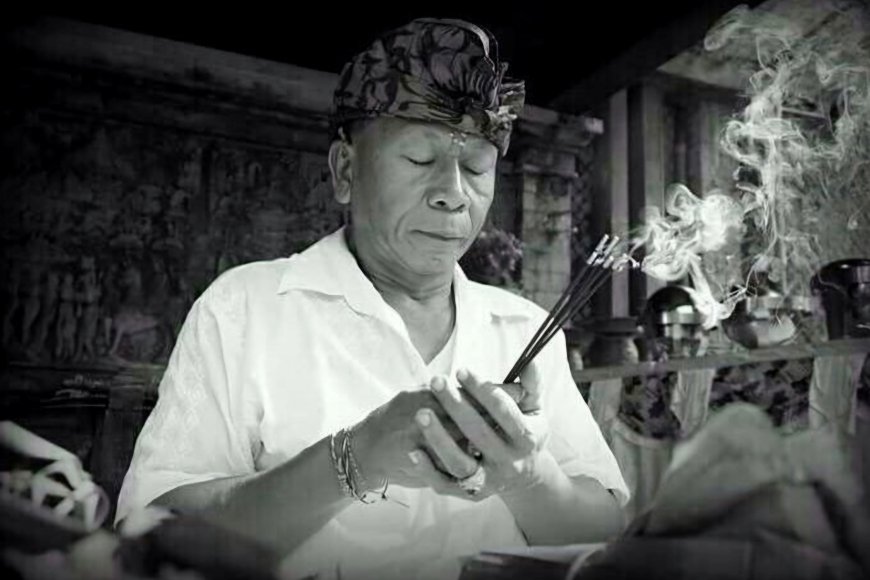
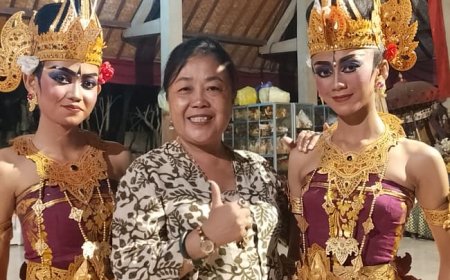
Founder of Sanggar Sandhi Swara (Photo Source: Sanggar Collection)
Sanggar Sandhi Swara was established around 2012, initiated by I Made Raka Sukada, a Balinese puppetry practitioner in Denpasar. The founding of the studio was driven by a desire to provide a space for children and adolescents interested in the art of puppetry, especially those from diverse regions and backgrounds. The name Sandhi Swara itself represents the meeting of various voices and origins unified within a single artistic space.
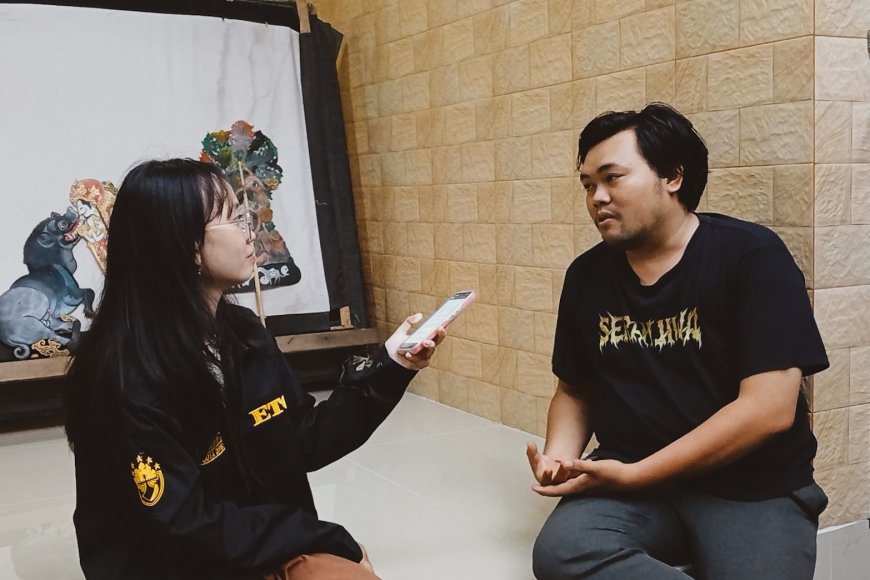
I Made Alit Widi Ariadnyana, Active Figure of Sanggar Sandhi Swara (Photo Source: Personal Collection)
Throughout its journey, Sanggar Sandhi Swara has not only functioned as a place to learn puppetry techniques but also as a space for character development. One of the studio’s key figures is I Made Alit Widi Ariadnyana, commonly known as Alit, a graduate of the Indonesian Institute of the Arts (ISI) Denpasar, Department of Puppetry, and the son of the studio’s founder. He explains that puppetry is essentially similar to theater, yet it possesses unique characteristics, as a puppeteer must be able to portray multiple characters simultaneously, complete with distinct vocal expressions, dialogues, and complex storylines.
The learning process at Sanggar Sandhi Swara is not bound by a rigid curriculum. Instead, the methods emphasize fundamental and enjoyable approaches, particularly for children. Students are introduced to puppetry through simple games, reinforcement of tradition, and habituation to listening and imitating dialogues. Innovation is introduced only after students have mastered the foundational aspects of puppetry. Through this approach, learning interest grows naturally from within the students rather than through coercion.
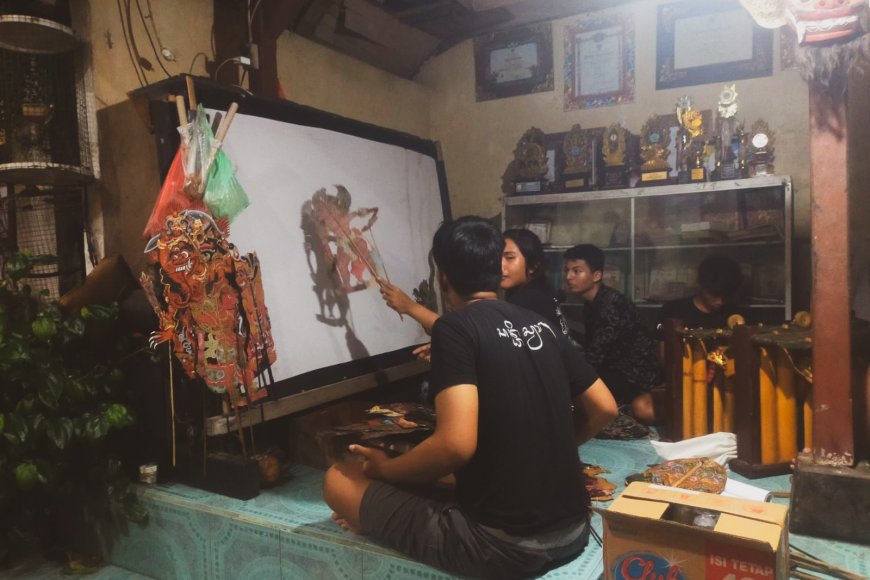
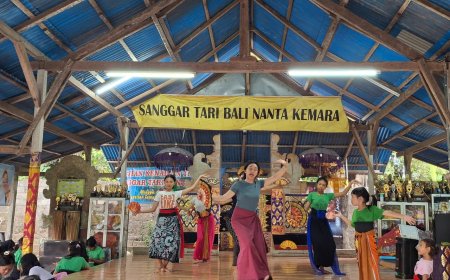
Routine Training at Sanggar Sandhi Swara (Photo Source: Sanggar Collection)
Students at the studio come from a wide range of ages, with some beginning their training even before entering kindergarten. Children who have not yet learned to read are trained through their strong memory and listening abilities. Frequently heard and watched puppetry dialogues become their initial learning foundation, which is then gradually refined, particularly in the proper use of sor singgih basa, the hierarchical levels of the Balinese language. This approach has proven effective in nurturing talented young puppeteers, some of whom have performed at the national level.
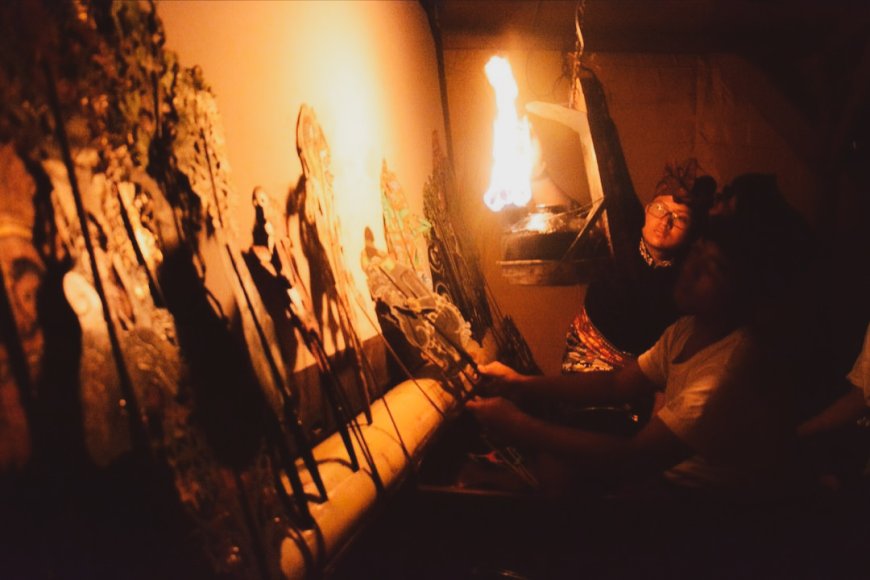
In performance practice, puppetry cannot be separated from various essential equipment that supports the show. In addition to the leather puppets as the main characters, performances require a kelir, a white cloth screen used as the medium for shadow projection. The light source comes from a blencong, a traditional oil lamp that casts light onto the kelir, allowing the puppet shadows to appear clearly. Musical elements also play a crucial role, provided by gamelan accompaniment such as gendér pat for Parwa performances, as well as kendang, suling, and batél for Ramayana performances. Although Sanggar Sandhi Swara does not specifically provide formal training in musical accompaniment, some students are able to play the gendér independently and teach one another.
Beyond routine training, Sanggar Sandhi Swara actively participates in various performance stages. The studio frequently takes part in puppetry competitions and festivals at the district, provincial, and institutional levels. Numerous achievements have been attained, ranging from the Bali Arts Festival (PKB) to competitions organized by arts education institutions. Outside of competitions, students also regularly ngayah, performing puppetry in religious ceremonies at temples according to their respective local communities.
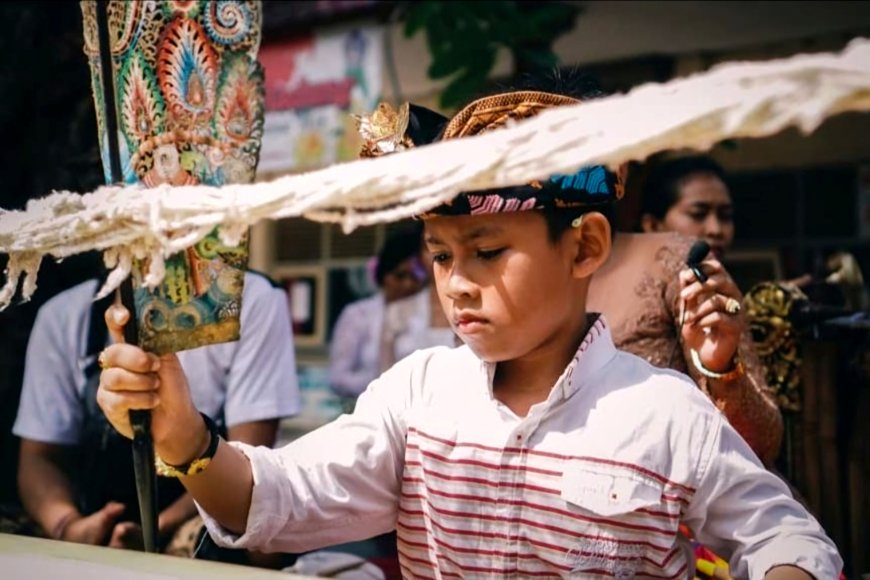
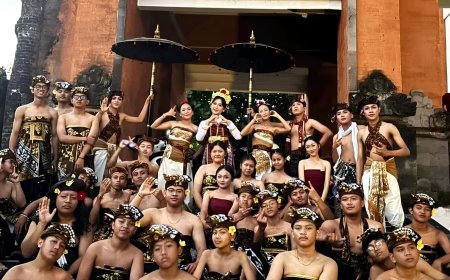
Students of Sanggar Sandhi Swara (Photo Source: Sanggar Collection)
In terms of narrative material, Kunti Yadnya is used as the foundational story in training, as it is considered the most standard and relevant to yadnya (religious ritual) contexts. This story serves as essential preparation for puppeteers to perform in various settings. Meanwhile, major epics such as The Bharatayudha War are regarded as particularly challenging due to the requirement of mastering kakawin (classical poetic texts) and deep literary knowledge. Additionally, the Ramayana presents its own challenges, especially in vocal strength and characterization, such as producing powerful and distinctive monkey voices.
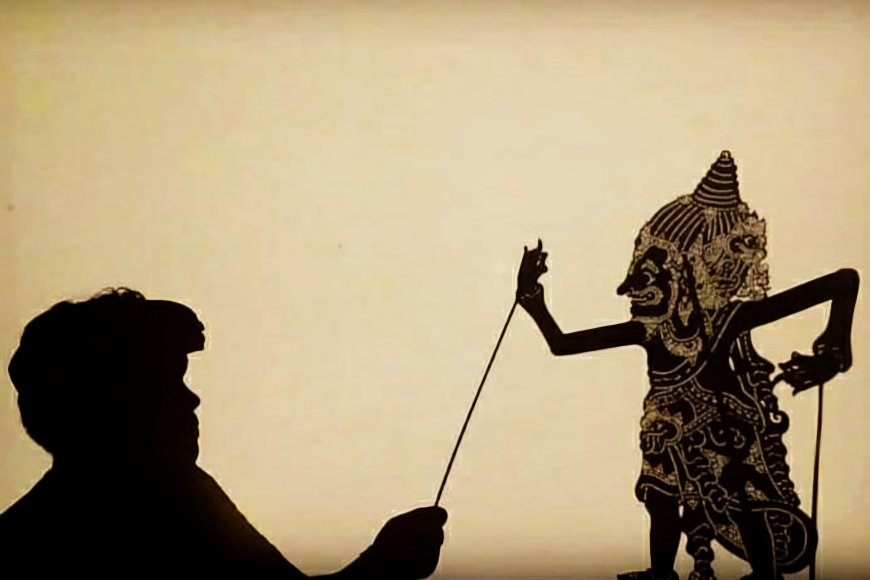
Performance of the Lontar Lipyakara Story (Photo Source: Sanggar Collection)
Amid challenges such as limited performance spaces and declining interest among younger generations, Sanggar Sandhi Swara remains optimistic about the future of puppetry. The belief that this art form will not become extinct is rooted in its integral role in Balinese religious rituals and ceremonial practices. Looking ahead, Sanggar Sandhi Swara envisions developing performing arts management, enabling students not only to master puppetry skills but also to manage performances, organize productions, and introduce Balinese puppetry to broader stages beyond Bali and Indonesia.
Through consistent mentorship, strong mastery of tradition, comprehensive use of puppetry equipment, and openness to contemporary developments, Sanggar Sandhi Swara demonstrates that puppetry is not merely a form of entertainment but a source of moral guidance. It is an ancestral heritage that continues to be embraced, preserved, and passed down from generation to generation.