



















Learning Life Values: The Story Behind the Song Juru Pencar
Tembang Juru Pencar is one of the tembang rare passed down through generations as both entertainment and a medium for value education. This song tells the story of a fisherman who works using a net at sea, reflecting responsibility and hard work in facing uncertain catches. In addition to depicting individual struggle, this song also highlights the value of mutual cooperation characteristic of Balinese coastal communities. Although it originates from the oral traditions of the past, Juru Pencar remains relevant today because it conveys a universal message.


Tembang Juru Pencar is one of the heritages of tembang rare or traditional Balinese children's songs that remains preserved to this day. Essentially, tembang rare is not merely entertainment but also a means of teaching values, character, and cultural introduction from an early age. Among the many tembang rare that have developed, Tembang Juru Pencar holds a special place due to its story that is so close to the lives of coastal communities. This song tells the story of a fisherman who catches fish using a traditional net called pencar. This fisherman is referred to as juru pencar, meaning a person who casts the net into the sea.

A fisherman casting a net at sunrise, AI illustration (Source: Private Collection)
Tembang Juru Pencar tells the story of a fisherman who lives a life full of responsibility. He struggles not only for himself but also for his family waiting at home. His catch is not always abundant, sometimes plentiful, sometimes empty. Whatever the result, he accepts it with patience and sincerity. Even in daily life, fishermen often share their catch with neighbors or sell it at the market to meet the needs of the community. From this story, values of mutual cooperation (gotong royong), sincerity, and social concern emerge, which are characteristic of Balinese society. Below are the lyrics of Tembang Juru Pencar:
Juru pencar, juru pencar
Mai jalan mencar ngejuk ebe
Be gede-gede, be gede-gede
Disawani ajake liu
Be gede-gede, be gede-gede
Disawani ajake liu
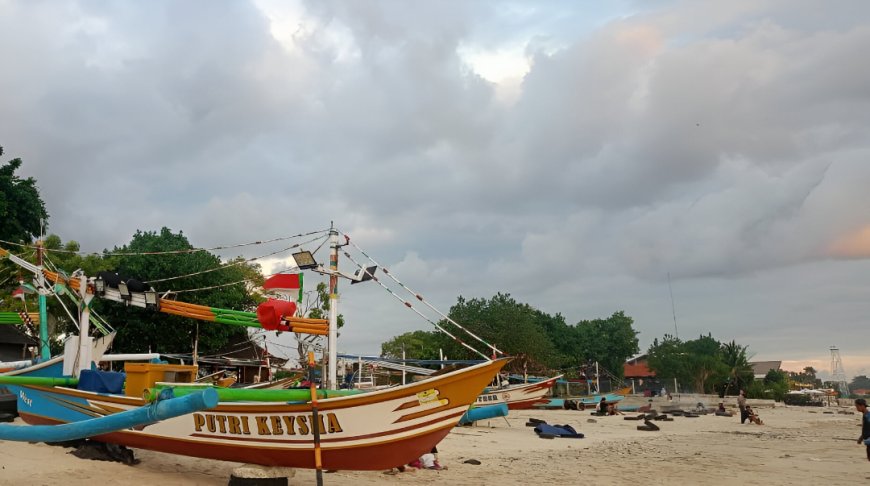
A view of the coastline (Source: Private Collection)
Additionally, this song also depicts the life of coastal villages in Bali with the togetherness of fishermen. The lyrics describe how the juru pencar walks to cast his net to catch big fish. This activity is not done alone but together, reflecting the spirit of mutual cooperation that characterizes coastal communities. This togetherness emphasizes that the sea is a shared blessing that must be managed wisely, while also reflecting solidarity and mutual cooperation as the main foundation of the life of Balinese fishing communities.
The history of this song is rooted in the oral tradition of Balinese society. From generation to generation, this tembang has been passed down through parents, teachers, and children who often sing it while playing. Although it originates from the past, Juru Pencar remains alive today and is still relevant. Its presence serves as a reminder that traditional values never become obsolete. in fact, they become increasingly important amid the rapid modernization and influence of global culture.
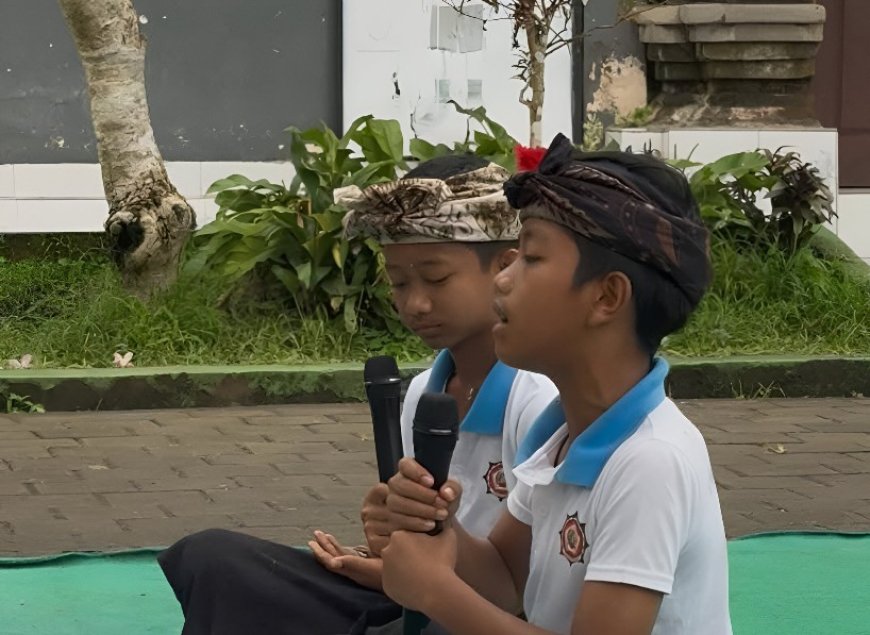
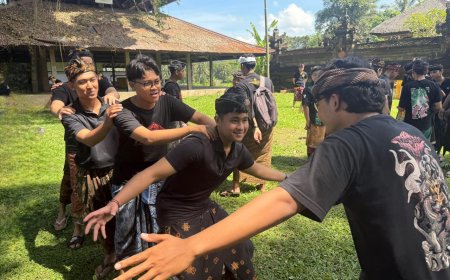
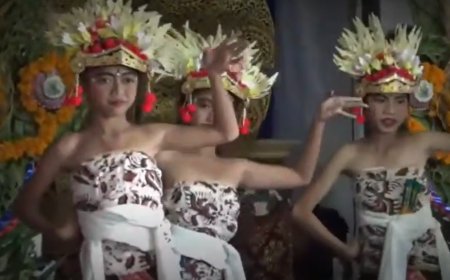
Children singing a traditional Balinese song (Source: Private Collection)
Tembang Juru Pencar is delivered with simple yet meaningful lyrics. From the figure of the fisherman to the uncertain catch, lessons about patience and sincerity in accepting life's realities emerge. From the fishermen's habit of always hoping the sea will provide blessings, a spiritual awareness is instilled that every effort must be accompanied by prayer and gratitude. Meanwhile, from the fisherman's responsibility toward his family, children learn that true hard work stems from love for those closest to them.
Thus, Tembang Juru Pencar is like an invitation to return to childhood, when songs were not just entertainment but also subtle teachings about life. This song reminds us that hard work must not be abandoned, prayers must not be forgotten, and gratitude must always be maintained. Preserving Juru Pencar means not only safeguarding Balinese cultural heritage but also nurturing universal life.