












Lawar Klungah: Young Coconut and Basa Genep in the Living Culinary Tradition of West Bali
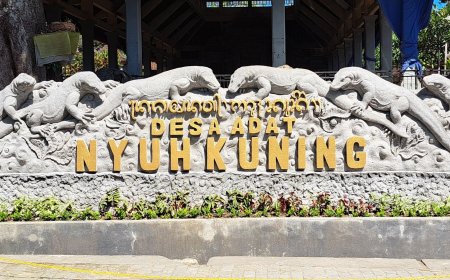
Lawar klungah is a traditional dish from West Bali made from young coconut combined with a complete basa genep spice blend, resulting in a unique savory and spicy flavor. This dish is not only served during religious festivals and traditional ceremonies but also symbolizes community togetherness. More than just food, lawar klungah is a cultural heritage of Jembrana that reflects the richness of Bali’s culinary traditions.

Lawar klungah is one of the unique and meaningful culinary treasures of West Bali. This dish is made from young coconut (klungah) combined with basa genep, a complete Balinese spice blend rich in herbs and aromatics. The soft texture of the klungah, fused with the fragrance and flavors of spices, makes lawar more than just food it is a reflection of a living culinary tradition passed down through generations, especially in Jembrana Regency.
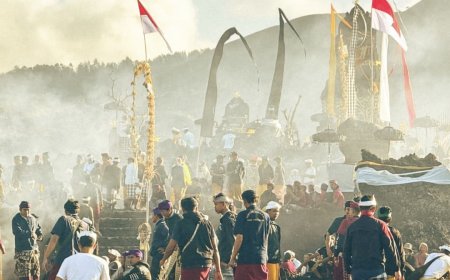
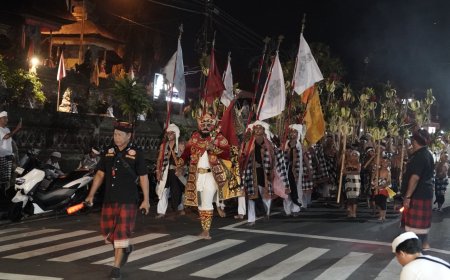
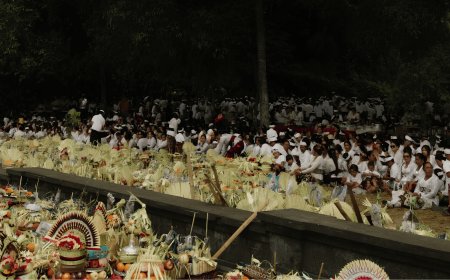
Like other varieties of lawar in Bali, lawar klungah holds an important role in community life. The dish is often served during major religious celebrations such as Galungan, Kuningan, and Nyepi, as well as in traditional ceremonies. Lawar is not merely a meal but also a symbol of togetherness, where extended families and villagers gather to cook and enjoy it as one.
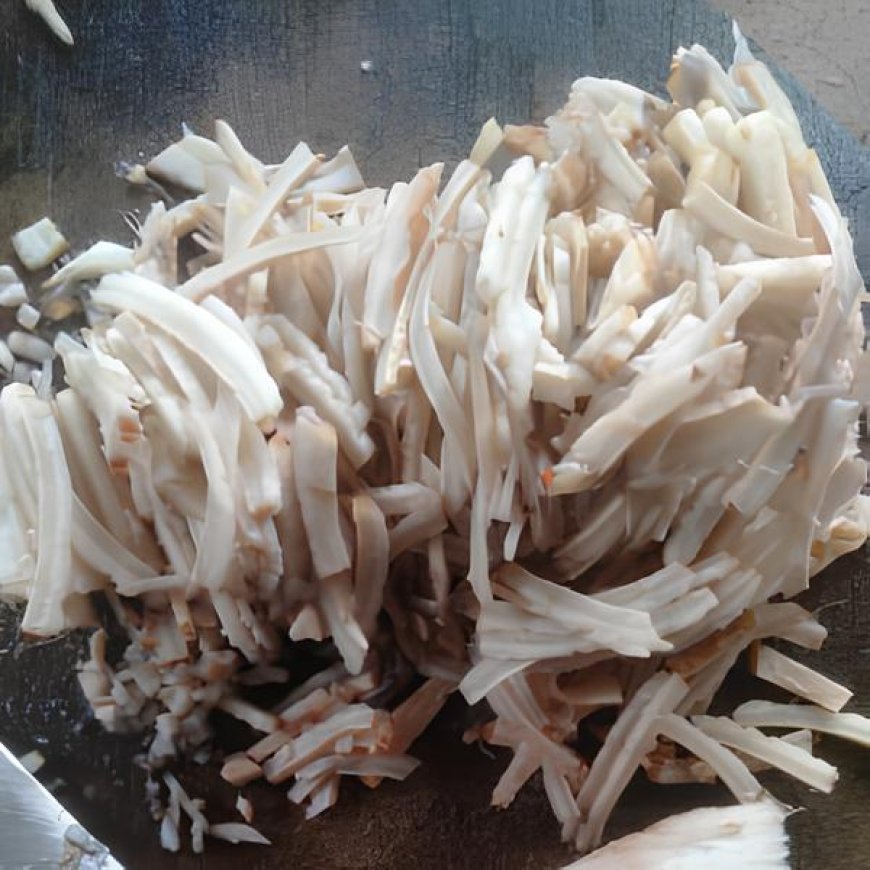
Klungah after being separated from the coconut flesh (Source: Personal Collection)
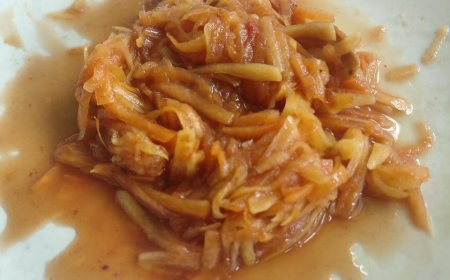
Klungah refers to the inner part of the young coconut after the soft coconut flesh (degan) has been removed. It has a tender and slightly chewy texture. When boiled, its color turns golden brown with a distinctive aroma. Before further processing, the klungah is usually cooled, finely chopped, and squeezed to reduce excess water that might create bitterness. This simple preparation makes klungah ready to be mixed with Balinese spices, setting it apart from other types of lawar made with vegetables or meat.
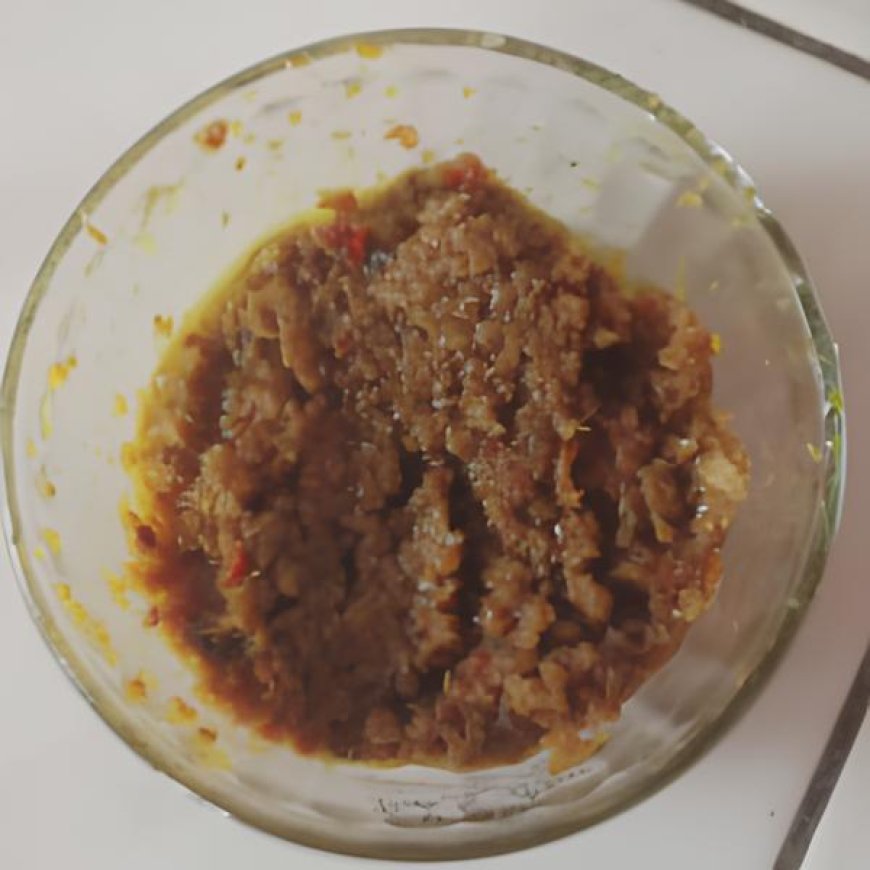
Basa Genap (Source: Personal Collection)
In Balinese cuisine, basa genep is considered the soul of almost every dish. This spice blend consists of turmeric, ginger, aromatic ginger (kencur), galangal, shallots, garlic, coriander seeds, black pepper, candlenuts, chili, shrimp paste (terasi), and lemongrass. All ingredients are ground into a paste and sautéed to release their rich aroma something quintessentially Balinese. In lawar klungah, basa genep not only imparts a savory and spicy flavor but also reinforces the culinary identity of West Bali. Preparing it together with family members or villagers during ceremonies further strengthens its role as a symbol of unity.
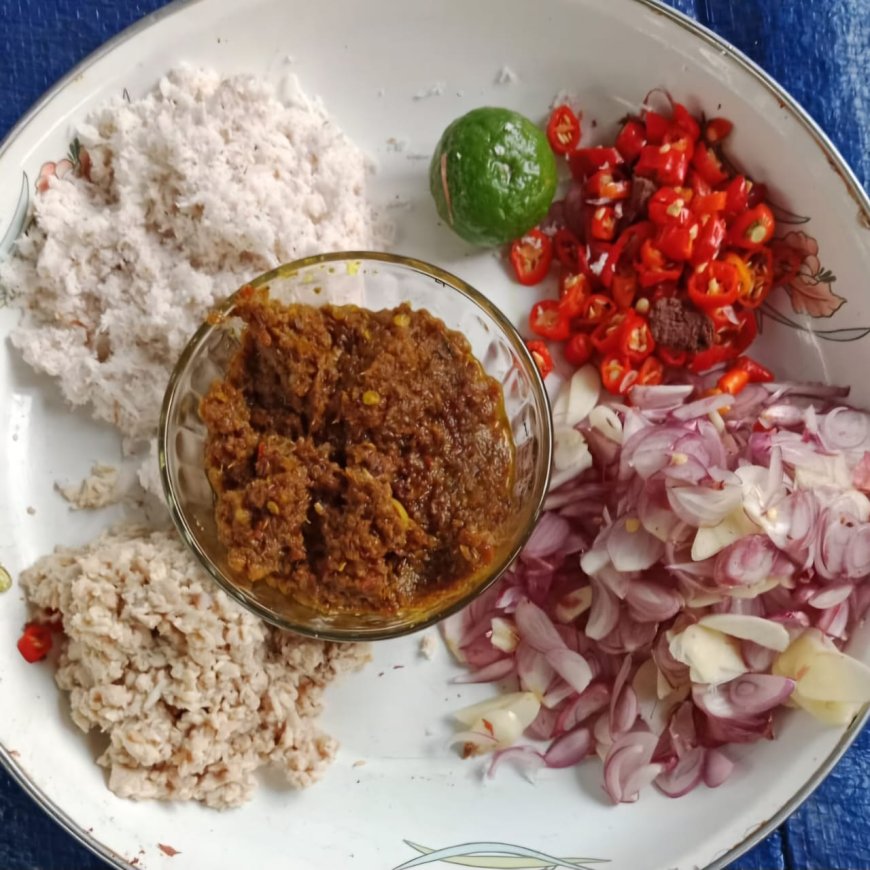
Main ingredients for lawar klungah (Source: Personal Collection)
The main ingredients commonly used include:
- Shallots
- Garlic
- Chili
- Salt
- Shrimp paste (terasi)
- Basa genep
- Grated coconut
- Ramas (minced chicken meat)
- Kaffir lime peel
Each ingredient plays an important role, from shallots and chilies that provide aroma and spiciness, to shrimp paste and salt that enhance the savory flavor, while grated coconut and lime peel add texture and freshness. The minced chicken (ramas) enriches the taste and also increases the nutritional value of lawar klungah.
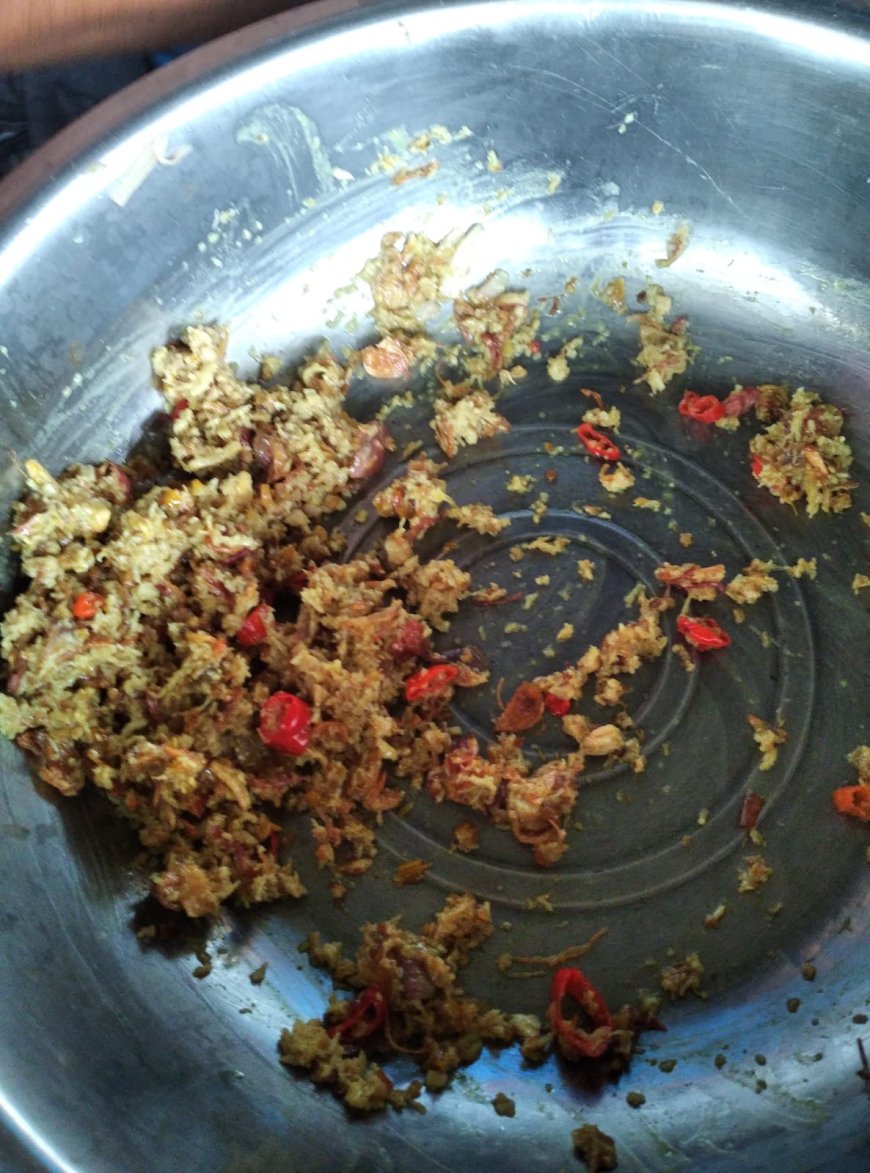
Kalas Preparation Process (Source: Personal Collection)
Kalas is prepared from a mixture of grated coconut, ramas, fried shallots, chili, and basa genep. These ingredients are blended together in one container and kneaded by hand until evenly mixed. This mixture is later combined with klungah to create the distinct taste of lawar.
Traditional steps of preparing lawar klungah:
- Take the inner part of the young coconut after the flesh is separated.
- Boil until golden brown, then finely chop.
- Squeeze the klungah to reduce its water content and remove bitterness.
- Prepare sautéed basa genep.
- Add crispy fried shallots, fried chili, and thinly sliced kaffir lime leaves.
- Mix fried shallots, chili, grated coconut, ramas, and basa genep, kneading by hand.
- Combine these with klungah and kalas.
- Mix thoroughly by hand so the spices absorb completely.
- Finally, sprinkle fried shallots on top.
The result is a dish that is savory, spicy, and enriched with the distinctive aroma of Balinese spices.
However, because klungah is relatively rare and more expensive compared to common vegetables, lawar klungah is now seldom found in food stalls or served with babi guling. It is typically prepared only for special occasions or sold by select vendors in Jembrana, Tabanan, and Denpasar
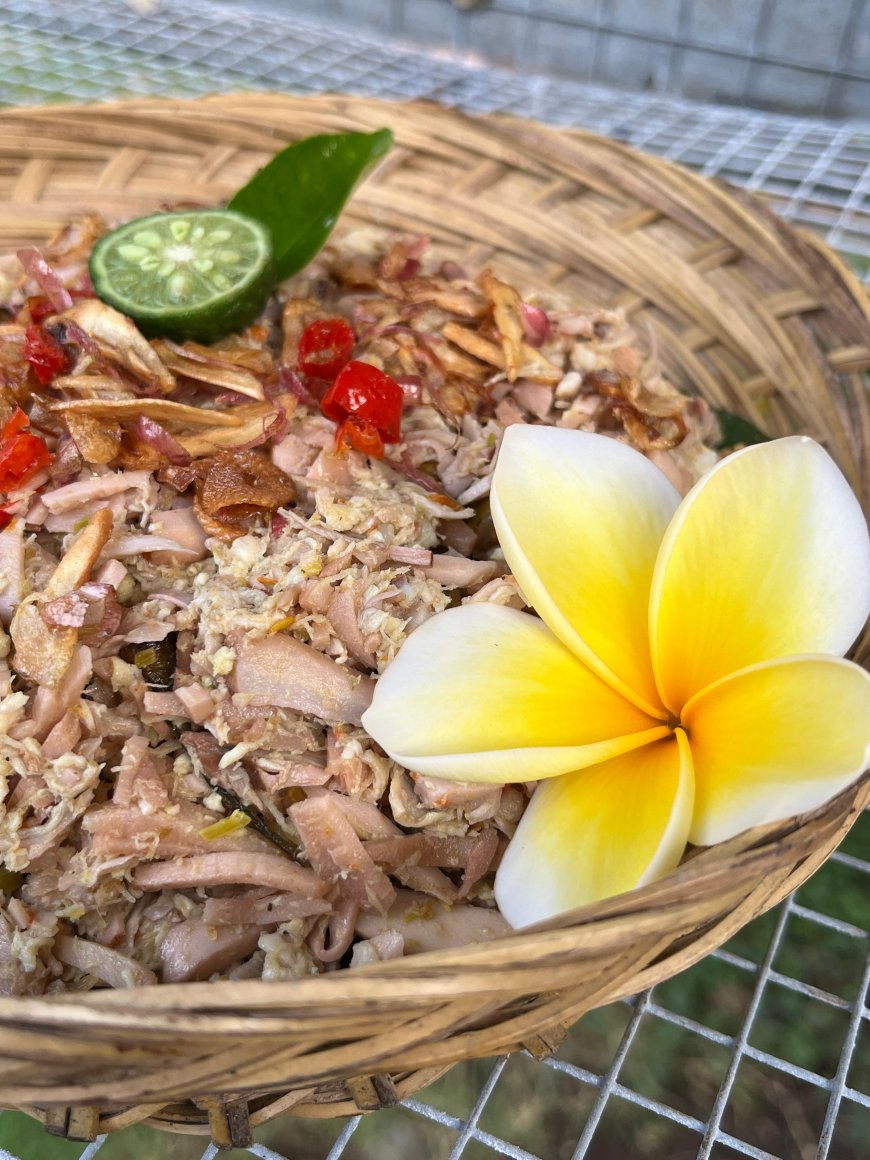
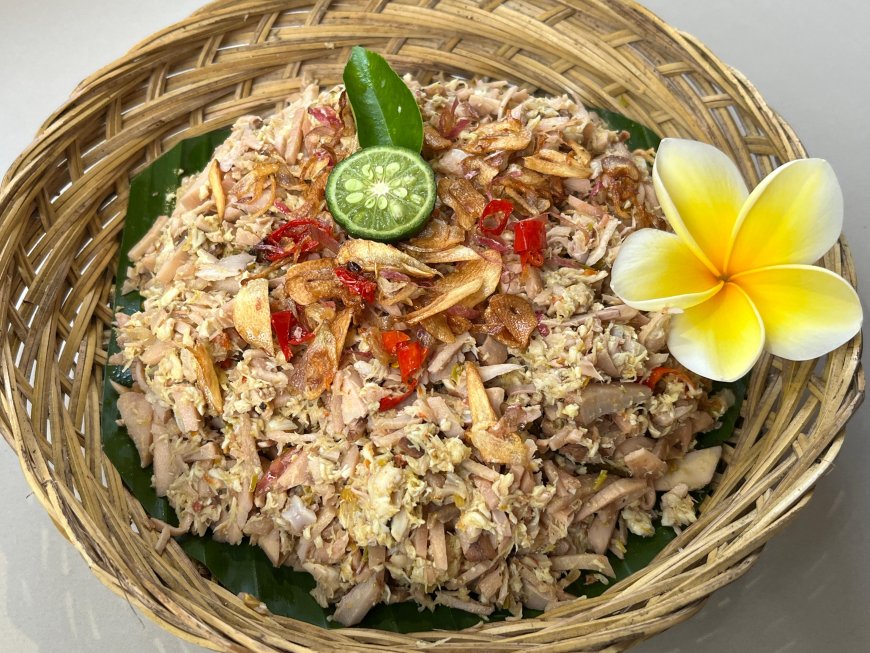
Lawar Klungah Ready to Serve (Source: Personal Collection)
Lawar klungah of Jembrana is a true representation of Bali’s culinary richness, born from the harmony of nature and culture. With young coconut as its main ingredient and basa genep as its soul, this dish offers a unique taste while embodying the philosophy of togetherness. To savor lawar klungah is not only to enjoy the flavors of West Bali but also to celebrate a tradition that lives in every bite.