Amid the waves of modernization, there are still figures who stand firm in preserving cultural heritage. One of them is Sanggar Sabda Kencana Sakti (SKS), founded by I Ketut Gede Antara, affectionately known as Pak Tut De. For nearly two decades, this art studio has become home to hundreds, even thousands, of students who study gender wayang and help keep Bali’s traditions alive.
The Philosophy Behind the Name and Its Foundation
The name Sabda Kencana Sakti was chosen with deep meaning. Pak Tut De explains that sabda means sound or voice, kencana means gold, and sakti means glory. “Soleh asane munyin gambel rage nah,” he says with a smile, expressing that the sound of the gamelan in his studio has its own unique nuance compared to others. Even the tuning of his instruments differs slightly, creating a distinct sound.
SKS was founded in 2005, around twenty years ago. At that time, Pak Tut De had already started a family and felt firsthand the difficulty of finding gender wayang players for religious ceremonies. Gender wayang is among the most complex Balinese gamelan ensembles to play, making skilled players rare. From this problem, the idea was born to train more musicians so that ngayah (communal offering) activities could continue smoothly in banjars and villages.
Journey and Motivation to Establish the Studio

Awards and Achievements (Source: Personal Collection)
At first, Pak Tut De did not intend to create a large studio. He only wanted to gather a small group of musicians who could perform ngayah together. He began by teaching his own son, who was still in the first grade of elementary school. With just one song played repeatedly, father and son performed from one banjar to another around Ubung Kaja.
Eventually, his son’s school friends joined in, and the number of students grew to 20. A new challenge emerged: the studio had only two pairs of gender wayang. Local residents encouraged him to add more instruments to make the lessons more effective. With limited funds and no government assistance, the parents worked together to raise money and bought two more instruments.
“Ironically, after we had four instruments, the number of students grew to 50,” recalls Pak Tut De. Because of the limited instruments, he had to schedule lessons from morning until night, and some students were even dropped off at the studio in the morning to wait for their turn. Bit by bit, he saved up and purchased more instruments until today the studio owns around 40 complete gender wayang instruments.
Artistic Bloodline and Inspiration
Pak Tut De’s love for the arts did not appear out of nowhere he comes from a family deeply rooted in art. His grandfather and father were both active in gamelan music, and his late uncle, Pak Sinti, was a well-known artist who traveled abroad several times to introduce Balinese gamelan and teach karawitan. This family background nurtured Pak Tut De’s passion and inspired him to pass it on through his studio.
Studio Location and Facilities

Founder’s Son Teaching Gender Wayang (Source: Personal Collection)
The current location of SKS is new, moved from his private home. The relocation was necessary because the previous location was in a narrow alley with no parking space and was too noisy for the neighbors. The new site, located amidst rice fields, offers a spacious parking area and a more conducive environment for practice.
Training, Activities, and Teaching Philosophy
Training at SKS always begins with the basics. “When it comes to gender wayang, technique comes first how to hold the mallet, how to strike, how to dampen the keys,” explains Pak Tut De. Only when the students master the technique are they gradually introduced to repertoire. According to him, the hardest part is not memorizing the melodies but maintaining proper technique so that the resulting sound is beautiful and harmonious.
He also instills the spiritual meaning behind the art. Pak Tut De explains the role of gamelan in yadnya (religious offerings) to his students. “Yadnya does not only mean praying. By different means, we can also worship God,” he says. This approach helps students understand that what they are learning is not just music but also a form of devotion.
Performances and Presence in the Community

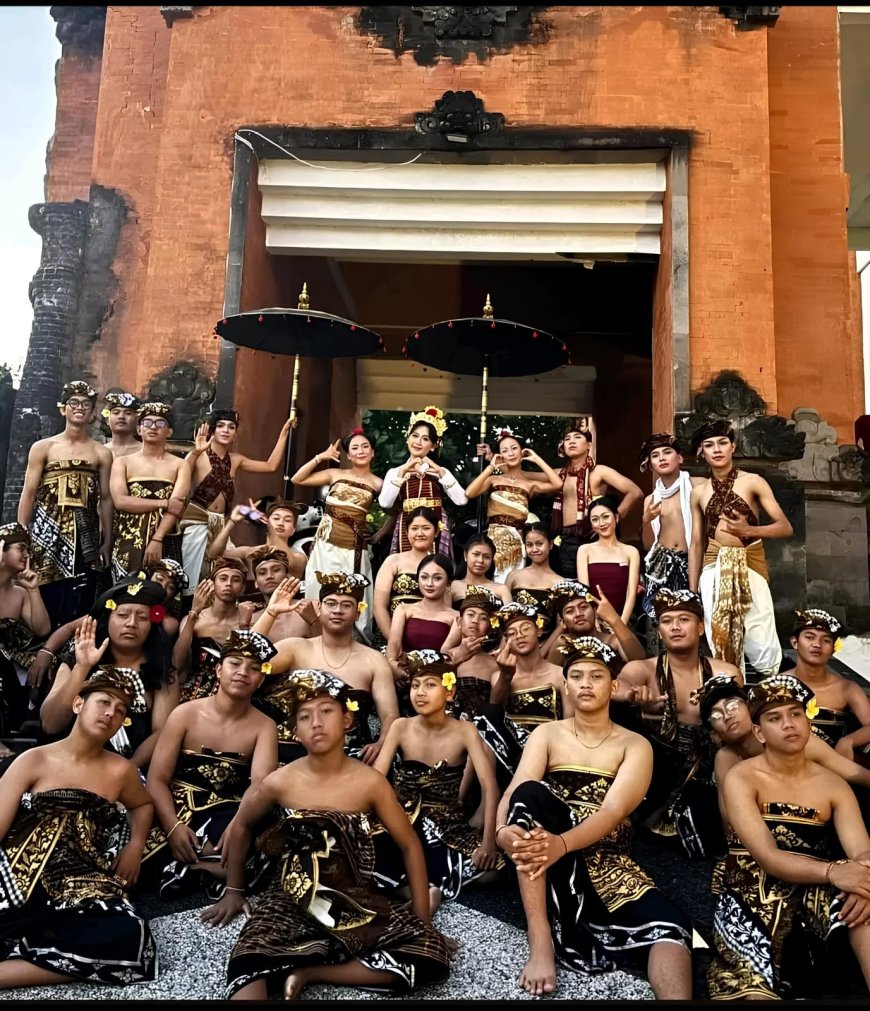
Young Generation of SKS Ready to Perform (Source: Personal Collection)
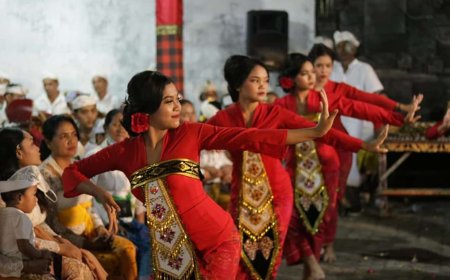
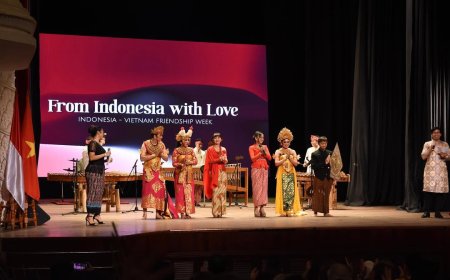
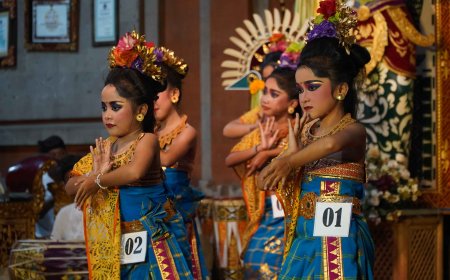
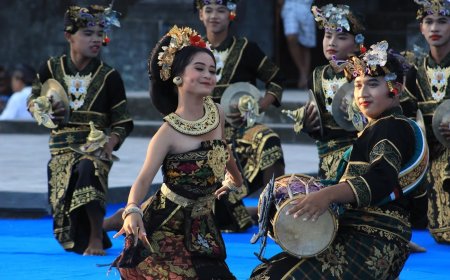
SKS regularly performs at cultural events. In Denpasar, they are invited to perform at Pentas Budaya every Sunday afternoon at Puputan Badung Square. They also frequently take part in the Pekan Seni Remaja (Youth Arts Week) and compete in the selection process for Pesta Kesenian Bali (PKB). The goal is simple to accustom the students to performing in front of an audience. Still, the most frequent performances remain those for ngayah during religious ceremonies, true to the studio’s original purpose.
Students, Alumni, and the Founder’s Pride
To date, SKS is estimated to have trained thousands of students. During the relocation, Pak Tut De found eight or nine notebooks containing the names of former students each notebook holding 500–600 names. Many alumni now have professional careers, some as police officers, doctors, and even studio founders themselves. “I feel so proud when my students open their own studios and help preserve our culture,” he says. For him, this is the ultimate purpose of founding SKS.
Most Memorable Experience

The Founder Personally Guiding the Training Process (Source: Personal Collection)
One of the most memorable moments was when SKS faced a crisis: too many students but too few instruments. Pak Tut De had to carefully manage the schedule so everyone could still practice. “Thankfully, the students were very patient. Some would even come straight from school in their uniforms to practice,” he recalls. In the early days, tuition fees were voluntary. “Some paid by bringing coffee, sugar, or even cigarettes,” he says with a laugh. For Pak Tut De, the most important thing was the students’ willingness to learn, not the amount of money they gave.
Challenges and Hopes
In today’s fast-paced entertainment era, keeping young people interested in learning gamelan is a challenge. Nevertheless, Pak Tut De remains optimistic. He hopes the government will provide more opportunities and facilities for young talents in education and career so that society does not underestimate the value of art as a viable future. “We must work from below, but the government must provide the platform,” he emphasizes.
Sabda Kencana Sakti stands as proof that the dedication of one individual can ignite the flame of cultural preservation for thousands of others. From a single song and two instruments, SKS has grown into a vibrant learning center with dozens of instruments and countless alumni. The philosophy of the “golden voice” continues to resonate through the hands of its students, ensuring that the sound of Bali’s cultural heritage lives on for generations to come.