



Cahya Art Bali Qui Art Studio: A Journey from the Banjar to the PKB Stage in Nurturing a New Generation of Young Gamelan Musicians
Sanggar Seni Cahya Art Bali Qui is a karawitan art studio founded by I Wayan Cahya Hendra Sujana as an effort to preserve traditional Balinese arts. Rooted in experience and formal education in karawitan, the studio serves as a space for nurturing the younger generation through regular training, the cultivation of discipline, and ngayah activities. Its achievement as the representative of Badung Regency at the 2019 Bali Arts Festival reinforces the studio’s role in sustaining Balinese cultural heritage.

The story behind the establishment of Sanggar Seni Cahya Art Bali Qui is inseparable from the personal journey of its founder, I Wayan Cahya Hendra Sujana. Since his first year of elementary school, he had been closely connected to the world of art through a sekaa in his local banjar. This interest continued to grow over time. During his junior high school years, he began to engage more seriously with the world of art studios through a sanggar located in Pengubengan Kauh. This experience became a turning point, shaping his understanding that a sanggar is not merely a place for practice, but also a space for character building and cultivating a deep love for culture. His determination to further pursue the art of karawitan led him to continue his education at SMK Negeri 5 Denpasar (KOKAR Bali), majoring in karawitan. It was here that his understanding of both the theoretical and practical aspects of Balinese musical arts became more refined. This formal education not only enhanced his technical skills, but also fostered an awareness of the moral responsibility carried by an artist in preserving and passing on cultural heritage. Since his school years, the aspiration to establish his own sanggar had already taken root. This desire was driven by his personal experience during junior high school, when art studios were still limited in number and difficult to access. From that experience emerged a strong determination to create a sanggar that would be open to anyone with the intention to learn and a love for traditional Balinese arts.
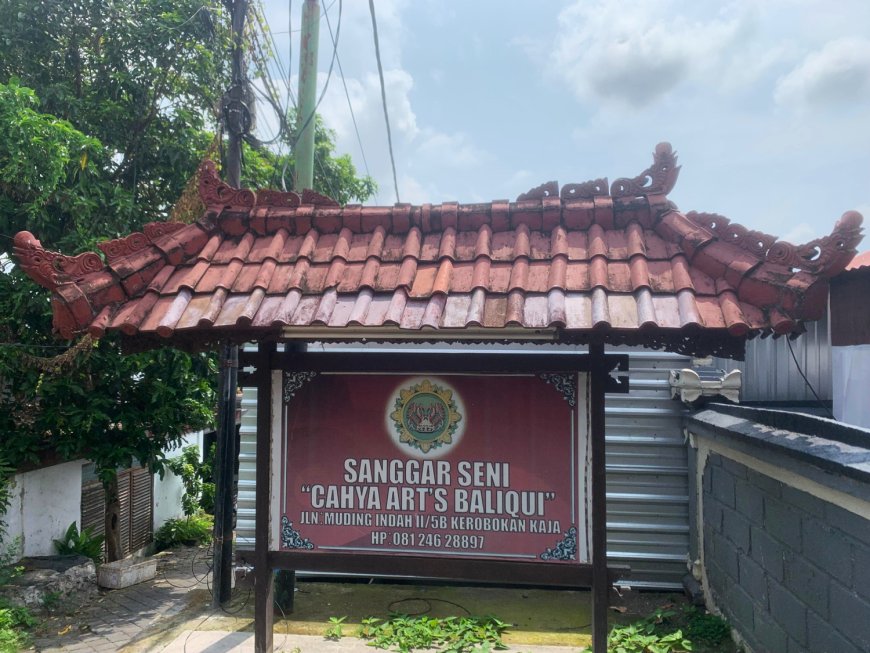
After completing his education at the vocational high school, concrete steps began to take shape. With full support from his family, especially his parents, he started to build the sanggar facilities at home in a modest manner. Thus, the sanggar was officially established on June 11, 2011, located at Jalan Muding Indah II/5B, Kerobokan Kaja. Facilities and infrastructure were prepared gradually, in accordance with available resources. Gamelan instruments and practice equipment were collected little by little, while children and prospective students were invited to learn together. From this simple space, Sanggar Seni Cahya Art Bali Qui slowly grew into a place for learning, creating, and artistic development for young generations who are interested in karawitan. The forms of karawitan taught at the sanggar include Gender Wayang, Semara Pegulingan, Kendang, Rindik, Batel, and Selonding.
The name Cahya Art Bali Qui is not merely an identity, but a reflection of a deep philosophy. The word Cahya is taken from the founder’s name, symbolizing personal identity and responsibility in managing the sanggar. Art, derived from English, means art and represents openness and the universal values of art itself. Bali affirms cultural identity as Balinese people rich in tradition. Meanwhile, Qui comes from Old Javanese, meaning something from the past or something that has existed since long ago, symbolizing ancestral heritage that continues to be preserved and passed down. Altogether, the name represents the spirit of the sanggar: safeguarding artistic heritage from the past so that it remains radiant and relevant for present and future generations.
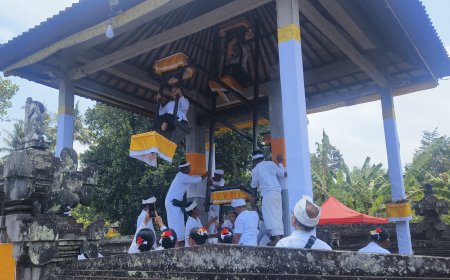
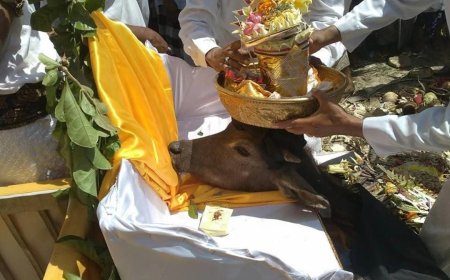
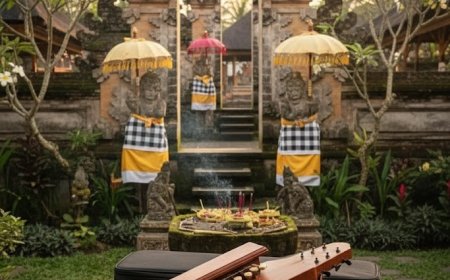
Ngayah during the Mecaru Ceremony at the Sanggar (Photo Source: Personal Collection)
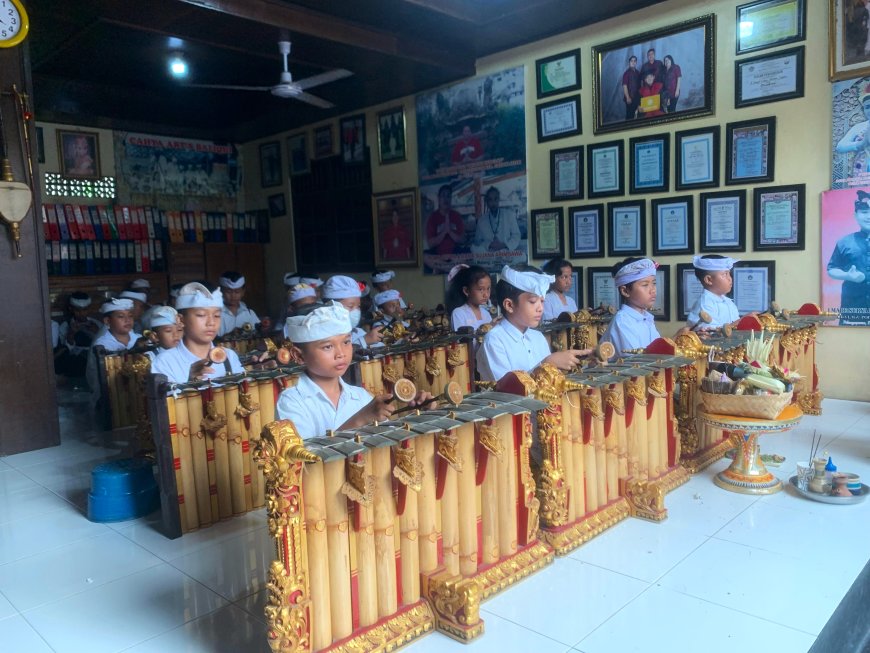
In its learning process, Sanggar Seni Cahya Art Bali Qui does not solely emphasize technical skills in playing instruments. Values such as discipline, responsibility, cooperation, and professionalism form the main foundation consistently instilled in the performers and students. They are guided to understand that art is not only about skill, but also about attitude and ethics. In addition, a strong sense of love for Balinese culture and arts is continually reinforced. Students are encouraged to eventually share the knowledge they have gained with future generations, ensuring that traditional arts do not fade away but continue to live on sustainably.
Activities at the sanggar are carried out regularly through weekly practice schedules. These sessions aim to sharpen skills, deepen understanding, and prepare performers to be ready to appear in various events and activities. Beyond rehearsals, the sanggar is also actively involved in ngayah at temples and religious ceremonies, serving as a form of artistic devotion to the community and an expression of Bali’s spiritual cultural values.
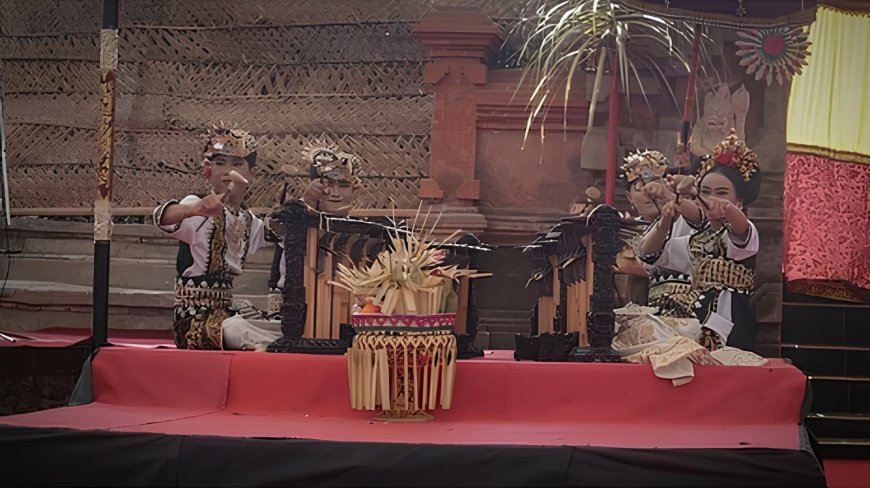
Performance and Award-Winning Gender Competition at PKB 2019 (Photo Source: Personal Collection)
One of the most memorable achievements of Sanggar Seni Cahya Art Bali Qui was being entrusted as the representative of Badung Regency in 2019 at the Pesta Kesenian Bali (PKB). On that occasion, the sanggar presented a performance in the form of children’s gender ensemble and successfully earned Third Place, a milestone achievement in the sanggar’s journey. In addition, the sanggar is frequently involved in various artistic activities within campuses and educational institutions, such as ISI Denpasar, Universitas PGRI Bali, and collaborations with Universitas Hindu Indonesia (UNHI). Numerous awards from inter-school competitions and other art events have further strengthened the sanggar’s existence in the Balinese art scene.
The presence of Sanggar Seni Cahya Art Bali Qui stands as proof that cultural preservation can begin with small steps from home, from the banjar, and from sincerity of the heart. With a spirit of regeneration, professionalism, and deep love for traditional arts, this sanggar continues to ignite the light of art, illuminating the cultural journey of Bali from one generation to the next.