





















Bali Language Month as a Creative Space for the Younger Generation to Preserve Cultural Heritage
Bali Language Month has been held every February since 2018 as an effort to preserve the Balinese language, script, and literature. Through competitions, festivals, and digital works, the younger generation is encouraged to safeguard cultural heritage creatively. This celebration serves as a hope that Bali’s identity will continue to thrive amid globalization.

Globalization threatens the existence of local languages, including in Indonesia, which is home to great linguistic diversity. Many young people today are more fluent in Indonesian or foreign languages, making regional languages increasingly vulnerable, including the Balinese language.
The interest of Balinese youth in their local language and culture continues to decline. Many urban teenagers rarely use Balinese, perceiving it as less modern. In fact, the Balinese language carries deep philosophy, history, and cultural identity. To preserve it, the Provincial Government of Bali has designated February as Bulan Bahasa Bali (Bali Language Month) since 2018.
This celebration is not merely ceremonial but rather a creative space that provides opportunities for the community, especially the younger generation, to safeguard and develop their ancestral heritage. Bali Language Month is designed as a collective stage where tradition and innovation meet in the same spirit of maintaining Balinese cultural identity so that it remains relevant in a rapidly changing era.
History and Purpose of Bali Language Month
Bali Language Month was first initiated in 2018 as part of a regional policy based on Regional Regulation of Bali Province No. 1 of 2018 on the Balinese Language, Script, and Literature. This regulation is reinforced by Governor Regulation No. 80 of 2018 concerning the Protection and Use of the Balinese Language, Script, and Literature, as well as the implementation of Bali Language Month.
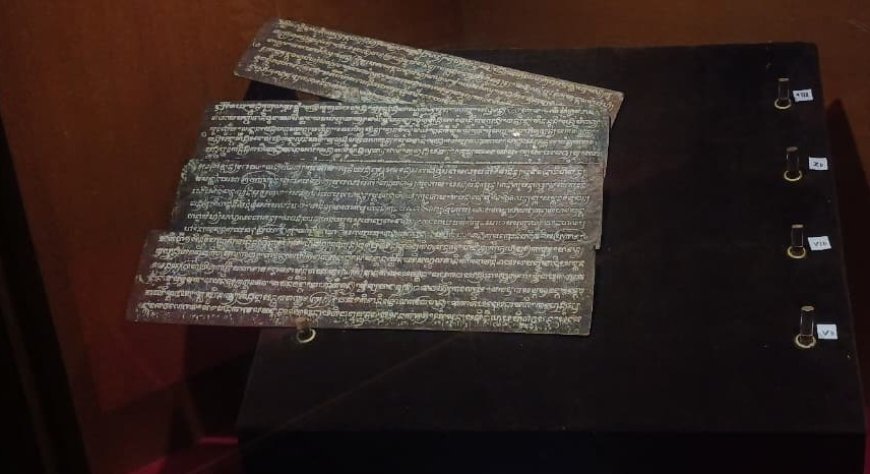
Plate Containing Balinese Script as Evidence of Past Literary Culture (source: Private Collection)
The main goal of this program is to raise awareness among society, particularly the younger generation, that the Balinese language is not merely a tool of communication but also a symbol of identity and pride. Activities are held simultaneously in schools, government institutions, cultural communities, and even at the level of traditional villages. Thus, Bali Language Month is not confined to formal spaces but also permeates the everyday lives of Balinese people across social layers.
Activities During Bali Language Month
Every February, a series of activities are organized under annually changing themes. These events involve participants of all ages, from school children to artists and local communities. Competitions in reading and writing Balinese script are among the most popular, allowing children to carefully inscribe lontar leaves and experience how their ancestors once recorded knowledge and stories of life.
Other activities include mesatua Bali or storytelling in the Balinese language, which revives oral traditions that are nearly extinct. Folktales filled with moral lessons are delivered in a distinctive style, bringing warmth while educating listeners. Poetry and traditional song competitions in Balinese are also held to cultivate literary creativity among participants.
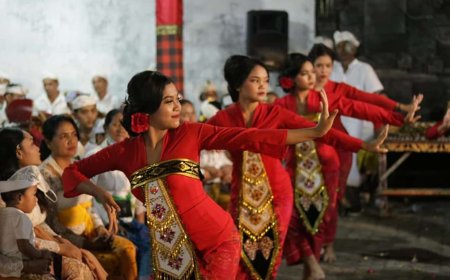
The festivities peak with art festivals and cultural performances. Traditional dances, gamelan music, and Balinese-language theater entertain and educate audiences. Exhibitions of Balinese script presented through modern media such as murals, comics, and digital content also demonstrate that the Balinese language can adopt a fresh and relevant face.
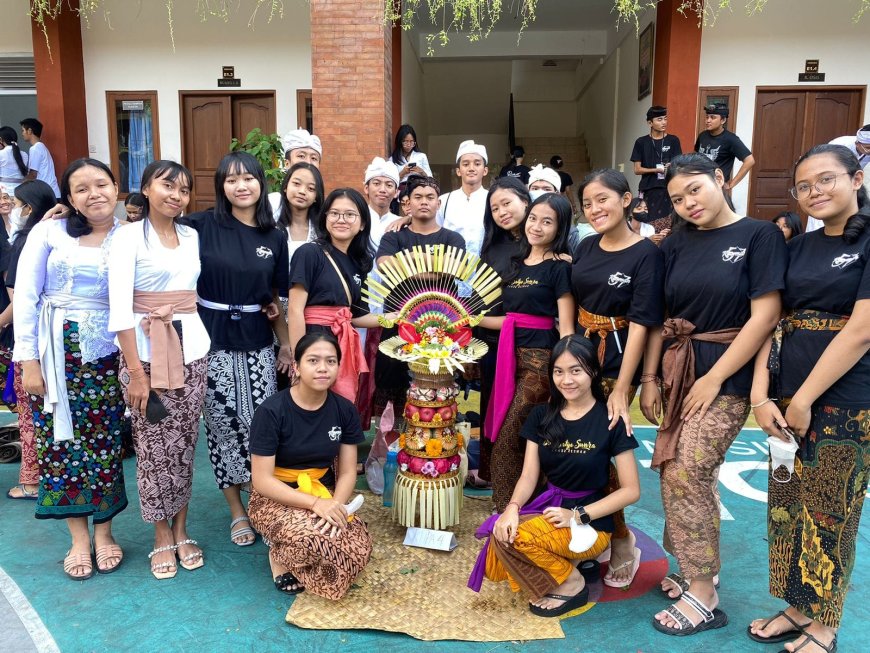
Gebogan Artwork Created by Young People at a School Event (Source: Private Collection)
Youth on the Creative Stage
A major focus of Bali Language Month is youth involvement. Young people are not only participants but also agents of innovation. They combine traditional values with modern technology—for example, creating social media content with Balinese captions, producing digital comics in Balinese script, or making short videos that adapt Balinese folktales in contemporary styles.
Some even blend traditional arts with modern touches. Classical Balinese songs are performed with electronic music accompaniment, or Balinese script is featured in trendy graphic designs. These creative endeavors show that tradition can remain alive and appealing when integrated with innovation.
Lontar and the Traces of Ancestors
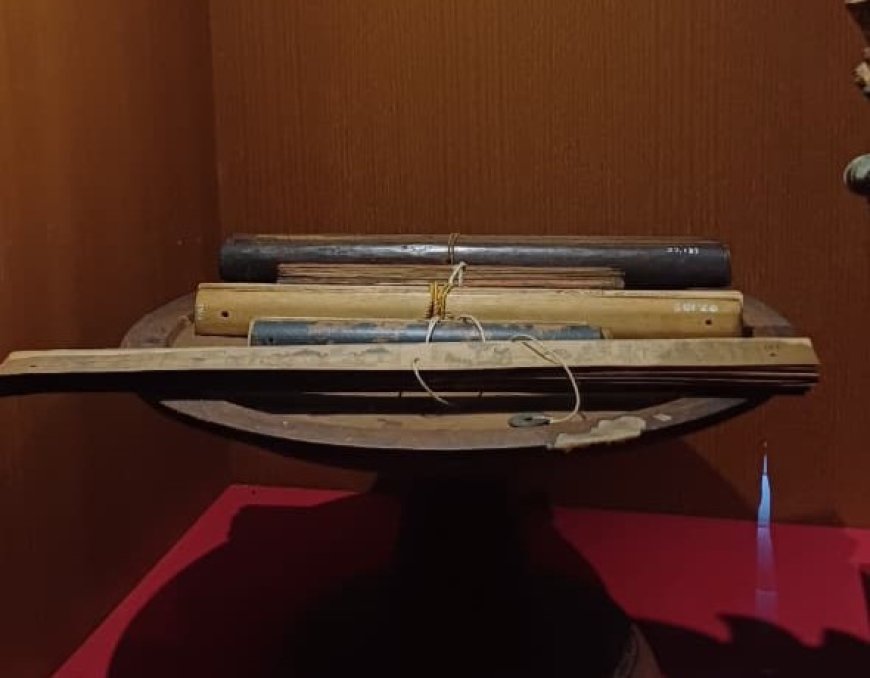
The richness of Balinese civilization is evident in ancient lontar manuscripts preserved in museums and traditional households. The palm-leaf manuscripts inscribed with Balinese script serve not only as written records but also as repositories of knowledge, philosophy, and life values.
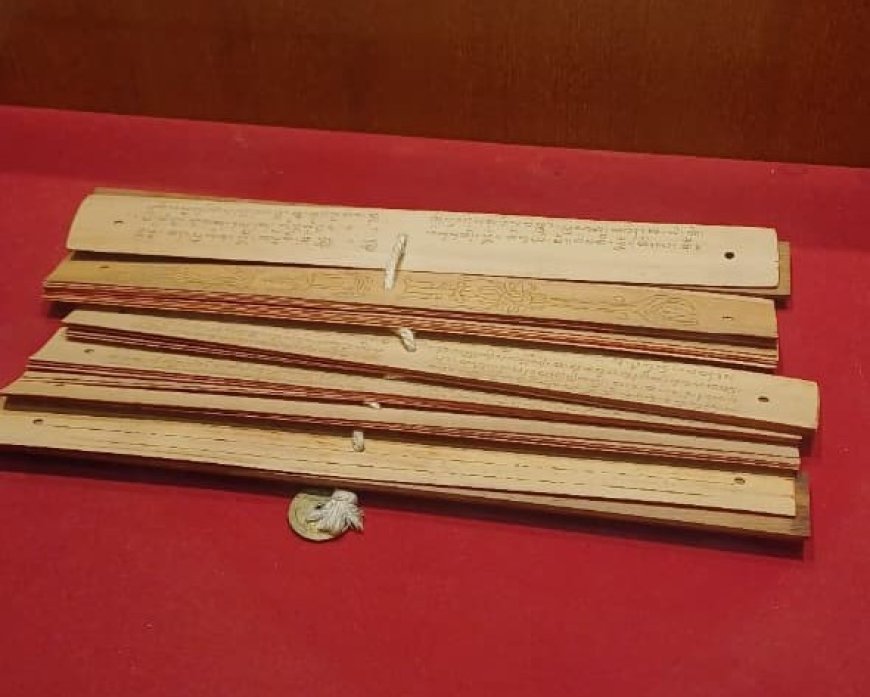
Balinese Script on Lontar Leaves (Source: Private Collection)
During Bali Language Month, lontar often becomes an object of study. Young people are invited to learn, read, and even try writing on lontar. This way, they do not merely admire relics of the past but also experience a direct connection with ancestral traditions.
Challenges and Future Hopes
Despite high enthusiasm, challenges remain. In daily life, Balinese society increasingly uses Indonesian or foreign languages, leading many to see Balinese as less practical. Left unchecked, this could marginalize the language further. Nevertheless, Bali Language Month offers hope that Balinese will not only survive on competition stages but also adapt into digital media, daily conversations, and modern literary works.
Bali Language Month is more than an annual celebration. It is a stage that opens space for young people to care for, revive, and develop their ancestral heritage. Preserving the Balinese language means preserving the very identity of Bali, for within the language lies priceless values, philosophies, and histories. With active youth involvement, this heritage is believed not only to endure but also to grow and take on new forms in the future.
References:
Dharmayanti, N. W. D. A., Utari, L. P. E., & Ristiani, A. K. (2023). Gumi Bali: Upaya Menghidupkan Bahasa Bali Pada Generasi Muda. Prosiding Pekan Ilmiah Pelajar (PILAR), 3, 428–438.
Jatiyasa, I. W. (2020). Efektivitas Bulan Bahasa Bali Tahun 2020 Dalam Upaya Pelindungan Bahasa, Aksara, dan Sastra Bali di Kabupaten Karangasem. Subasita: Jurnal Sastra Agama dan Pendidikan Bahasa Bali, 1(1).
Widiantana, I. K. (2022). Media Massa Berbahasa Bali sebagai Media Pemertahanan Bahasa Bali di Provinsi Bali. Widya Duta, 17(1).