







Wijaksara Script, the Language of the Gods in Balinese Tradition
Discover the sacred Balinese Wijaksara script, the “language of the gods.” Learn about its history, spiritual functions, and role in connecting humans with the divine through manuscripts, carvings, and rituals in Bali’s rich cultural tradition.

Bali is not only known as a world-class tourist destination but also as a land deeply rooted in cultural richness. Behind its many artistic and ritual expressions lies a sacred heritage that defines the spiritual identity of the Balinese people: the Wijaksara script. Revered as the language of the gods, this script is more than just a writing system—it is a medium that connects humans with divine power.
The Sacred Traces of Wijaksara
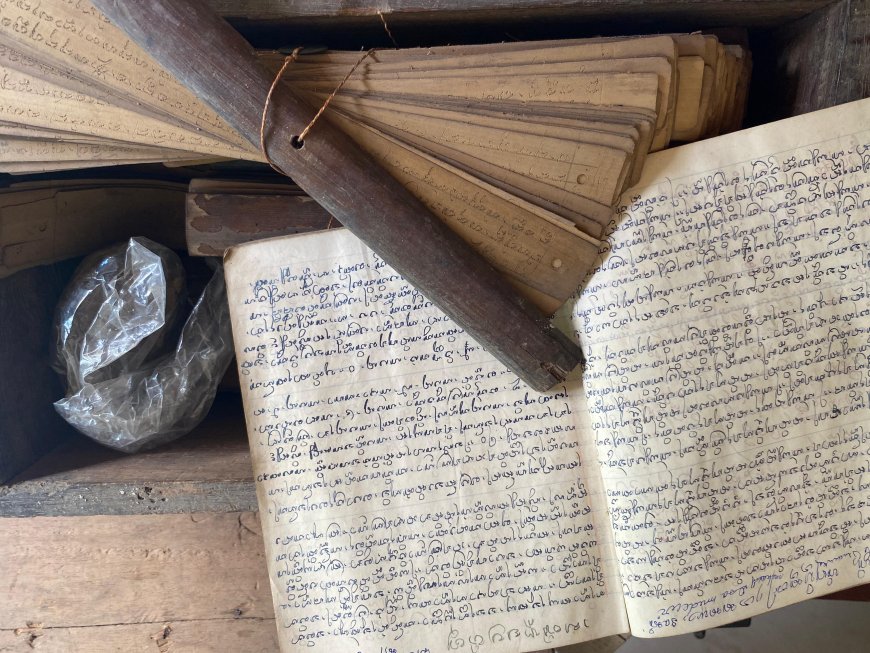
Wijaksara has a long history in Balinese civilization. It originated from the Kawi script, which was influenced by Pallava and Devanagari from India, and later transformed into Balinese script with various levels. Among all types of Balinese script, Wijaksara holds the highest status due to its philosophical and religious significance. Its presence can still be found in ancient lontar manuscripts, which are carefully preserved to this day. These manuscripts contain Vedic teachings, kakawin poetry, and religious philosophy passed down through generations. Some lontars are even believed to possess magical powers, making them accessible only to those purified through sacred rituals. This fact demonstrates that Wijaksara is never regarded as mere letters but as sacred knowledge embedded in Balinese tradition.
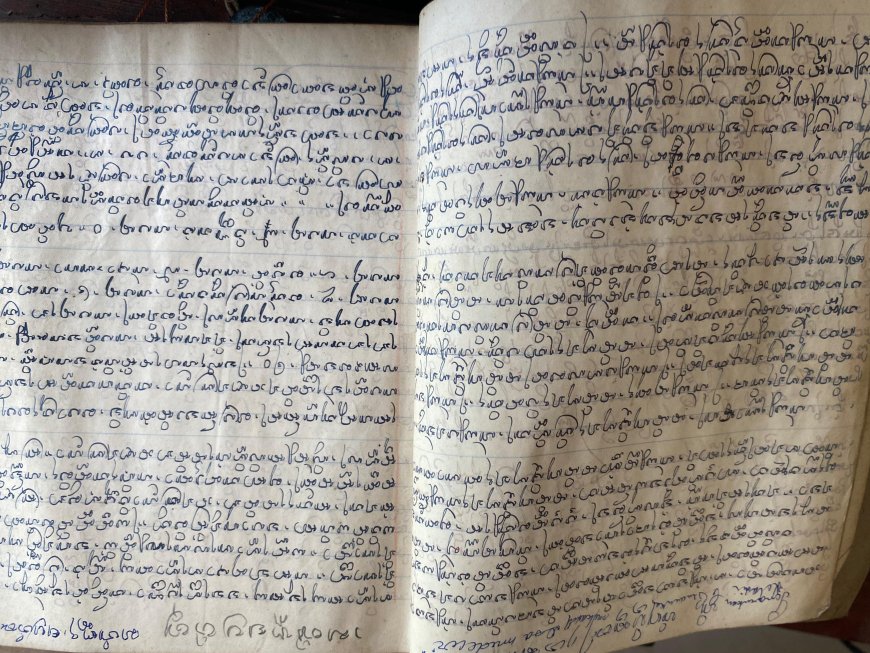
Traces of sacred writings in an old manuscript (Source: Personal Collection)
Function and Sacredness
The Wijaksara script plays an essential role in Balinese spirituality. It is written on lontar manuscripts to preserve sacred knowledge, drawn on protective rerajahan cloths, carved into pratima statues and temple shrines, and engraved on sacred stones or metals to enhance their sanctity. Every stroke of the script is believed to carry mystical and spiritual power, which is why it is not seen merely as a system of writing but as a yantra or medium of worship. During important rituals such as melaspas and pawintenan, Wijaksara is inscribed on human bodies or sacred buildings as a form of purification, protection, and divine connection.
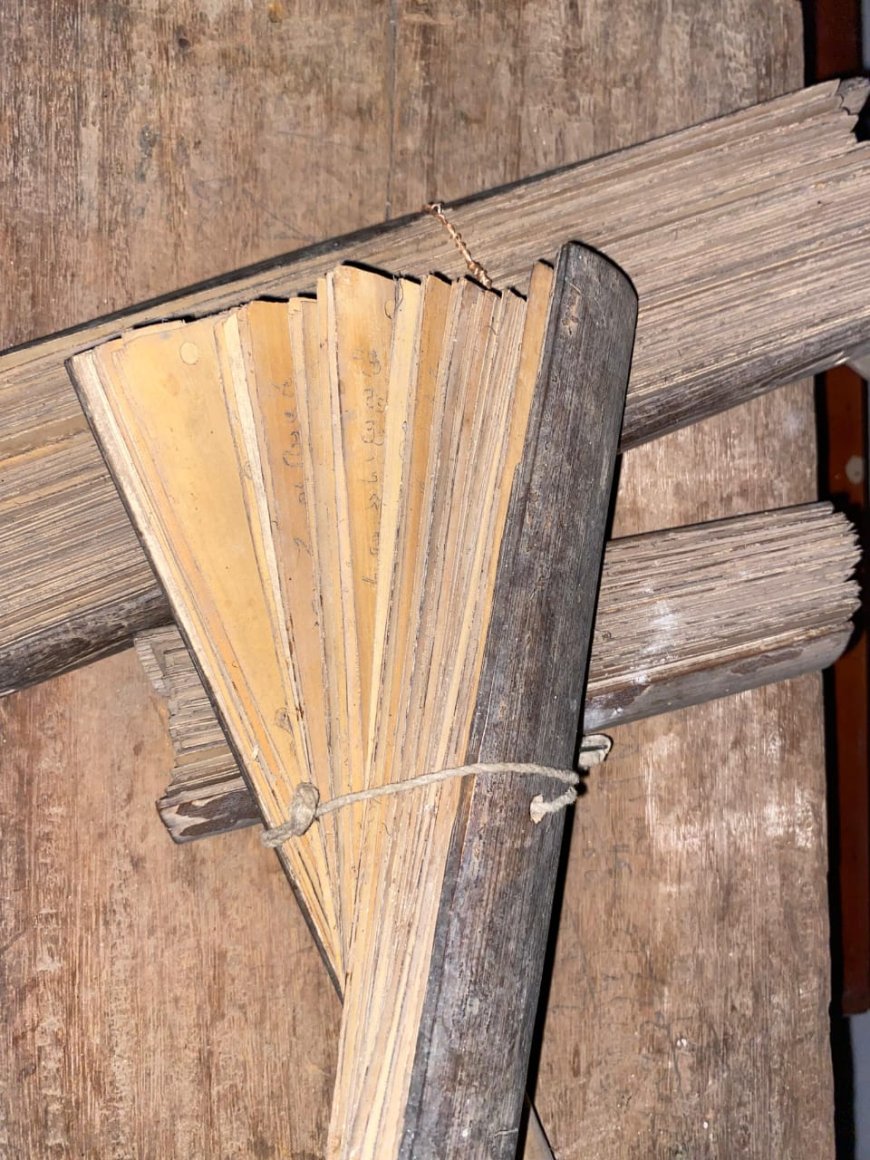
Ancestral heritage preserved in ancient lontar (Source: Personal Collection)
Philosophical and Spiritual Meaning
Each Wijaksara character is believed to embody cosmic energy that unites the macrocosm (the universe) with the microcosm (the human body). In religious ceremonies, the script is often placed on specific body parts to symbolize the union between humanity and the divine. Beyond its ritual use, Wijaksara also reflects the principle of balance in Balinese Hindu philosophy. Its fundamental letters are associated with natural elements such as fire, water, air, and earth, reminding human beings of the importance of maintaining harmony within creation. This idea resonates with the philosophy of Tri Hita Karana, which emphasizes balance between humanity, nature, and God.
Aesthetic Value and Modern Development
Apart from its sacred role, Wijaksara also embodies a high aesthetic value. Its graceful curves bring a sense of elegance and majesty, making it a recurring motif in Balinese art, whether in woodcarvings, traditional paintings, or woven textiles. Its visual beauty not only enriches Balinese artistic expression but also reinforces its unique cultural identity.
In the modern era, Wijaksara faces the challenges of globalization, which has made the Latin alphabet more dominant in everyday use. Nevertheless, this situation has sparked new initiatives to preserve the script. Many cultural communities, artists, and scholars are now working to safeguard it through digitization of lontar manuscripts, the creation of digital fonts, and its inclusion in educational curricula. These collective efforts ensure that Wijaksara remains alive, meaningful, and relevant in contemporary times.
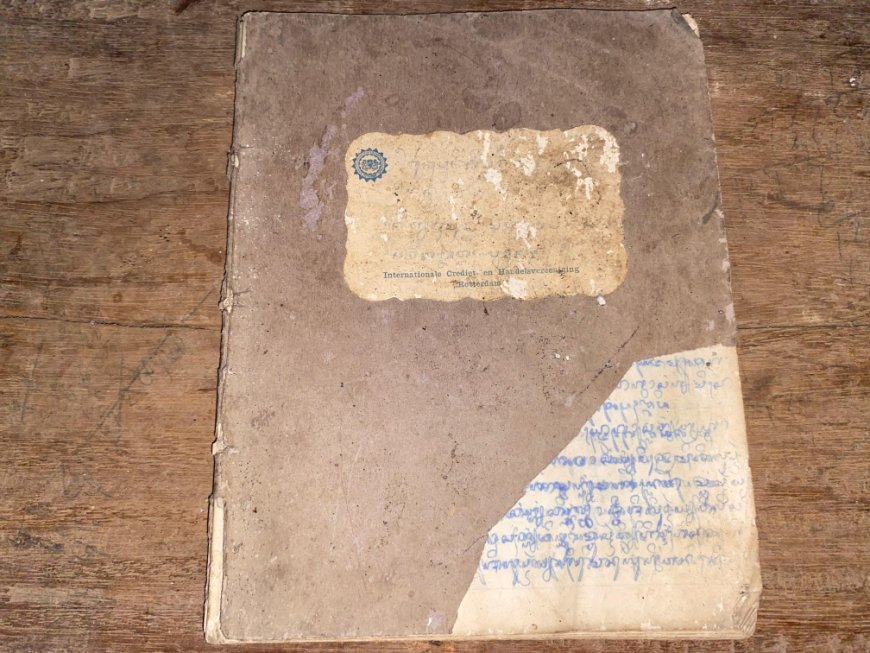
An old manuscript bearing ancient script (Source: Personal Collection)
Preserving the Ancestral Heritage
Wijaksara is the sacred essence of the Balinese script. It exists not merely as writing in manuscripts, carvings, or sacred drawings, but as living prayers and spiritual energy. Through this script, the Balinese people connect with the divine, maintain cosmic balance, and strengthen their inherited spiritual identity. To preserve Wijaksara is to protect not only an ancient form of writing but also the philosophical and spiritual values it embodies—values that continue to be a source of strength and pride for Balinese civilization.