







The Fingerprint Painting Museum: The Wonder of Art from the Fingertips of I Gusti Ngurah Gede Pemecutan
A long and quiet story of art, memory, and perseverance. Through its distinctive fingerprint paintings, historical works, and spaces animated by cultural activities, the museum does not merely document the journey of a single artist, but also safeguards Balinese artistic heritage so it may continue to be recognized and passed on to future generations. It offers a contemplative journey that invites visitors to view art not only as an object, but as an ongoing story.

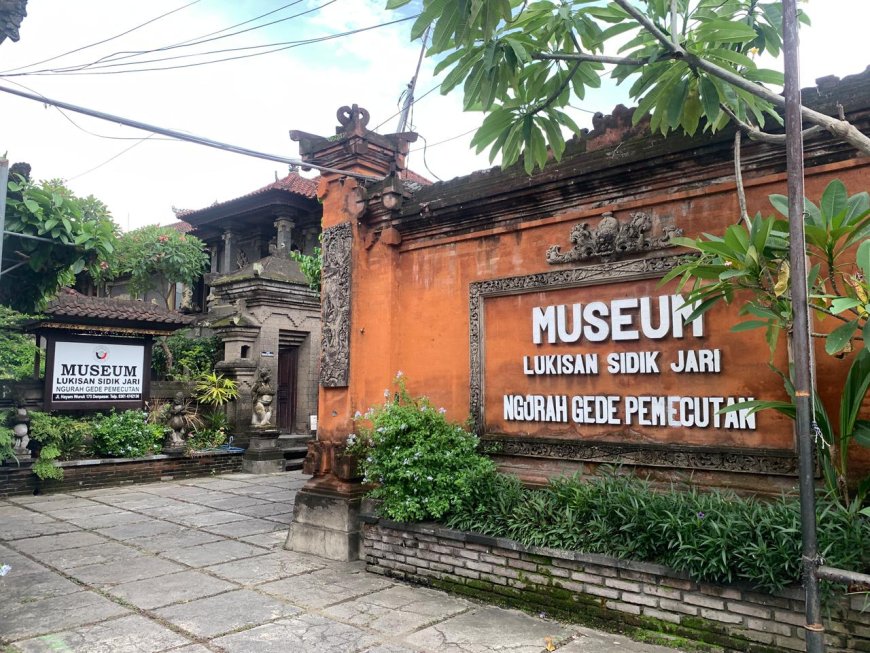
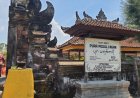
On the eastern side of Jalan Hayam Wuruk in Denpasar stands a building that appears calm and unassuming from the outside, as though holding stories that are not in a hurry to be told. Behind its shaded courtyard and modest spatial arrangement, the Ngurah Gede Pemecutan Fingerprint Painting Museum nurtures the memory of a long artistic journey.
The museum was born from a simple yet profound idealism: the desire to preserve personal works so they would not be lost to time. From childhood through adulthood, canvas after canvas bore witness to the artist’s learning process and search for identity. Rather than allowing these works to scatter or deteriorate through age and natural forces, the museum stands as a protective space, where each painting is cared for, maintained, and given the opportunity to continue speaking to future generations.

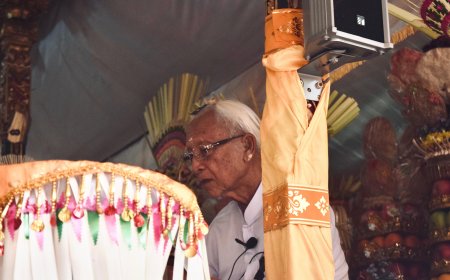
I Gusti Ngurah Gede Pemecutan (Photo Source: Private Collection)
Born on Thursday Wage, July 4, 1935, I Gusti Ngurah Gede Pemecutan grew within a historical arc that positioned him both as a witness to and a participant in the development of modern Balinese visual art. A pivotal moment in his creative journey occurred on April 9, 1967, when he discovered the fingerprint painting technique. This discovery did not arise from careful planning, but from an honest creative process and the courage to respond to failure. Tari Baris, his first fingerprint painting, marked the beginning of a visual language that would later become inseparable from his name.
His lifelong dedication to art received wide recognition through various honors, including the Kerti Budaya Award with a gold medal from the Mayor of Denpasar in 2018 and the Regent of Badung in 1980, the Dharma Kusuma Award from the Governor of Bali Province in 2011, and the Dharma Kusuma Madia Award from the Governor of Bali Province Prof. Dr. Ida Bagus Mantra in 1984. Today, with advancing age, he is no longer actively painting. Yet his works continue to speak powerfully, preserved within the museum he himself established as a cultural legacy, affirming that an artist’s creative force can transcend physical limitations and time.

Visitors’ First Encounter with the Painting Collection (Photo Source: Private Collection)
After passing through the museum courtyard and ascending a few steps, visitors are welcomed into the first space where the paintings are displayed. The atmosphere feels honest and unembellished. The paintings hang without excess, radiating the purity of a creative process untouched by grand narratives. Before engaging further with the artworks, visitors are invited to pause briefly to make a voluntary donation in support of the museum’s operations and to record their presence in the guest book. Names, addresses, and signatures become modest yet meaningful traces of visitation, linking each visitor’s personal journey with the museum’s long narrative.

Visitors from Various Regions and Countries (Photo Source: Private Collection)
The guest records collected in this space reveal the museum’s reach beyond local boundaries. Visitors from cities outside Bali such as Malang, Bondowoso, Surabaya, Banten, and Jakarta, as well as international visitors from the United States, Japan, Spain, New Zealand, and India, are carefully documented as cross-cultural witnesses who have passed through. Among the paintings are also preserved the artist’s written works and collector records listing those who have acquired his paintings since the 1970s. These archives affirm that this initial space is not merely a place to view paintings, but a gateway connecting works, memories, and a network of appreciation cultivated over decades.

National and International Recognition of the Museum (Photo Source: Private Collection)
The array of awards displayed within the museum signals that this modest space resonates far beyond its local context. Recognition from various institutions, including its listing by Guinness World Records, establishes the museum not merely as a repository of artworks, but as a widely acknowledged cultural phenomenon. Other national and international honors stand as the result of consistent care for the collection, fidelity to process, and openness to the public.
All of the paintings exhibited in the museum are presented as part of an effort to preserve Balinese cultural heritage so it may remain alive and accessible to future generations. The themes explored are closely tied to tradition, history, and spirituality, such as depictions of Rangda figures, scenes of the Kecak dance, and various expressions of performance art and Balinese daily life. Through these works, the museum functions not only as a space for visual appreciation, but also as an educational medium where cultural memory is carefully maintained against the erosion of time.

The Painting of Perang Puputan Badung (Photo Source: Private Collection)
Among the many paintings, visitors’ attention is often drawn to a large-scale work dominated by dark brown tones that convey a heavy historical atmosphere. The painting of Perang Puputan Badung by I Gusti Ngurah Gede Pemecutan depicts the Puputan Badung event of 1906, set against the burning Puri Pemecutan and fierce battles against Dutch soldiers.
This painting was created entirely using the fingerprint technique and required up to eighteen months to complete. The lengthy process reflects the artist’s perseverance in transforming a historical event into a reflective visual language. Through layered and repetitive work, the painting serves not only as a depiction of the past, but also as a space for contemplation on courage, sacrifice, and collective memory that continues to live through art.

Padma Udyana Garden (Photo Source: Private Collection)
After leaving the main museum space, visitors may walk further toward the back and pass through Padma Udyana Garden, an open area designed to evoke calm and serenity. The pathway, surrounded by trees and landscaped greenery, provides a natural pause after engaging with the artworks inside, inviting visitors to realign their thoughts and emotions. In this area, the museum expands its function beyond exhibition, offering a place to rest, reflect, and find quiet connection between art and nature.
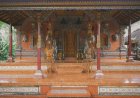
From the stillness created by the garden, visitors are gradually led toward an open space that serves as the heartbeat of the museum’s activities. Here, the wantilan functions as a multipurpose area where various artistic and cultural activities take place. It is used for meetings, communal painting sessions, and performing arts practice, creating a more fluid and lively atmosphere. With its open character, the wantilan becomes a meeting point for artists, students, and the community, reaffirming that the museum not only preserves artworks, but also sustains the continuity of artistic processes through interaction and shared experience.

Mask Collection at the Wantilan of the Fingerprint Painting Museum (Photo Source: Private Collection)
Around this open space, visitors are also drawn to a collection of masks created by other master carvers. The presence of Dalem Arsawijaya, Rangda, Rarung, Tua, and Jauk Manis masks reveals another facet of the museum as a space open to works beyond a single artist. This collection is not intended to elevate one figure over others, but rather to express respect, appreciation, and support for the broader Balinese arts ecosystem. Through these masks, the museum presents a quiet dialogue between artists and tradition, emphasizing that cultural preservation does not stand alone, but grows through mutual respect and collective effort.

Fingerprint Paintings at the Wantilan (Photo Source: Private Collection)
The Ngurah Gede Pemecutan Fingerprint Painting Museum invites visitors to conclude their journey with a sense of calm understanding. Here, artworks are not merely displayed, but allowed to speak of process, memory, and continuity. From fingerprints that leave traces upon canvas to spaces that open themselves to younger generations and fellow artists, the museum stands as a home for stories that refuse to be forgotten. In its simplicity, it reminds us that art and culture will continue to live as long as there are hands willing to care for them and hearts ready to pass them on.