





Beji Taman Gili Dukuh: A Sacred Water Heritage from the Singasari Era
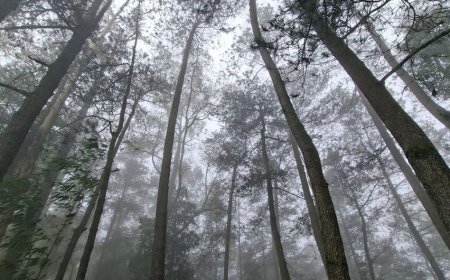
Hidden within a serene natural landscape, a sacred space preserves the long-standing relationship between humanity, water, nature, and belief. This place has grown and endured through the passage of time, sustained by collective memory and living spiritual practices. Layers of history, mythology, and sacred spatial design intertwine to form an identity that is not only inherited but continuously reinterpreted by each generation. There, the harmony between the niskala and sekala realms remains intact, flowing like sacred water that never ceases to give life.

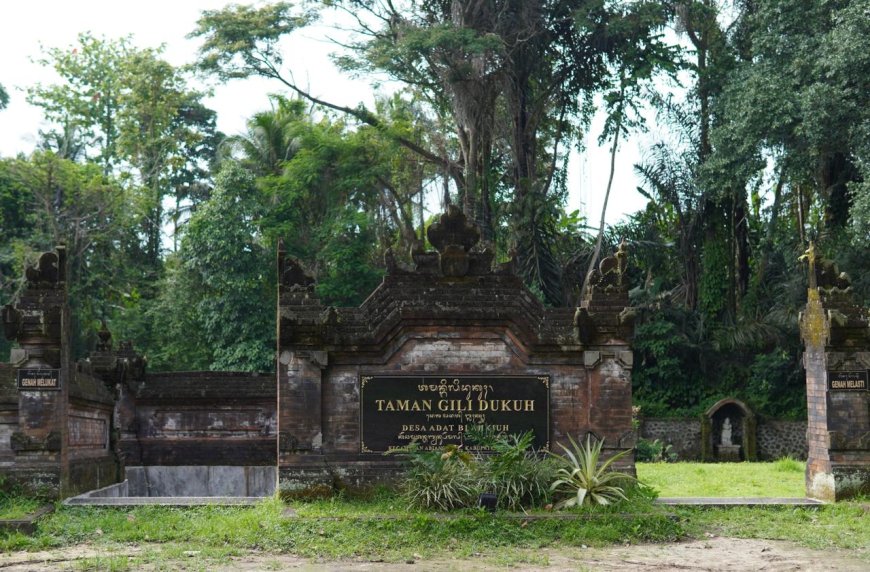
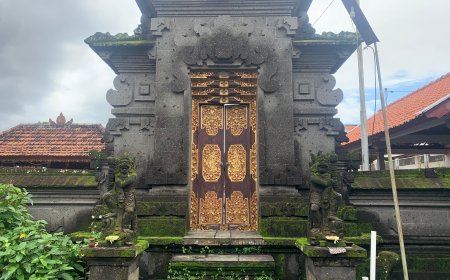
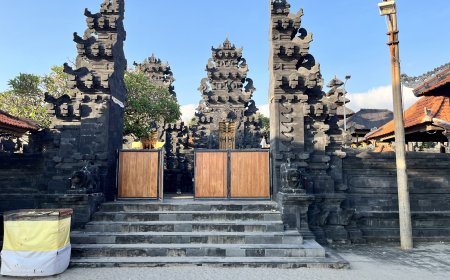
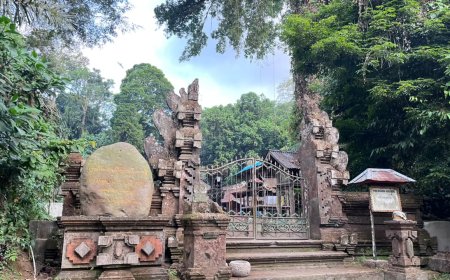
In Blahkiuh Village, Abiansemal District, Badung Regency, there is a sacred area that remains actively visited by devotees, especially during the Kuningan and Umanis Kuningan holy days. This area is known as Taman Gili Dukuh, a beji or purification site that not only holds spiritual appeal but also preserves a long historical legacy dating back to the Singasari period. The existence of Taman Gili Dukuh stands as evidence that the heritage of sacred water continues to live on and be safeguarded across generations.
Taman Gili Dukuh has a very close connection with Pura Luhur Giri Kusuma, one of the Kayangan Jagat temples located to the west of the Pleh Kio Traditional Village Market. The relationship between the temple and the beji is inseparable, as from its earliest existence, Taman Gili Dukuh has functioned as a place of purification for Ida Betara who resides at Pura Luhur Giri Kusuma.
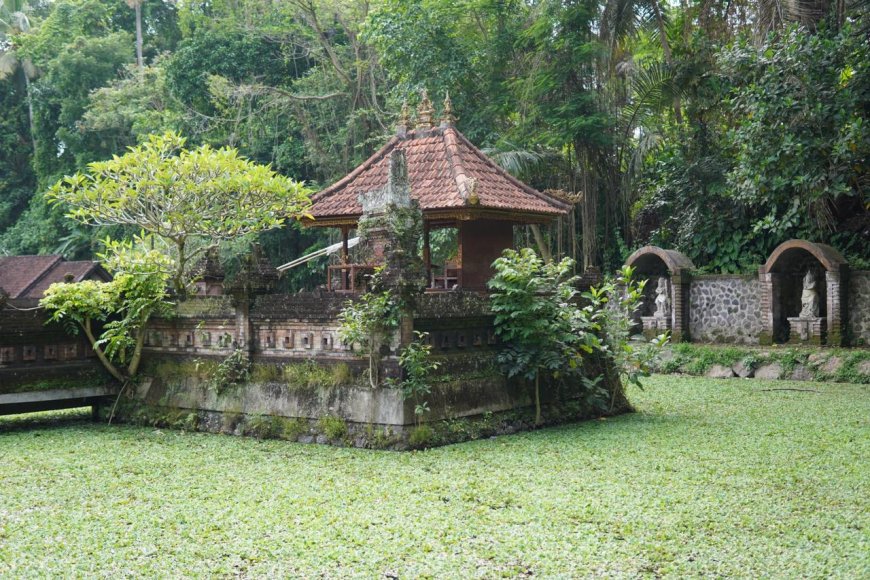
Padmasana for Genah Melasti in the Middle of the Pond (Source: Personal Collection)
In the Purana of Pura Luhur Giri Kusuma, it is stated that Taman Gili Dukuh is a sacred beji that was initiated during the Singasari era. This area is believed to be part of the early origins of Blahkiuh Village, which in its early period was led by Ki Gusti Pacung, a figure originating from the lineage of the Mengwi Dynasty. To this day, his lineage can still be found at Puri Mayun Blahkiuh.
The construction of Pura Luhur Giri Kusuma along with the Taman Gili Dukuh beji did not take place in a single period. Based on historical records, the construction process began between 1634 and 1638, and then continued with further development and refinement until 1928. This shows that the sacred area has continuously been maintained and sanctified from generation to generation, adapting to changing times without losing its sacred values.
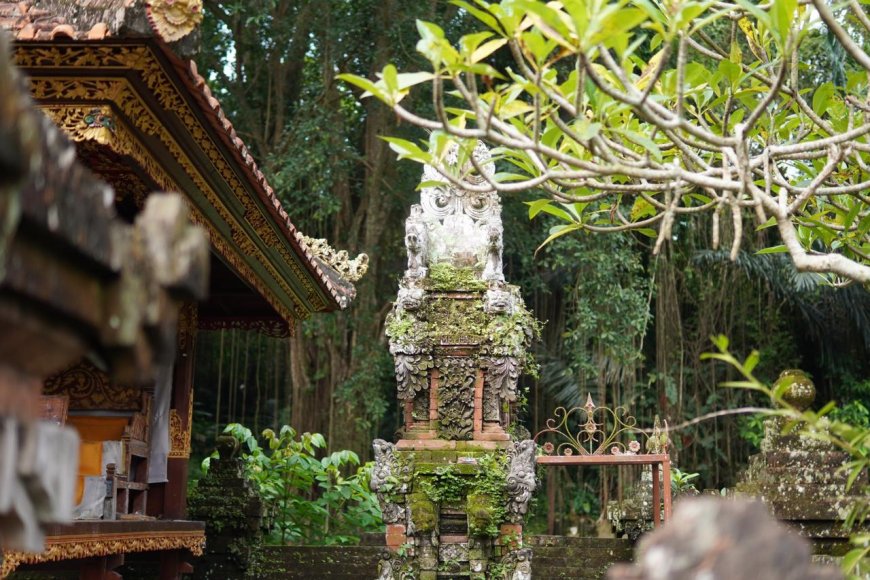
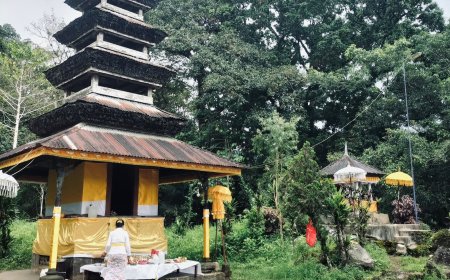
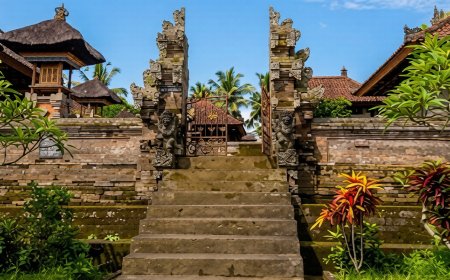
Padmasana at Taman Gili Dukuh (Source: Personal Collection)
The name Taman Gili Dukuh has a meaning closely related to the condition and history of the area. The word dukuh is associated with the existence of Padukuhan, a figure or spiritual element believed to have once existed around this place. Meanwhile, the term gili refers to the presence of a Padmasana shrine standing in the middle of the pond, serving as a spiritual center as well as a symbol of cosmic balance.
As a garden, this area does not function solely in a ritual sense, but is also arranged as a harmonious space integrating elements of water, land, and vegetation. This naming reflects the concept of sanctity and beauty united within a single spiritual space.
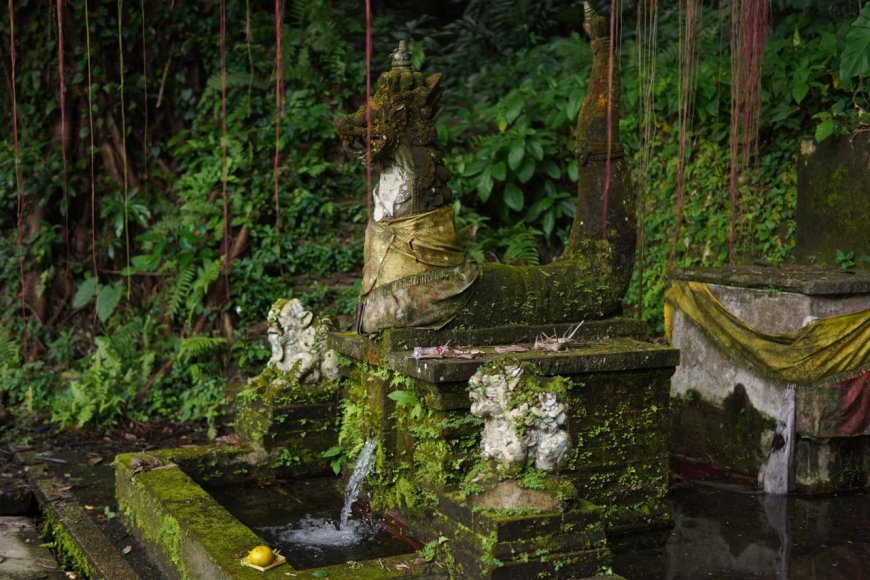
A Shrine with a Spring (Source: Personal Collection)
In addition to being known for its sanctity, Taman Gili Dukuh is also believed by the local community to possess an aura of mystique. One of the myths that has developed is the presence of be jeleg, a snakehead fish with an unusual form. The existence of this myth adds a sacred dimension to the area, while also serving as a reminder that sacred places are understood not only physically, but also in a niskala (unseen) sense.
Belief in this local mythology is not interpreted as something frightening, but rather as a form of respect for the natural and spiritual forces believed to reside in the Taman Gili Dukuh area.
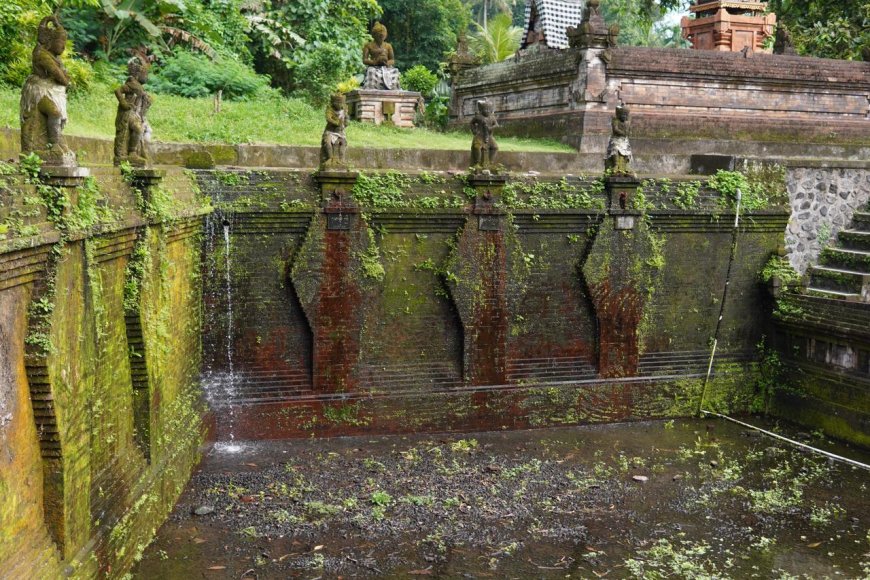
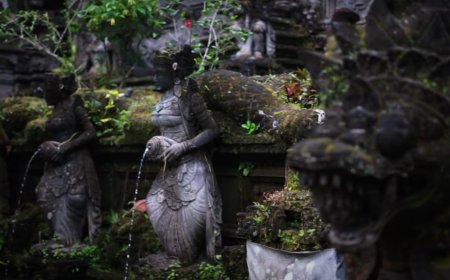
Pancoran of Dewi Saraswati, Dewi Sri, and Dewi Uma (Source: Personal Collection)
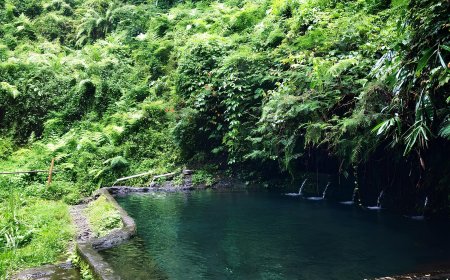
Taman Gili Dukuh has several sacred water sources that are still used by the community today. These springs have been functionally developed into public bathing areas, swimming pools, and melukat (ritual purification) sites, without diminishing their sacred value. In the future, this area is also planned to be equipped with additional supporting facilities.
Topographically, the Taman Gili Dukuh area extends from north to south and is arranged into three main levels. This arrangement refers to the Tri Mandala concept, namely the division of sacred space into nista mandala, madya mandala, and utama mandala. This concept emphasizes that the spatial layout of Taman Gili Dukuh was not arranged arbitrarily, but is based on Balinese Hindu cosmological values.
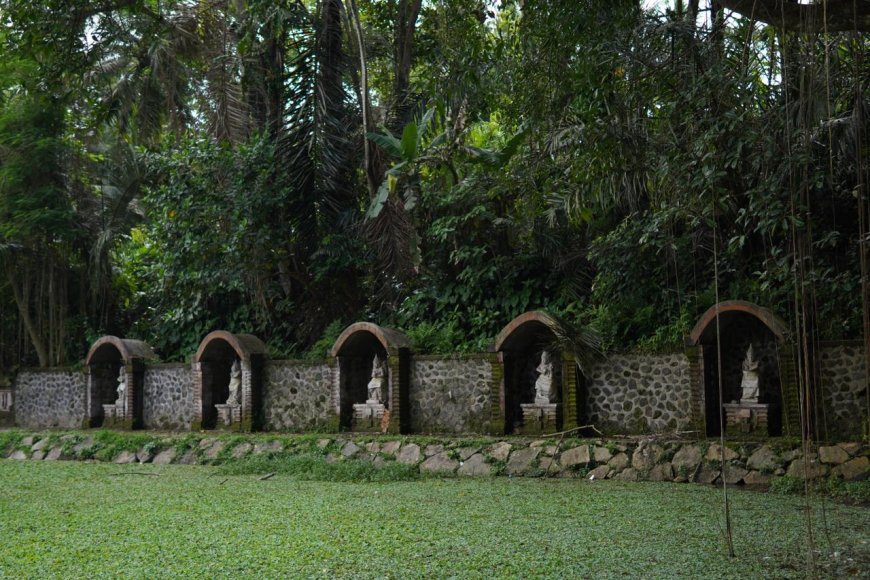
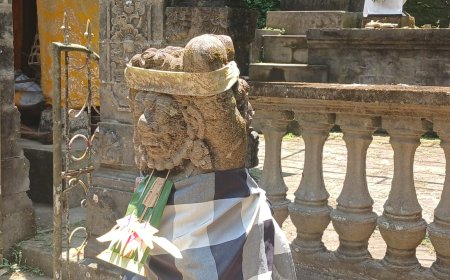
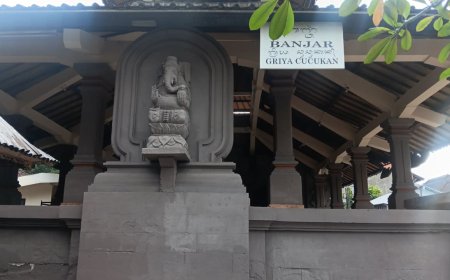
Statues of Deities at Taman Beji Paluh (Source: Personal Collection)
Around the Taman Gili Dukuh area, there is a site now known as the Dukuh Blahkiuh Camping Ground. In the past, this place served as a resting area for the Mengwi royal family. Over time, the area has been developed into an open space that can be utilized by the wider community.
Beji Taman Gili Dukuh is a heritage of sacred water that unites history, spirituality, and local wisdom. Rooted in the Singasari era, developing during the Mengwi period, and remaining in use to this day, this area stands as a tangible example of the continuity of tradition in Bali. Amid the currents of modernization, Taman Gili Dukuh has not only survived as a sacred site, but has also transformed into a space for education, recreation, and cultural preservation.