









Learning Balinese Dance in Kupang: The Story of Sanggar Agung Giri Budaya
A culture does not always disappear simply because people no longer know about it. Sometimes, it slowly fades when the generation meant to inherit it begins to choose a different path. But what happens when a culture has to survive far from the land where it was born, within a community of different backgrounds and among younger generations surrounded by countless choices? Who will make sure that the movements, values, and stories passed down from one generation do not stop with just one? And when no one is willing to learn it anymore, can a culture still be considered alive?

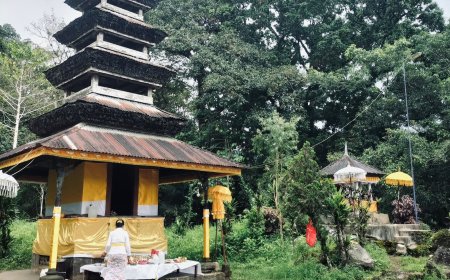
In Kupang, East Nusa Tenggara, Balinese dance is regularly practiced at Sanggar Tari Agung Giri Budaya, located at Pura Agung Giri Kertha Bhuwana in Kolhua. The sanggar welcomes children, teenagers, and adults from different age groups and religious backgrounds. Both boys and girls can take part in the training. Classes are held every Saturday and Sunday from 3:30 to 5:30 p.m. WITA, guided by Ms. Ary Mayastuti, Ms. Charma, and Ms. Kusuma. The sanggar celebrates its anniversary every February 16 and serves as a place where participants learn Balinese dance while preparing for performances and cultural activities in Kupang.

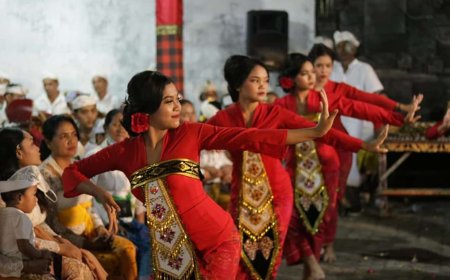
A Regular Training Session at Sanggar Tari Agung Giri Budaya (Source: Sanggar Collection)
Participants who want to join the sanggar first complete the registration process and pay the initial registration fee. New participants do not immediately learn dances with a high level of difficulty. Training begins with a warm-up before dance practice, followed by different dances based on each participant’s ability. Body movements, hand gestures, eye movements, and the ability to follow the rhythm are all part of the training. After practice, the instructors provide feedback on the participants’ movements, allowing them to understand which parts still need improvement.
Progress at the sanggar is not determined simply by how long someone has been attending. Participants can move on to more difficult dances when they have the necessary skills and readiness. This allows beginners to start with basic movements, while those who have developed stronger dance skills can continue with more challenging material. In this way, training can be adjusted to the ability of each participant.
Sanggar Agung Giri Budaya teaches a variety of Balinese dances. Some of the dances include Panyembrama, Manukrawa, Puspanjali, Cendrawasih, Gopala, Baris Gede, and Rejang Dewa. Both male and female participants can take part in these lessons. In addition to regular classes, the sanggar also offers professional classes for teenagers and adults. These classes include Tari Galang Bulan and Tari Belibis for teenagers, as well as Tari Tenun for adults.
In the professional classes, training begins with one hour of body movement exercises before continuing with dance practice. The class is designed for participants who want to develop their dance skills further. The fee is Rp100,000 per person per month. Different classes and levels allow participants to continue developing their abilities according to their readiness.

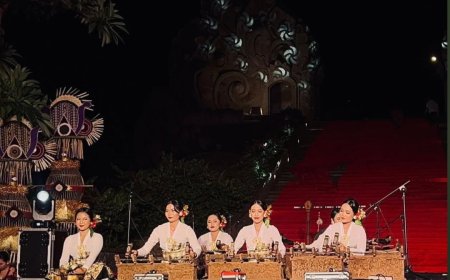
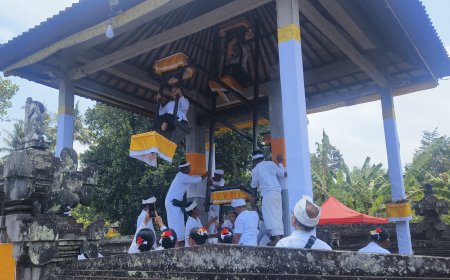
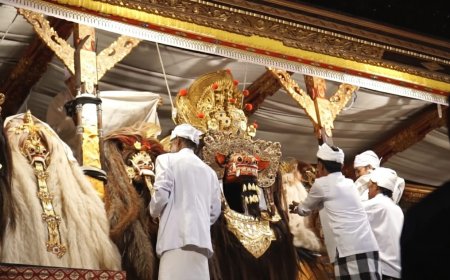
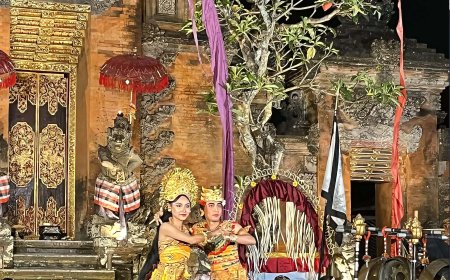
Balinese Dance Performance During the Piodalan at Pura Agung Giri Kertha Bhuwana (Source: Sanggar Collection)
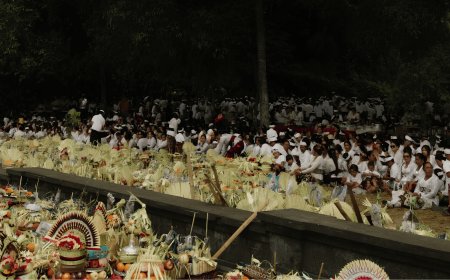
The skills learned during training are then used in various activities. Participants of Sanggar Agung Giri Budaya prepare to take part in ngayah during piodalan at Pura Agung Giri Kertha Bhuwana and other temples in Kupang. One of the activities they participate in is Piodalan Saraswati on Saniscara Umanis Watugunung. During the ceremony, participants not only perform Balinese dances but also take part in ngayah activities at the temple.
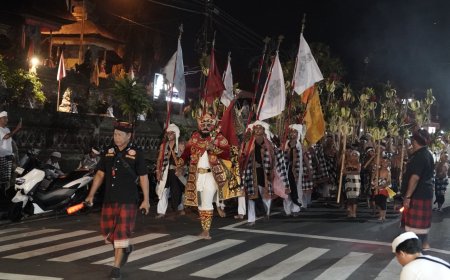
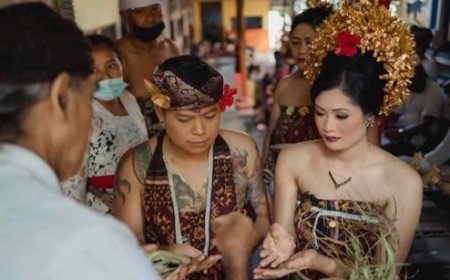
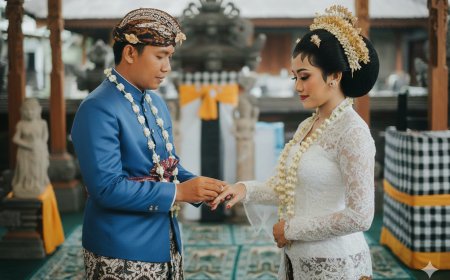
The sanggar’s activities are not limited to temple grounds. Participants have also performed at weddings and church events, as well as other community activities. One of their performances was Tari Panyembrama as a welcoming dance at the Parade Festival Budaya Kolhua, held as part of the 81st Anniversary of Indonesian Independence. Performances like these give participants an opportunity to apply the skills they have developed during regular training.

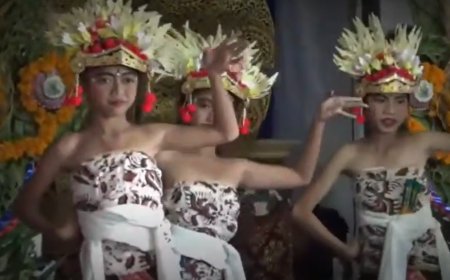
Tari Puspanjali Performance During the Piodalan at Pura Agung Giri Kertha Bhuwana (Source: Sanggar Collection)
According to Ms. Ary Mayastuti, one of the challenges faced by the sanggar is keeping participants actively involved. The number of participants attending training can decrease because of school commitments and other activities. As a result, attendance is not always the same from one training session to another. To maintain participants’ interest, the instructors try to keep the training atmosphere enjoyable, motivate the participants, and involve them in various performances.
This challenge also affects the continuity of participants’ learning. When participants cannot attend regularly, they may fall behind the material being taught. For this reason, training is conducted gradually, with participants learning according to their individual abilities. Taking part in performances also gives them opportunities to apply the skills they have learned.
The learning process at the sanggar also allows participants who have been training longer to help others. When there are many participants or when instructors need additional assistance, more experienced participants may be asked to help younger participants with their movements. This may include correcting dance techniques, agem, and ngét, as well as other movements that have not yet been mastered. They remain participants themselves, helping only when asked or when additional assistance is needed. There is no fixed period that determines when someone should start helping others, as each participant develops their skills at a different pace.
This was also experienced by the writer, who has been part of the sanggar since childhood. After becoming older and developing sufficient skills, the writer sometimes helped younger participants when asked or when assistance was needed. This support does not replace the role of the instructors in teaching and evaluating participants. The instructors remain responsible for the main learning process, while more experienced participants provide additional help when necessary.
Sanggar Agung Giri Budaya provides a space for people in Kupang to learn and practice Balinese dance. Participants of different ages can attend training, learn dances according to their abilities, and use their skills in piodalan, ngayah, and various community activities. Participants do not need to come from a particular age group or religious background to take part. In a diverse community like Kupang, the sanggar provides a space where Balinese dance continues to be practiced by people living far from Bali and introduced to new generations of participants.

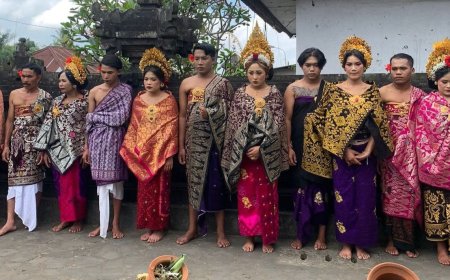
A Training Session at Sanggar Agung Giri Budaya (Source: Personal Collection)
At Sanggar Tari Agung Giri Budaya, learning happens through regular weekend practices, performances, ngayah, and participation in the sanggar’s activities. Participants come with different ages and levels of ability and learn according to their individual readiness. More experienced participants may also assist others when needed without taking over the role of the instructors. The learning of Balinese dance continues through regular training, performances, ngayah, and the involvement of participants in the life of the sanggar.