












Legong Bidadari Cultural Arts Studio: The Graceful Steps of Heavenly Maidens Weaving Prayers, Guarding the Hidden Flame on the Stage of Time
In the ever-modernizing corner of Denpasar, the sound of gamelan and the graceful movements of dancers still pulse with life at Sanggar Tari Legong Bidadari. More than just a training ground, every step in this studio is an expression of love for tradition, a prayer woven into each graceful motion, and a flame of art carefully guarded so it will not be extinguished by the passing of time.

From Learning Space to Space of Devotion
Legong Bidadari Cultural Arts Studio was founded in the year 2000 thanks to the determination of Ibu Agung Arisna, an alumna of the Indonesian Institute of the Arts (ISI), who chose to continue her knowledge by establishing her own dance learning space.
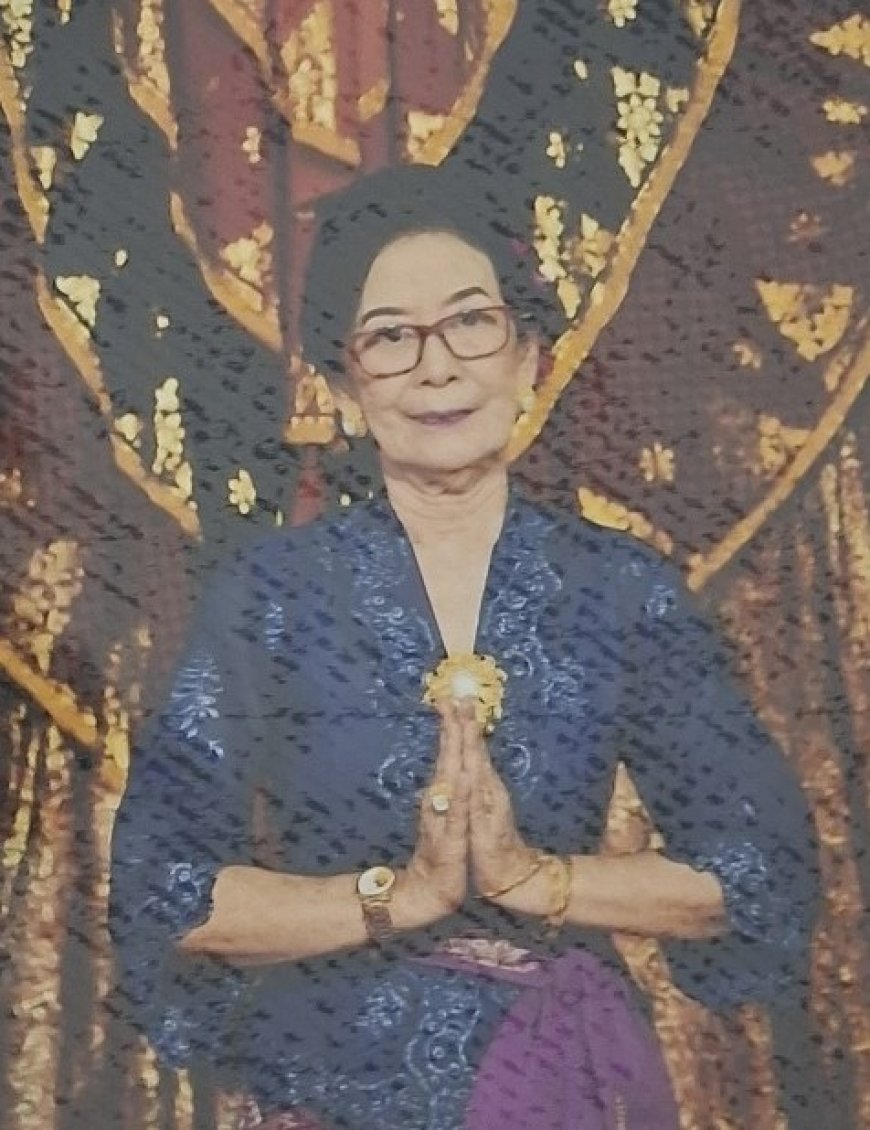
Founder of Legong Bidadari Cultural Arts Studio (Source: Legong Bidadari Cultural Arts Studio Documentation)
That decision was born from a simple yet profound thought, knowledge would be in vain if not passed on. From the very beginning, the studio was based in Denpasar, although at one point a branch was also opened in Klungkung, the owner’s hometown. However, due to distance and the physical demands that came with age, Ibu Agung eventually chose to focus her efforts in Denpasar as the main center of activity. The name “Legong Bidadari” carries a philosophical meaning: Legong as the foundation of Balinese dance, and Bidadari (heavenly maiden) as a symbol of grace, flexibility, and the beauty of a dancer’s movement.
Learning Dynamics at the Studio
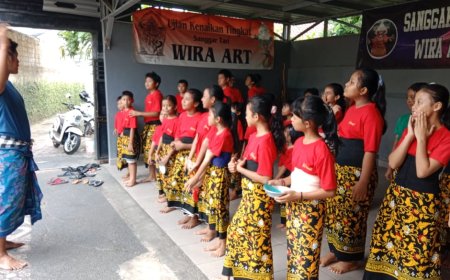
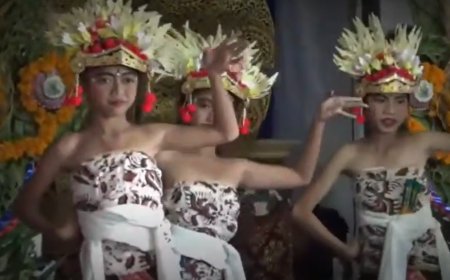
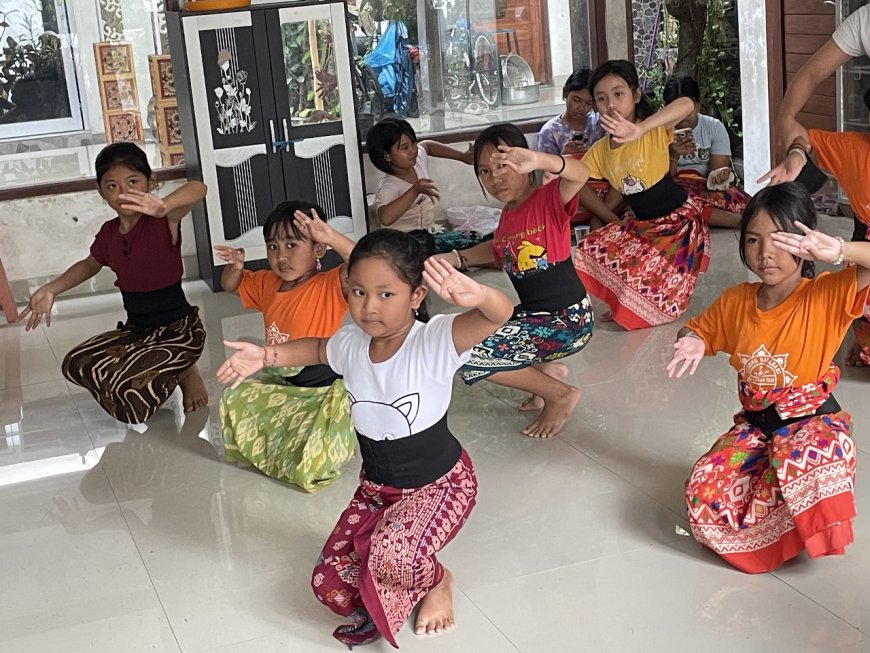
This studio is open to everyone. Children as young as five, teenagers, adults, even housewives from community groups can join. They come with different purposes some only wish to learn the basics, some prepare for cultural performances, while others pursue dance seriously as a life path.
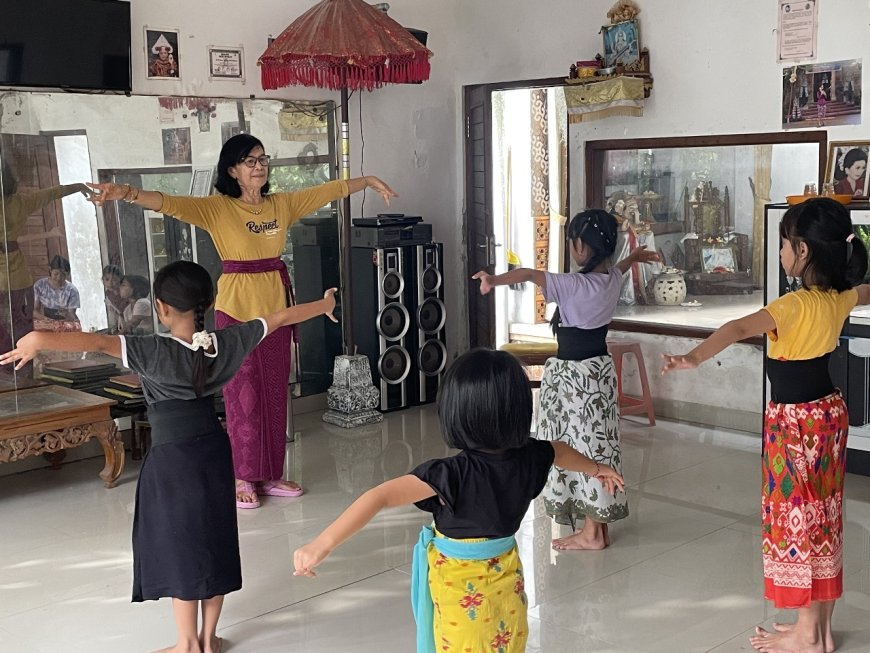
Teaching Process Led by Ibu Agung Arisna at Legong Bidadari Cultural Arts Studio, Denpasar. (Source: Personal Collection)
Teaching System: Regular and Private
Legong Bidadari Cultural Arts Studio offers not only regular classes but also private sessions. Regular classes are usually held on weekends, Saturday and Sunday, according to a schedule arranged directly by Ibu Agung. Meanwhile, private lessons provide more flexibility, as the instructor can be invited directly to the student’s home.
Contributions on the Cultural Stage
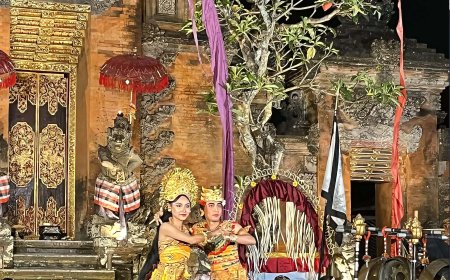
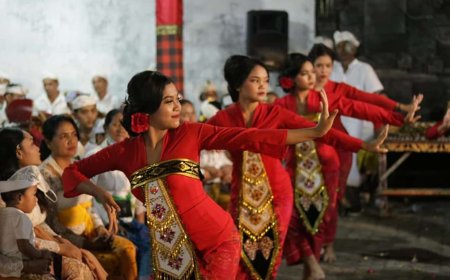
More than just a place to learn, the studio actively contributes to various cultural events. Each year, representatives are sent to perform in art festivals, cultural celebrations, and even New Year festivities.
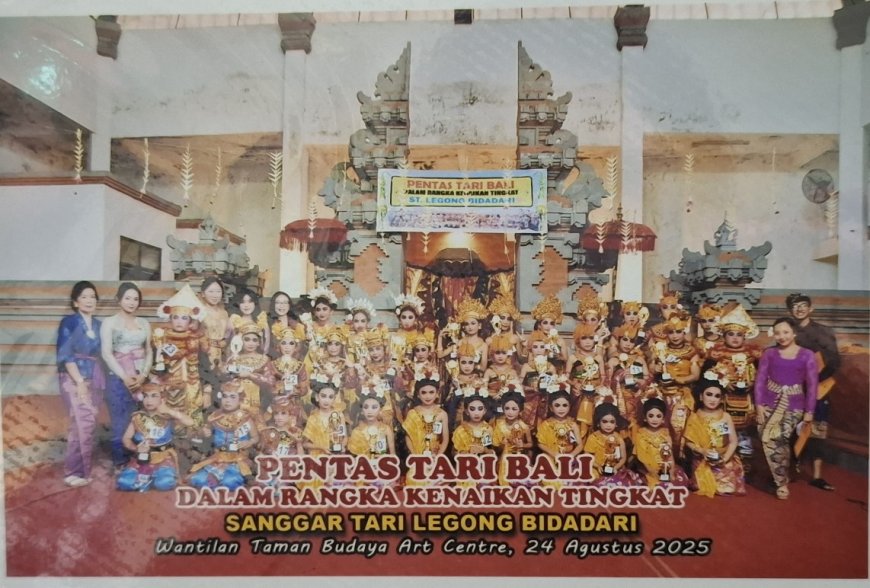
Balinese Dance Performance for Advancement Ceremony (Source: Legong Bidadari Cultural Arts Studio Documentation)
Invitations from local cultural offices frequently arrive, signaling recognition of the studio’s quality and reputation. They also often participate in dance competitions, both at local and broader levels, as an arena to sharpen skills while introducing the studio’s work to the public.